Pangram vs GPTZero vs Turnitin: Which AI Detector Is Best for Educators?
When stakes are high, detector philosophy matters. This article compares how GPTZero, Pangram, and Turnitin approach uncertainty.

John Angelo Yap
Updated February 17, 2026

AI detection for teachers, generated with GPT
Reading Time: 5 minutes
AI detection in education isn’t just a technical problem. It’s a trust problem.
Teachers are being asked to make high-stakes decisions — sometimes disciplinary ones — based on tools that are still evolving, inconsistently accurate, and often misunderstood. That tension has only grown as detectors become more confident, even when their conclusions aren’t always reliable.
So when educators ask which AI detector is “best,” the real question usually isn’t about raw accuracy. It’s about which tools can be trusted, how transparent they are about limitations, and how responsibly they fit into a classroom environment.
Among the tools tested, Pangram consistently delivered the strongest detection results which we'd recommend to educators the most.
This article compares three detectors that frequently come up in education discussions: Pangram, GPTZero, and Turnitin by examining trust, design philosophy, and practical use in real classrooms.
What Educators Should Prioritize First
Before comparing tools, it’s worth restating something clearly: AI detectors should not be treated as verdict engines.
As we’ve covered in other articles, false positives are not edge cases — they’re a known and documented risk, especially when detectors are used without context or safeguards.
The most responsible detectors tend to share a few traits:
- They communicate uncertainty clearly
- They avoid absolute claims
- They encourage human review
- They don’t present themselves as proof
With that framing in mind, here’s how Pangram, GPTZero, and Turnitin differ.
Pangram
What Pangram Is
Pangram Labs is a newer entrant, but it’s quickly gained attention for one reason: consistency.
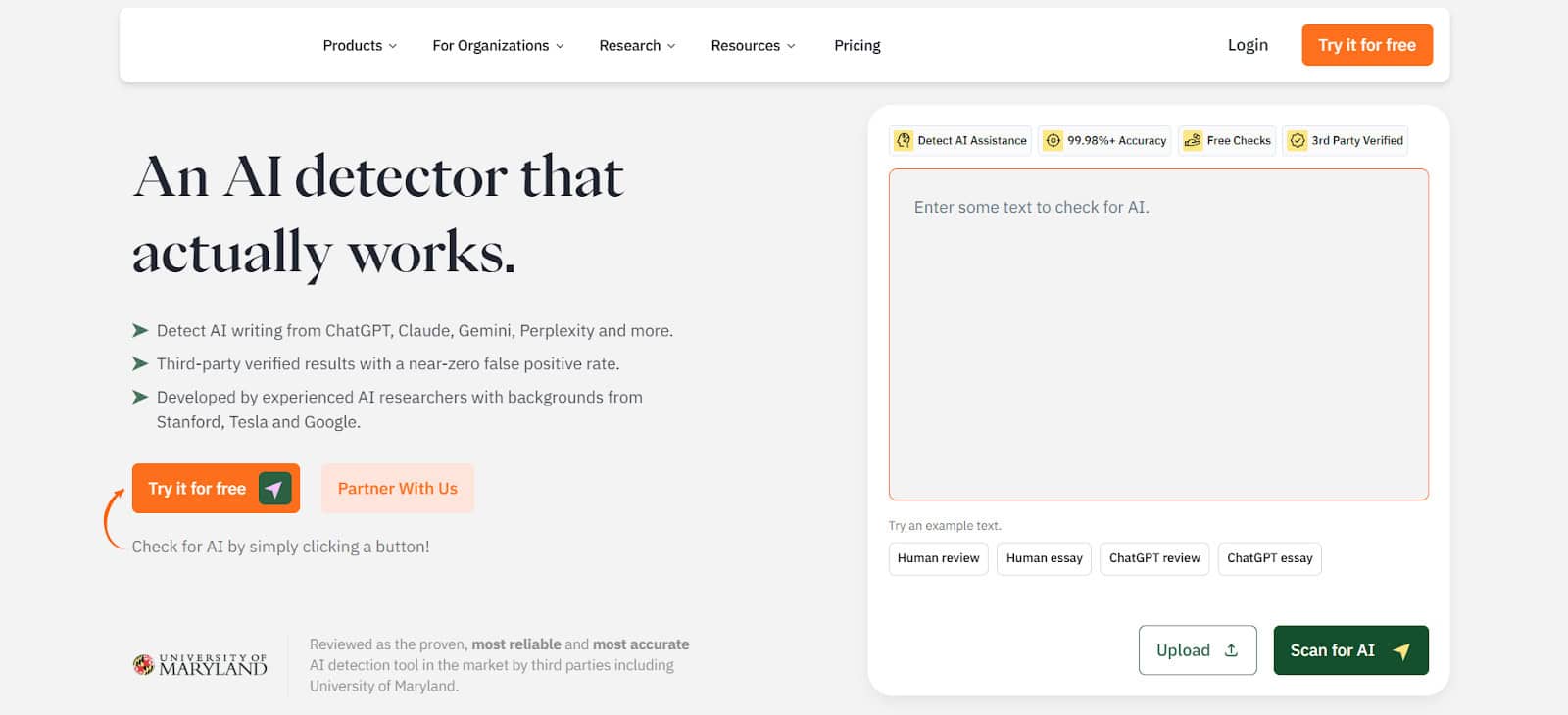
In our direct comparison testing with Undetectable AI, Pangram successfully detected 100% of the AI-generated test cases it was evaluated against.
That performance immediately sets it apart from many general-purpose detectors.
Why Pangram Stands Out
Pangram’s appeal lies in its clarity and confidence on obvious AI output.
Where some detectors hedge or soften results, Pangram is decisive — at least in the contexts tested. For educators dealing with assignments that are clearly AI-generated and lightly edited, this can save time and reduce ambiguity.
It’s also worth noting that Pangram’s detection success wasn’t presented as magic or universal. The article explicitly frames its results within the tested scope, which matters for trust.
Bottom line on Pangram
Pangram is a strong option if you want:
- High confidence on clearly AI-generated writing
- A decisive screening tool
- A complement to more conservative detectors
GPTZero
What GPTZero Is
GPTZero is one of the earliest AI detectors built specifically with education in mind. Its core positioning has always been about reducing false accusations, rather than catching every possible AI-assisted sentence.
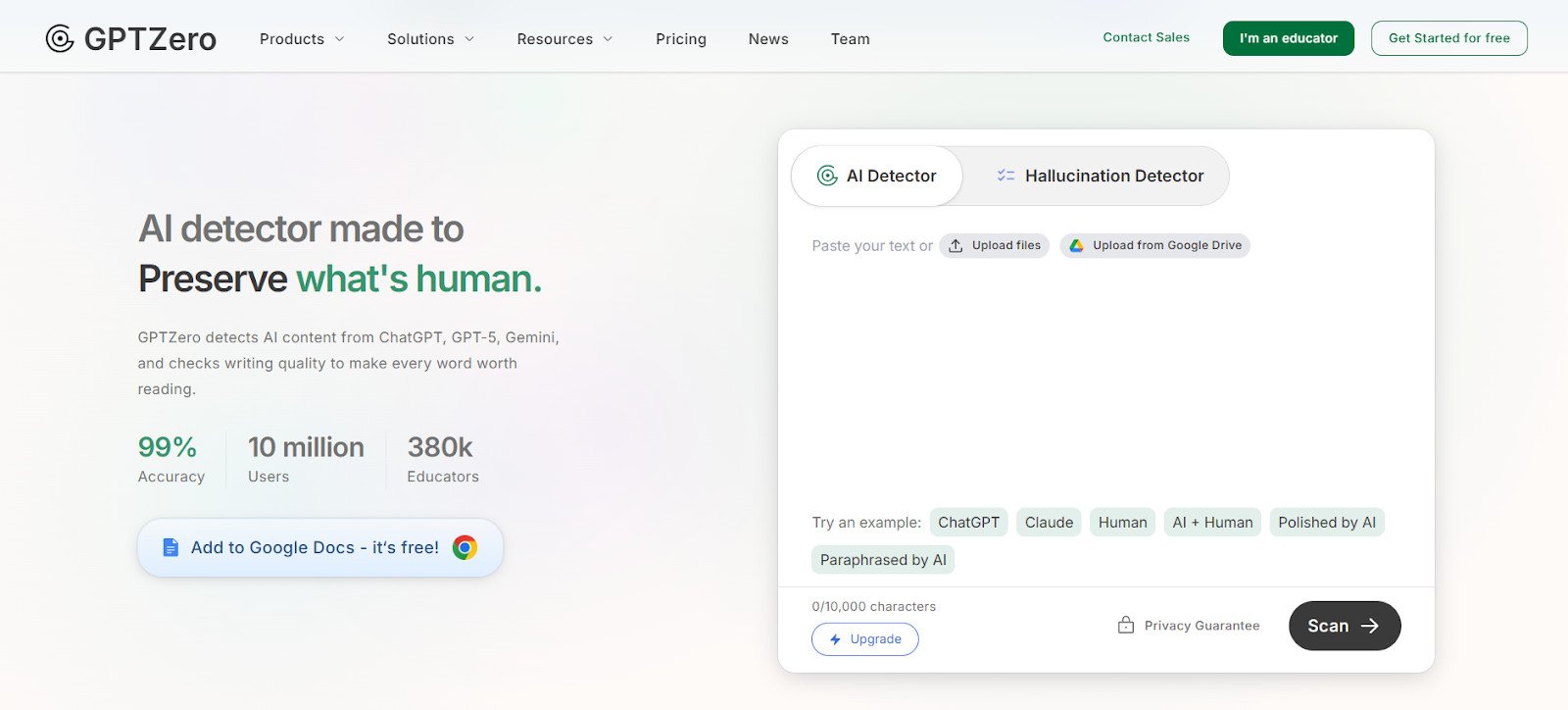
Unlike many detectors that focus on surface-level probability scores, GPTZero emphasizes patterns like perplexity and burstiness — signals intended to differentiate human writing from machine-generated text.
Why Educators Trust It
GPTZero’s biggest strength is its restraint.
It doesn’t aggressively label borderline content as AI. Instead, it often returns lower-confidence or mixed signals, especially for edited or hybrid writing. For teachers, this is a feature—not a flaw—because it reduces the risk of over-accusation.
In our 2024 detector testing, GPTZero didn’t top the charts in raw detection rates, but it avoided the most dangerous classroom outcome: confidently mislabeling human work as AI.
Recent Updates and Direction
In 2025, GPTZero rolled out updates focused on improved reporting, classroom workflows, and educator-specific tooling. The emphasis wasn’t on “catching more AI,” but on making results easier to interpret responsibly.
That design choice reinforces GPTZero’s role as a screening tool, not an enforcement mechanism.
Bottom line on GPTZero
GPTZero is best suited for educators who want:
- A conservative detector
- Lower false-positive risk
- A tool that supports judgment rather than replacing it
- It may miss some AI-assisted writing—but it’s far less likely to escalate a false accusation.
Turnitin
What Turnitin Is (and Isn’t)
Turnitin isn’t just an AI detector. It’s an institutional compliance platform embedded deeply into academic workflows.
That position gives it enormous influence—and also magnifies its risks.
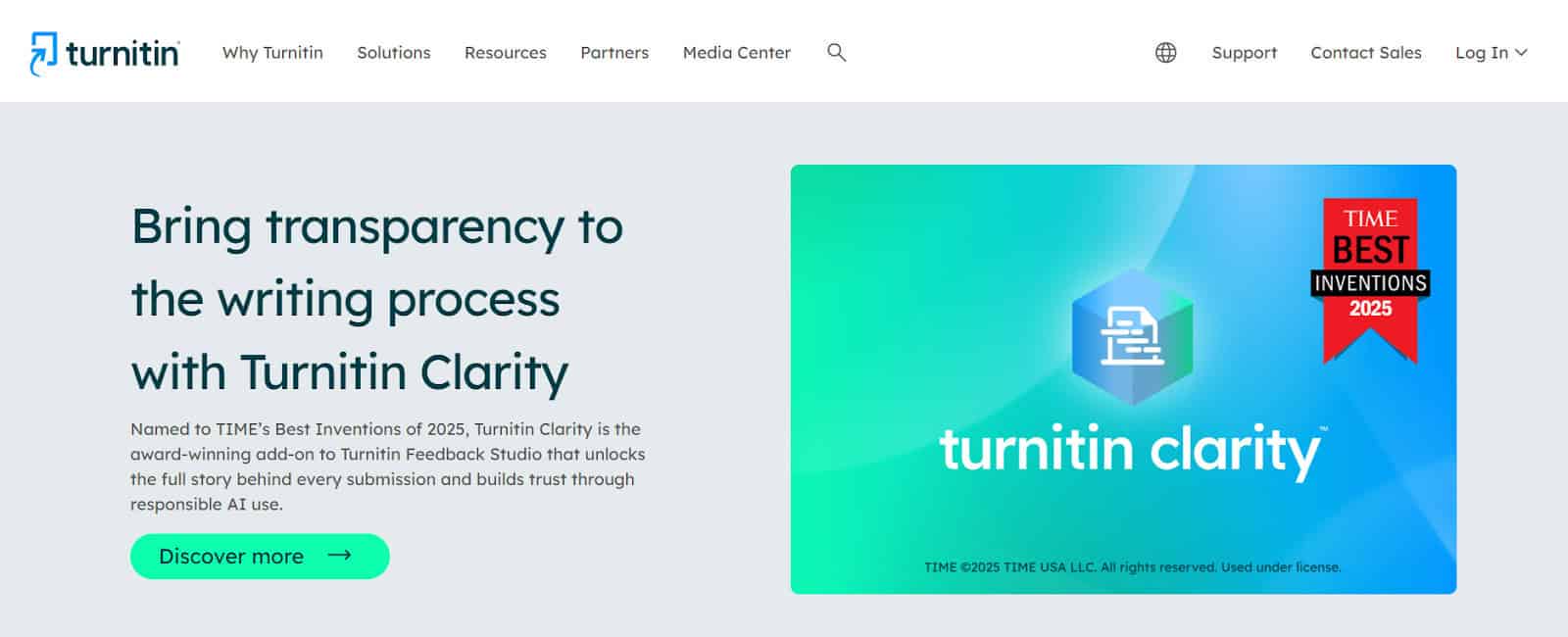
Unlike GPTZero or Pangram, Turnitin’s AI detection is often automatically surfaced to educators, sometimes without sufficient explanation of uncertainty or error margins.
False Positives
Multiple articles we’ve written about TurnItIn concerns around Turnitin’s false positives, especially for:
- Non-native English writers
- Formulaic academic writing
- Short or structured assignments
Turnitin itself has acknowledged these limitations and published internal guidelines cautioning against using AI scores as definitive proof.
The issue isn’t that Turnitin ignores these risks: it’s that the tool’s institutional authority often overrides nuance in practice.
Why Educators Still Use It
Turnitin’s true advantage is reach.
It’s already integrated into learning management systems, plagiarism checks, and institutional reporting. For many educators, opting out isn’t practical.
When used cautiously, it can still function as a start for AI detection, not a conclusion.
Bottom line on Turnitin
Turnitin works best when:
- Educators understand its limitations
- AI scores are never treated as evidence on their own
- Institutional policies emphasize due process
- Without those safeguards, it carries the highest risk of misuse.
So, Which AI Detector Is Best for Educators?
There’s no universal winner—but there is a clear pattern.
Pangram offers strong, confident detection for obvious AI use and works well as a first-pass filter.
GPTZero is the most conservative and educator-friendly when trust and fairness matter most.
TurnItIn is unavoidable in many institutions but requires the greatest caution and policy support.
The safest classroom approach isn’t choosing one tool: it’s choosing the right role for each tool.
AI detectors should guide attention, not determine guilt. When educators keep that boundary intact, these tools can support integrity without undermining trust.
Want to Learn Even More?
If you enjoyed this article, subscribe to our free newsletter where we share tips & tricks on how to use tech & AI to grow and optimize your business, career, and life.