ImageDetector vs WasItAI (Which AI Image Detector Is More Accurate?)
A photo that has been shared and reshared a thousand times online is a completely different problem than a clean AI generation. We tested both ImageDetector and WasiTAI to see which one can actually catch the harder case.

Mark Goutaco
Updated March 17, 2026
Reading Time: 4 minutes
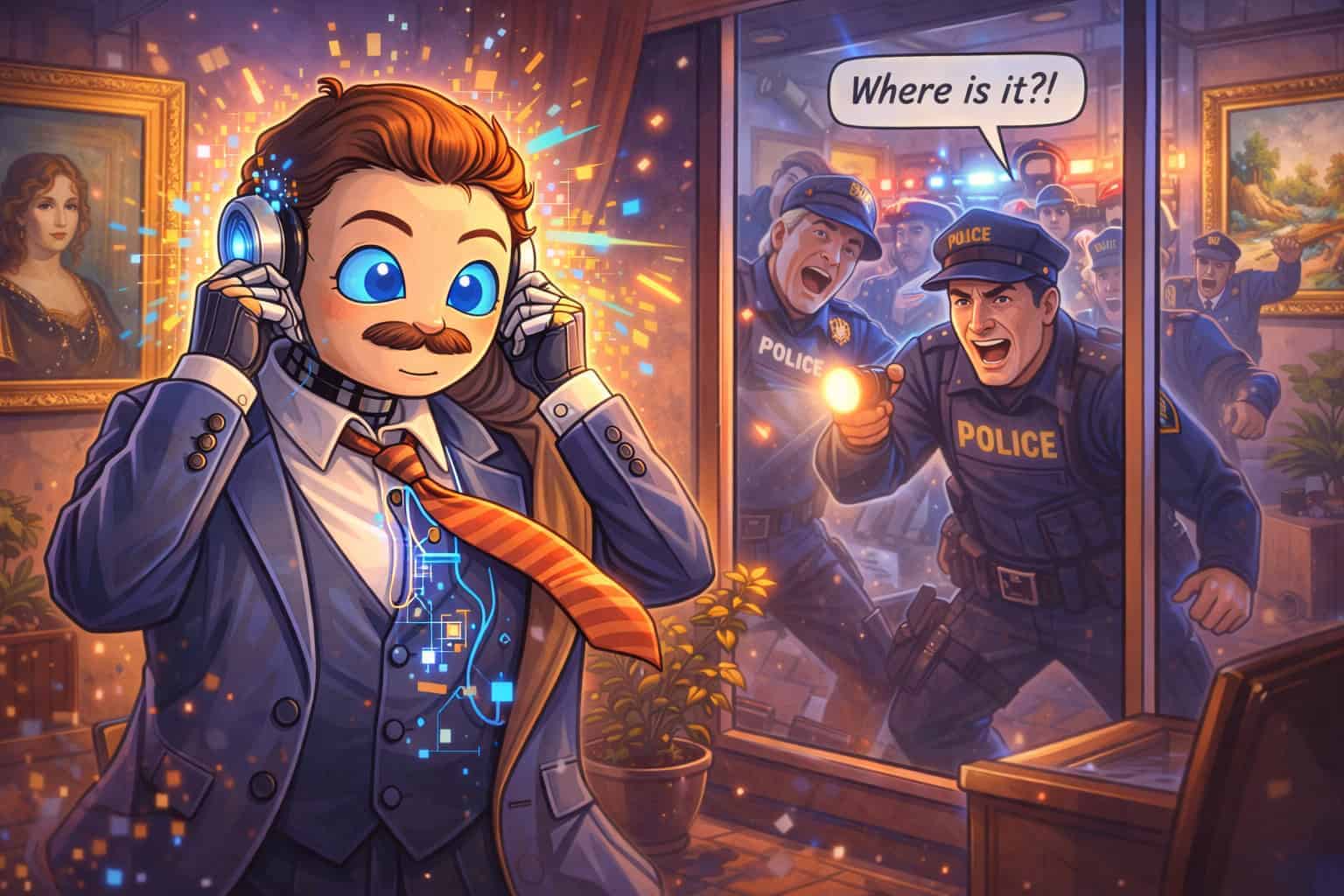
A student submits an illustration for a class project. A photo circulates in a Facebook group claiming to show a local news event. A document that looks a little too clean.
Sometimes it's obvious. A profile photo where the person's ear blends into their hair, or a "news photo" where the crowd in the background looks copy-pasted.
Sometimes it's a photo that's been shared and re-shared so many times the compression alone makes it suspicious.
And sometimes a completely real photo gets flagged because the built in AI processed the image a little too much.
ImageDetector.com and WasItAI both claim to catch AI-generated images reliably. So we tested them with four images.
Here's what happened.
What is ImageDetector.com?

ImageDetector.com is a free, browser-based AI Image detector built for speed. You upload an image or paste a link, and it returns an AI likelihood score in seconds. No account needed.
It supports JPG, PNG, and WEBP, and it's designed to work even when metadata has been stripped.
Which matters because most images people actually encounter online have already been shared, compressed, or re-uploaded at least once.
What is WasItAI?

WasItAI is an API-based AI image detector, which already tells you something about who it's built for. There's no free browser tool you can open and drop an image into.
You're working with an API, a confidence score in the response, and a pricing structure that starts at $4/month for 100 requests.
The Basic tier gets you API access and confidence scores. The Custom tier is for higher volume, faster processing, and an on-prem installation option for teams that need it.
So right away, these two tools aren't really competing for the same person.
ImageDetector is built for quick, free, individual verification.
WasiTAI is built for teams and developers who need detection baked into a workflow.
The Test Setup
Four image samples, run through both AI image detectors and scored back to back.
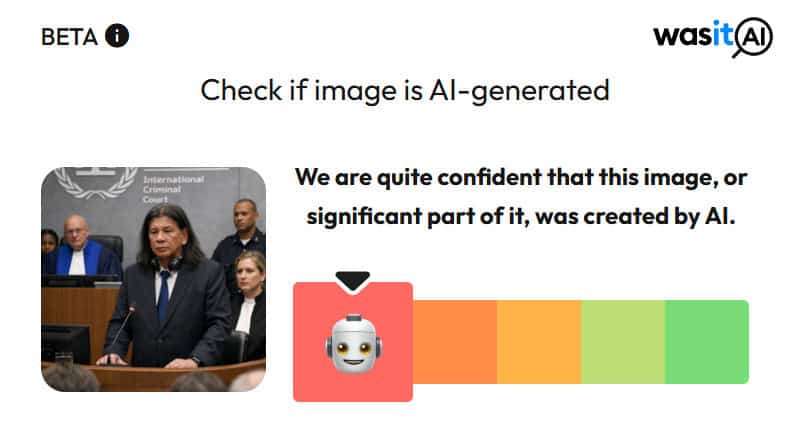
Sample 1 was an image generated from ChatGPT.
Sample 2 was an image generated from Claude.
Samples 3 is the control, a photo taken from my phone and
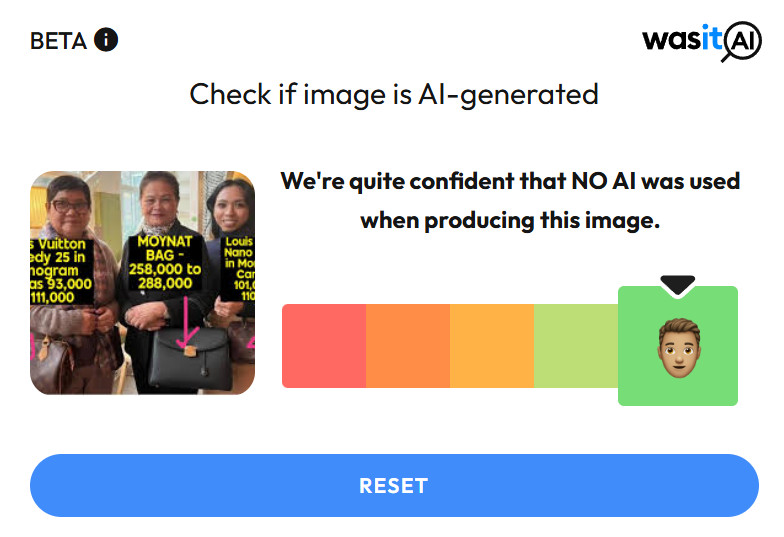
Sample 4 is an image taken from Facebook that has been widely debunked as fake.
The Actual Test (ImageDetector vs WasITAI
Test # 1 Generated with ChatGPT
Verdict: ImageDetector correctly flagged the image as AI generated

Verdict: WasItAI correctly detected the image as AI generated
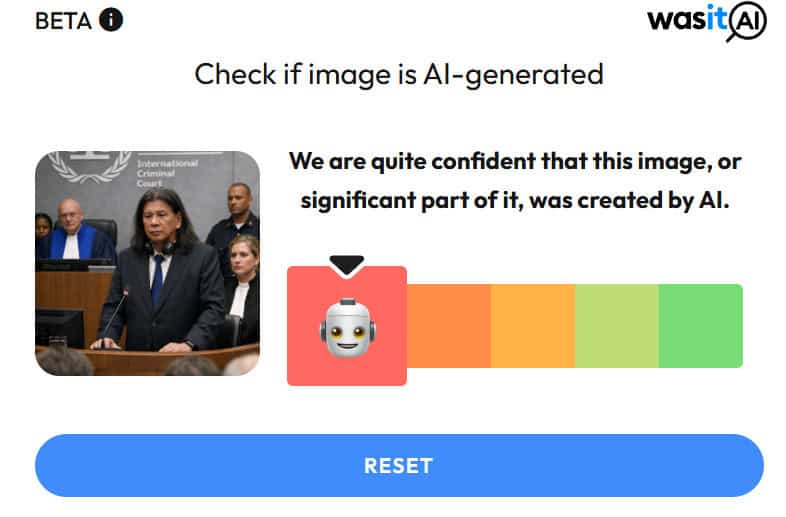
Test # 2 Generated with Gemini
Verdict: ImageDetector correctly detected the image as AI generated

Verdict: WasItAI correctly detected the image as AI generated
Test # 3 Photo Taken from My Phone
Verdict: ImageDetector correctly identified the image as a Real

Verdict: WasItAI correctly marked the image as Real

Test # 4 Altered Photo Taken from Facebook
Verdict: ImageDetector correctly detected the image as digitally altered
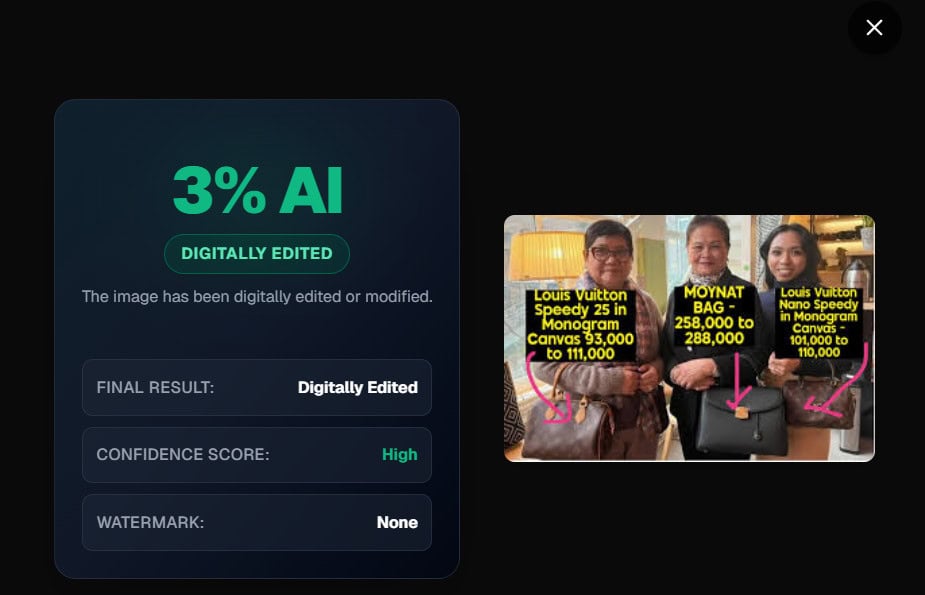
Verdict: WasItAI marked the image as Real
The Test Results By The Numbers
| Test Number | ImageDetector | WasiTAI |
| #1 ChatGPT | Correct ✔️ | Correct ✔️ |
| #2 Gemini | Correct ✔️ | Correct ✔️ |
| #3 Photo from Phone | Correct ✔️ | Correct ✔️ |
| #4 Facebook | Correct ✔️ | Incorrect ✖️ |
| Score | 100% | 75% |
Final Thoughts
ChatGPT and Gemini outputs were flagged easily as AI by both detectors without any issue.
Image 3 is was a photo taken straight from my phone, and both tools returned a real image verdict. That's fair.
Then came Image 4 (the photo pulled from Facebook).
ImageDetector flagged it as digitally altered. WasItAI called it real. That's not a minor scoring difference, that's a miss on an image that had already been debunked.
For a tool that positions itself around stopping misinformation and fake news, that result is hard to overlook.
To be fair, detecting edited or composited images is a genuinely harder problem than catching clean AI generations. Manipulation can be subtle, and compression makes it worse.
For controlled AI generations, both tools work. If your use case starts and ends there, either one is fine.
But if you're trying to verify images that have been shared and reshared like 1,000 times online.
ImageDetector is the one that actually caught it.
Want to Learn Even More?
If you enjoyed this article, subscribe to our free newsletter where we share tips & tricks on how to use tech & AI to grow and optimize your business, career, and life.