TruthScan vs. BrandWell: Which Should Be Your AI Image Detector?
BrandWell or TruthScan: who can accurately see the AI in the images you see online?

John Angelo Yap
Updated December 18, 2025
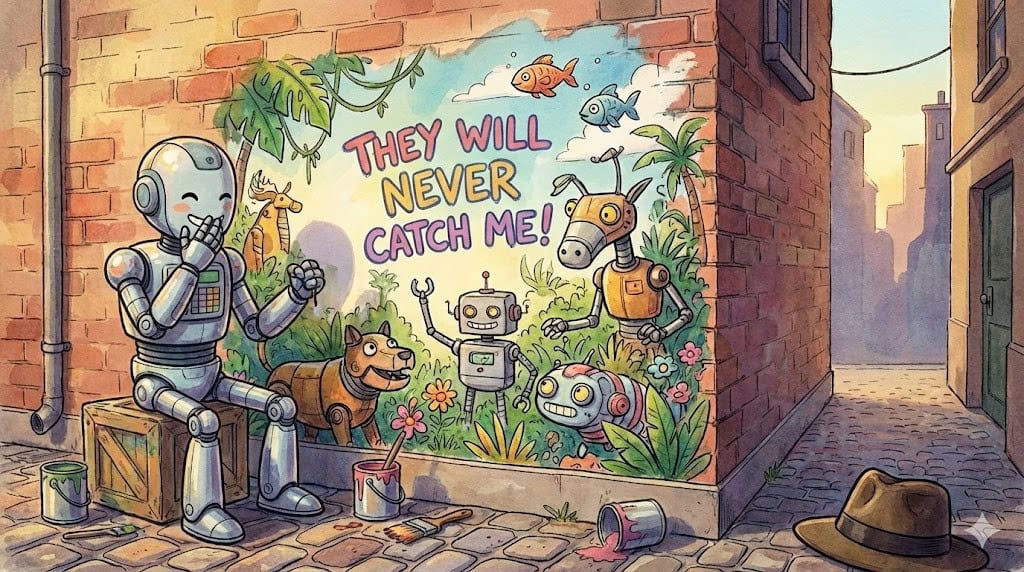
An AI artist with a taunting message, generated with Nano Banana
Reading Time: 4 minutes
Image detection has become a weirdly competitive space lately. A year ago, there were maybe three tools worth talking about. Now? Every other platform suddenly claims it can “detect deepfakes” or “spot AI-generated media with near-perfect accuracy.”
And sometimes, these claims come from companies you’d never expect — like BrandWell.
BrandWell is known for content marketing, SEO automation, and long-form workflow tools. They generate 7,000-word articles, automate internal linking, run full content audits… and somewhere along the way, they decided to throw in an AI image detector too.
Naturally, I had to see how it compares to TruthScan, a tool built specifically for AI detection and media forensics.
Two totally different companies. Two very different goals.
But one question: Which one actually detects AI images correctly?
What is TruthScan?
TruthScan is the Swiss Army suite of AI detection. Where most tools do one thing, TruthScan has an entire lineup consisting of an AI text detector, AI image detector, deepfake detector, real-time AI detector, AI voice detector, and email scam detector.
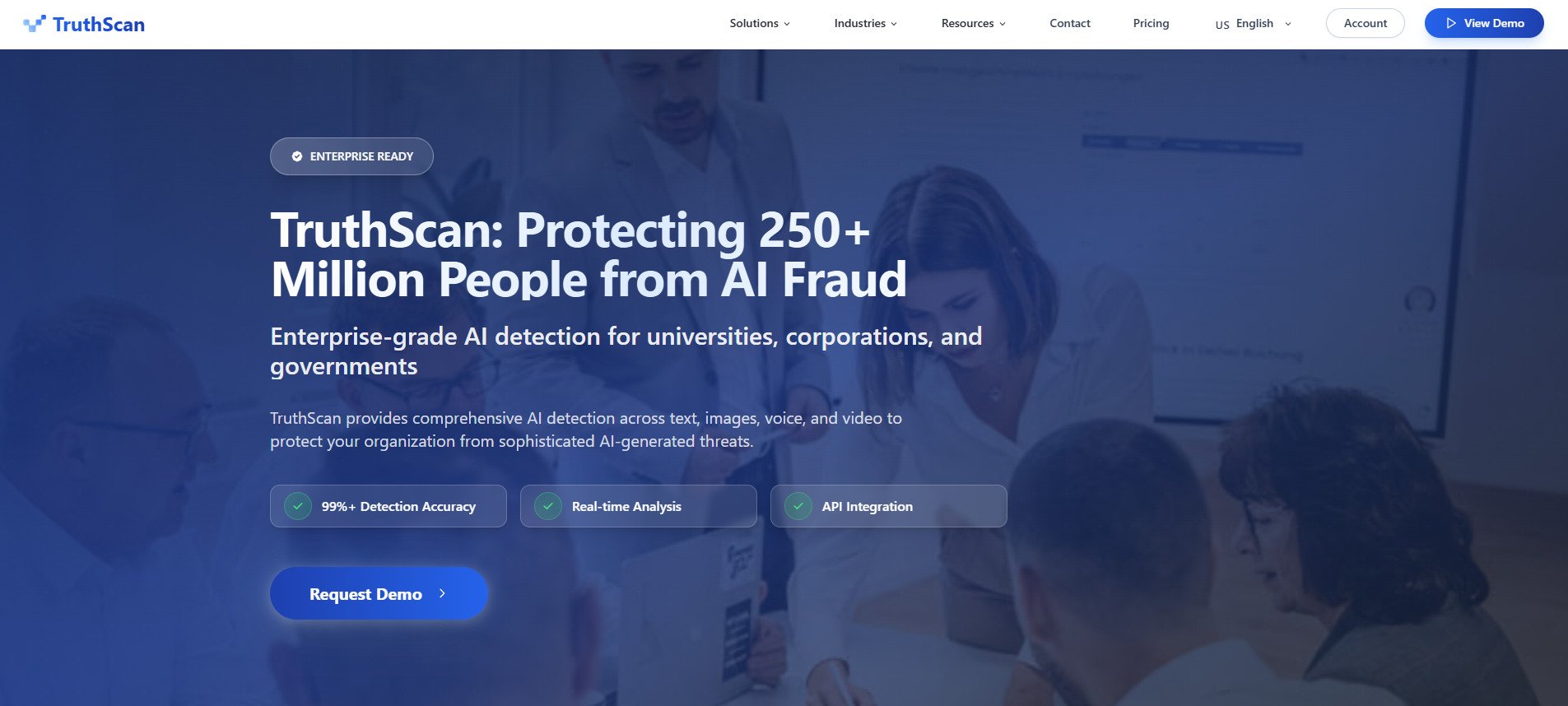
It’s built for accuracy, consistency, and forensic-level detection — and the goal is simple: catch AI-generated or manipulated content fast and help organizations stay ahead of AI misuse.
The part we’re looking at today is its AI Image Detector. And honestly, this is where TruthScan shines. It’s fast, it’s confident, and it usually returns a correctness score that makes most other tools look like they’re guessing.
If there’s one tool built specifically for telling real from artificial, it’s this one.
What is BrandWell?
BrandWell is a content and SEO platform — formerly Content at Scale — designed to help marketers, agencies, and businesses automate their long-form content pipeline.
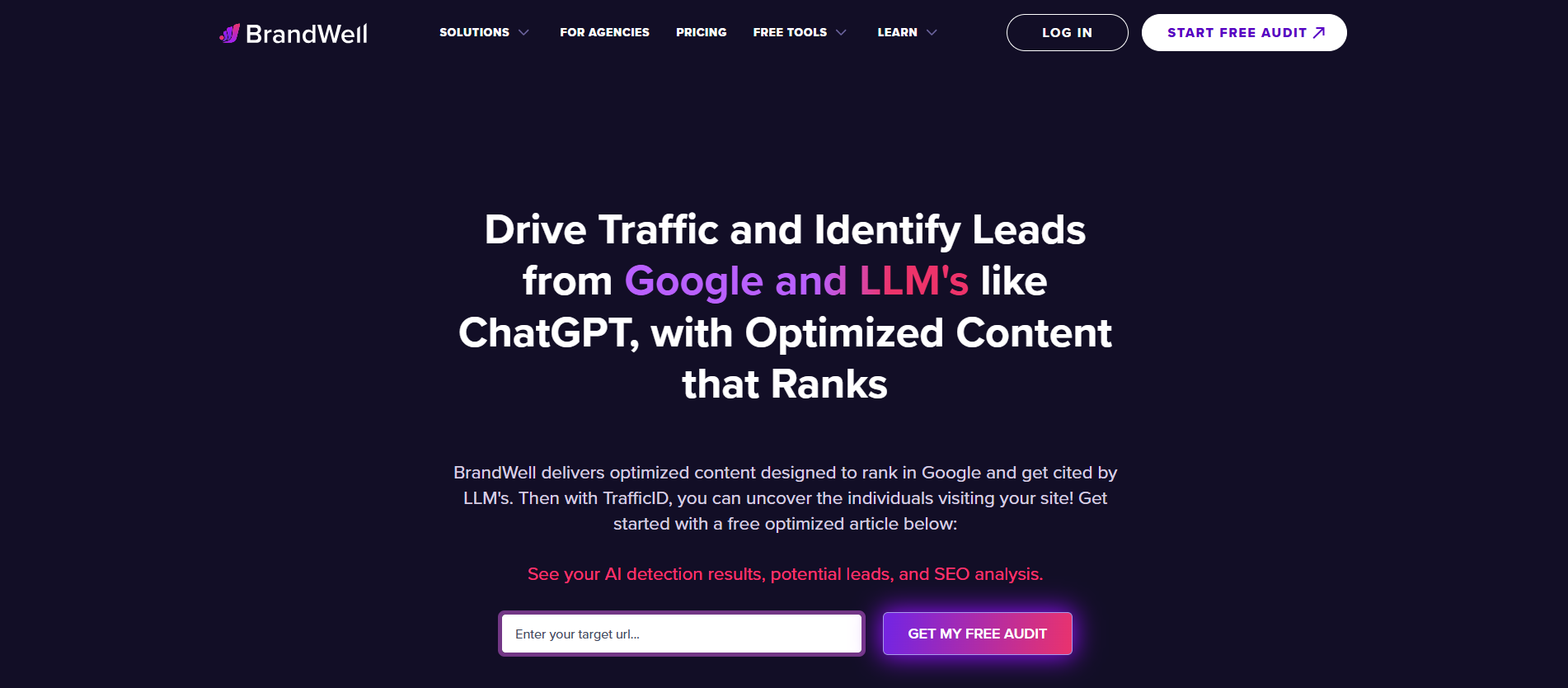
So what does that have to do with AI image detection? Well… technically, nothing. The AI image detector is more of an add-on, not one of its core flagship tools. It’s a full-stack content engine.
But because they already work heavily with AI, and because image generation is now tied to content workflows, they rolled out an AI Image Detection feature to help users verify the authenticity of media before publishing.
Question is, how well does it actually perform when placed side-by-side with TruthScan?
TruthScan vs. BrandWell: Which Spots AI Better?
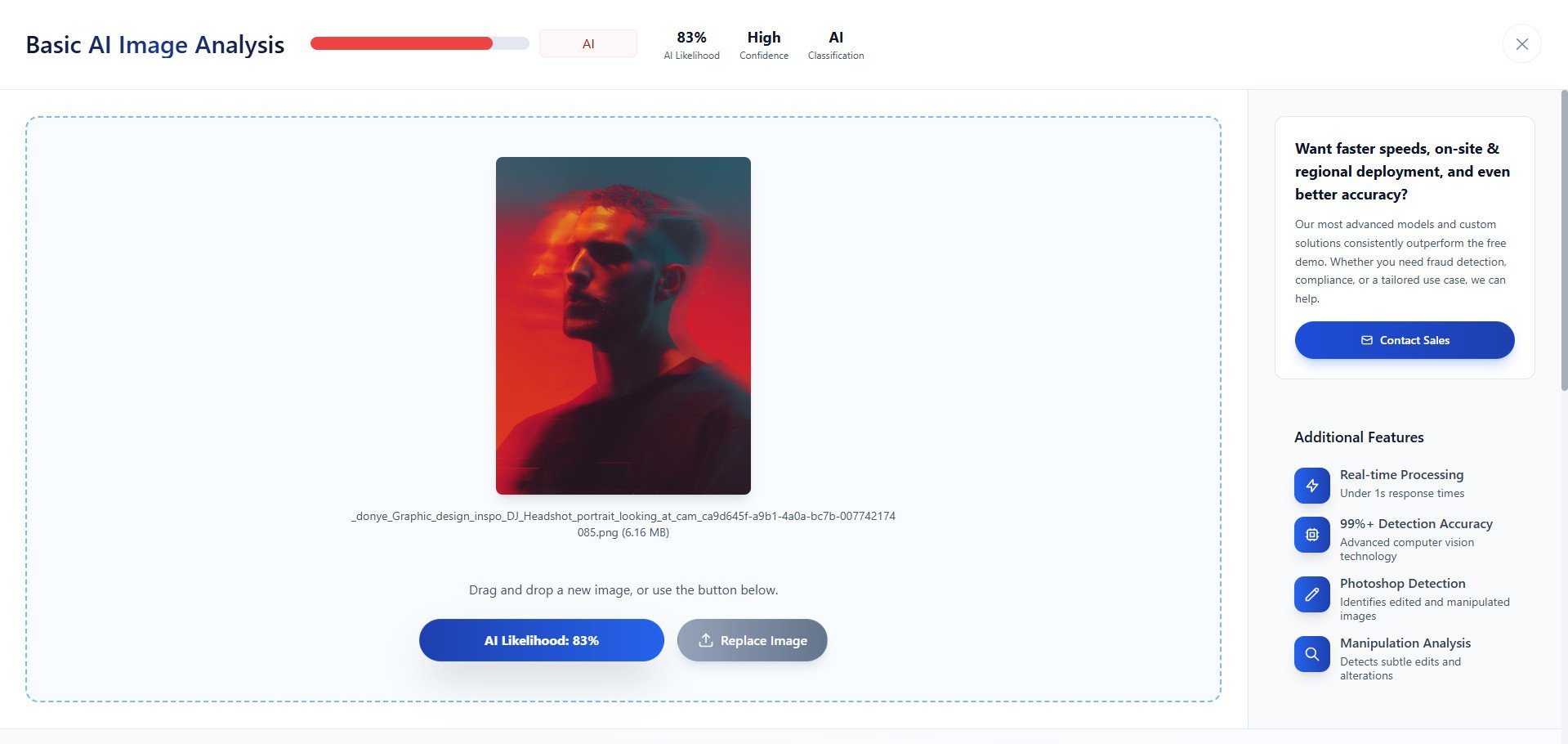
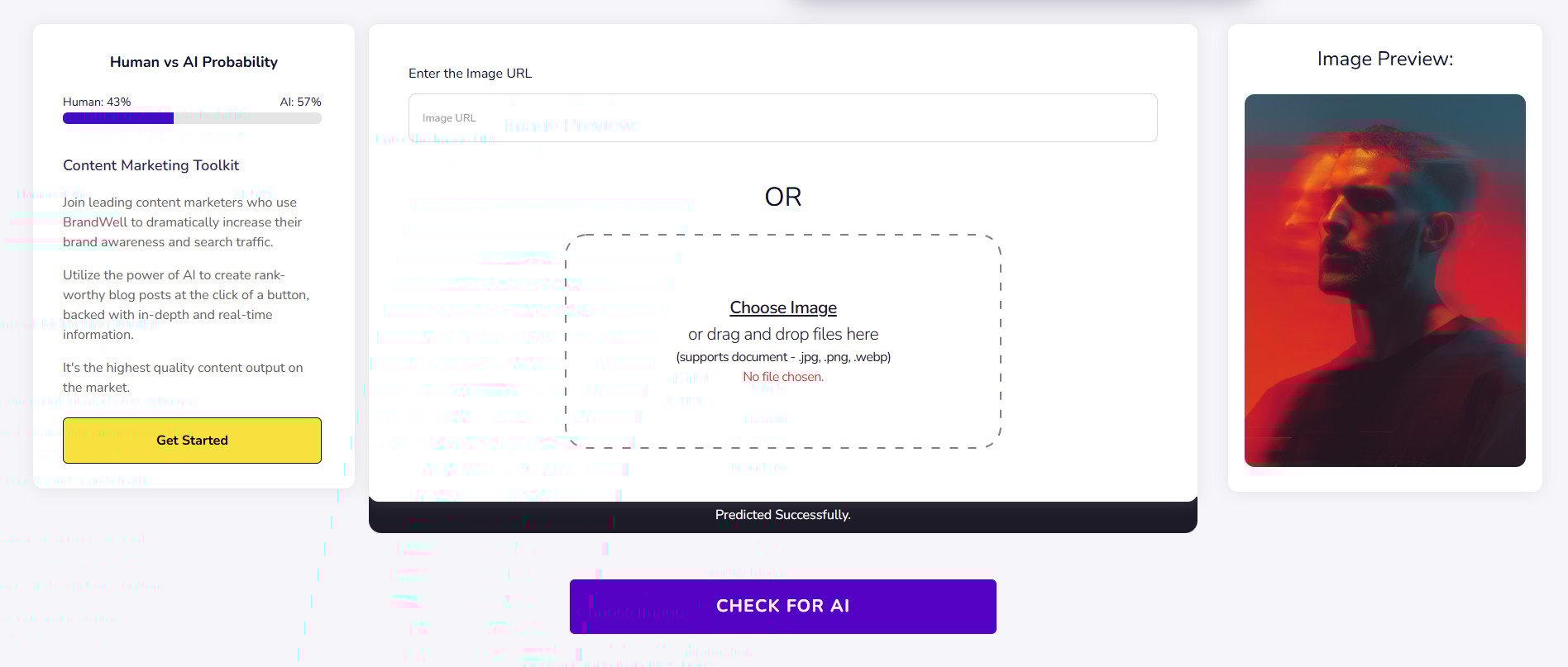
Test #1
Truthscan: Correctly classified image as AI-generated.
AI Likelihood Score: 83%
BrandWell: Detector unsure.
AI Likelihood Score: 57%
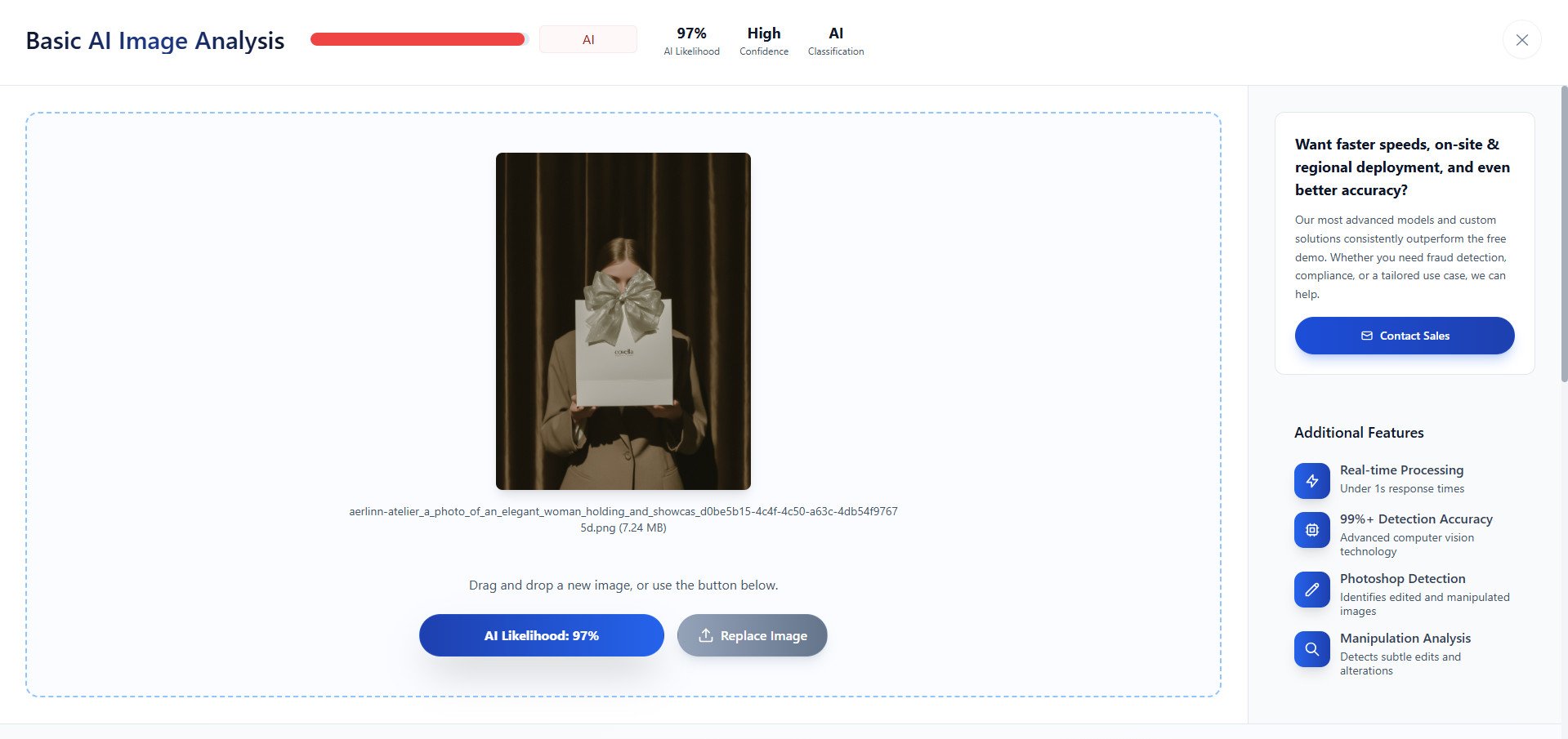
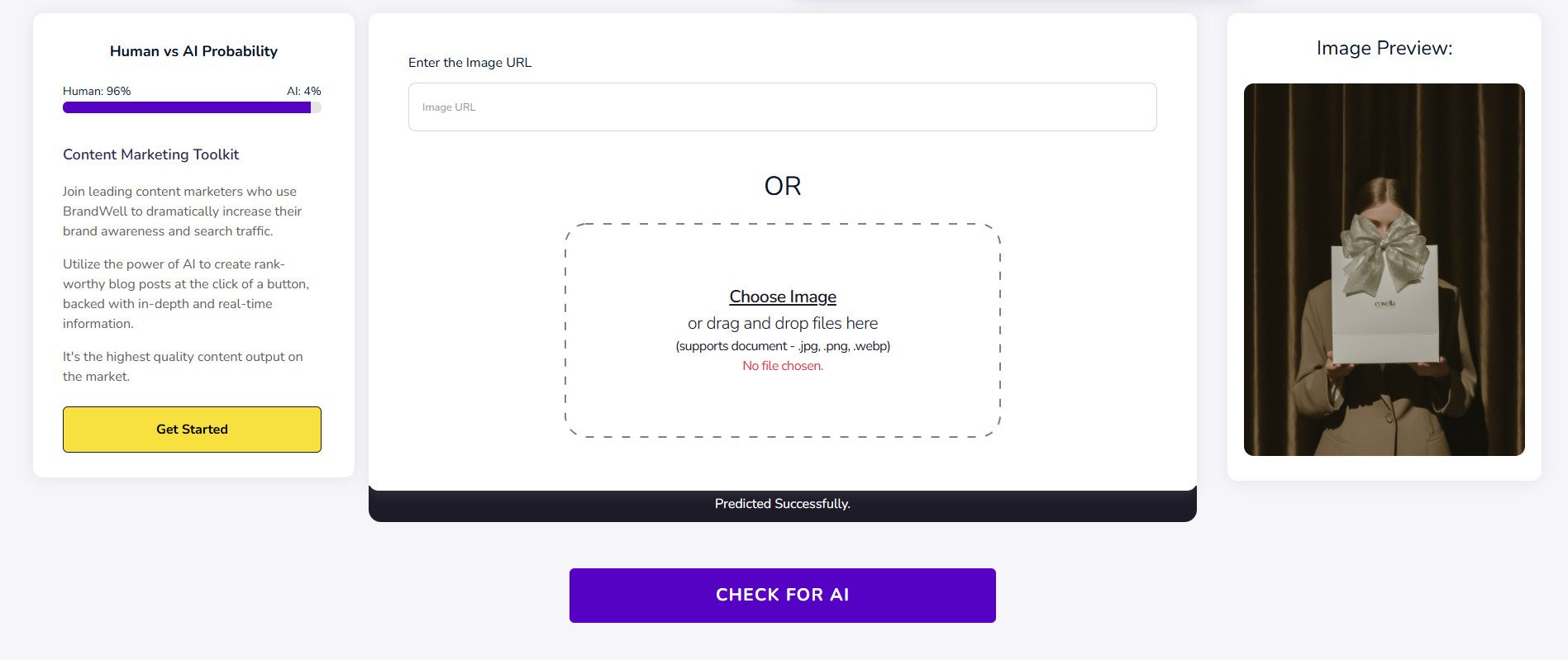
Test #2
Truthscan: Correctly classified image as AI-generated.
AI Likelihood Score: 97%
BrandWell: Incorrectly classified image as human.
AI Likelihood Score: 4%
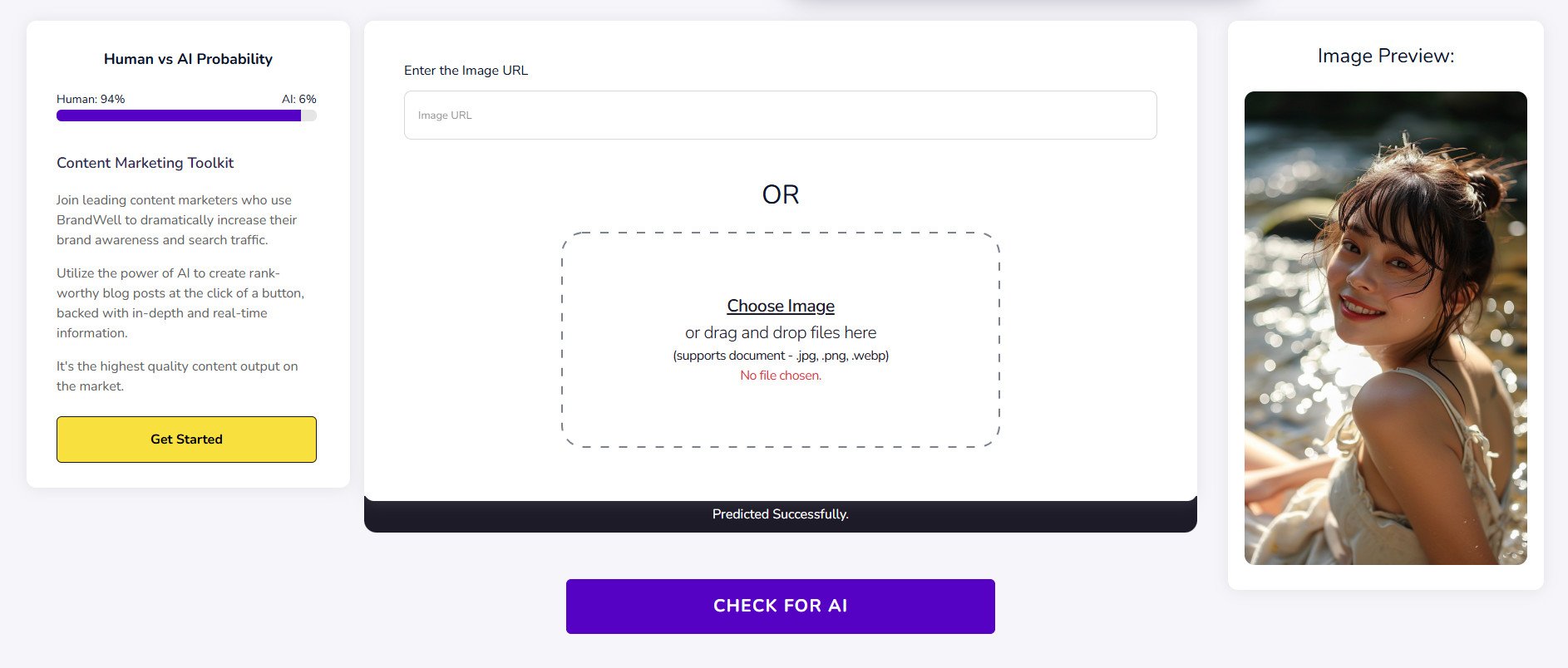
Test #3
Truthscan: Correctly classified image as AI-generated.
AI Likelihood Score: 98%
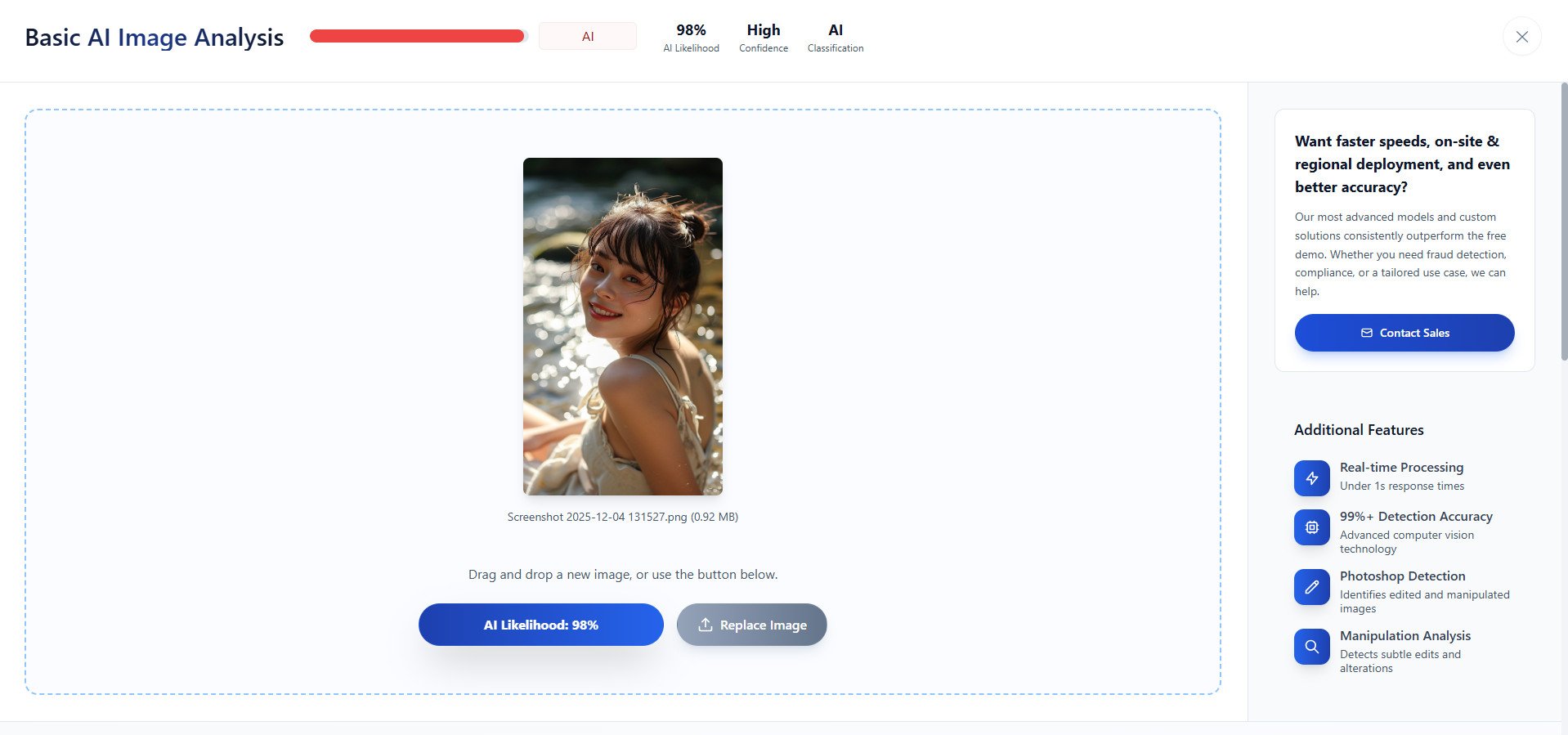
BrandWell: Incorrectly classified image as human.
AI Likelihood Score: 6%
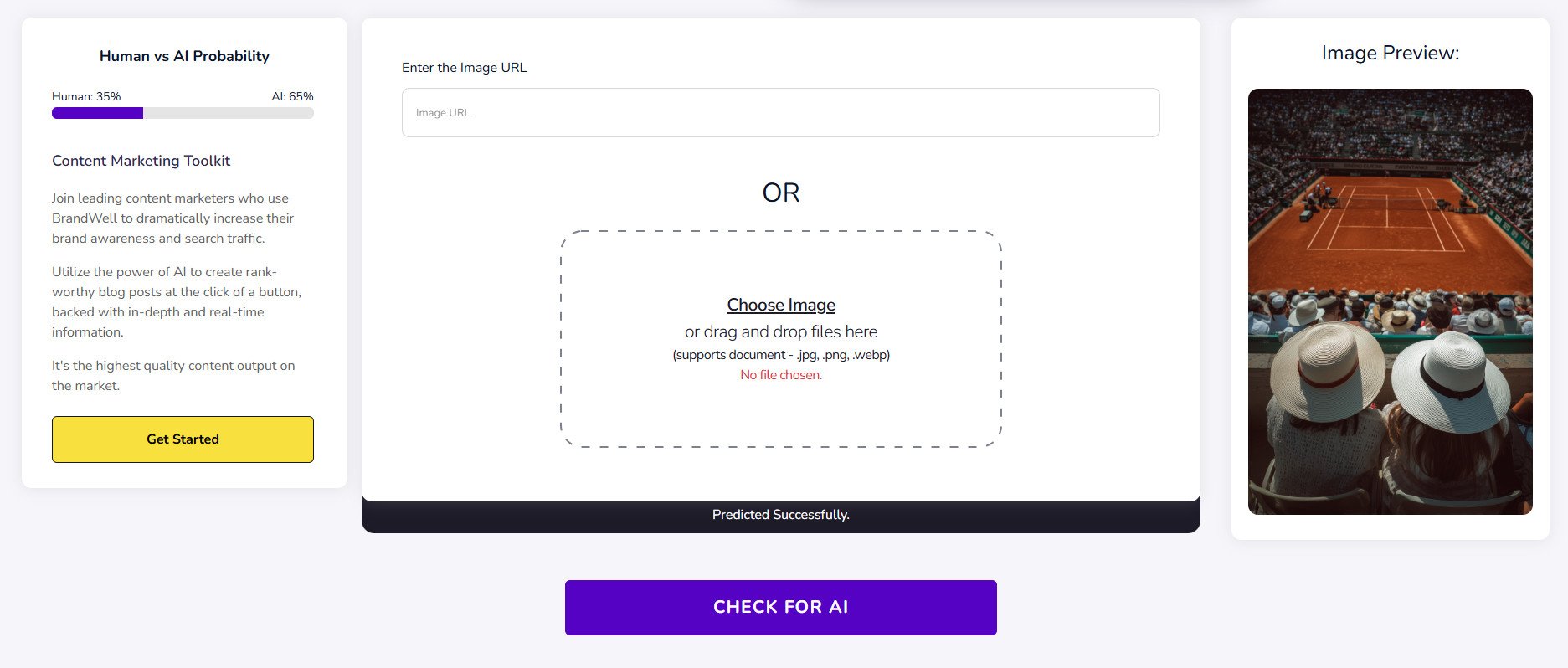
Test #4
Truthscan: Correctly classified image as AI-generated.
AI Likelihood Score: 97%
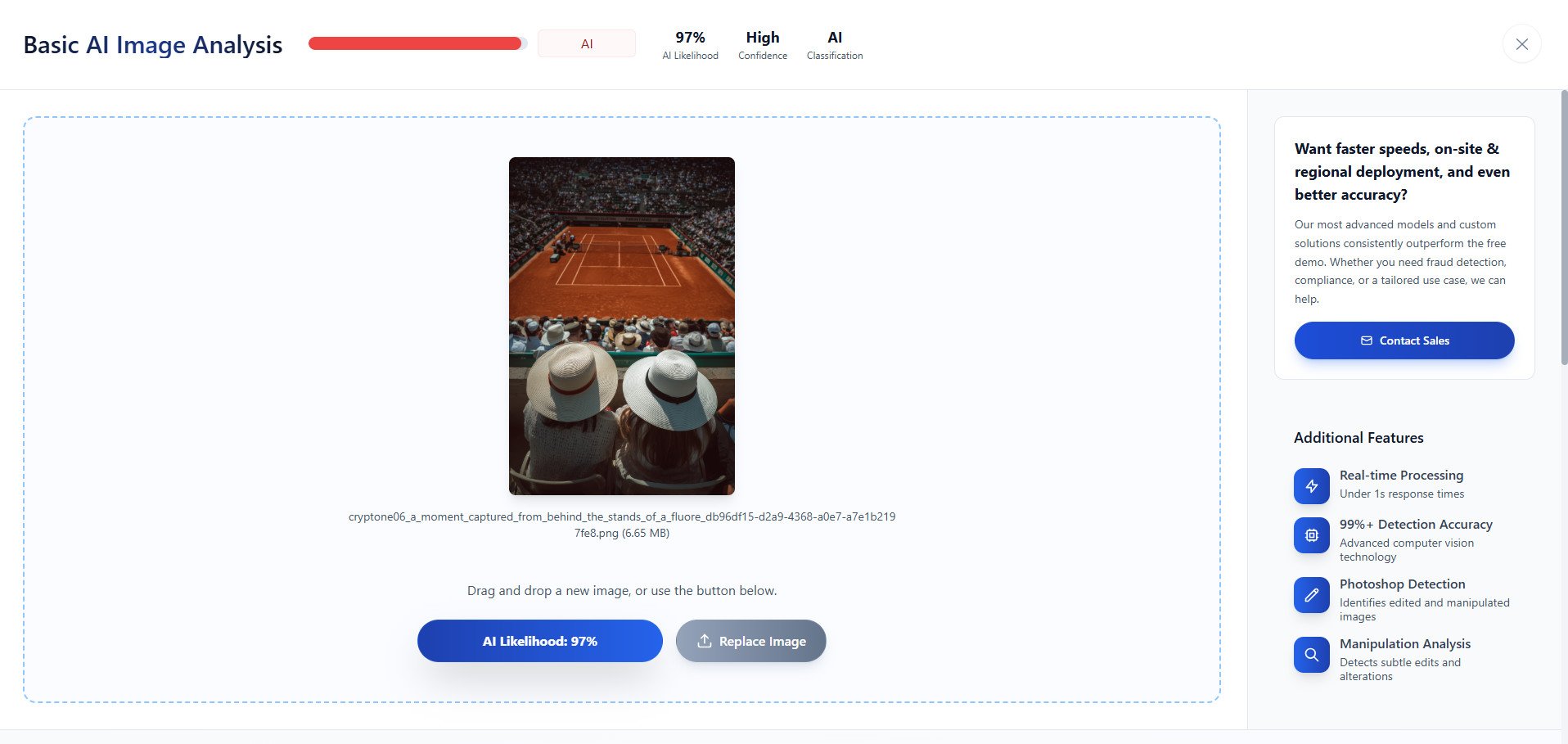
BrandWell: Correctly classified image as AI-generated.
AI Likelihood Score: 65%
Test #5
Truthscan: Correctly classified image as AI-generated.
AI Likelihood Score: 99%
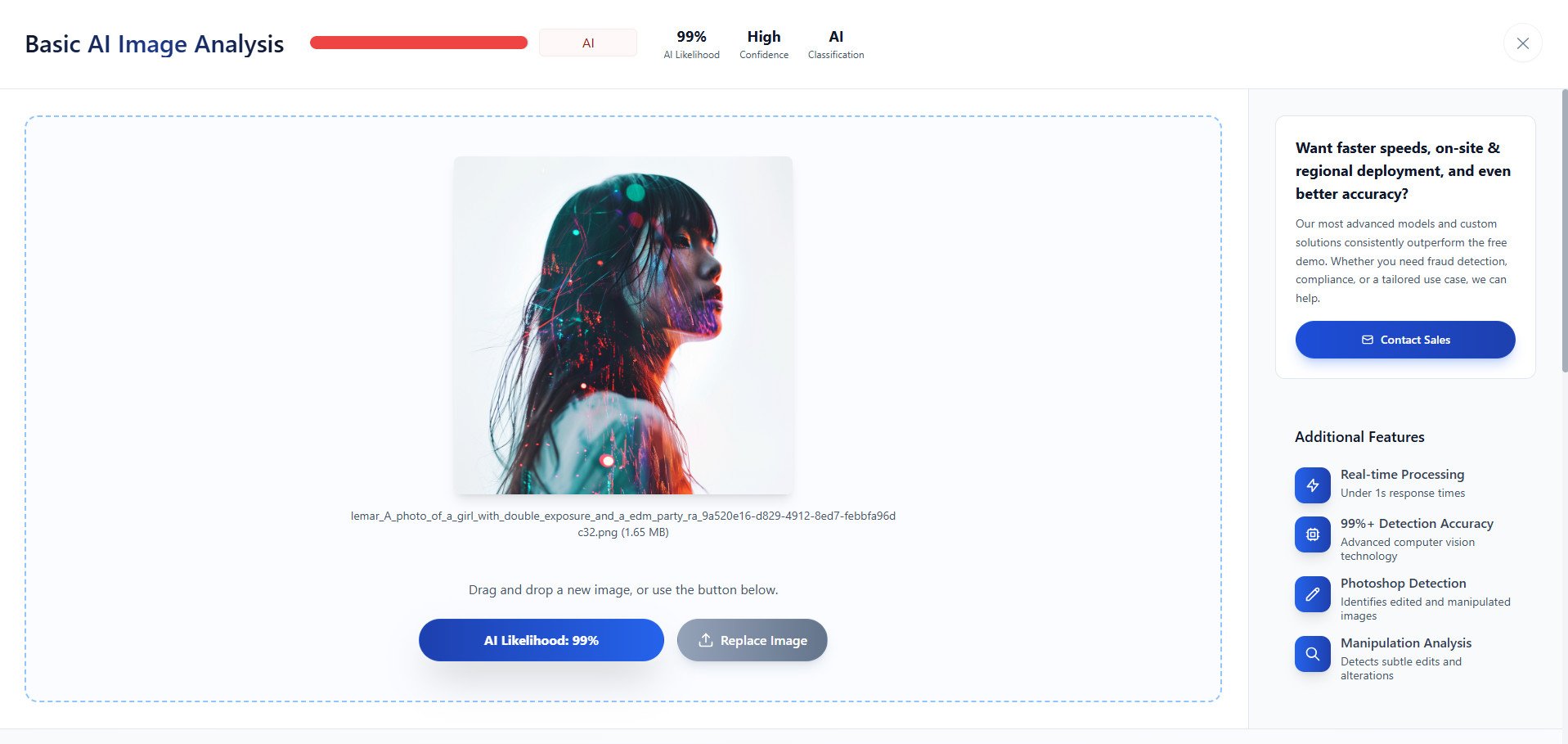
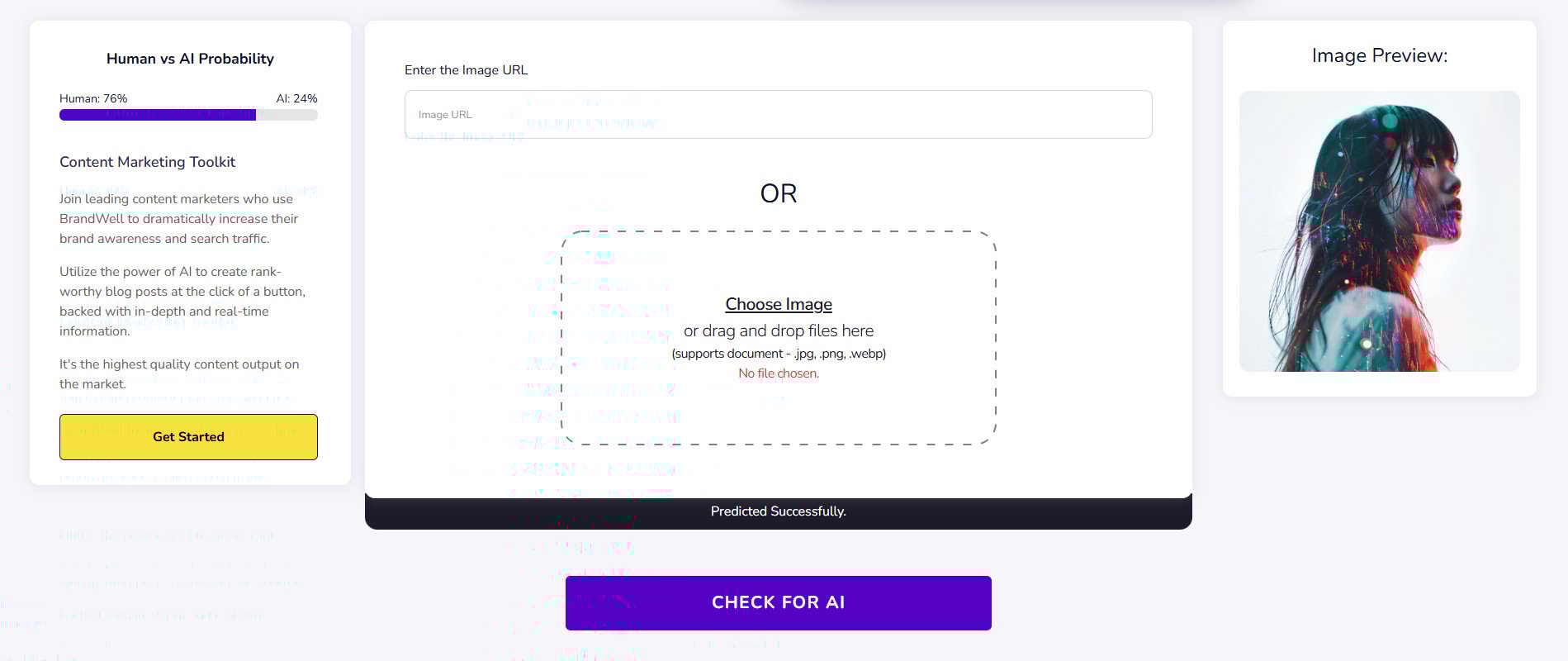
BrandWell: Incorrectly classified image as human.
AI Likelihood Score: 24%
Test #6
Truthscan: Correctly classified image as AI-generated.
AI Likelihood Score: 99%
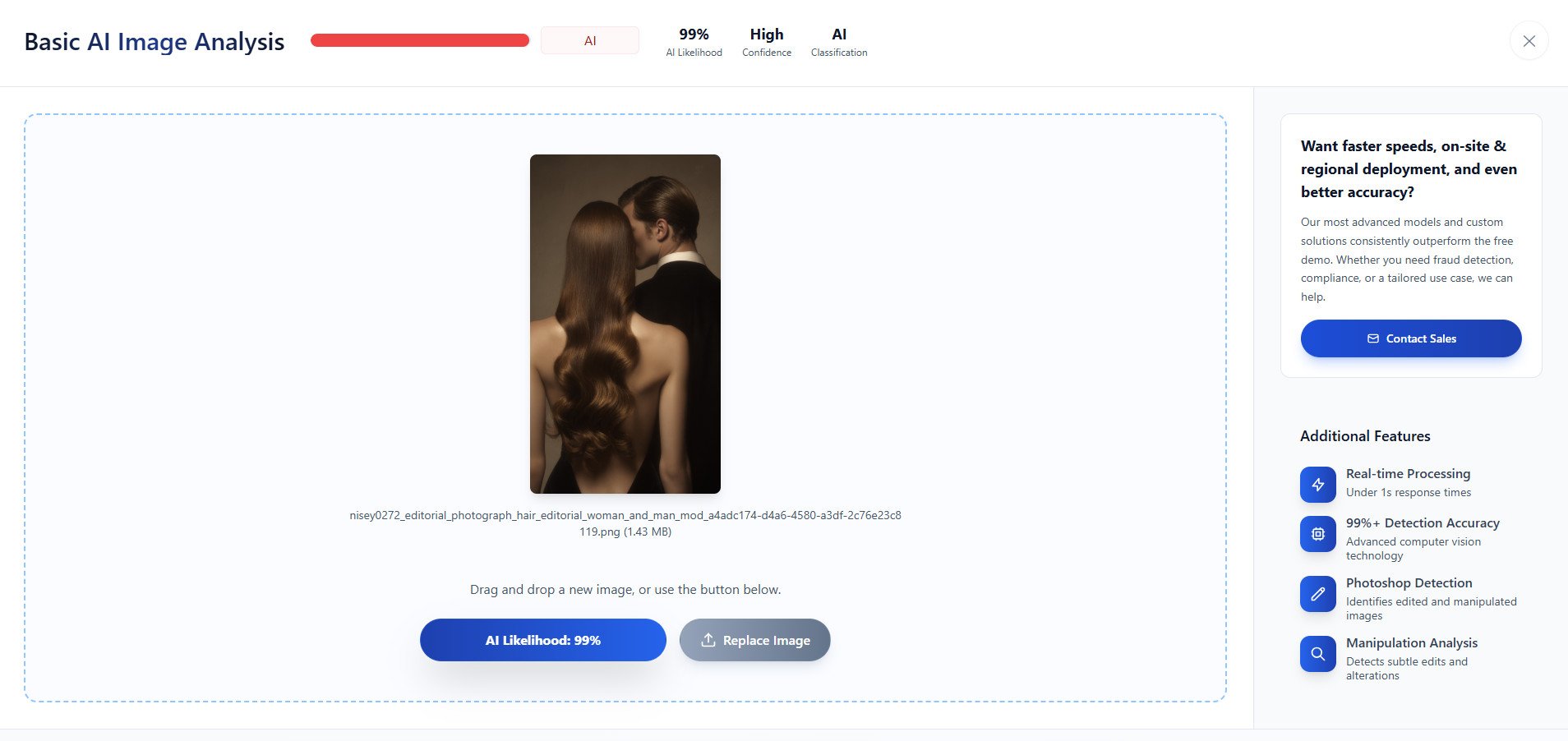
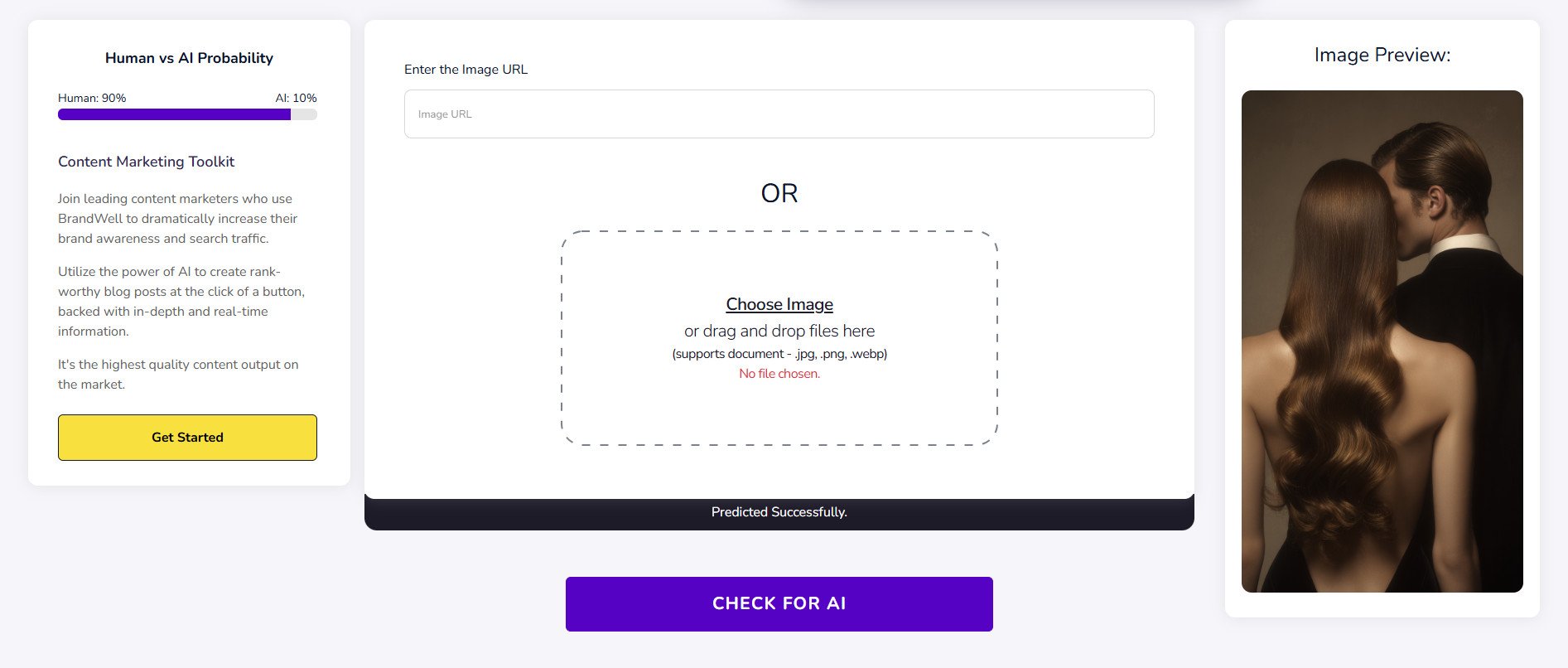
BrandWell: Incorrectly classified image as human.
AI Likelihood Score: 10%
Test #7
Truthscan: Correctly classified image as AI-generated.
AI Likelihood Score: 97%
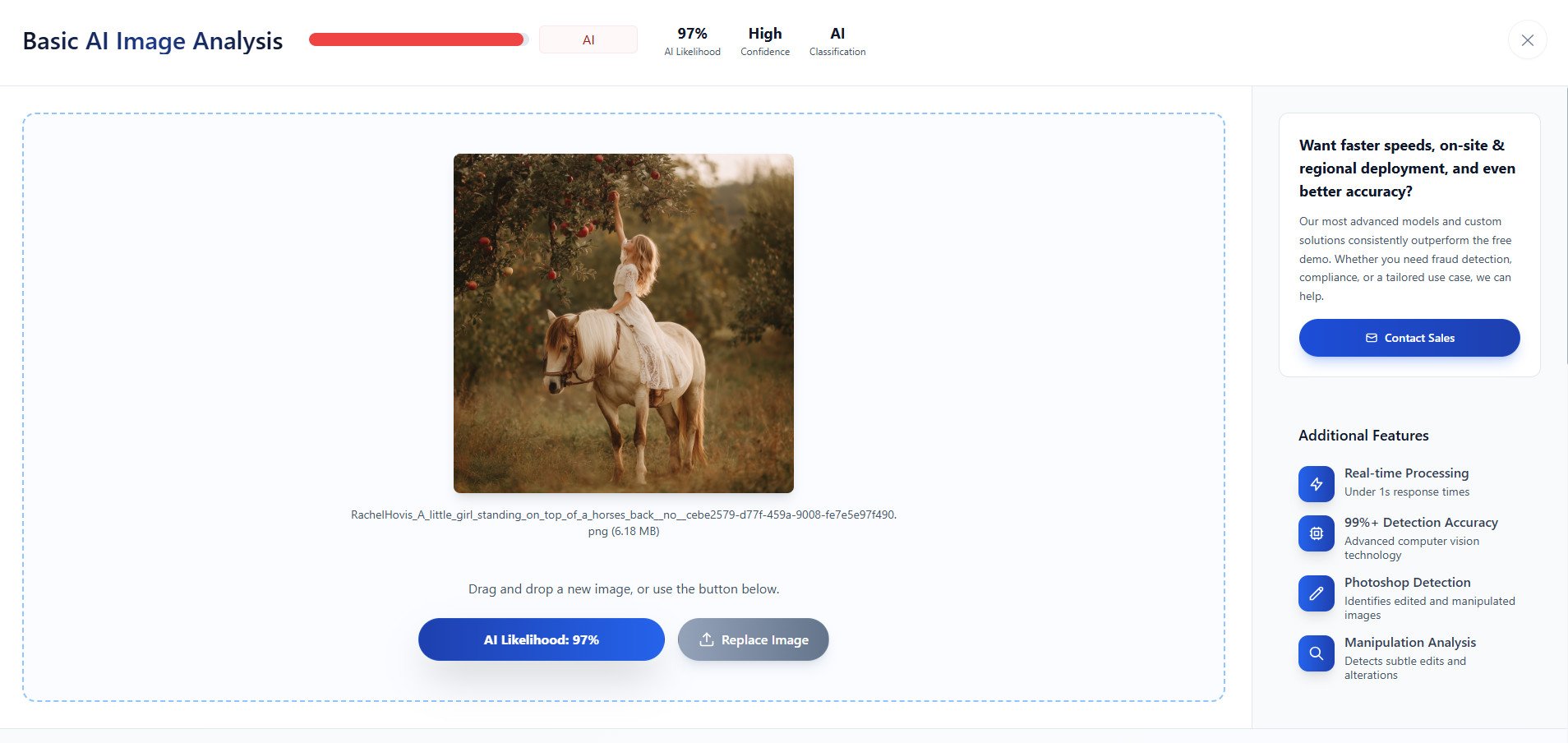
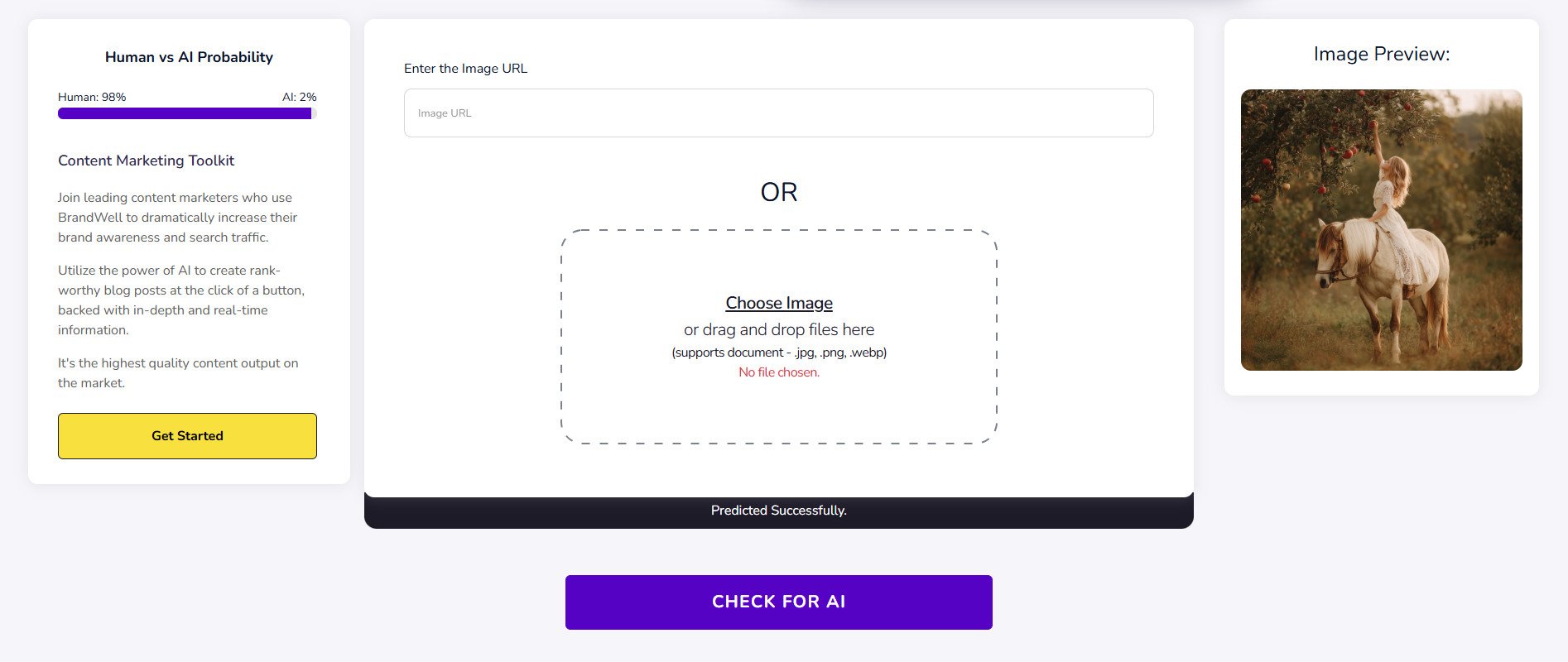
BrandWell: Incorrectly classified image as human.
AI Likelihood Score: 2%
Average Score
Test Number | TruthScan | AI Or Not |
#1 | 83% | 57% |
#2 | 97% | 4% |
#3 | 98% | 6% |
#4 | 97% | 65% |
#5 | 99% | 24% |
#6 | 99% | 10% |
#7 | 97% | 2% |
Score | 95.71% | 24% |
Bottom Line
After running both tools through the same set of images, the gap was just massive.
TruthScan landed a 95.7% accuracy score, which honestly didn’t surprise me. It’s built for this. Image forensics, deepfake detection, media authenticity — that’s its core identity. When you use a tool created specifically for AI detection, you expect high performance, and TruthScan delivered exactly that.
BrandWell, on the other hand, scored 24% accuracy.
Is that low? Yes.
But to be fair, BrandWell was never designed to compete with forensic-grade detectors. Its AI image detection tool is more of a bonus feature inside a much larger SEO and content-marketing engine. It’s there to help users sanity-check images before publishing — not to become the gold standard of authenticity verification.
So here’s the honest takeaway:
If you need a quick, built-in detector while working on content inside the BrandWell ecosystem, their tool gets the job done at a very basic level. But if you actually care about whether an image is AI-generated — and you need results you can trust — TruthScan is multiple leagues ahead.
Want to Learn Even More?
If you enjoyed this article, subscribe to our free newsletter where we share tips & tricks on how to use tech & AI to grow and optimize your business, career, and life.