TruthScan vs. DeepDetect: Which Detects AI Images Better?
Enterprise-grade claims meet real-world image testing — and the gap between TruthScan and DeepDetect is wider than expected.

John Angelo Yap
Updated February 17, 2026
The deepfake office, generated with Gemini
Reading Time: 4 minutes
Lately, I’ve been noticing more and more AI-generated images online, especially on social media apps like TikTok. Between generative models getting better by the month and fake visuals spreading faster than context can catch up, being able to tell whether an image is real, AI-generated, or manipulated actually matters now — not just theoretically.
That said, not every tool that can detect AI images was built to do that as its primary job. Some platforms are laser-focused on AI authenticity. Others approach it as one capability among many. This comparison falls squarely into that second category.
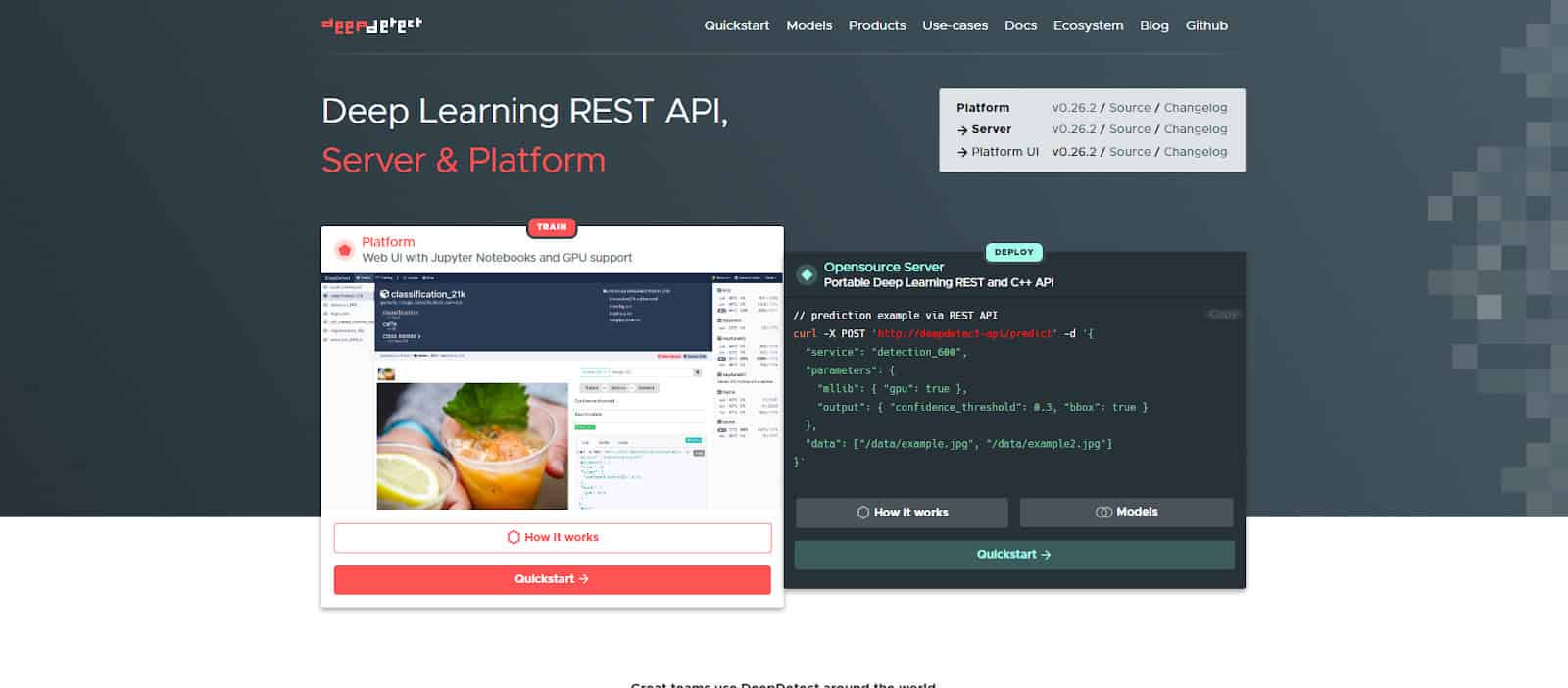
On one side, you have TruthScan, a platform built around AI detection across images, text, video, voice, and deepfakes. On the other, DeepDetect, an open-source machine learning framework that happens to include AI image detection as part of a much larger toolkit.
They’re both capable. They’re both technical. But they’re trying to solve very different problems.
What is TruthScan?
TruthScan is a dedicated AI detection platform designed to answer one core question: Is this content real or AI-generated?

Rather than positioning itself as a general-purpose machine learning framework, TruthScan focuses specifically on AI authenticity. Its image detector is part of a broader detection suite that also includes AI text detection, deepfake video analysis, voice detection, real-time monitoring, and email scam detection.
What stands out about TruthScan is how opinionated it is. It’s not trying to be everything. It’s trying to be good at one thing — identifying AI-generated or manipulated content quickly, at scale, and with minimal friction.
From a user perspective, that shows up in a few ways:
- You don’t need to train models.
- You don’t need to tune parameters.
- You don’t need to think about architecture choices.
You upload an image (or send it via API), and you get a verdict. That simplicity is very intentional.
What is DeepDetect?
DeepDetect lives in a completely different universe.
At its core, DeepDetect is an open-source machine learning server designed to help developers deploy, train, and manage deep learning models across a wide range of data types — images, text, audio, video, and even tabular time-series data.
AI image detection exists within DeepDetect, but it’s not the headline feature. It’s more accurate to say that DeepDetect gives you the building blocks to create an AI image detector, rather than a polished detection product out of the box.
Some of DeepDetect’s key strengths include:
- Support for image tagging, object detection, segmentation, OCR, and classification
- A fast C++ server that works across cloud, desktop, and embedded environments
- Pre-trained models that reduce training time
- Full open-source access, allowing deep customization
They’re for developers, but if you’re not one: fortunately, DeepDetect still offers a web UI for less technical users.
TruthScan vs. DeepDetect: Testing Results
Test #1
TruthScan: Correctly classified image as AI-generated.
Confidence Score: 99%
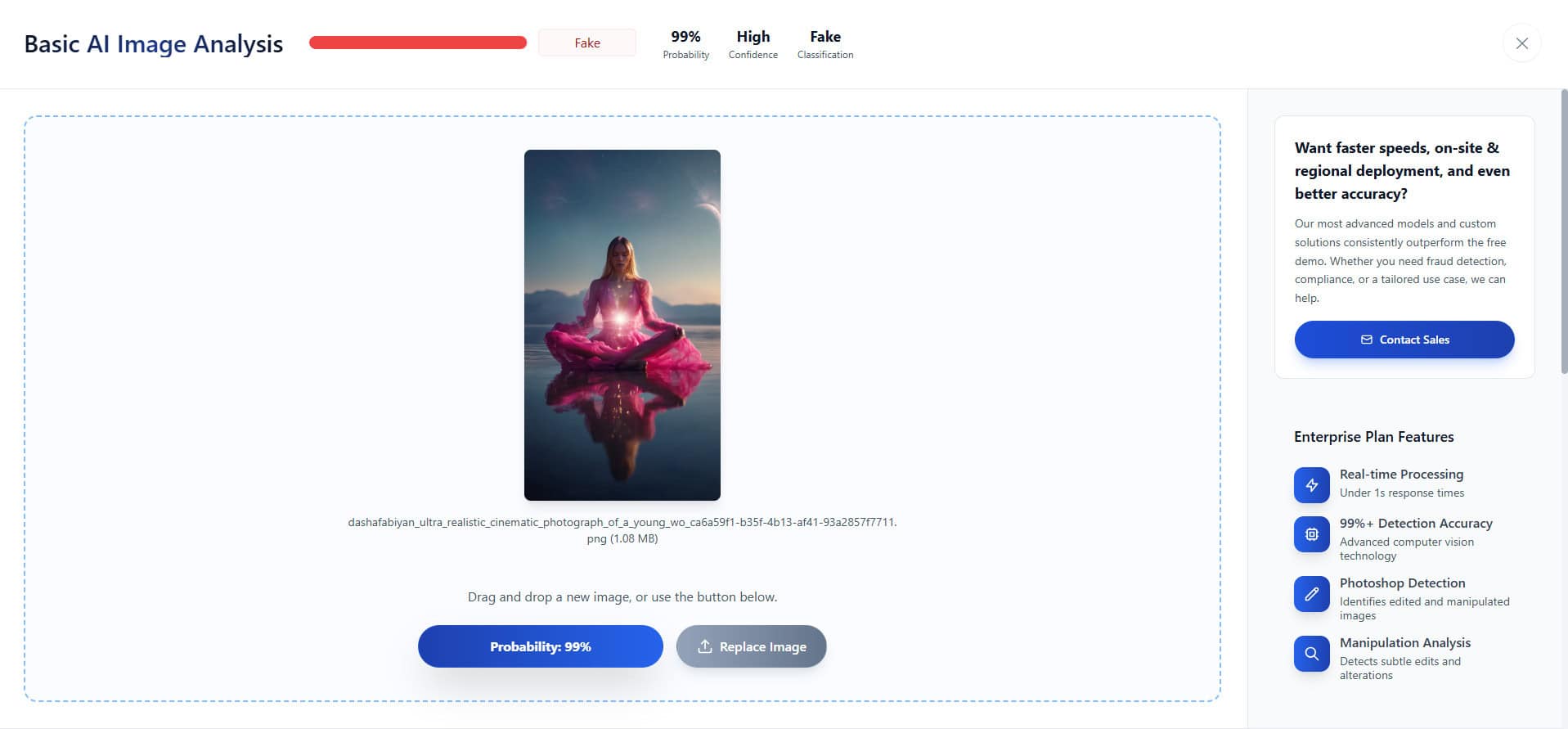
DeepDetect: Correctly classified image as AI-generated.
Confidence Score: 95%

Test #2
TruthScan: Correctly classified image as AI-generated.
Confidence Score: 99%
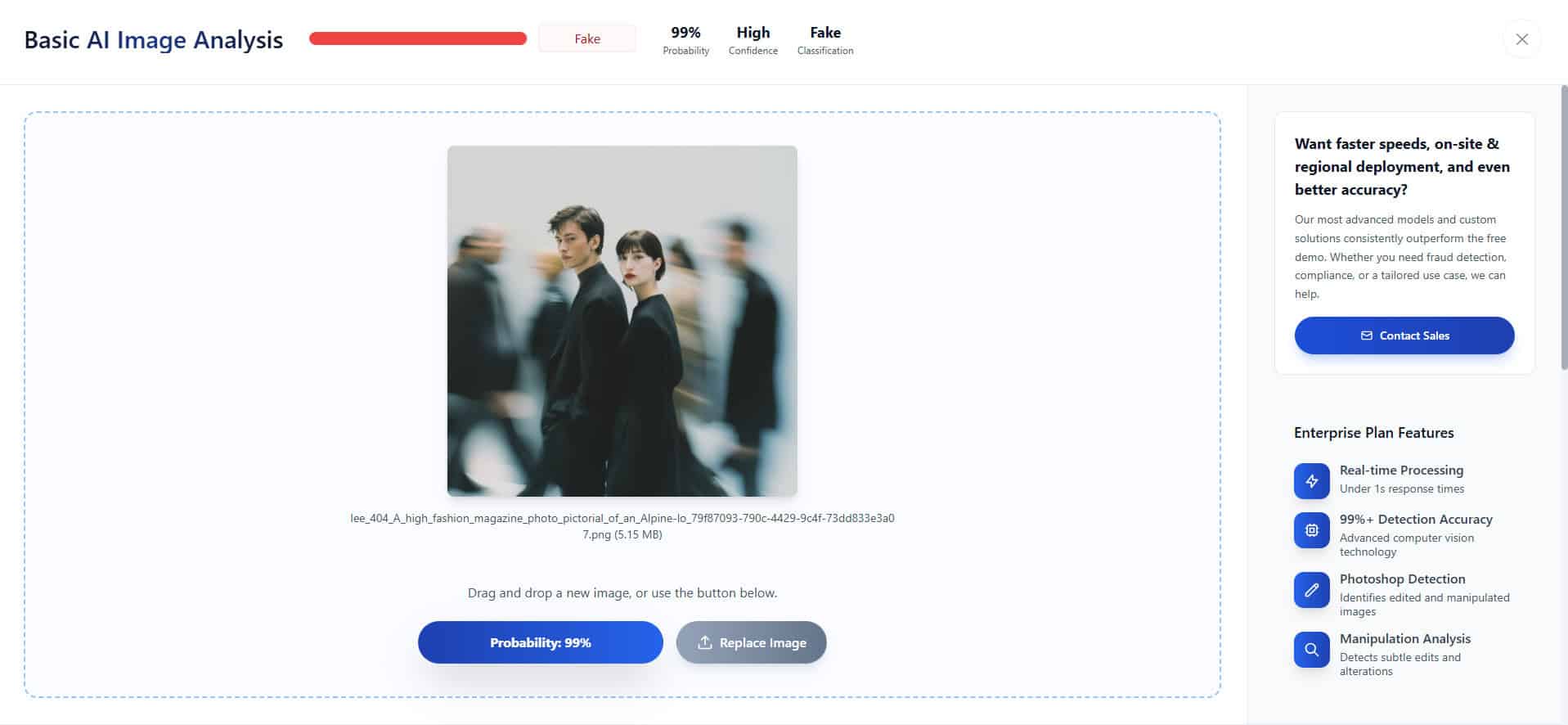
DeepDetect: Correctly classified image as AI-generated.
Confidence Score: 75%
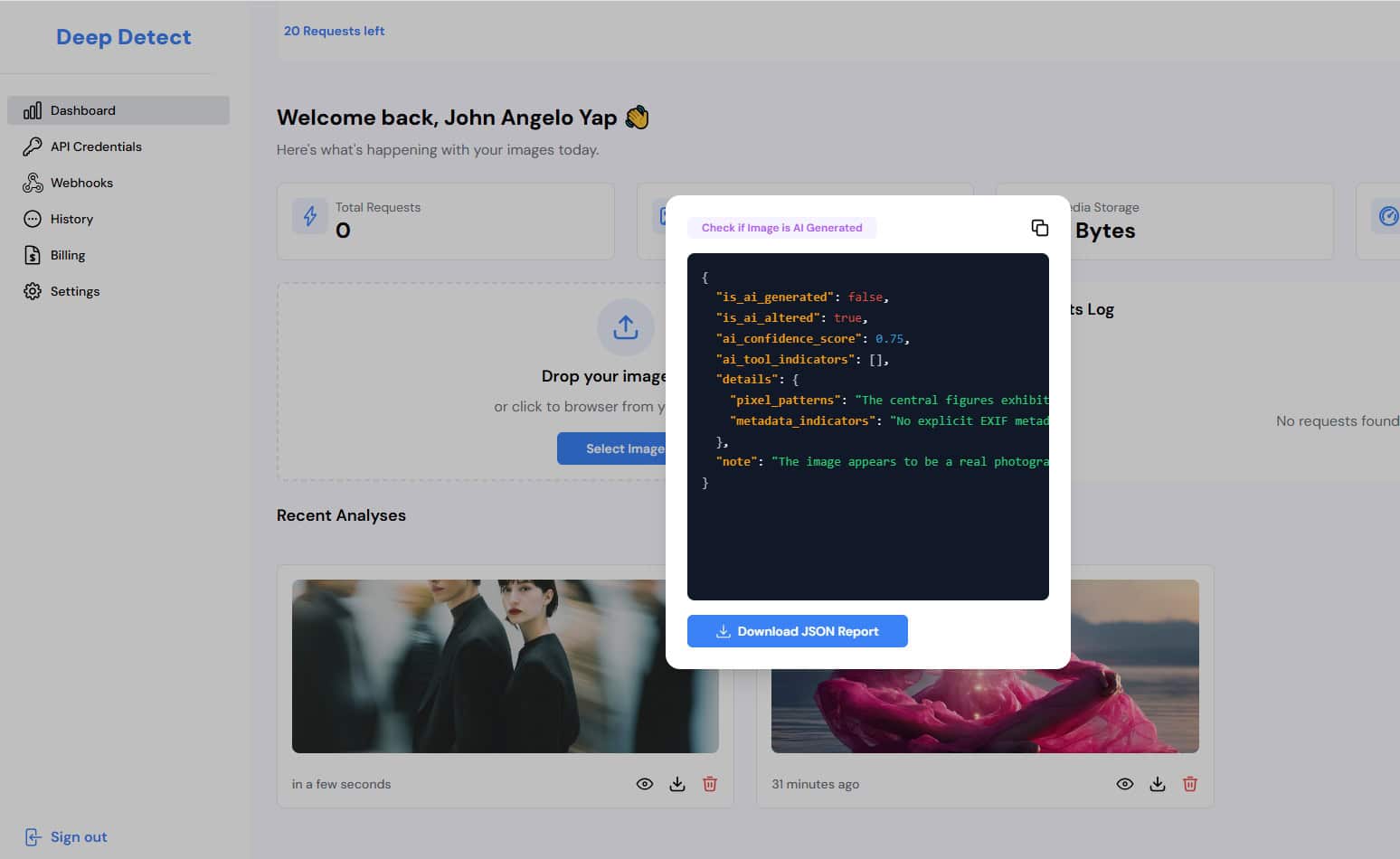
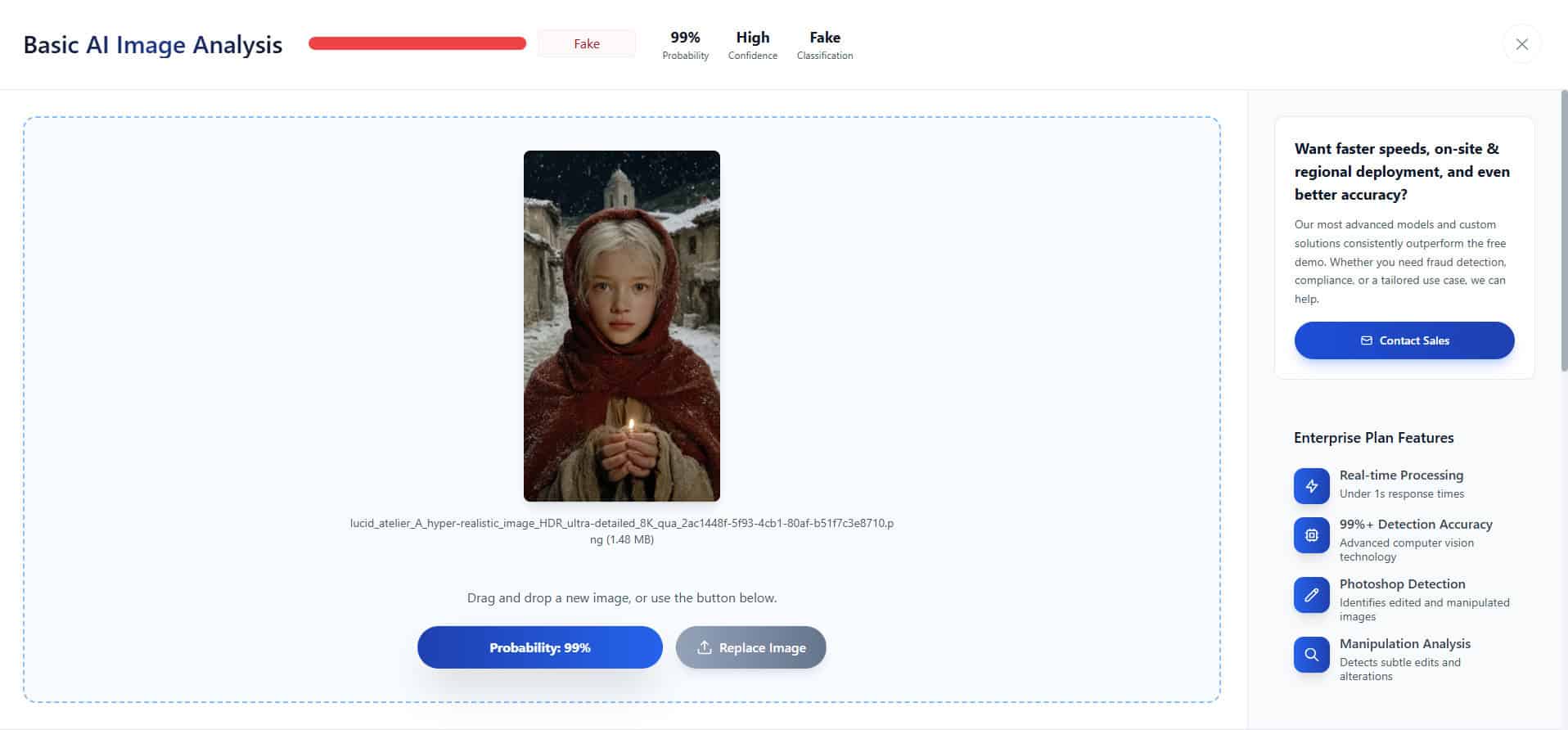
Test #3
TruthScan: Correctly classified image as AI-generated.
Confidence Score: 99%
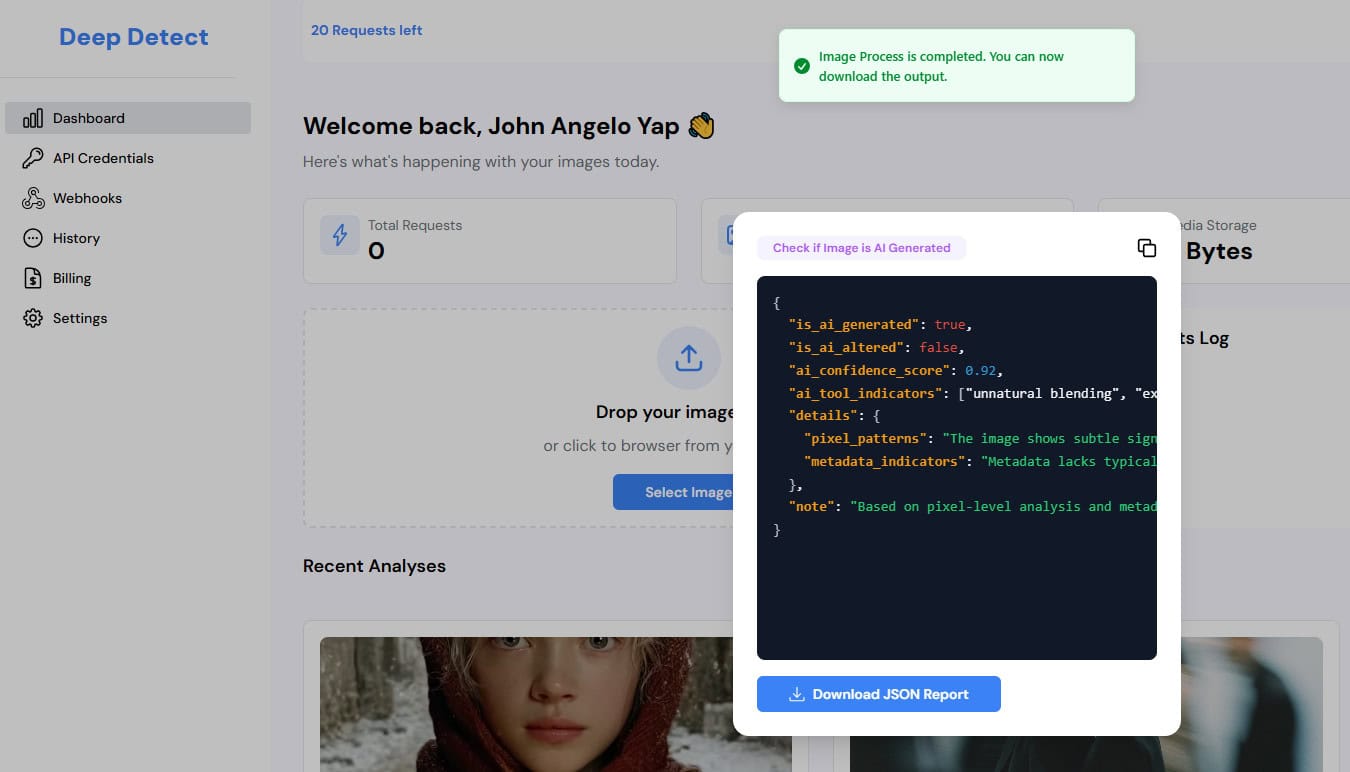
DeepDetect: Correctly classified image as AI-generated.
Confidence Score: 92%
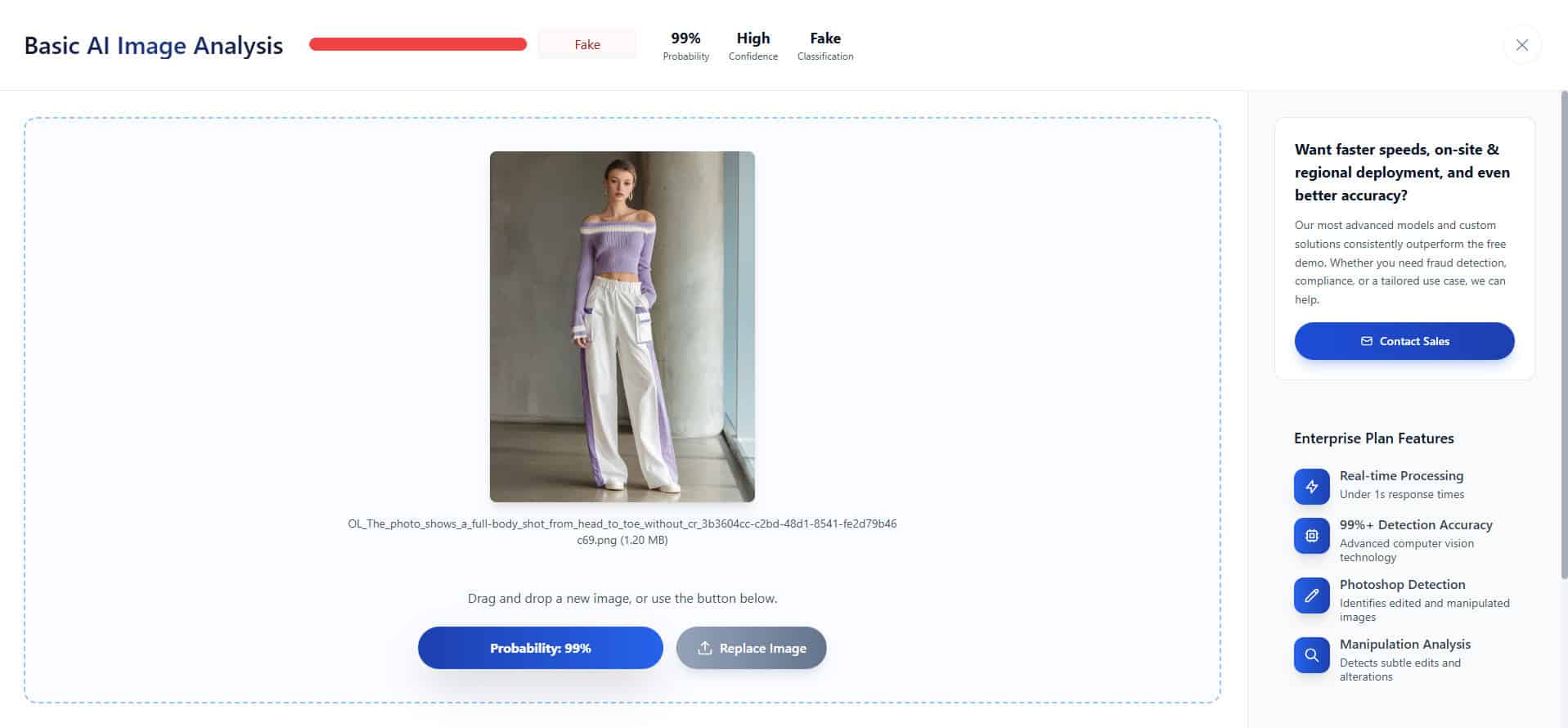
Test #4
TruthScan: Correctly classified image as AI-generated.
Confidence Score: 99%
DeepDetect: Incorrect classified image as human-created.
Confidence Score: 10%
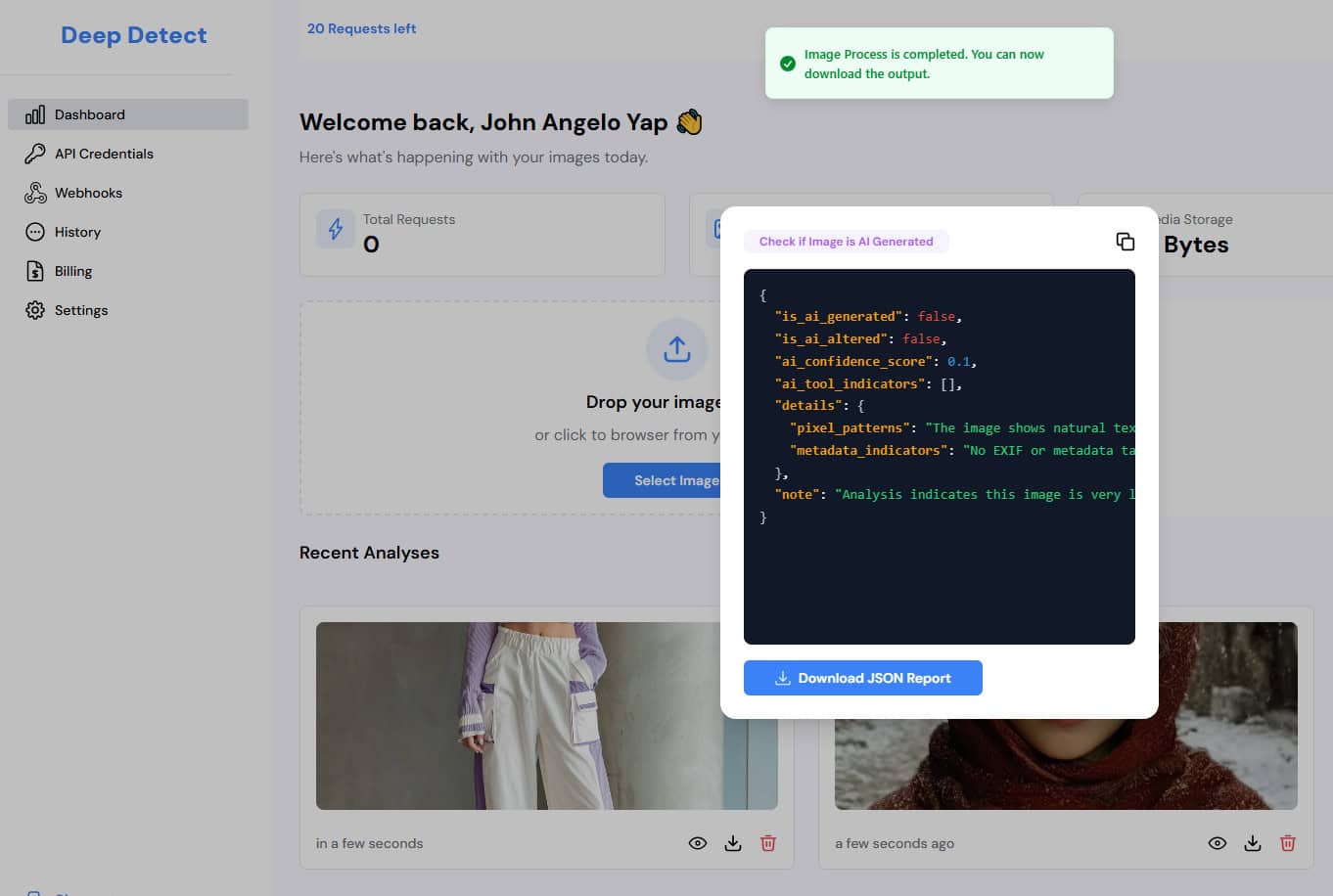
Test #5
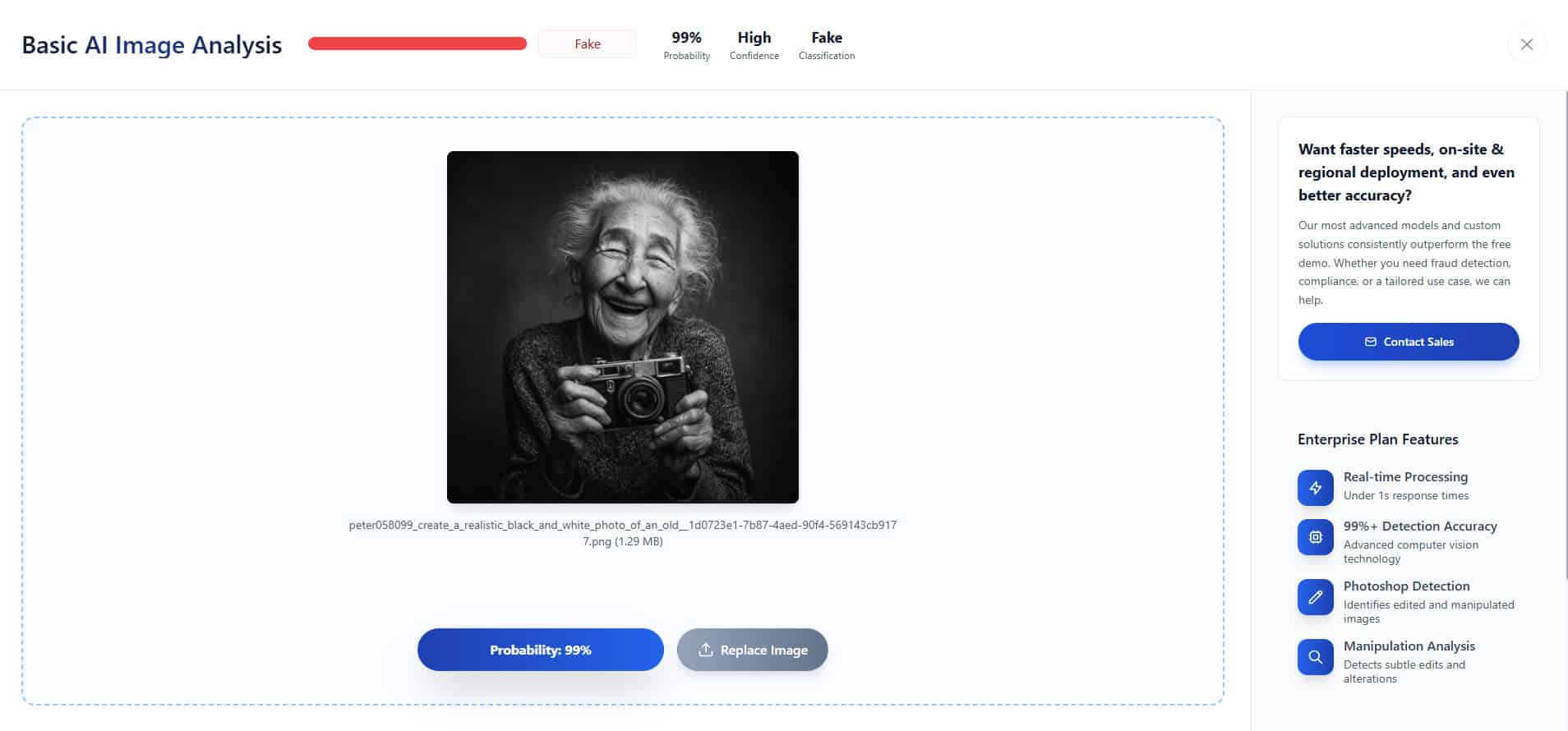
TruthScan: Correctly classified image as AI-generated.
Confidence Score: 99%
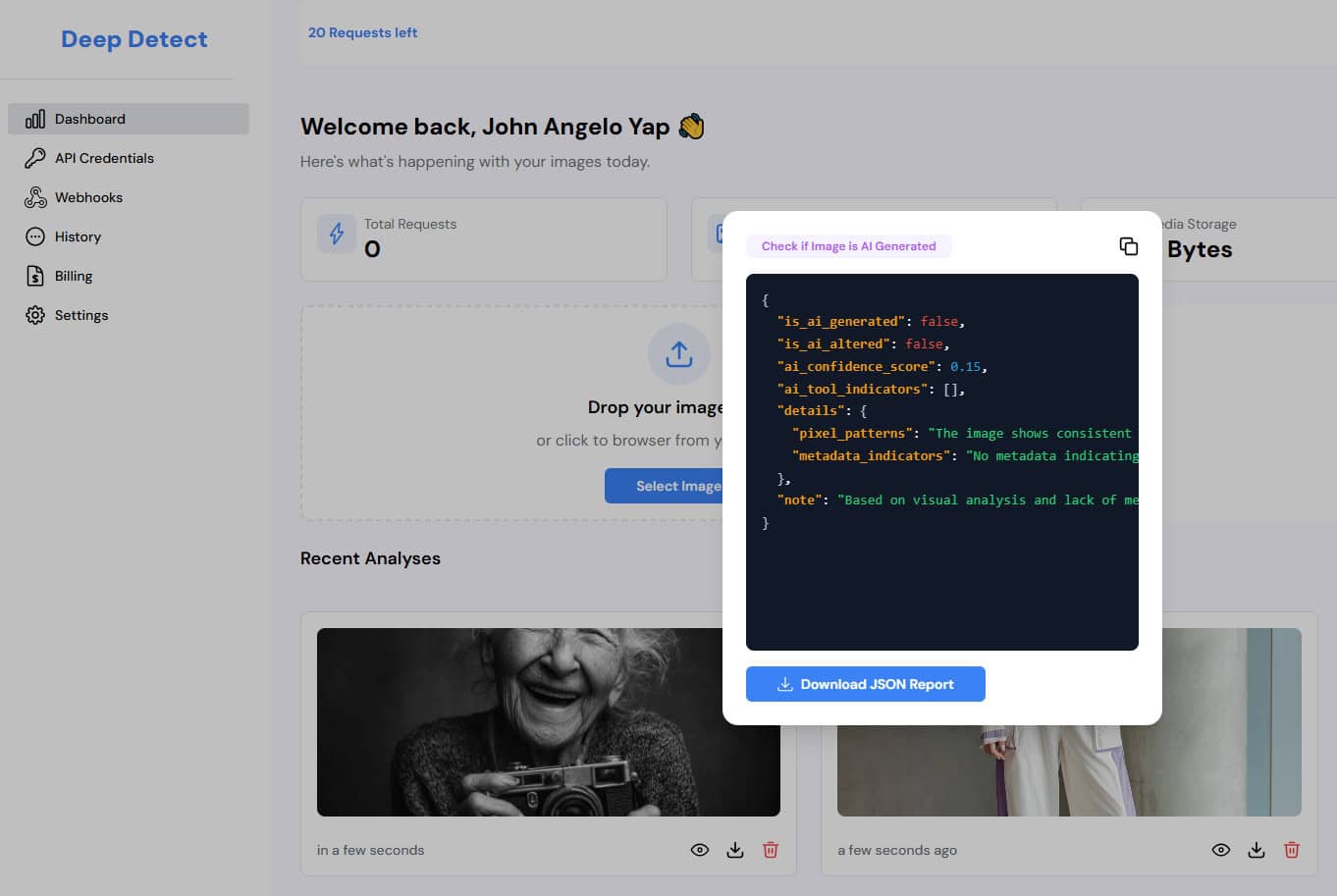
DeepDetect: Incorrect classified image as human-created.
Confidence Score: 15%
Test #6
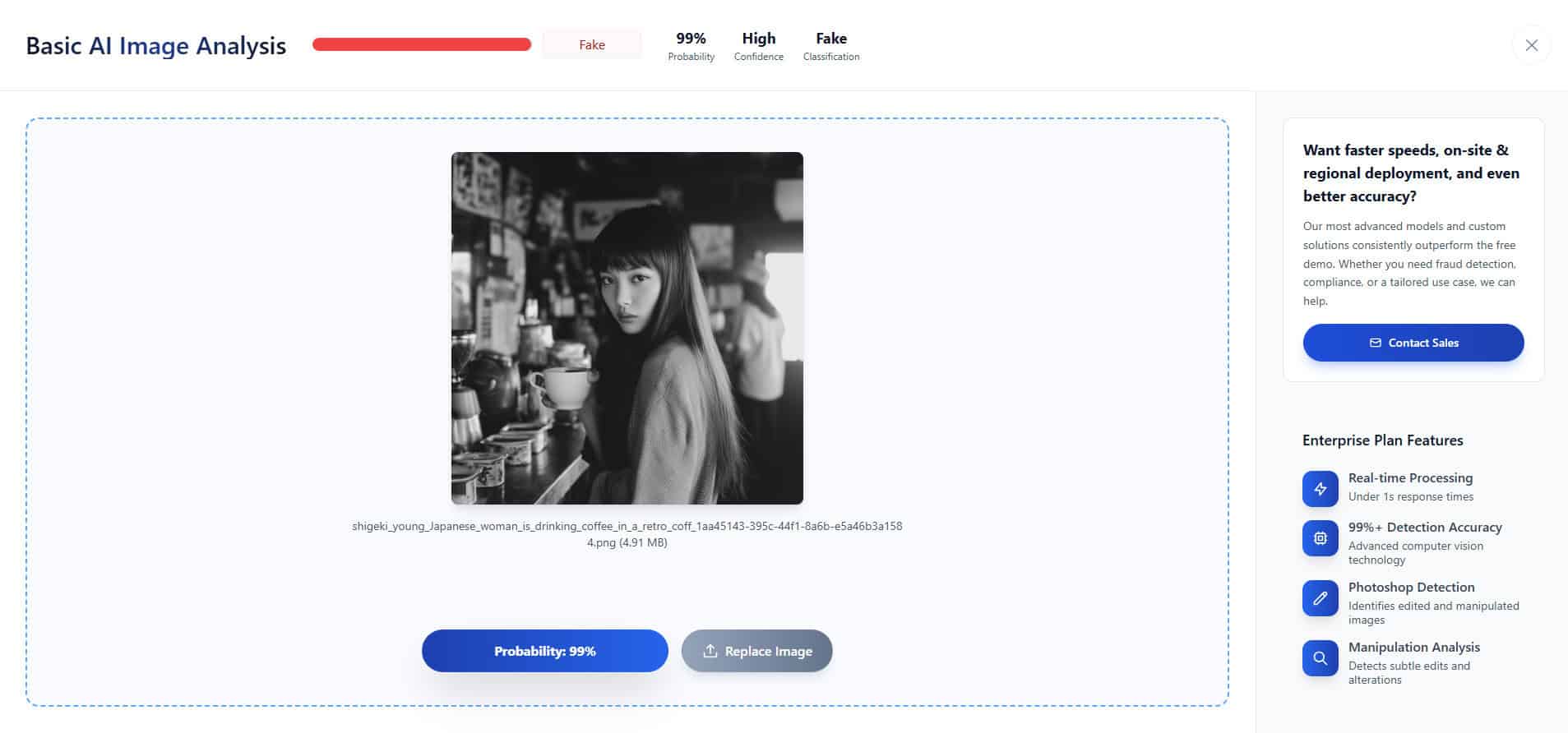
TruthScan: Correctly classified image as AI-generated.
Confidence Score: 99%
DeepDetect: Correctly classified image as AI-generated.
Confidence Score: 85%

Test #7
TruthScan: Correctly classified image as AI-generated.
Confidence Score: 99%
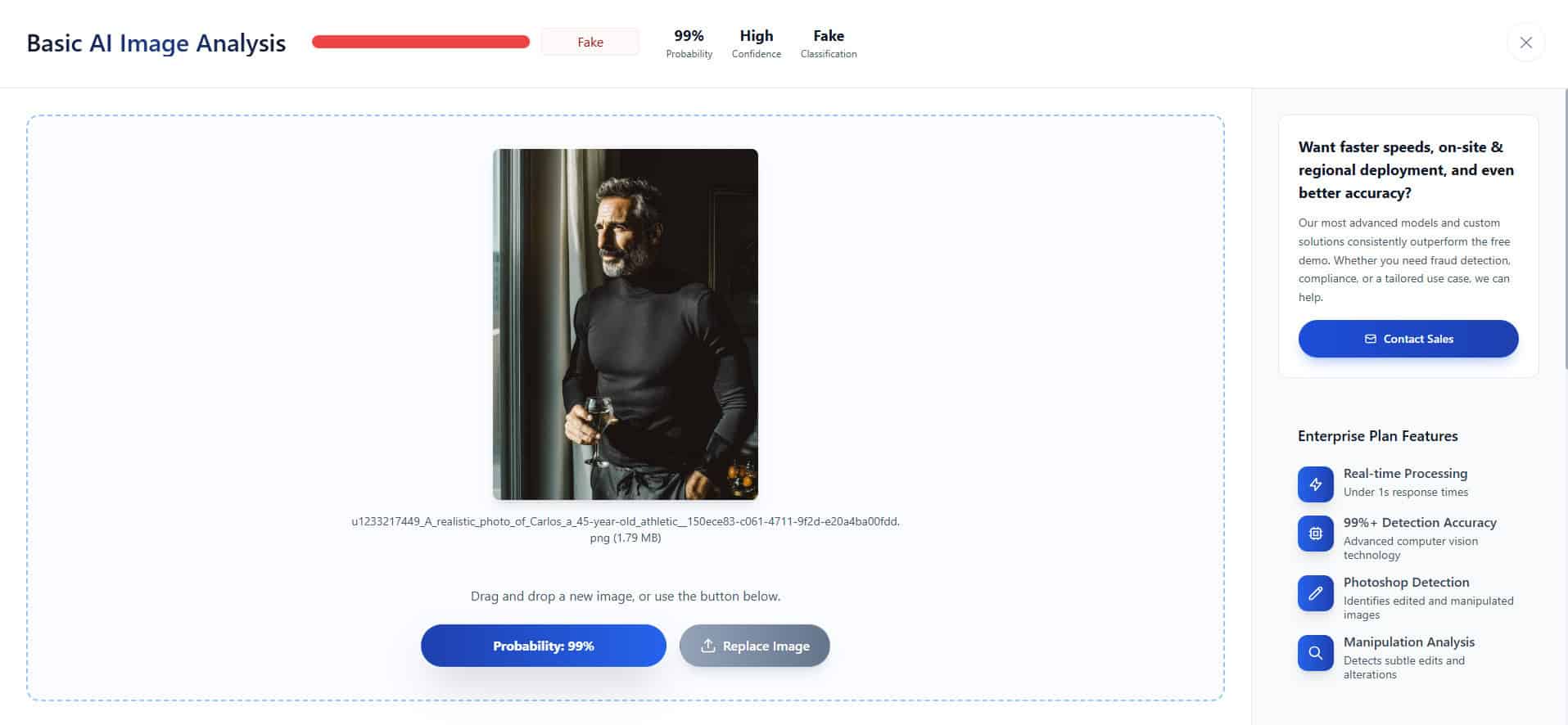
DeepDetect: Incorrect classified image as human-created.
Confidence Score: 10%

Average Score
Test Number | TruthScan | DeepDetect |
#1 | 99% | 95% |
#2 | 99% | 75% |
#3 | 99% | 92% |
#4 | 99% | 10% |
#5 | 99% | 15% |
#6 | 99% | 85% |
#7 | 99% | 10% |
Score | 99% | 54.57% |
The Bottom Line
Based on my testing, the gap between the two tools was hard to ignore. TruthScan achieved a 99% correctness rate, while DeepDetect landed at 57.5%. In practical terms, that difference matters — a lot. TruthScan was far more consistent, more decisive, and better aligned with how modern AI-generated images actually look in the wild.
That said, DeepDetect deserves real credit here. Even though AI image detection isn’t its primary focus, it brings something genuinely valuable to the table: beyond a raw confidence score, its API surfaces a human-readable explanation highlighting which parts of an image feel AI-generated and why.
Still, this comparison ultimately comes down to purpose. DeepDetect is an excellent open-source framework with impressive flexibility and insight, especially if you want to experiment, customize, or dig deep into model behavior.
TruthScan, however, is built to answer one question quickly and accurately — is this image AI-generated? — and at 99% correctness, it does exactly that.
Want to Learn Even More?
If you enjoyed this article, subscribe to our free newsletter where we share tips & tricks on how to use tech & AI to grow and optimize your business, career, and life.