TruthScan vs. Sapling: Which Can Detect AI Writing Better?
TruthScan and Sapling both promise top-tier detection. But which one can actually deliver and which falls short?

John Angelo Yap
Updated November 24, 2025

A detector tries to detect AI writing, generated with ChatGPT
Reading Time: 4 minutes
AI writing detection has gotten trickier — and honestly, that’s the whole point. With AI tools sounding more human every month, detectors are scrambling to keep up. Two of the most talked-about right now are TruthScan, a newcomer with enterprise-grade tools, and Sapling, a startup that quietly built one of the most reliable AI detectors on the web.
Both tools promise accuracy, speed, and transparency. Both say they can tell real human writing apart from AI-generated content. But how do they actually perform when the text is clean, natural, and deliberately written to blur the line?
Let’s break it down.
What is TruthScan?
TruthScan isn’t just another AI checker. It’s an AI detection suite — many different tools designed to spot AI-generated content across every format you can imagine: text, images, audio, and even deepfake video.
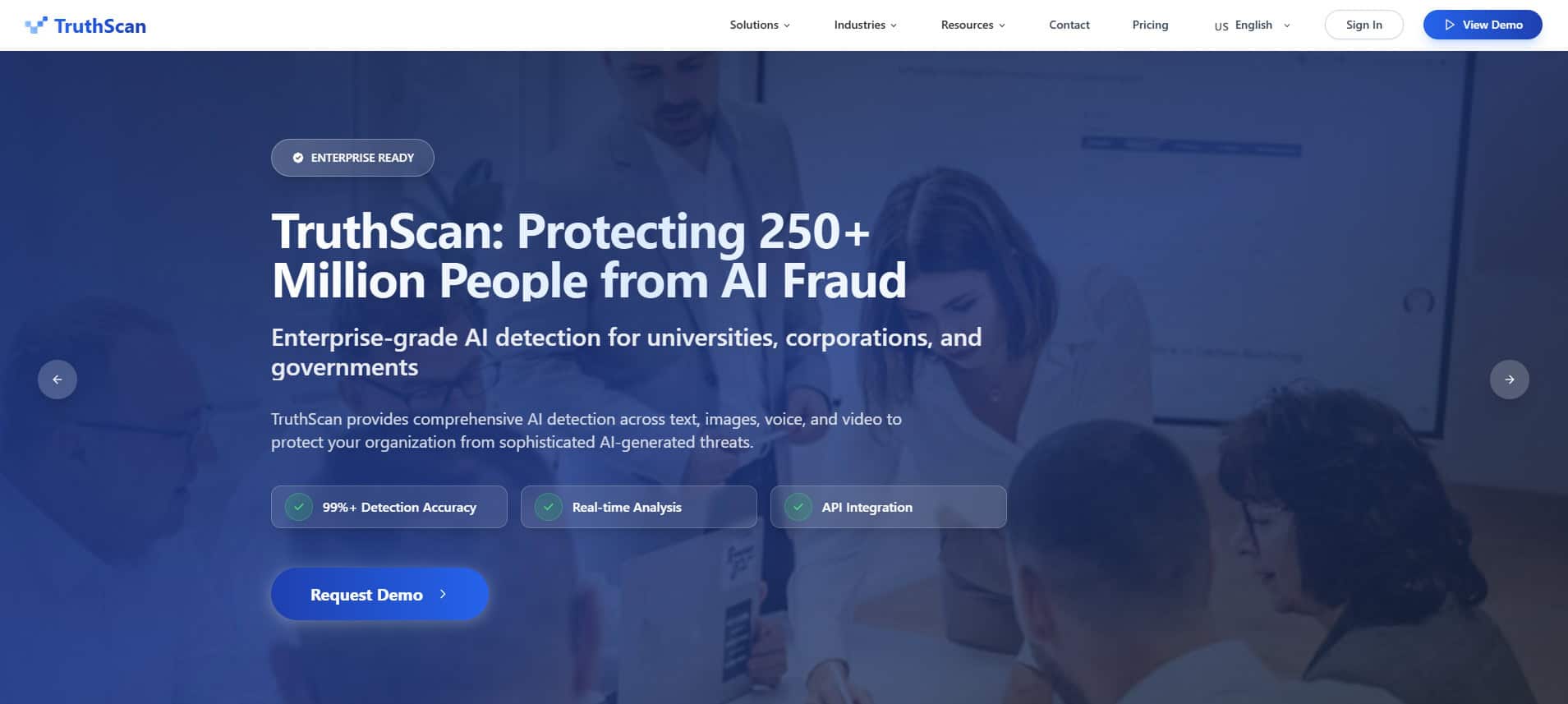
The AI Text Detector is the heart of that system. It claims 99%+ accuracy, sub-second detection speeds, and real-time analysis that identifies whether content was written by humans, ChatGPT, Gemini, or other large language models.
A few standout features:
- Instant results – detection in under 100ms.
- Detailed reporting – sentence-level scoring and confidence percentages.
- API access – integration for businesses, schools, and content moderation platforms.
- SOC 2 Type II compliance – meaning it’s enterprise-grade and privacy-secure.
Unlike many detectors, TruthScan isn’t meant to be just a teacher’s grading tool. It’s a professional-level product that fits everywhere — from corporate verification pipelines to journalism and education.
It’s powerful, fast, and surprisingly intuitive for something this advanced.
What is Sapling?
Sapling’s AI Detector was one of the first reliable text detection tools to appear during the rise of ChatGPT, and honestly, the one I trust the most. Its detection model analyzes text using patterns — essentially looking at how predictable or “AI-like” the sentence structures are.
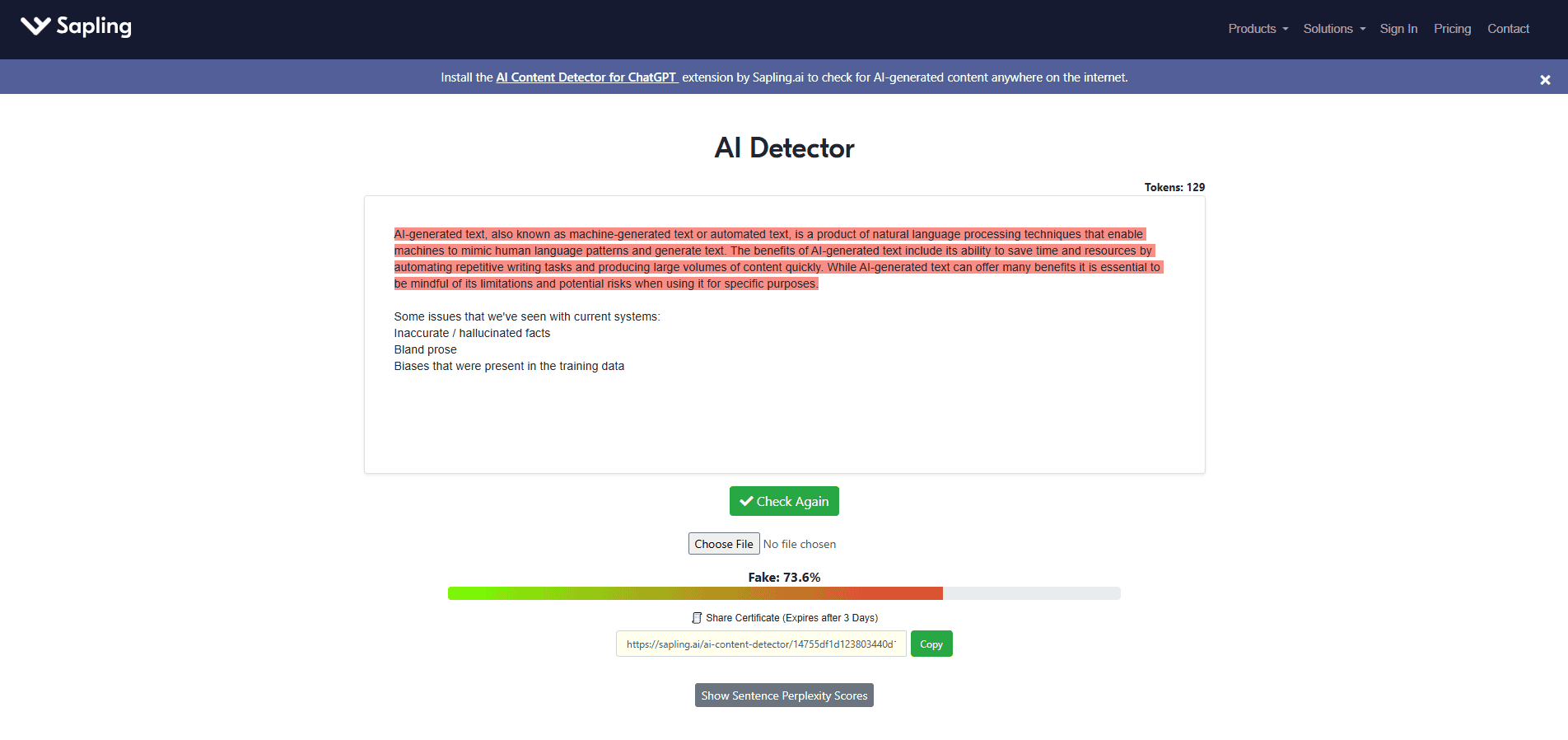
Unlike simpler detectors, it doesn’t rely on a single score. Instead, it gives you a clear percentage showing how likely the text was AI-generated. Sapling also:
- Free, web-based access — no login required.
- Supports multiple LLMs (ChatGPT, Claude, Gemini, etc.).
- Visual breakdowns showing AI vs. human probability per section.
- Lightweight and accessible — designed for everyday users, not just professionals.
TruthScan vs. Sapling: AI Likelihood Scores
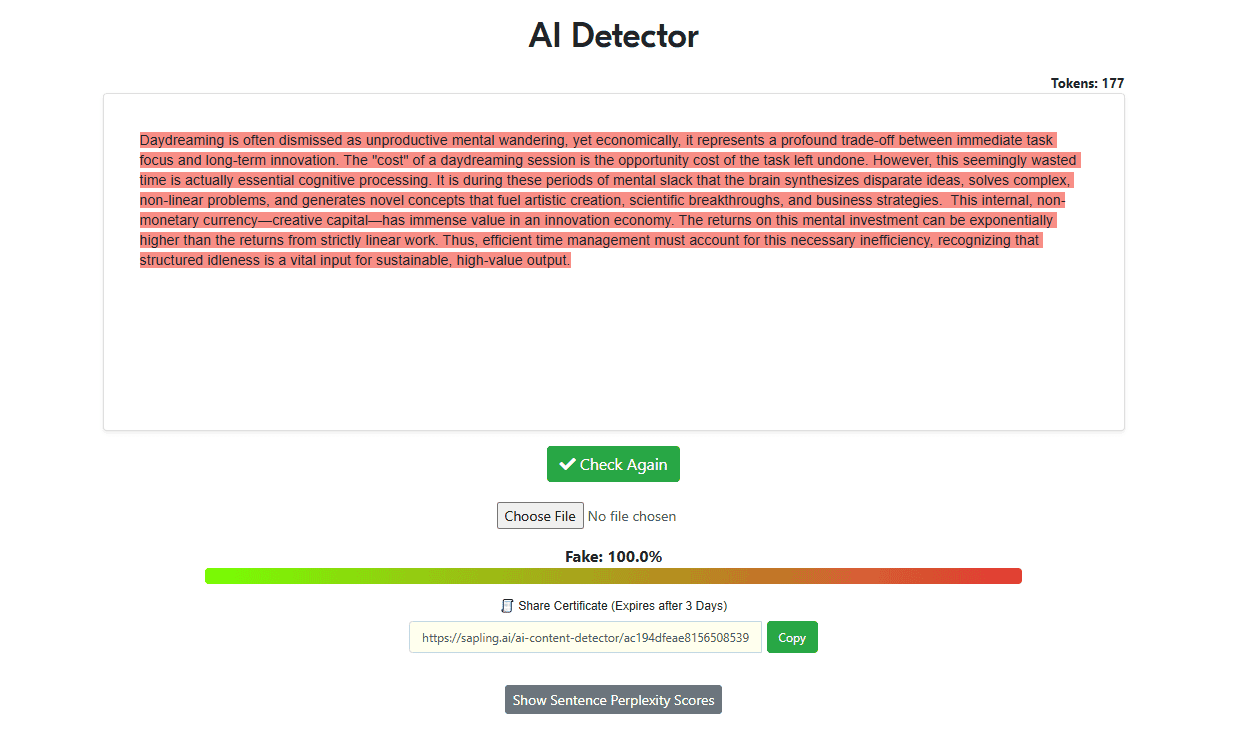
Test #1
AI-Generated Text:
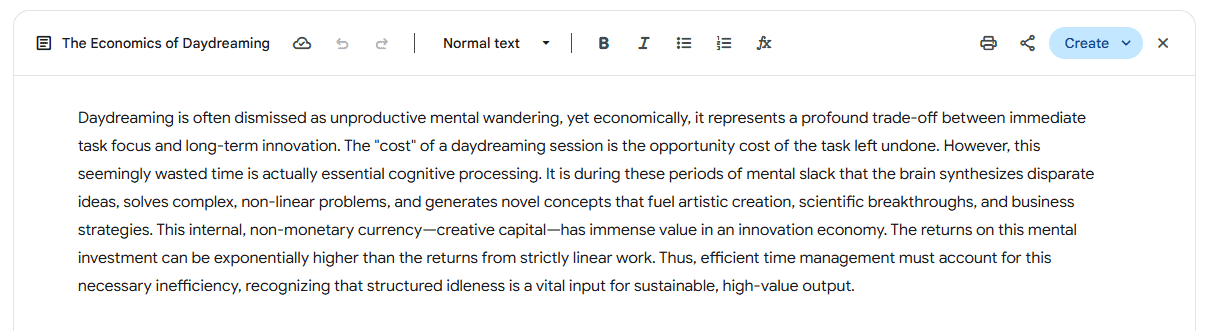
TruthScan: Correctly identified text as machine-generated.
AI Likelihood: 79%
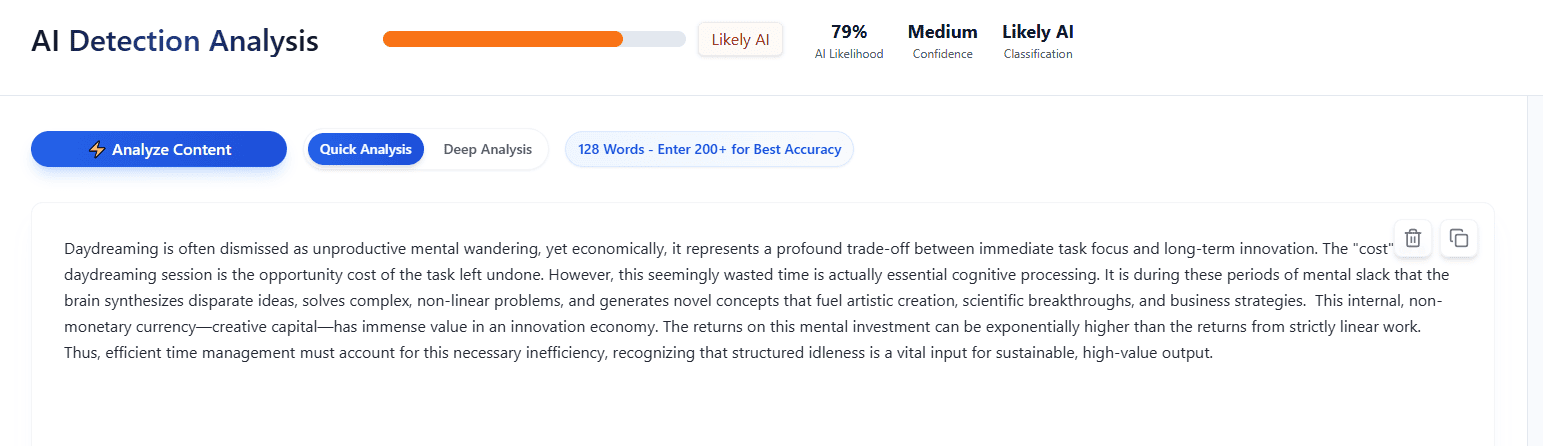
Sapling: Correctly identified text as machine-generated.
AI Likelihood: 100%
Test #2
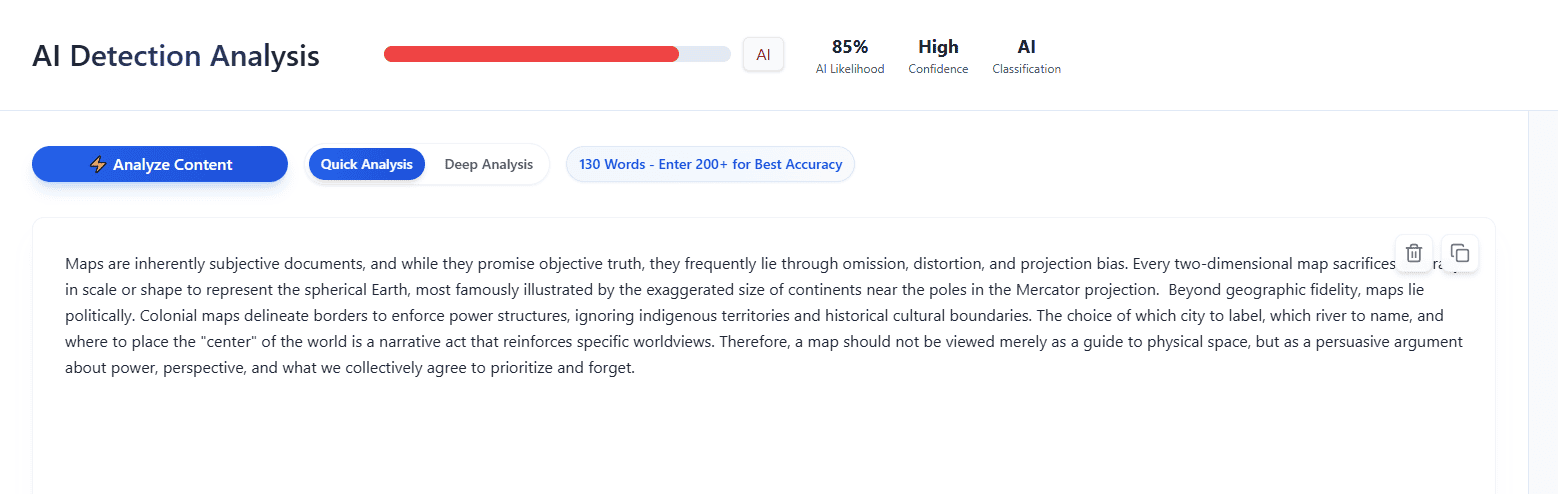
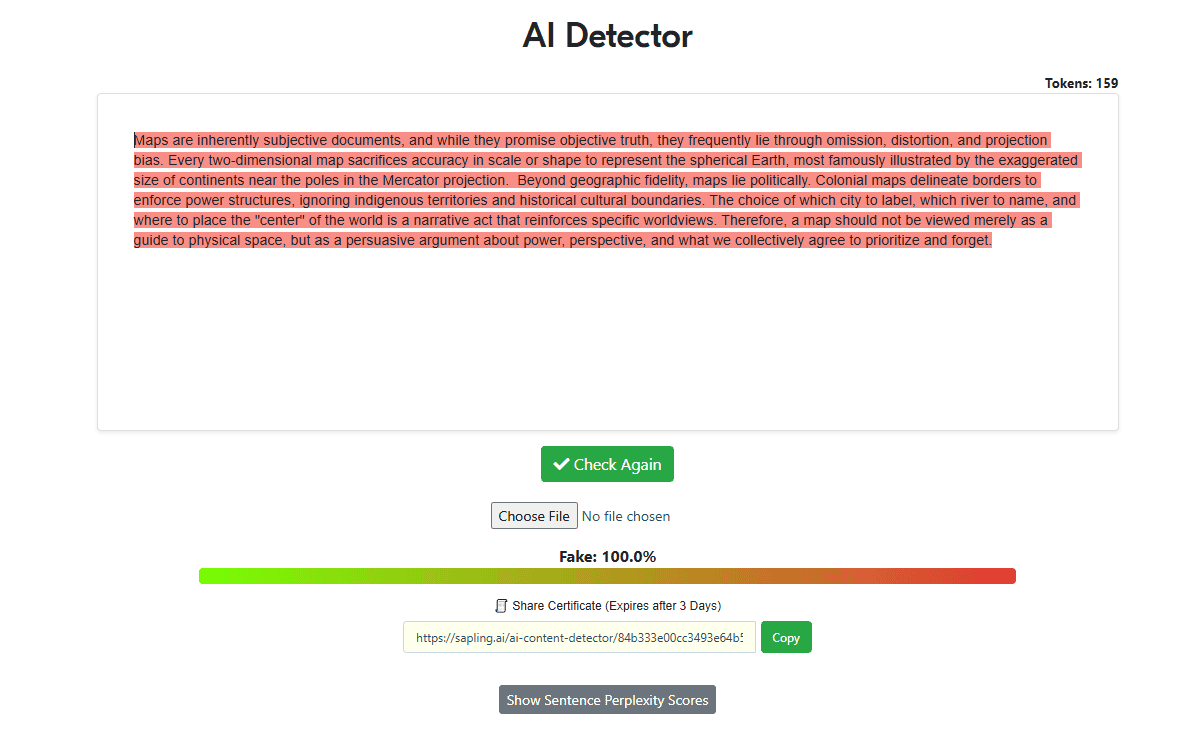
AI-Generated Text:
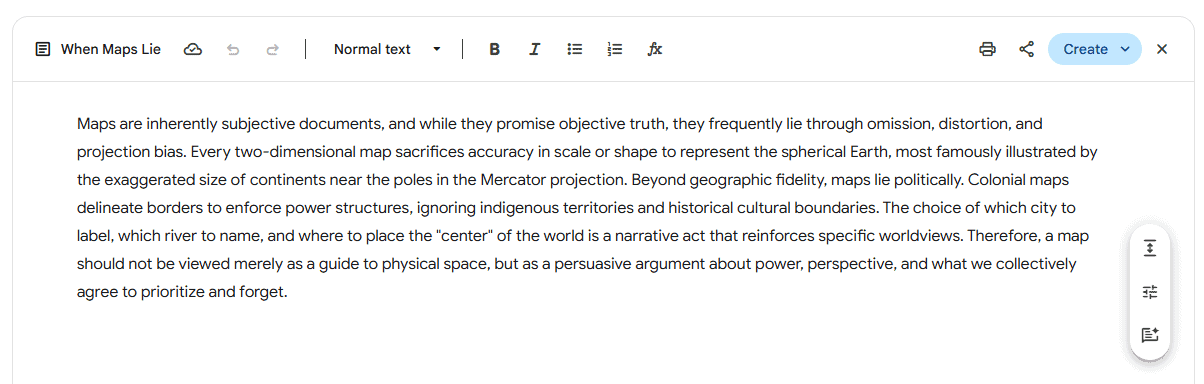
TruthScan: Correctly identified text as machine-generated.
AI Likelihood: 85%
Sapling: Correctly identified text as machine-generated.
AI Likelihood: 100%
Test #3
AI-Generated Text:
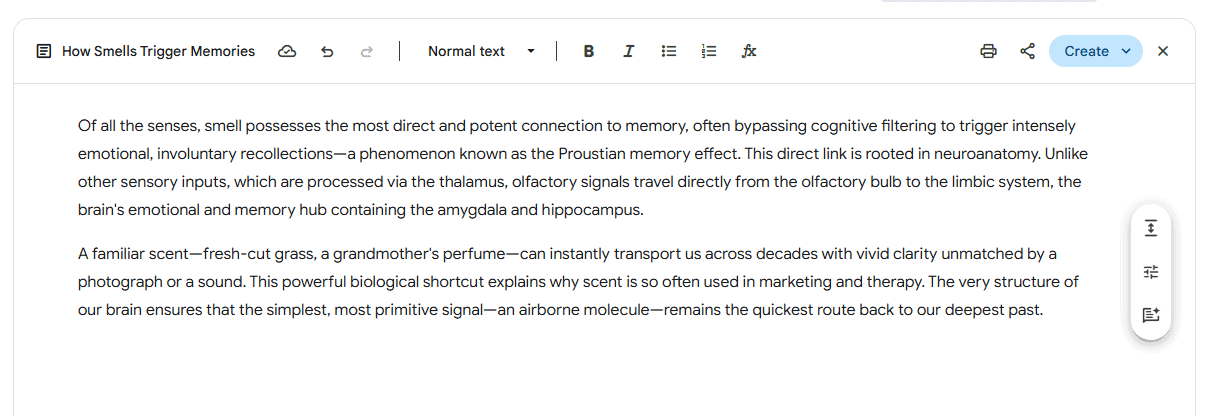
TruthScan: Correctly identified text as machine-generated.
AI Likelihood: 75%
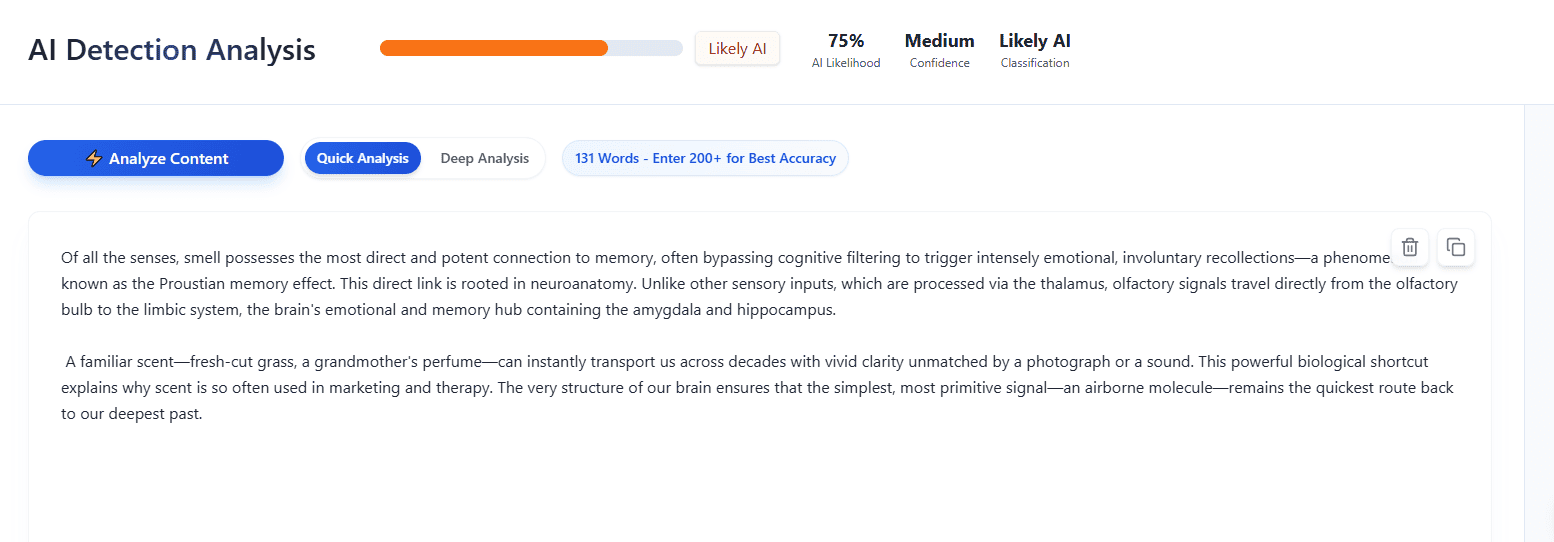
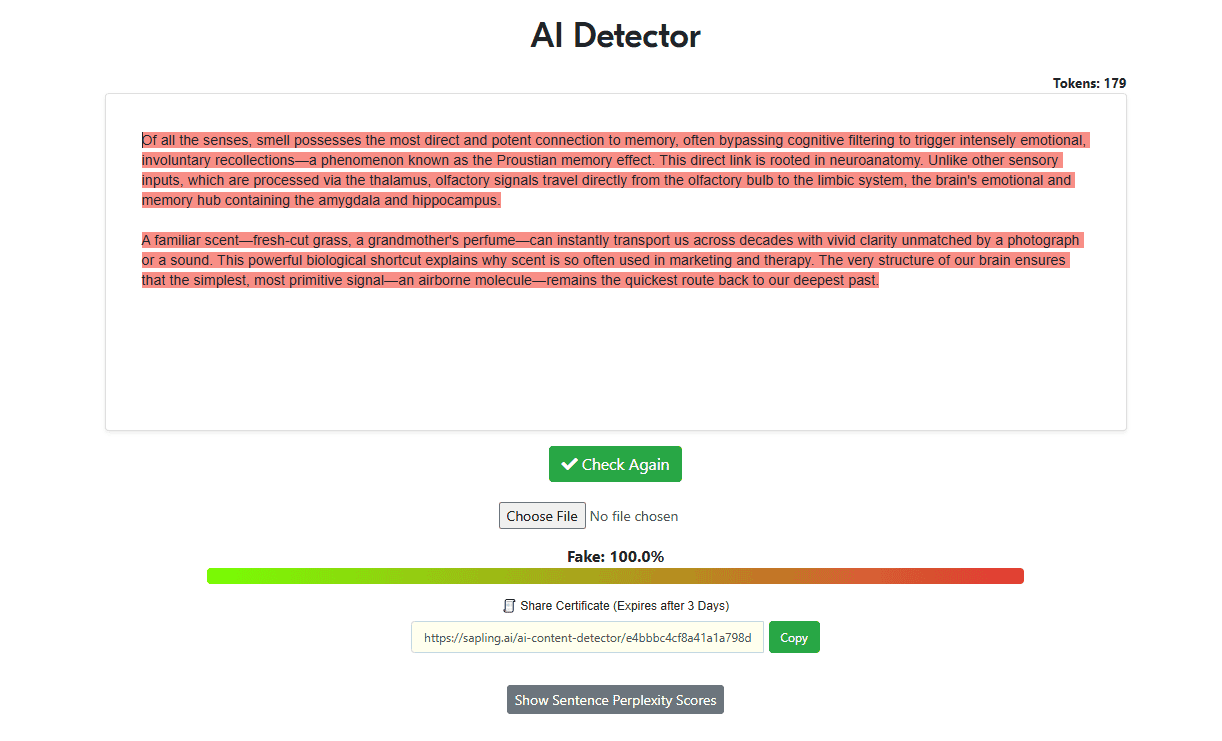
Sapling: Correctly identified text as machine-generated.
AI Likelihood: 100%
Test #4
AI-Generated Text:
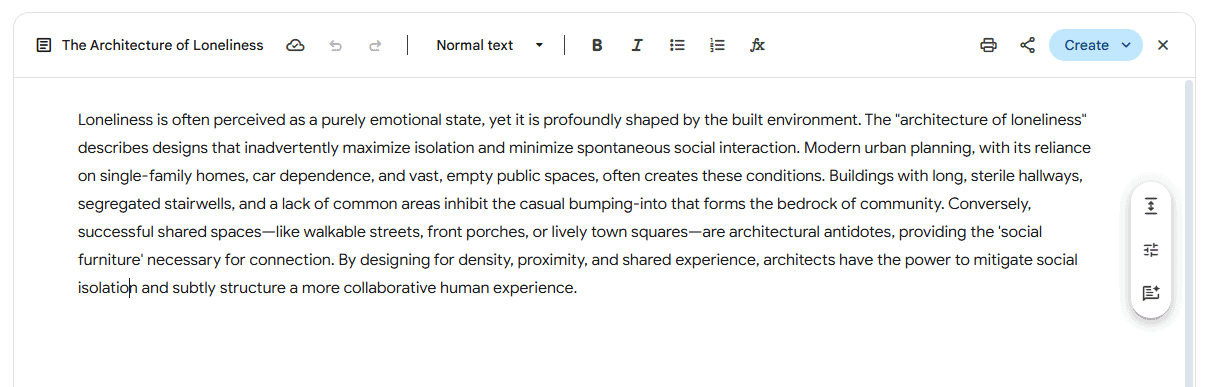
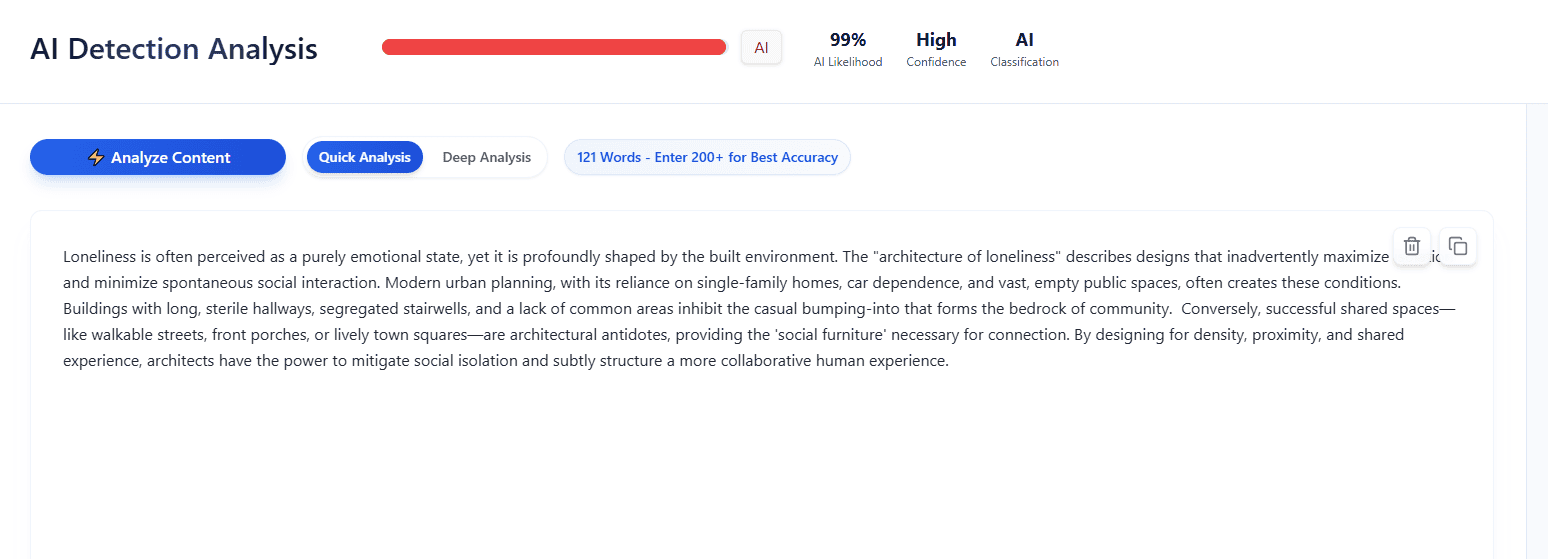
TruthScan: Correctly identified text as machine-generated.
AI Likelihood: 99%
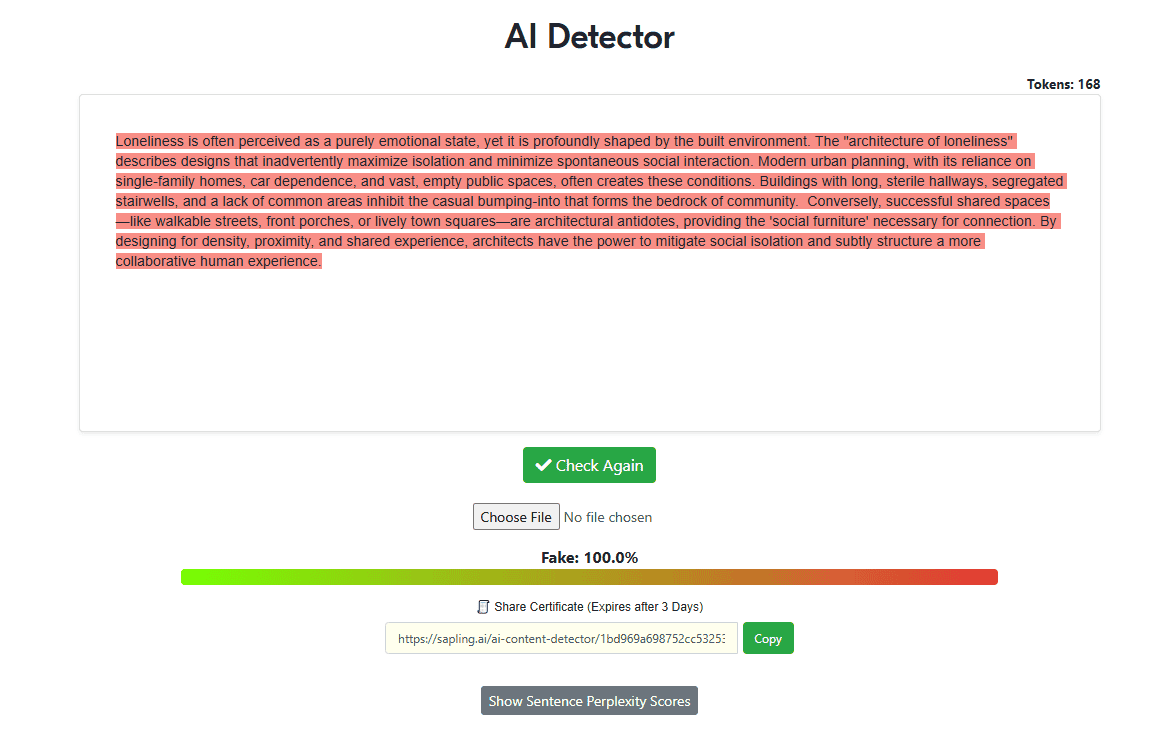
Sapling: Correctly identified text as machine-generated.
AI Likelihood: 100%
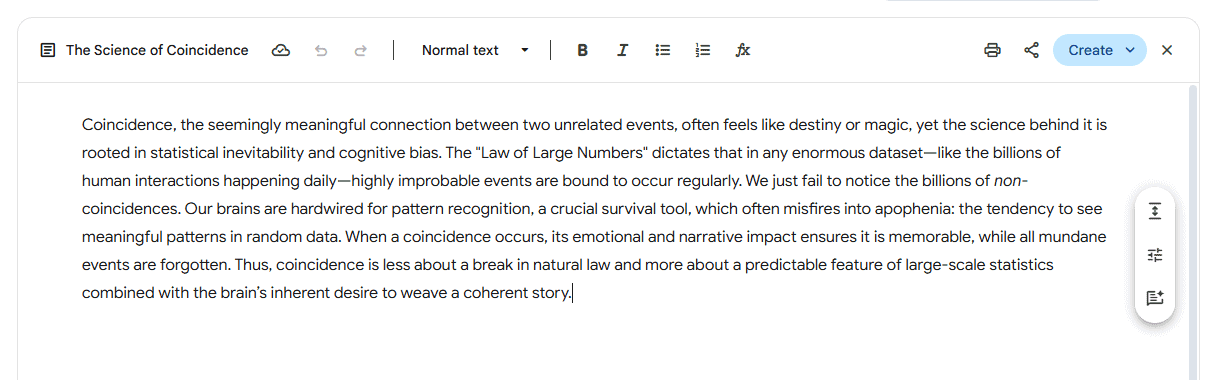
Test #5
AI-Generated Text:
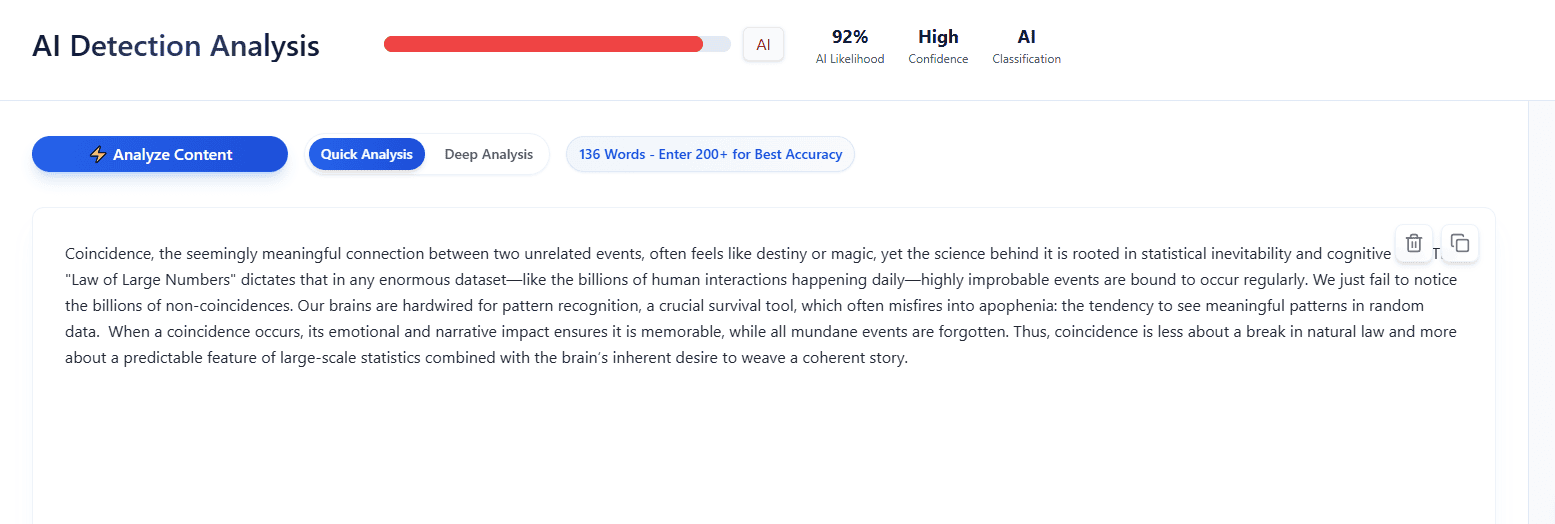
TruthScan: Correctly identified text as machine-generated.
AI Likelihood: 92%
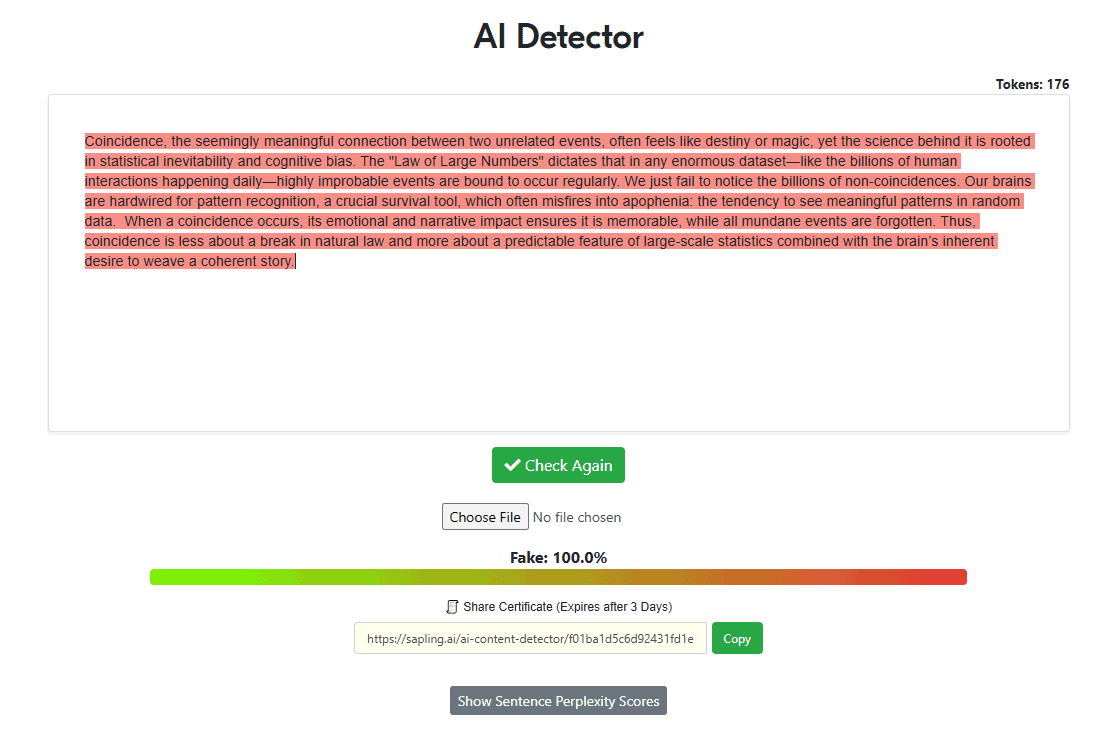
Sapling: Correctly identified text as machine-generated.
AI Likelihood: 100%
Test #6
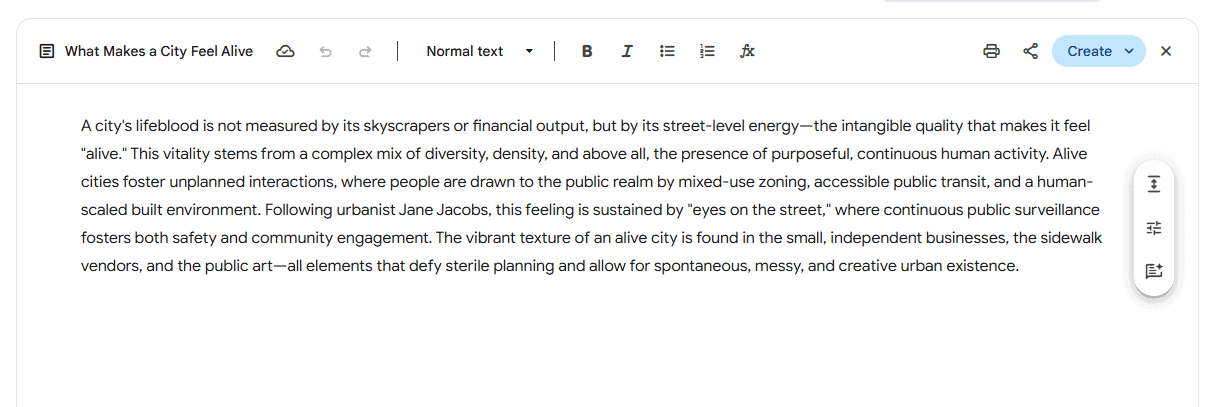
AI-Generated Text:
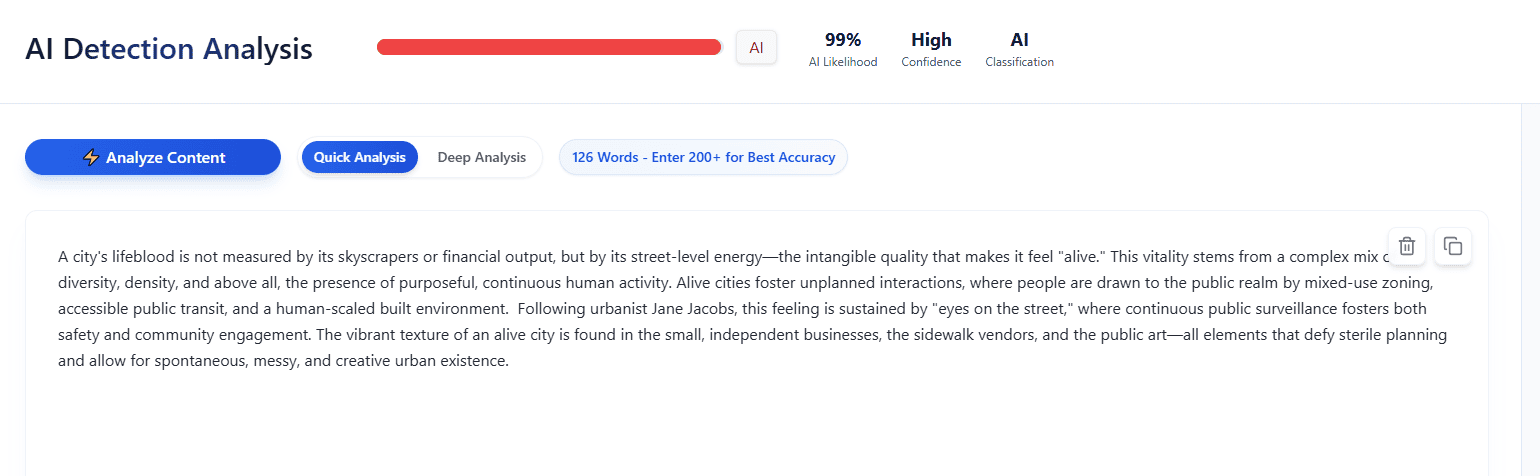
TruthScan: Correctly identified text as machine-generated.
AI Likelihood: 99%
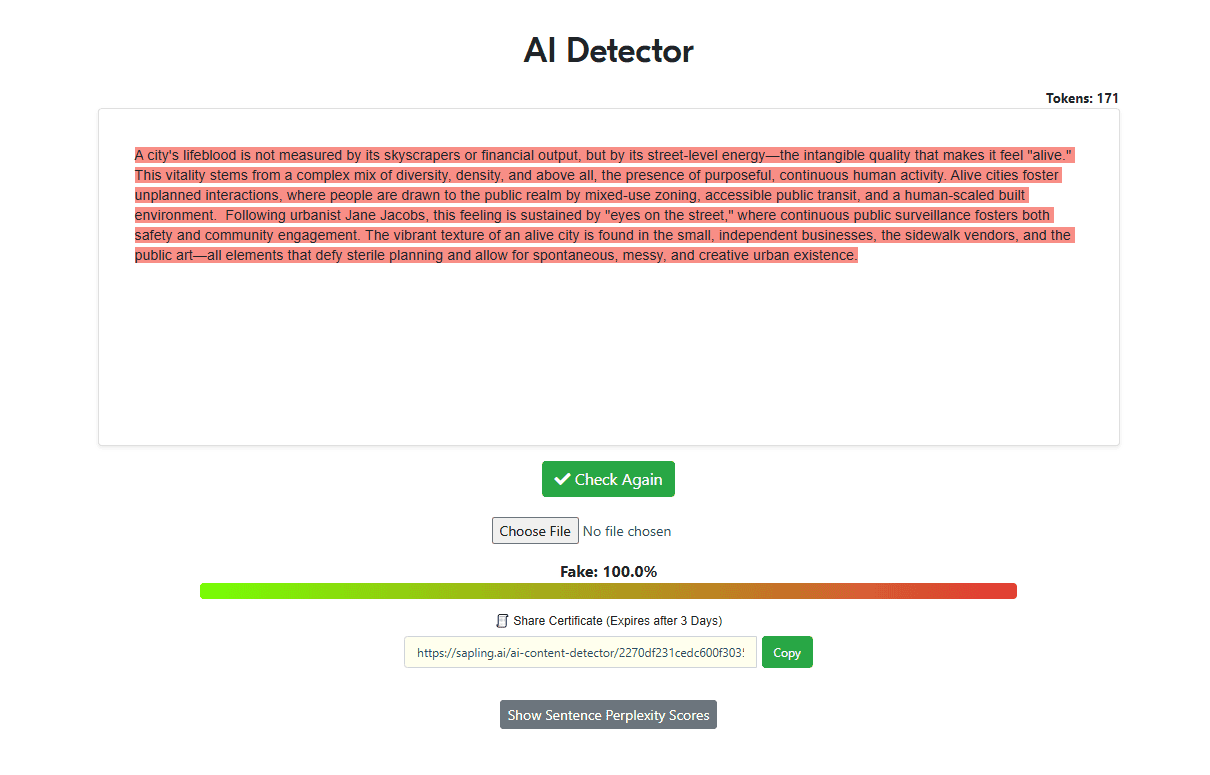
Sapling: Correctly identified text as machine-generated.
AI Likelihood: 100%
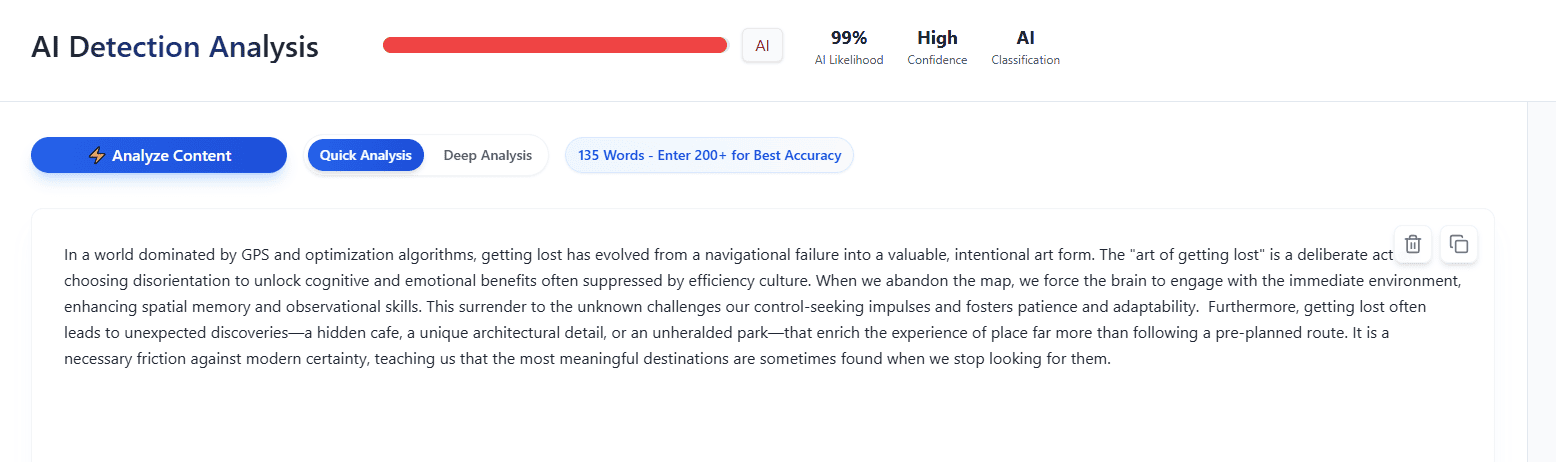
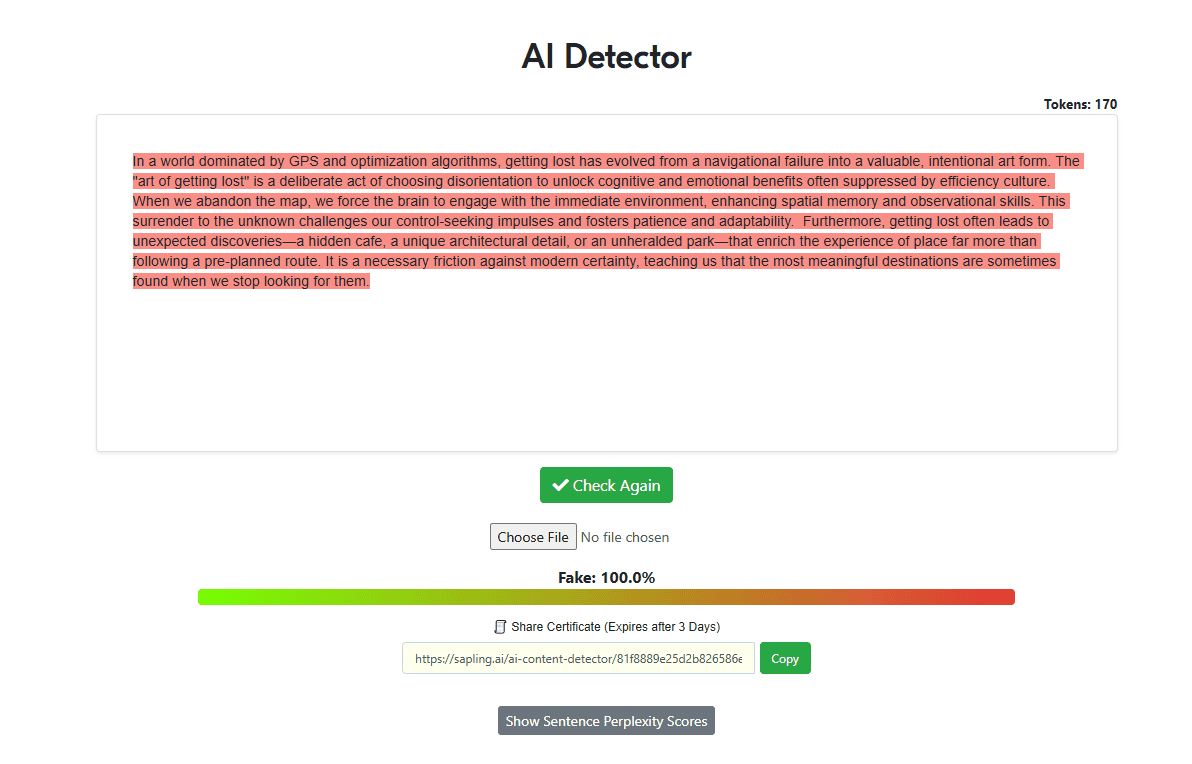
Test #7
AI-Generated Text:

TruthScan: Correctly identified text as machine-generated.
AI Likelihood: 99%
Sapling: Correctly identified text as machine-generated.
AI Likelihood: 100%
Overall Score
Test Number | TruthScan | Sapling |
#1 | 79% | 100% |
#2 | 85% | 100% |
#3 | 75% | 100% |
#4 | 99% | 100% |
#5 | 92% | 100% |
#6 | 99% | 100% |
#7 | 99% | 100% |
Score | 89.71% | 100% |
The Bottom Line
After testing both tools across AI-generated samples, one thing became clear: these two detectors are genuinely reliable.
Sapling AI came out on top with a perfect 100% correctness rate, accurately identifying every AI-written text without a single false positive. It’s fast, intuitive, and remarkably consistent — especially for a tool that’s free and web-based. For straightforward AI detection, it doesn’t miss a beat.
TruthScan, on the other hand, landed at 89.71% correctness, which still puts it among the most accurate detectors I’ve tested. What’s impressive is that both tools correctly flagged all the test samples as AI-generated.
So, who wins? Honestly — both. They approach AI detection differently, but both excel at what they do, proving that in 2025, we finally have detectors that can keep up with AI itself.
Want to Learn Even More?
If you enjoyed this article, subscribe to our free newsletter where we share tips & tricks on how to use tech & AI to grow and optimize your business, career, and life.