Image Detection Accuracy Compared: TruthScan vs WasItAI
The old six fingers trick is gone and ChatGPT, Gemini, and Sora are all producing images that pass casual inspection without breaking a sweat. We ran TruthScan and WasItAI through six image tests to find out which detector actually gives you something useful when the answer isn't obvious.

Mark Goutaco
Updated March 24, 2026
Reading Time: 5 minutes
A student submits a photo essay. A journalist publishes a sourced image. A hiring manager reviews a portfolio.
None of them can tell anymore if what they're looking at is real.
AI image generation has gotten good enough that the old "just look for six fingers" trick doesn't cut it anymore.
ChatGPT, Gemini and more models they're all producing images that pass casual inspection without breaking a sweat.
And the people who need to verify authenticity are being asked to make judgment calls they're not equipped to make with the naked eye.
That's exactly the gap detectors like TruthScan and WasItAI are supposed to fill.
We originally planned to test both tools across images and text. But WasItAI doesn't have text detection (yet).
So this comparison stays in its lane.
Which one actually holds up when the images get harder to call? That's what we're here to find out.
What is TruthScan?
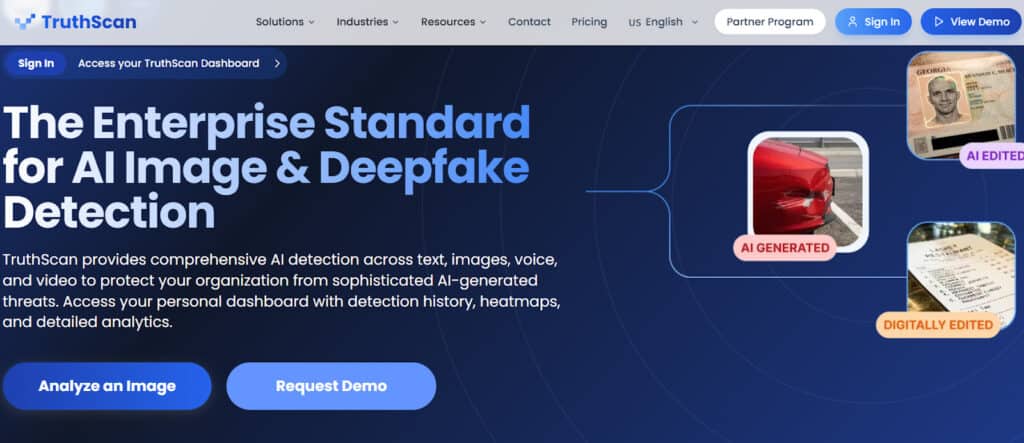
TruthScan is one of the more ambitious detection tools on the market right now.
It's not just an image detector, it covers text, video, and audio too, making it a multi-modal platform built for anyone who needs to verify content at scale.
Their image detection leans on confidence scoring and heatmaps that show exactly which parts of an image triggered the AI flag.
It's built with enterprise users in mind: SOC 2 and GDPR compliance, priority support, and API access that plugs into larger workflows.
Pricing runs on a credit-based system. The Professional plan comes in at $49/month for 1 million credits, which covers roughly 1,000 image scans and 33 minutes of video scans.
There's a free trial with 20,000 credits if you want to test the waters first.
Independent benchmarks put TruthScan's image accuracy at around 97–98%, with the company claiming 99%+ across enterprise conditions.
What is WasItAI?
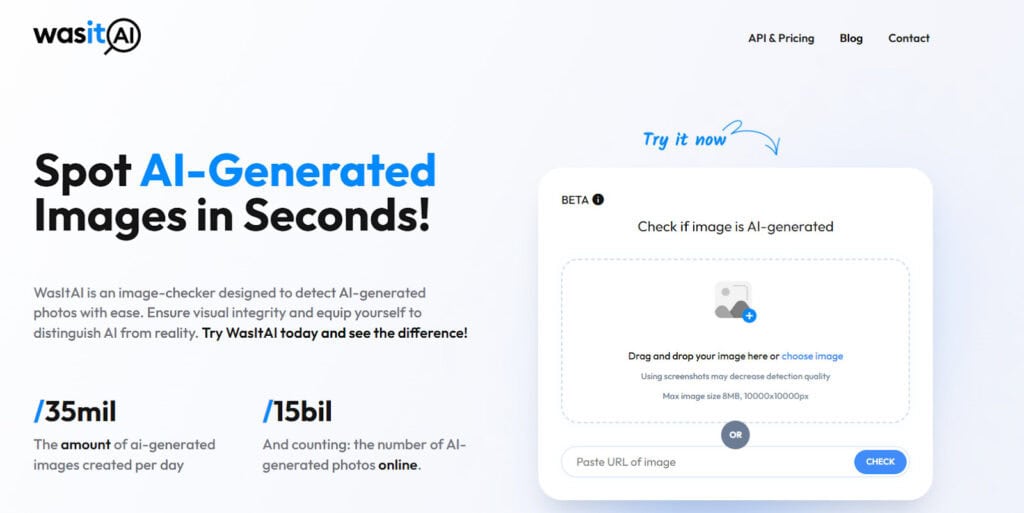
WasItAI does one thing and focuses hard on doing it well: detecting AI-generated images.
There's no text module, no audio tab, no video pipeline. Just a clean, browser-based interface where you upload an image and get an answer fast.
No app download required. It uses pattern analysis cross-referenced against a database of known real and AI-generated images, which gives it a different detection fingerprint than TruthScan.
The pricing is more accessible. Their Basic plan runs around $ 4/month for 100 request, with custom enterprise options including API access.
What We Tested and Why
We originally planned to test both tools with images and text. WasItAI doesn't have text detection, it's image-only by design so this comparison is image-only across the board.
We ran 6 tests, one image per category.
A ChatGPT-generated image, a Gemini-generated image, and a SORA output cover the AI side.
Then a clean phone photo, an edited version of that photo, and an image pulled from social media.
Most detector reviews test the easy stuff — polished AI outputs against obviously real photos. That's not where detectors fail.
They fail in the messy middle: edited images, compressed social media reposts, stylized generations that don't look like typical AI.
That's what we wanted to stress-test here.
A Quick Note on Privacy
Before getting into the results, one thing worth flagging: both tools process images you upload through their servers.
If you're working with client assets, private shoots, or anything under NDA, be careful about what you submit. Keep it to images you own and are comfortable sharing externally.
The Actual Head to Head
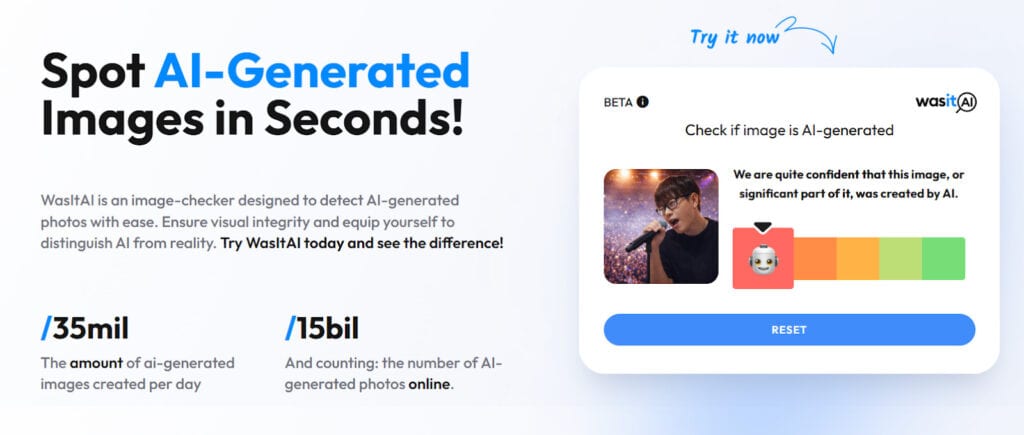
Test #1: ChatGPT
TruthScan: Correctly identified the image as AI Generated
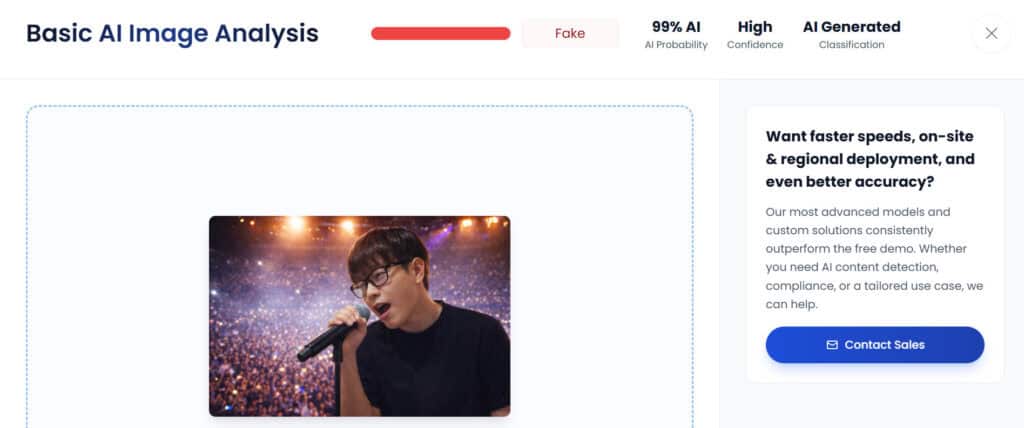
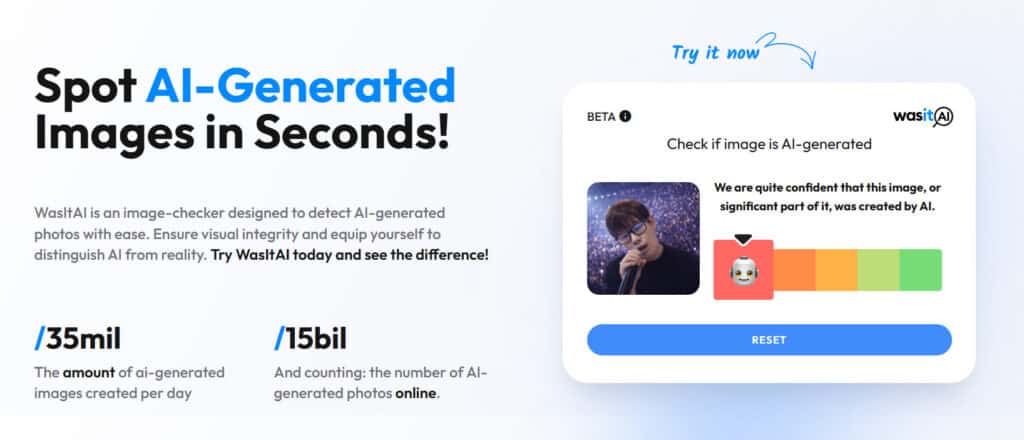
WasItAI: Correctly flagged the image as AI Generated
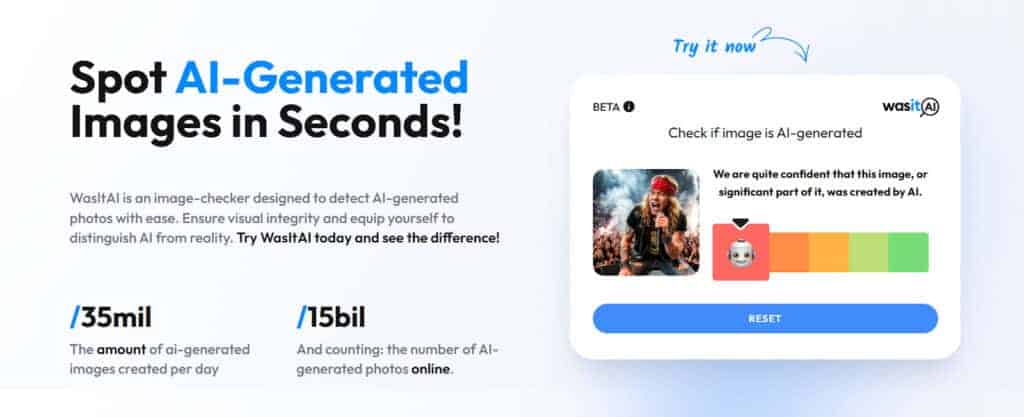
Test #2: Gemini
TruthScan: Correctly flagged the image as AI Generated
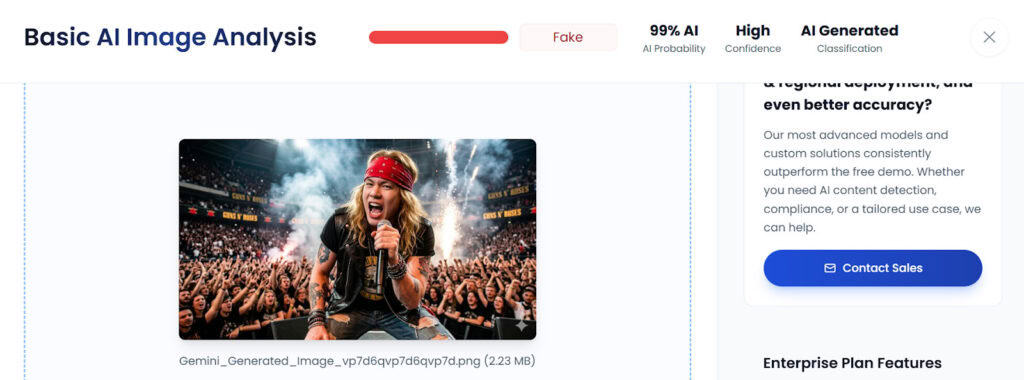
WasItAI: Correctly flagged the image as AI Generated
Test #3: Sora
TruthScan: Correctly flagged the image as AI Generated
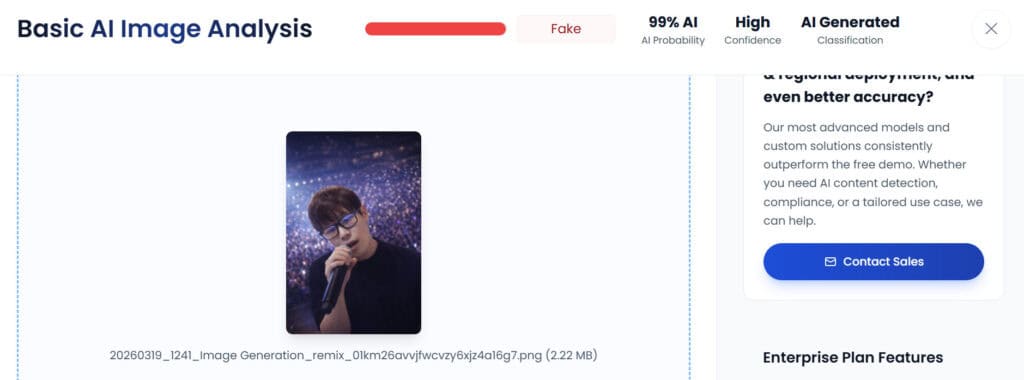
WasItAI: Correctly flagged the image as AI Generated
Test #4: Phone Photos (Unedited)
TruthScan: Correctly identified the image as Human
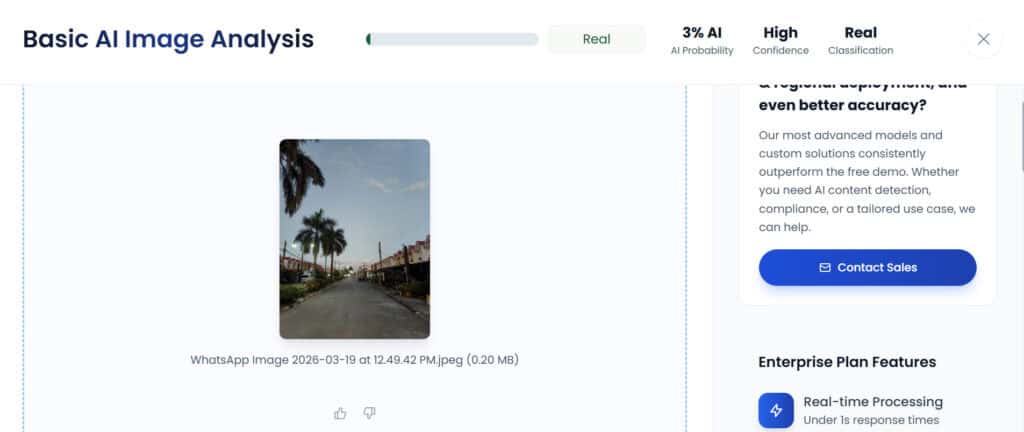
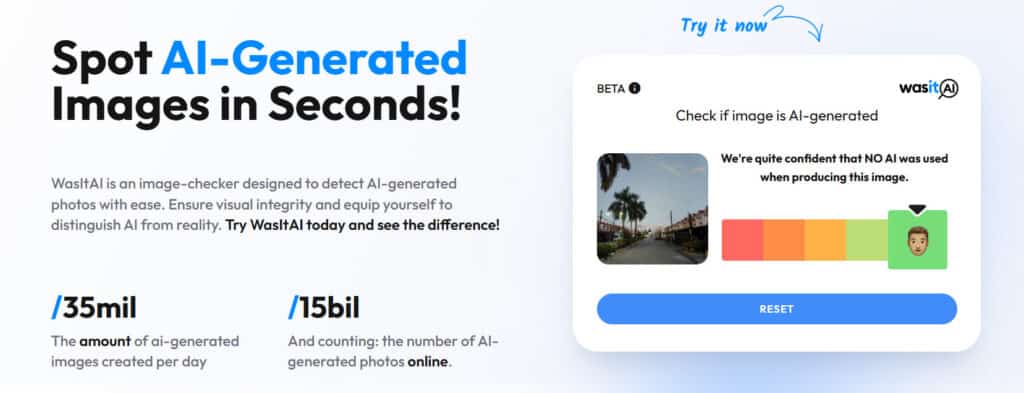
WasItAI: Correctly identified the image as Human
Test #5: Phone Photos (Edited)
TruthScan: Correctly identified the image as Human
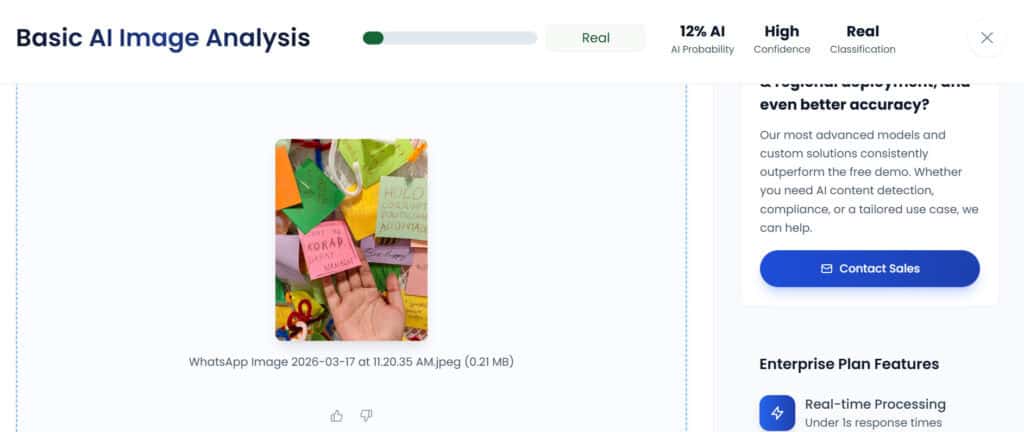
WasItAI: Correctly identified the image as Human
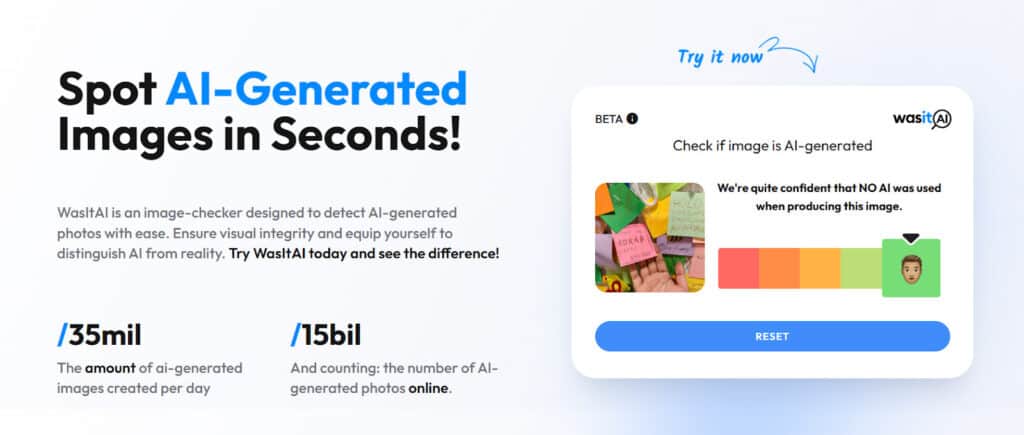
Test #6: Social Media Images (Facebook)
TruthScan: Correctly identified the image as Human
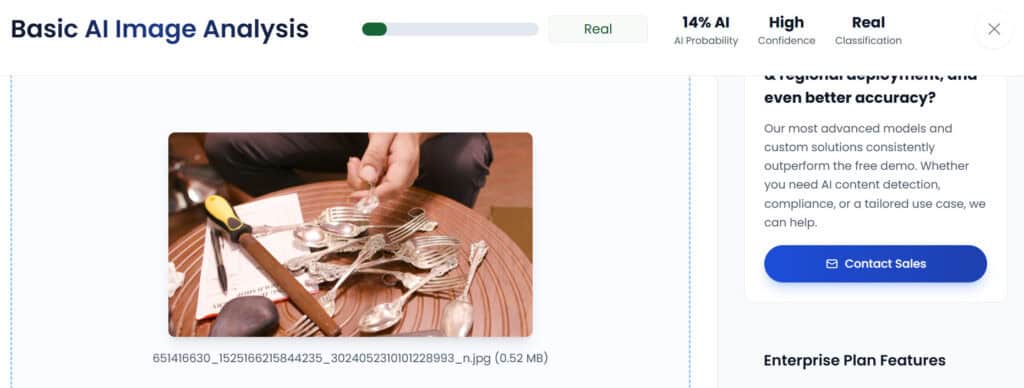
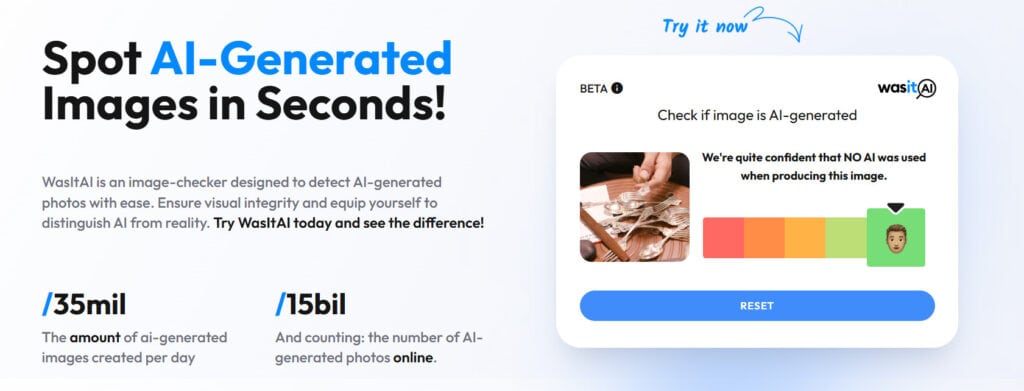
WasItAI: Correctly identified the image as Human
Average Scores
| Test | Undetectable AI | WasiTAI |
| #1 ChatGPT | ✅ AI Detected | ✅ AI Detected |
| #2 Gemini | ✅ AI Detected | ✅ AI Detected |
| #3 Sora | ✅ AI Detected | ✅ AI Detected |
| #4 Phone Photo (Raw) | ✅ Real | ✅ Real |
| #5 Phone Photo Edited | ✅ Real | ✅ Real |
| #6 Social Media (Facebook) | ✅ Real | ✅ Real |
| Accuracy | 6/6 | 6/6 |
Final Thoughts
Both tools went 6/6.
But the scoreboard doesn't tell the whole story.
TruthScan doesn't just give you a verdict, it gives you a percentage. Every result comes with a confidence score that tells you how AI the image actually is.
A 14% AI likelihood and a 99% AI likelihood are technically a "flagged" result, but they should not be treated the same way.
One might be worth a second look. The other is a clear call. Without that number, you're flying blind on the close ones.
WasItAI gives you a yes or no. That works fine when the answer is obvious.
But when you're dealing with edited images or anything that sits in the gray zone, a binary result isn't enough to make a confident decision.
Which brings us to Test #5. The edited phone photo was cleared as human and technically, that's correct. It is a real photo.
But with TruthScan, the confidence percentage on the edited image was noticeably higher than on the unedited one.
It didn't flag manipulation outright, but the number moved. That shift is a signal worth paying attention to.
WasItAI returned the same binary result; it just doesn't have anything that differentiate a pristine phone photo from one that's been through an edit.
So while the accuracy score is tied, TruthScan gives you more to work with at every step. So it takes this head to head at least for this round
Want to Learn Even More?
If you enjoyed this article, subscribe to our free newsletter where we share tips & tricks on how to use tech & AI to grow and optimize your business, career, and life.