Can Fake Image Detector Keep Up with TruthScan? A Side-by-Side Test
Accuracy numbers look similar on paper, but the entirety of the app tells a different story. This is Fake Image Detector vs. TruthScan.

John Angelo Yap
Updated February 17, 2026
A detective getting fooled by an AI, generated with Gemini
Reading Time: 4 minutes
AI image generation has crossed a weird threshold. We’re no longer talking about obviously fake faces or surreal lighting errors that jump out immediately. Today’s AI images are polished, consistent, and — in many cases — indistinguishable from real photography unless you know exactly what to look for.
That’s where AI image detectors come in. Tools like Fake Image Detector and TruthScan both claim to help users separate real images from AI-generated ones. On paper, they’re solving the same problem. In practice, though, they approach it very differently — and that difference matters more than most people realize.
Today, we’re going to take a grounded look at Fake Image Detector and TruthScan side by side. No marketing fluff, no exaggerated claims. Just what each tool is built to do, how they work, and where the gaps start to show once you look beyond surface-level detection.
What Is Fake Image Detector?
Fake Image Detector is a lightweight tool designed to answer a single, straightforward question: Is this image real or AI-generated?
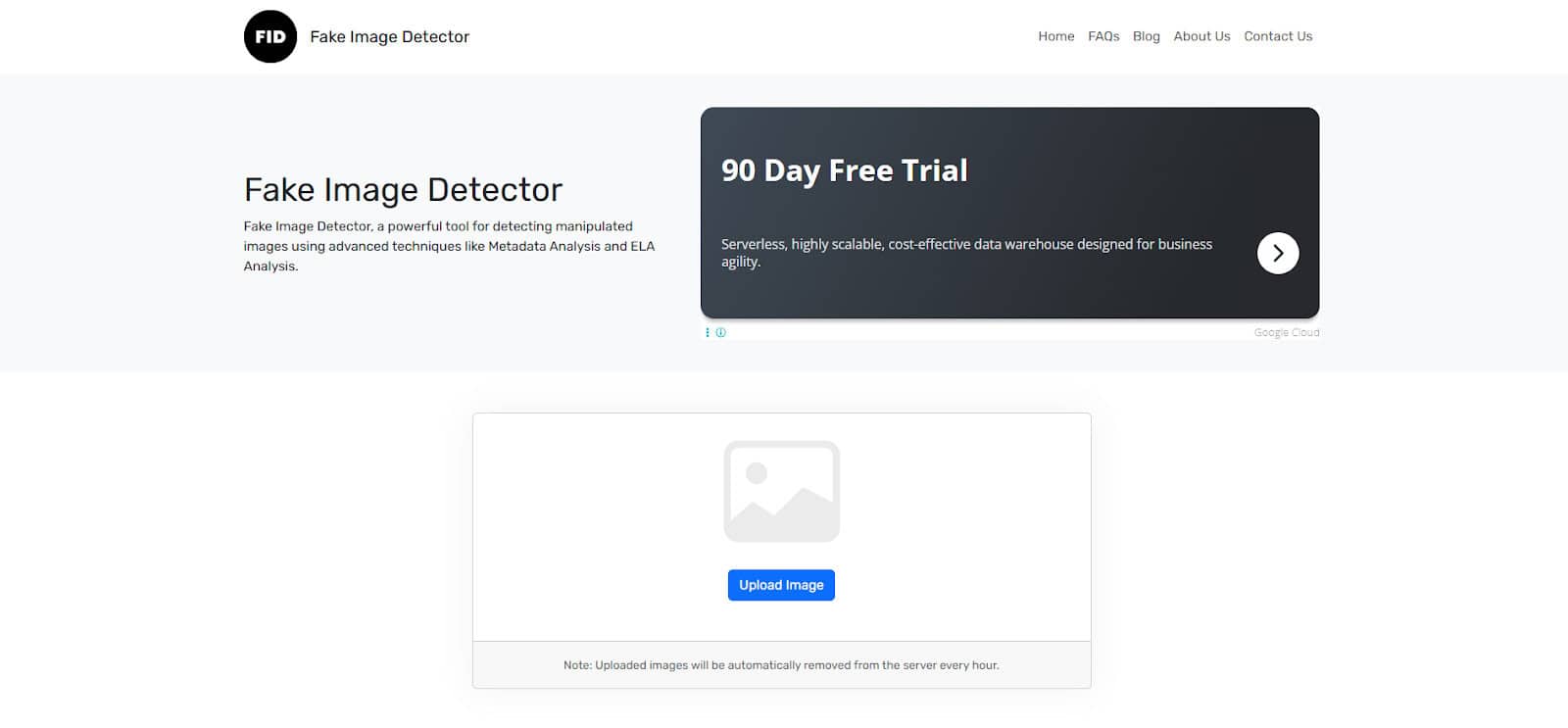
The appeal is obvious. You upload an image, wait a moment, and get a result. There’s no onboarding, no complex setup, and no broader ecosystem to learn. For casual users — journalists double-checking an image, students verifying sources, or anyone encountering suspicious visuals online — that simplicity is the product.
What it doesn’t try to be is an enterprise-grade system. There’s no deep reporting layer, no cross-modal analysis, and no real-time monitoring. It’s a point solution — quick, focused, and intentionally narrow.
What is TruthScan?
TruthScan sits on the opposite end of the spectrum.
Rather than positioning itself as just an AI image detector, TruthScan is a full AI detection suite. Image detection is one part of a larger system that also includes AI text detection, deepfake video analysis, voice authentication, real-time monitoring, and email scam detection.

For the purpose of this comparison, though, the focus is on TruthScan’s AI image detection specifically.
TruthScan’s image detector is designed for authenticity verification at scale. It doesn’t just flag whether an image is likely AI-generated — it evaluates patterns of manipulation, synthetic generation techniques, and anomalies across different generation models. This includes newer diffusion models and hybrid pipelines that many simpler detectors struggle with.
The system is built for speed (sub-100ms detection), API-based integration, and continuous monitoring. In other words, it’s designed for environments where image authenticity is a recurring problem, not a one-off curiosity.
That broader scope affects how TruthScan approaches detection — and why its results often feel more confident rather than binary.
TruthScan vs. Fake Image Detector: AI Image Detection
Test #1
Truthscan: Correctly classified image as AI-generated.
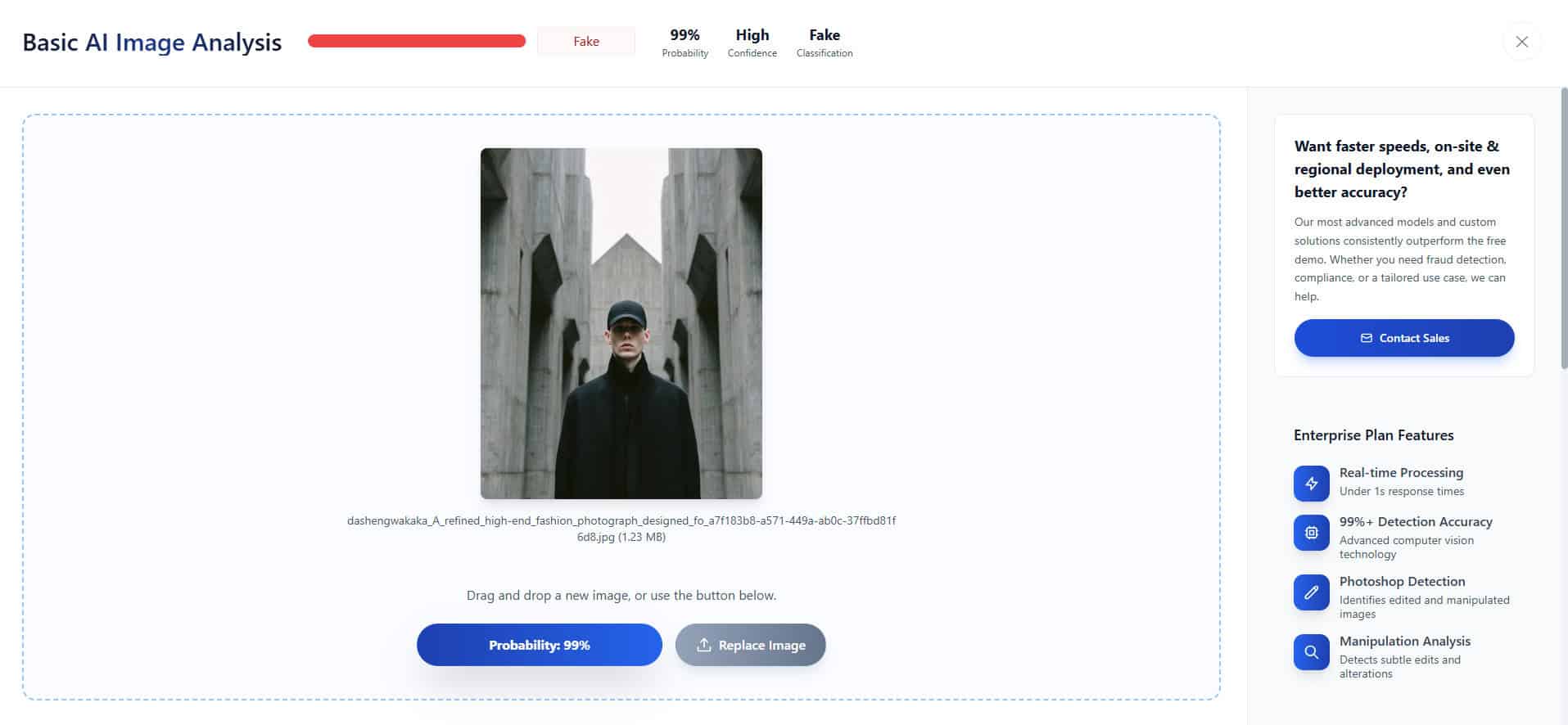
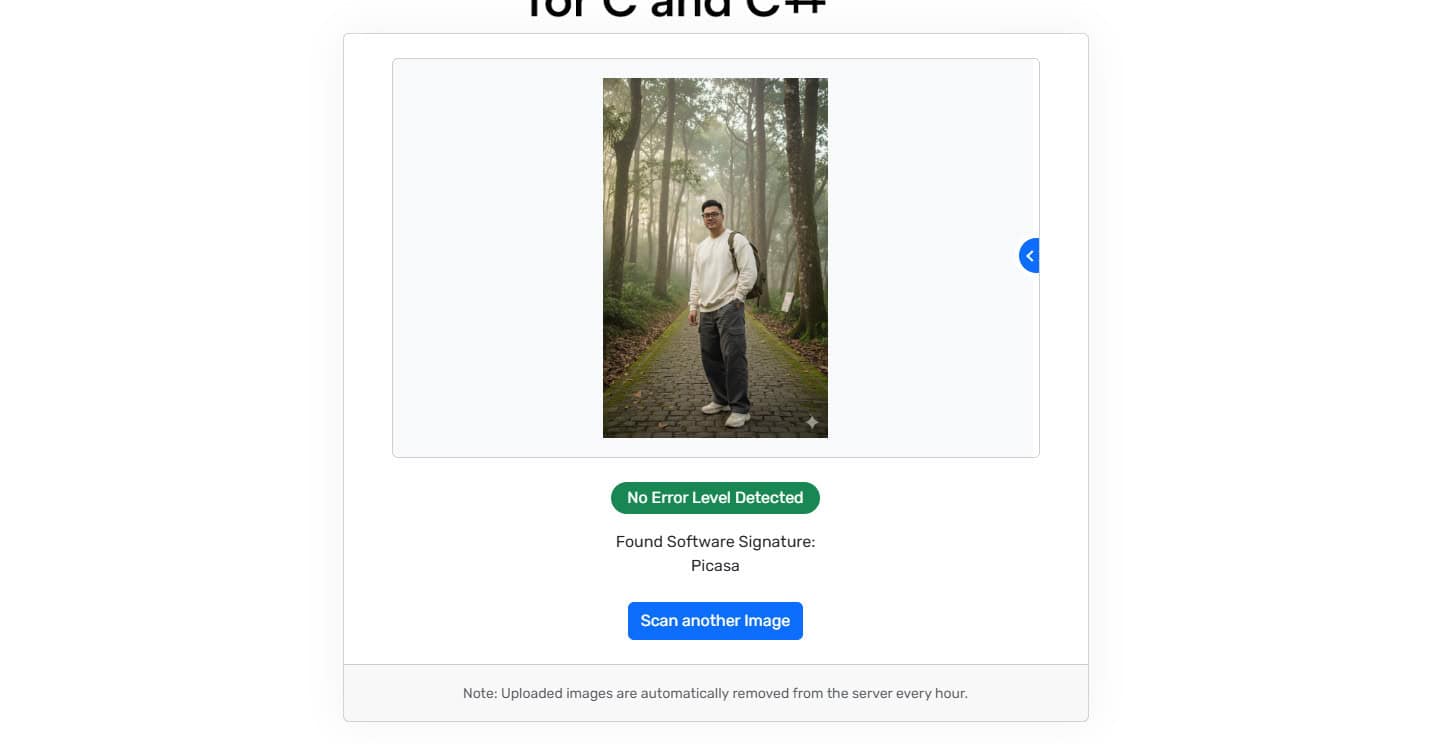
Fake Image Detector: Correctly classified image as AI-generated.
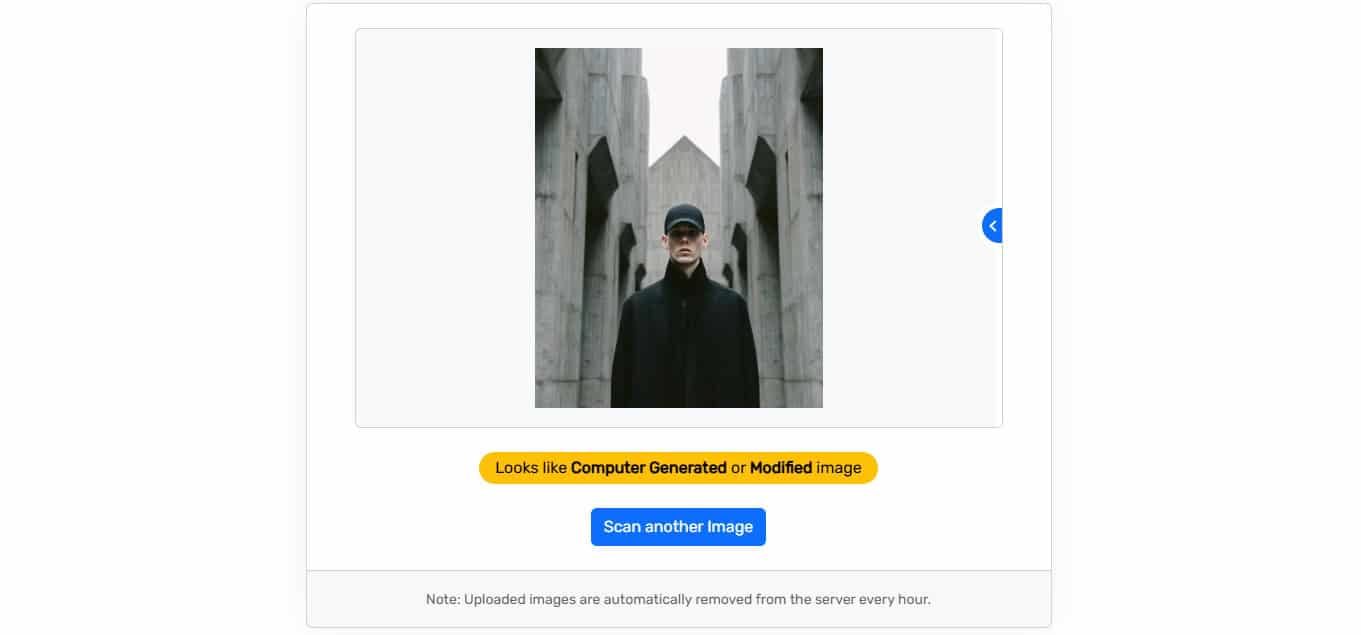
Test #2
Truthscan: Correctly classified image as AI-generated.
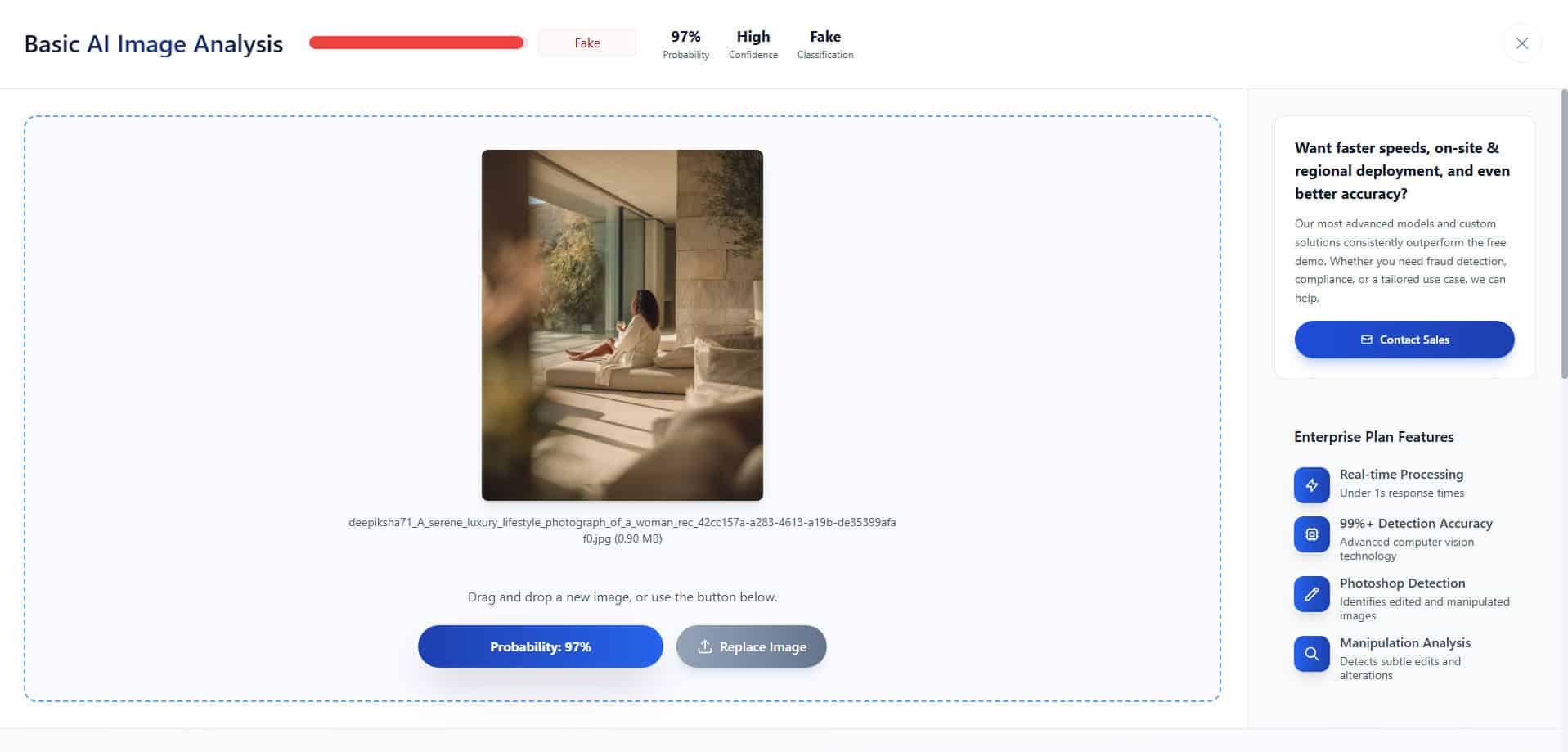
Fake Image Detector: Correctly classified image as AI-generated.
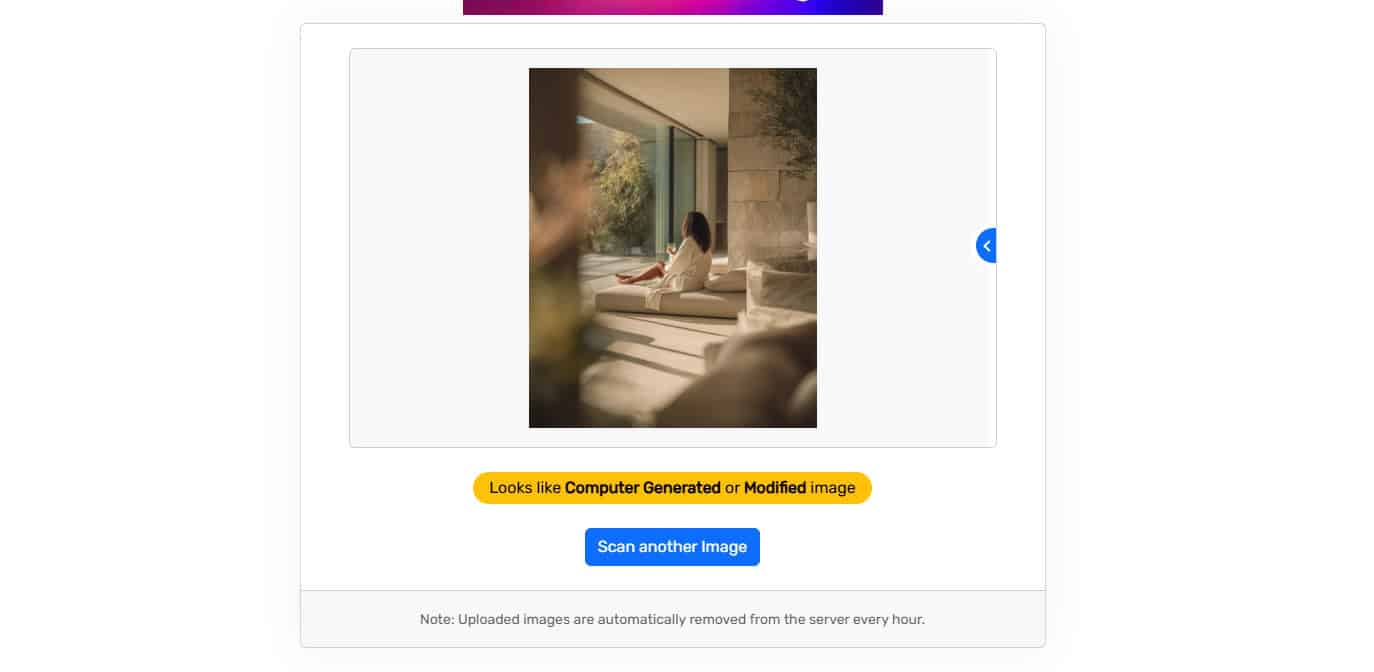
Test #3
Truthscan: Correctly classified image as AI-generated.
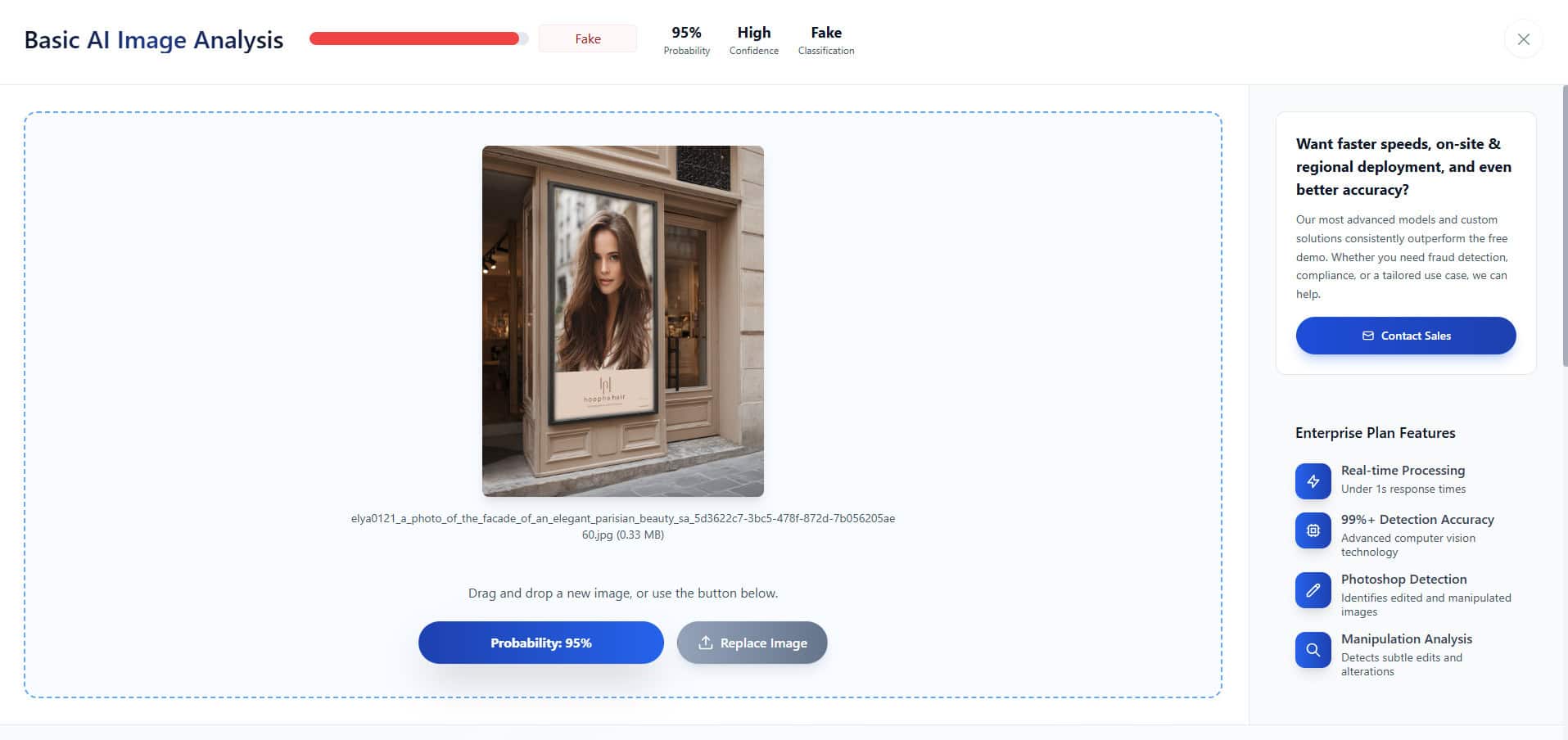
Fake Image Detector: Correctly classified image as AI-generated.
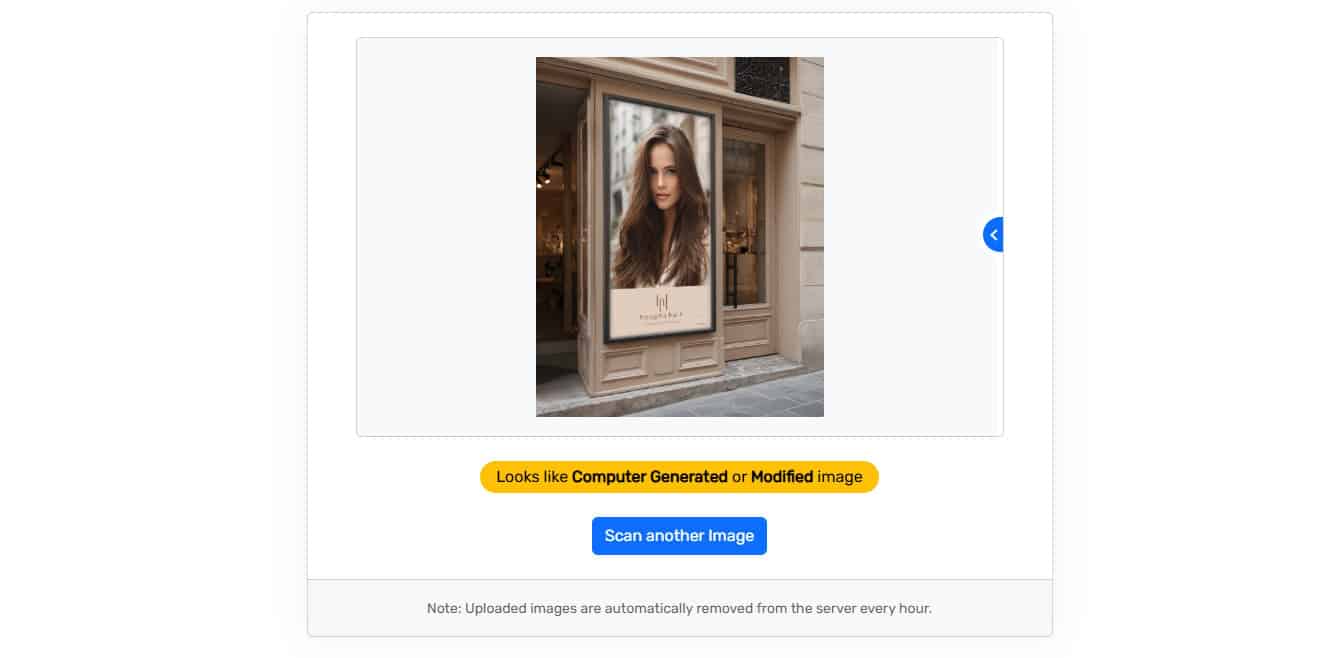
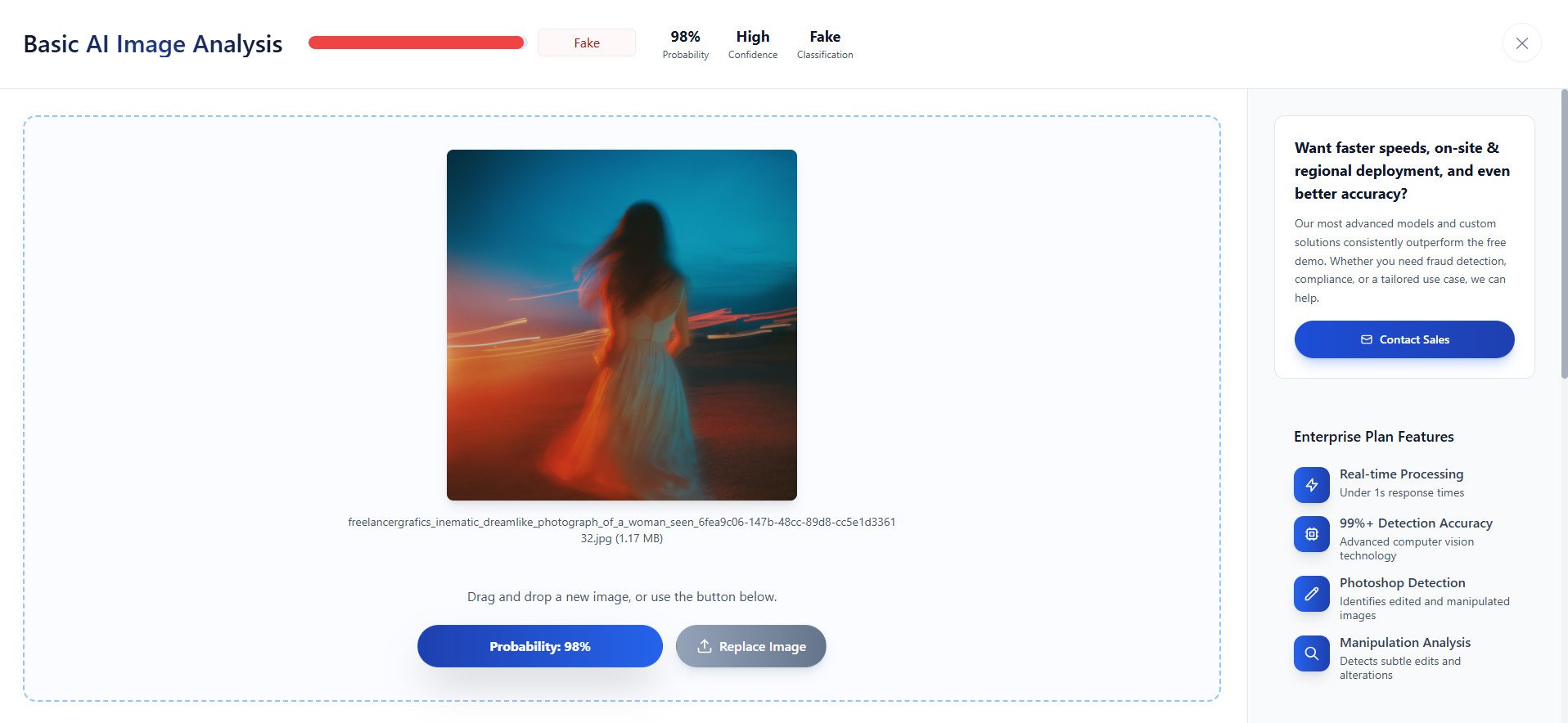
Test #4
Truthscan: Correctly classified image as AI-generated.
Fake Image Detector: Correctly classified image as AI-generated.
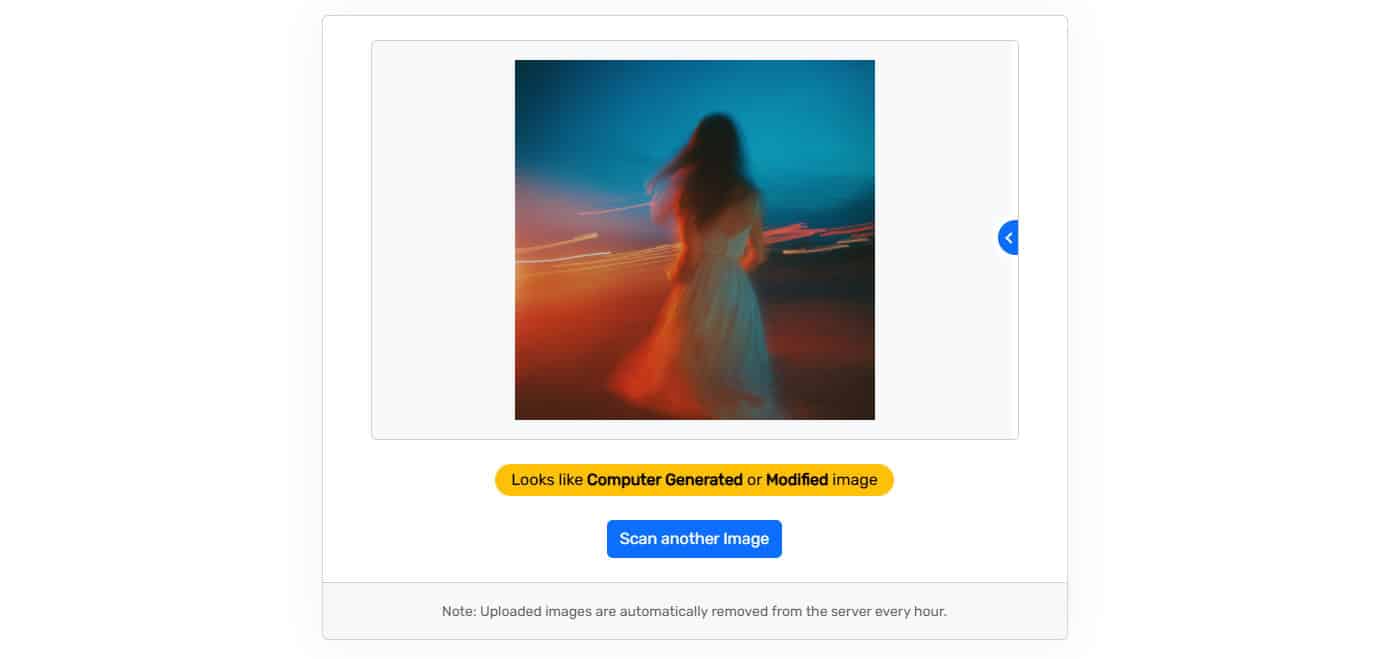
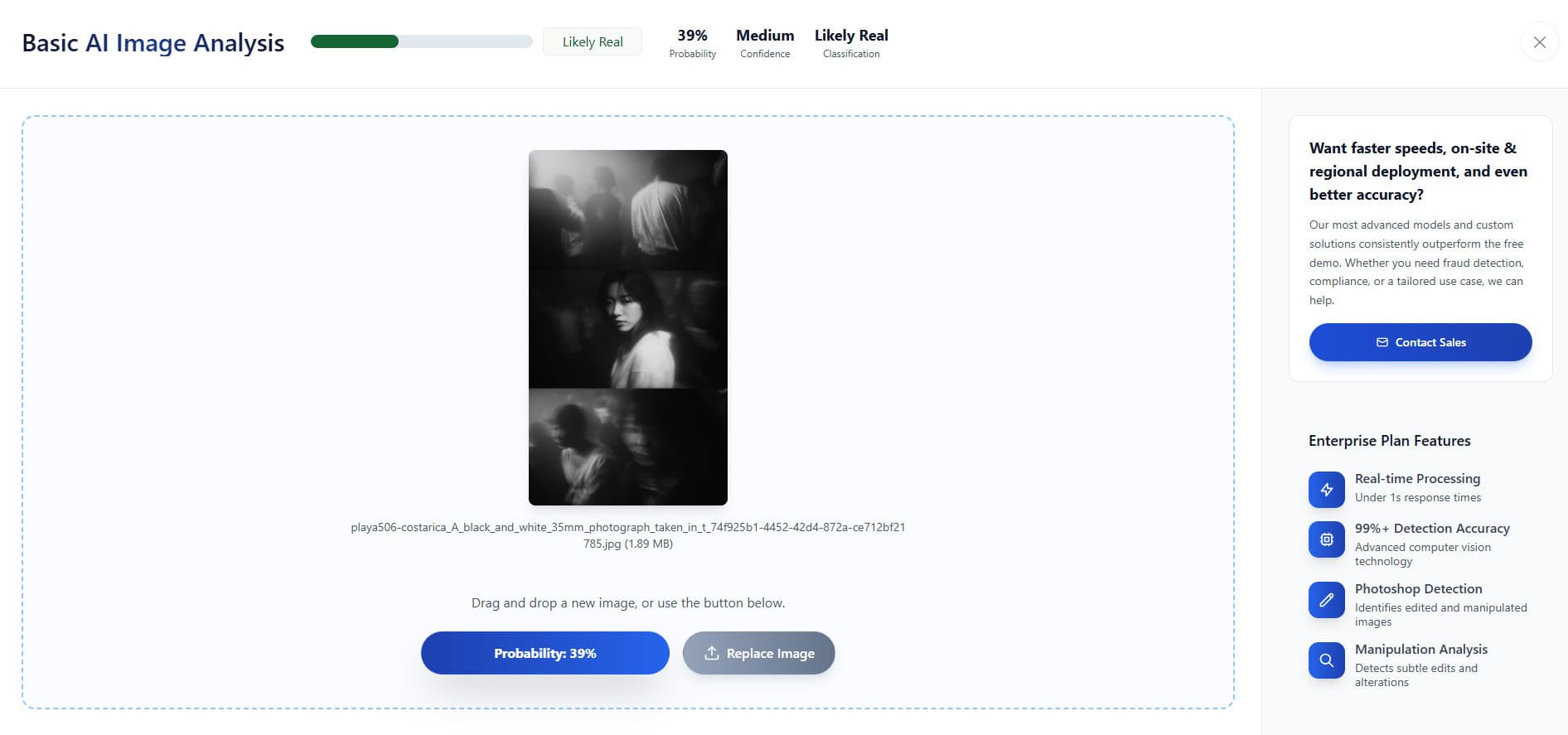
Test #5
Truthscan: Incorrectly classified image as human-created.
Fake Image Detector: Correctly classified image as AI-generated.
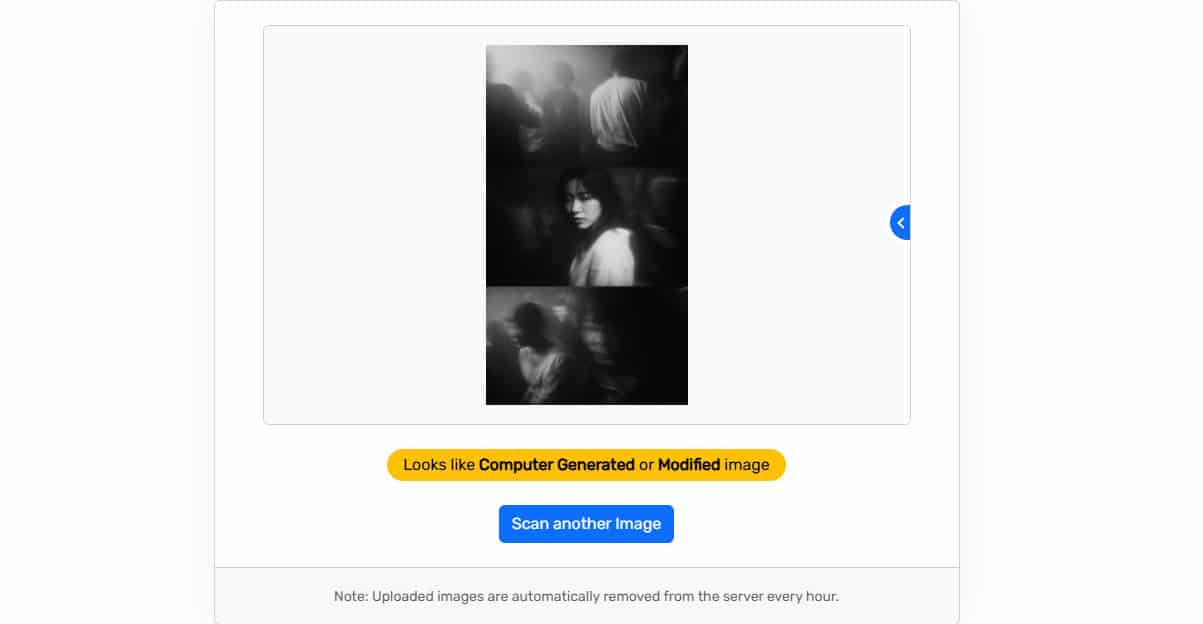
Test #6
Truthscan: Correctly classified image as AI-generated.
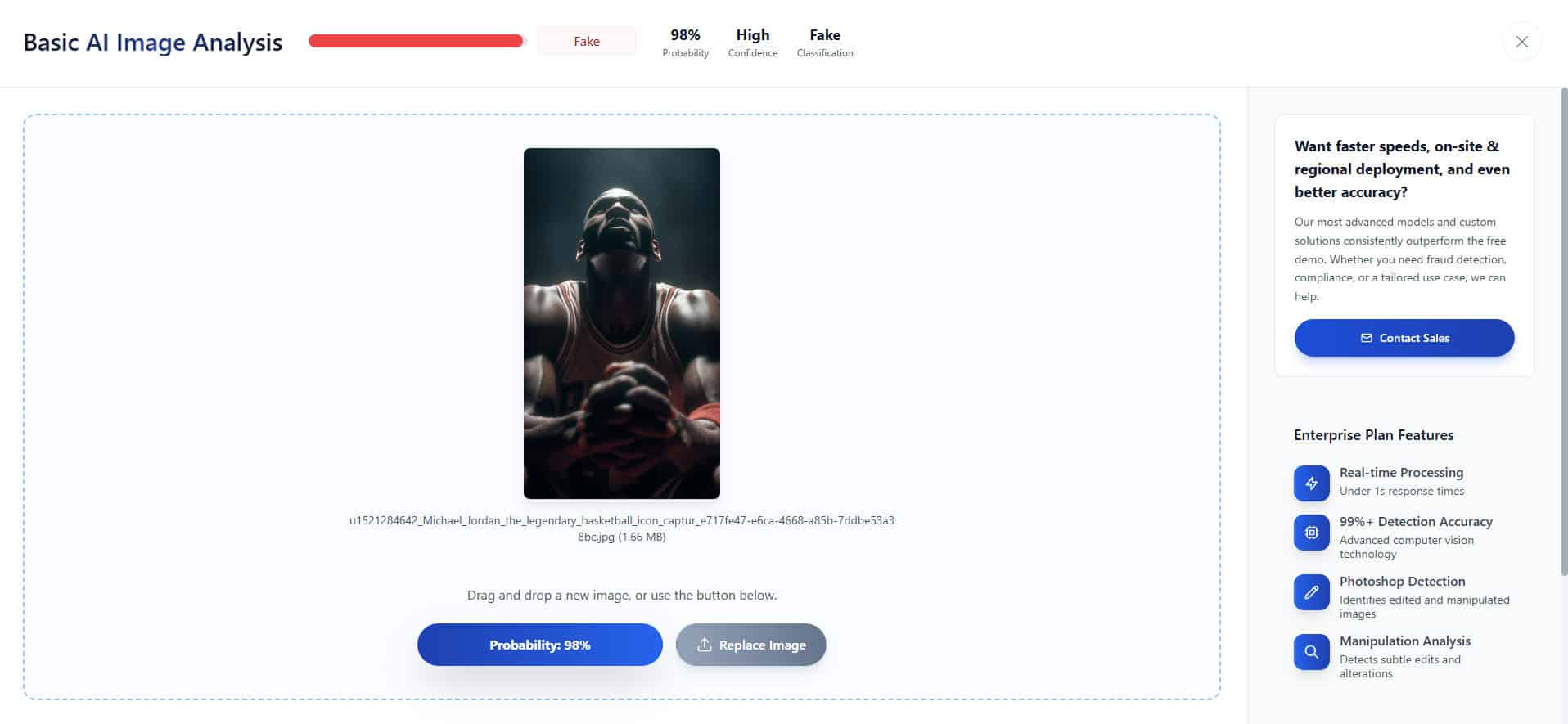
Fake Image Detector: Correctly classified image as AI-generated.
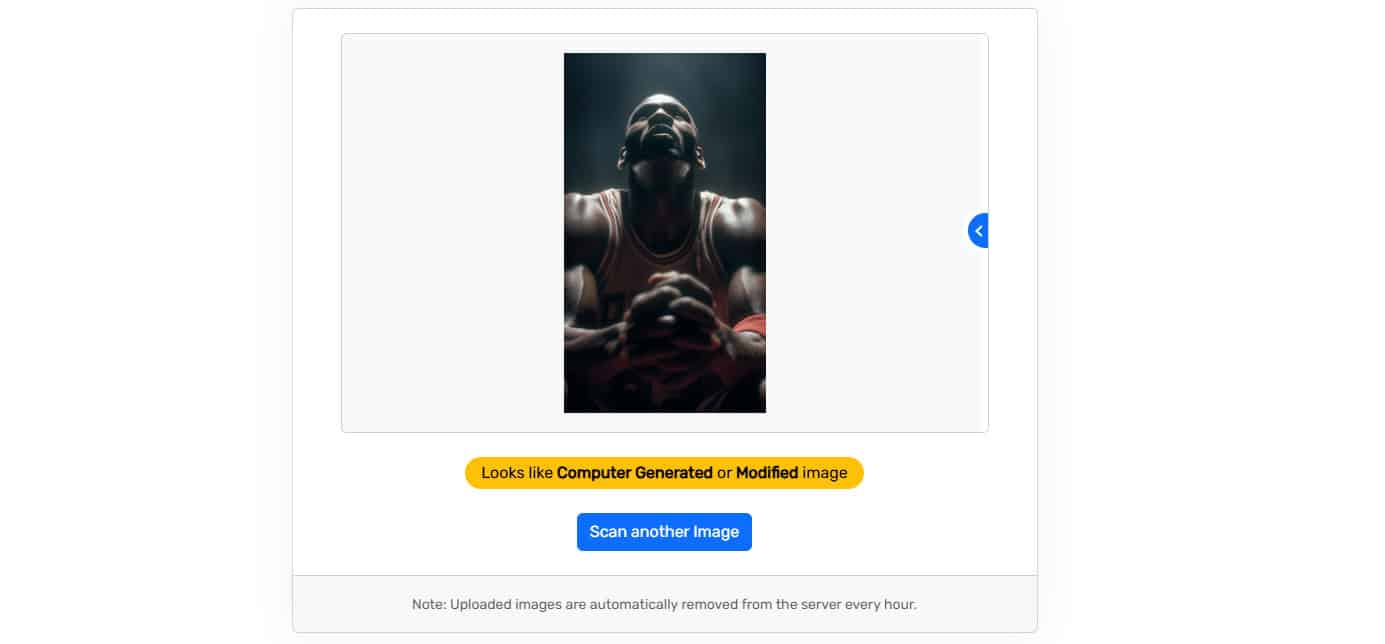
Test #7
Truthscan: Correctly classified image as AI-generated.
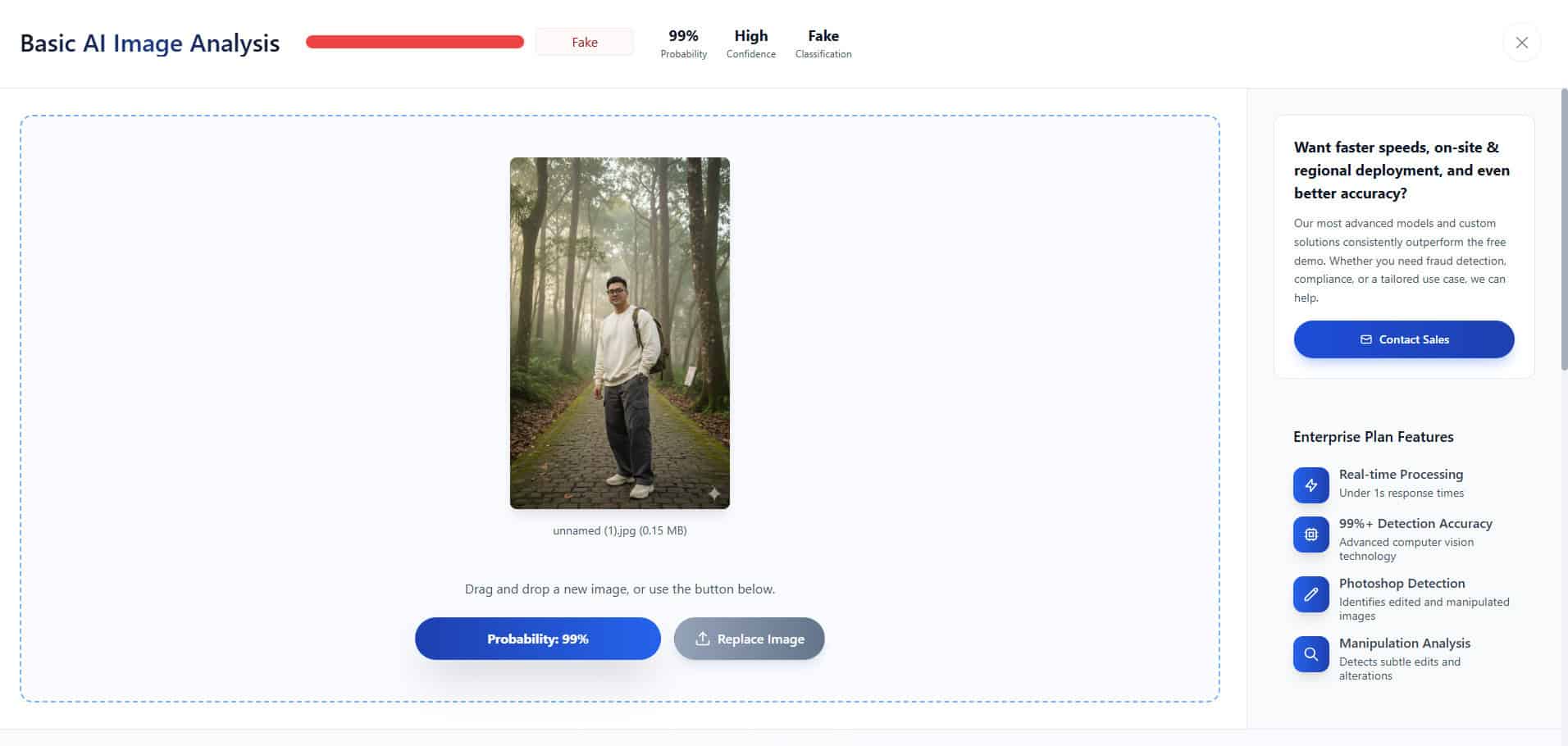
Fake Image Detector: Incorrectly classified image as human-created.
Average Score
Test Number | TruthScan | Fake AI Image Detector |
#1 | ✅ | ✅ |
#2 | ✅ | ✅ |
#3 | ✅ | ✅ |
#4 | ✅ | ✅ |
#5 | ❌ | ✅ |
#6 | ✅ | ✅ |
#7 | ✅ | ❌ |
Score | 85.71% | 85.71% |
The Bottom Line
Based on this round of testing, both Fake Image Detector and TruthScan landed 6 out of 7 correct, which, on the surface, puts them on equal footing. That alone says a lot — catching the majority of AI-generated images today is no small task, especially as image models continue to improve at an uncomfortable pace.
That said, the similarity in scores doesn’t tell the whole story.
TruthScan’s detections felt more intentional and consistent, especially when dealing with higher-quality AI images that sit closer to the realism threshold. Even when both tools reached the same final verdict, TruthScan provided a confidence score for the certainty of that verdict, rather than simply presenting a yes-or-no outcome.
Fake Image Detector deserves credit here. A 6/7 performance shows it can absolutely hold its own for quick checks and casual verification. But when you zoom out and think about long-term reliability — especially as AI images keep getting cleaner — TruthScan still feels like the more future-proof option.
Same score, different ceilings. And in this case, TruthScan’s ceiling is clearly higher.
Want to Learn Even More?
If you enjoyed this article, subscribe to our free newsletter where we share tips & tricks on how to use tech & AI to grow and optimize your business, career, and life.