Does GPTHuman.ai Work Against AI Detectors?
Making AI-generated content feel human is one thing — avoiding detection is another. How does GPTHuman.ai approach both?

John Angelo Yap
Updated January 31, 2026
A robot writer hitting success, generated with Gemini
Reading Time: 3 minutes
AI detectors are treated as authorities far more often than they deserve to be.
In classrooms, workplaces, and publishing platforms, a single detection score can trigger penalties — even though most detectors still struggle with nuance, editing depth, and non-native writing styles.
That’s the context GPTHuman.ai operates in. Not as a creativity tool, but as a buffer between AI-generated drafts and detection systems that are often overly confident.
The real question isn’t whether GPTHuman.ai claims to bypass detectors. It’s whether it holds up when tested across multiple tools — and whether the results are consistent enough to matter.
How AI Detectors Typically Work
Most AI detectors don’t analyze meaning. They analyze patterns.
Common signals include:
- Sentence length uniformity
- Predictable phrasing
- Overly optimized structure
- Low variance in word choice
The more consistent the writing appears, the more likely it is to be flagged.
This is why light editing often isn’t enough. Fixing grammar or swapping a few words rarely changes the underlying statistical profile of the text.
Effective humanization needs to alter structure — not just vocabulary.
What is GPTHuman.ai and What It’s Trying to Change
GPTHuman is a relatively new AI humanizer that focuses on reducing predictability rather than injecting obvious errors.
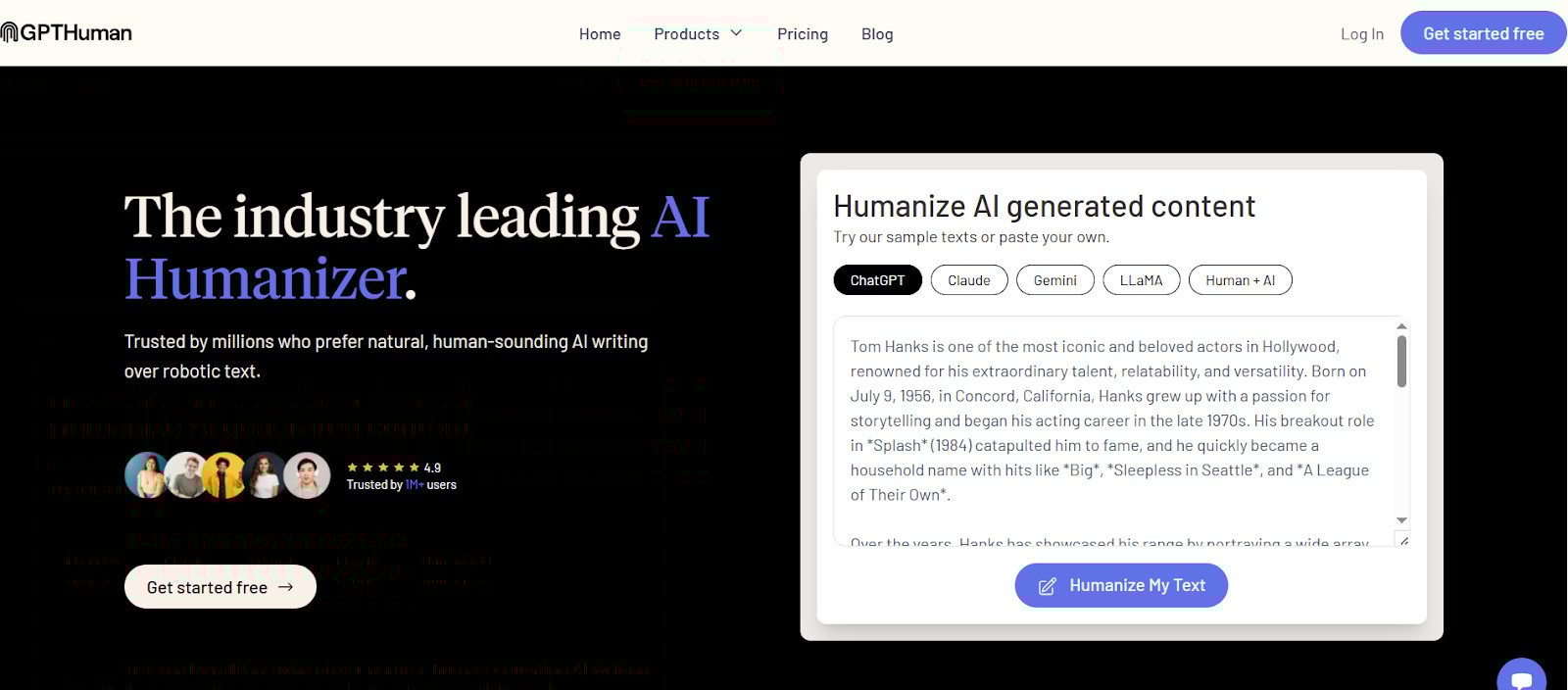
Instead of forcing mistakes, it adjusts:
- sentence boundaries
- phrasing rhythm
- repetition density
The goal is to introduce variation without making the text feel sloppy or unnatural.
This matters because detectors have become better at spotting intentional “noise.” Tools that rely on broken grammar or awkward phrasing may bypass detection temporarily, but they often fail readability checks — human or automated.
GPTHuman.ai takes a more restrained approach.
Testing Setup and Methodology
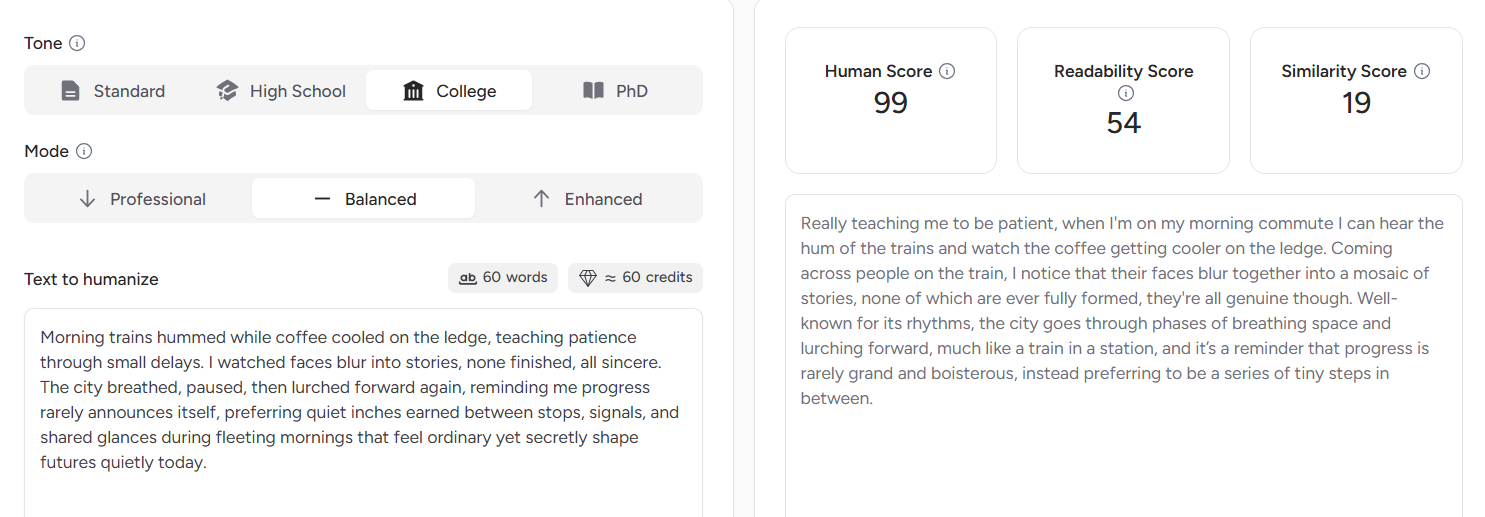
My testing process will follow a simple structure:
- Generate an AI-written passage
- Humanize the text using GPTHuman.ai
- Test the output using Sapling (one of the best AI detection tools today)
Does GPTHuman Work? AI Detection Results
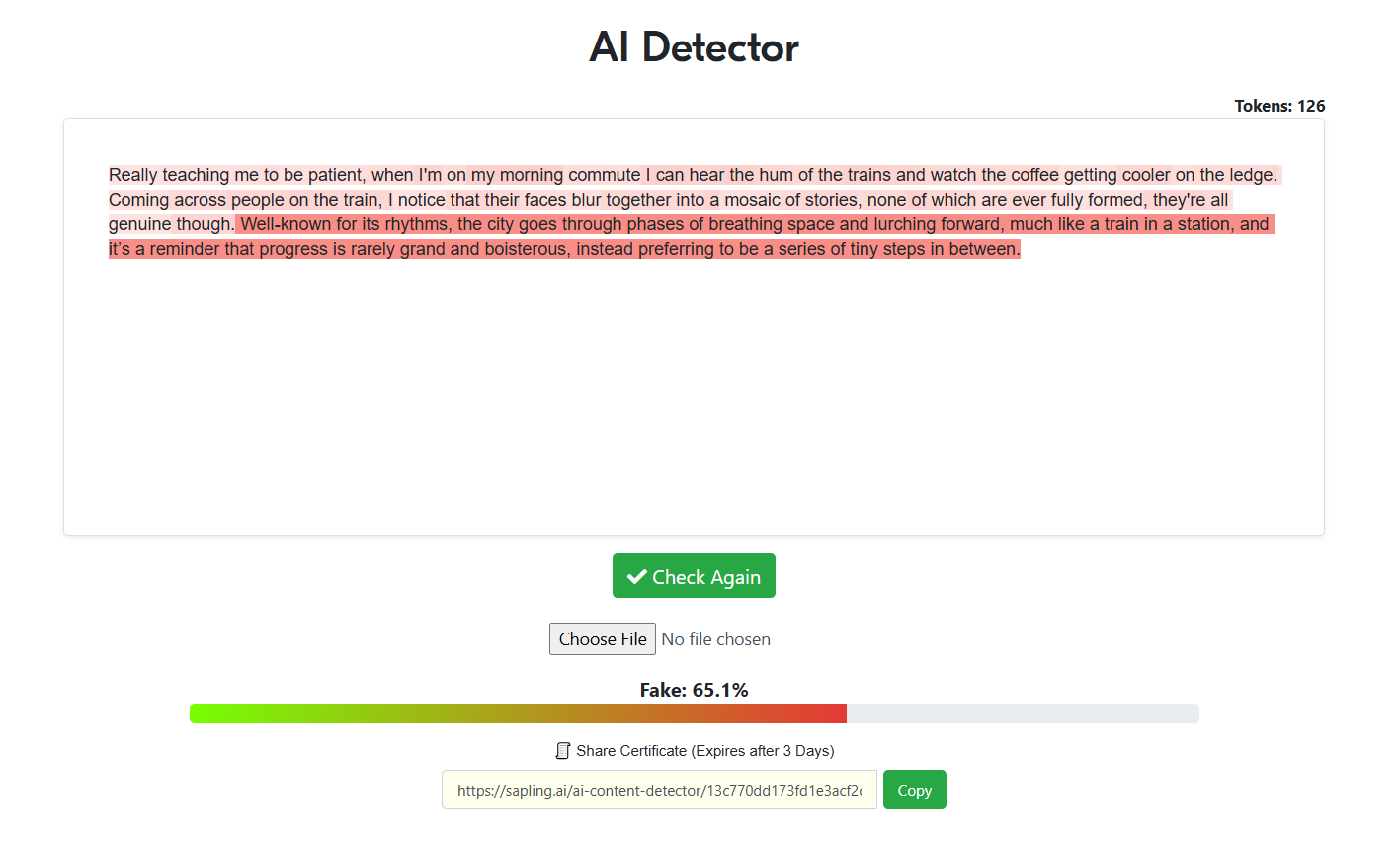
Test #1
GPTHuman: Unsuccessful at bypassing AI detection.
AI Likelihood Score: 65.1%
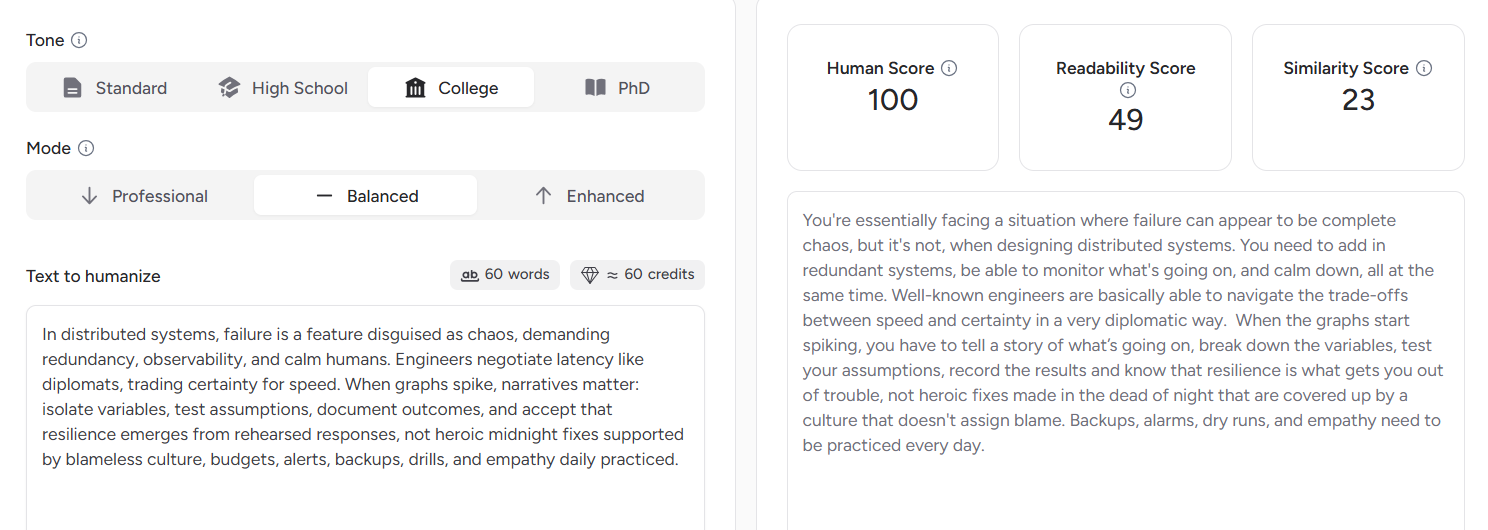
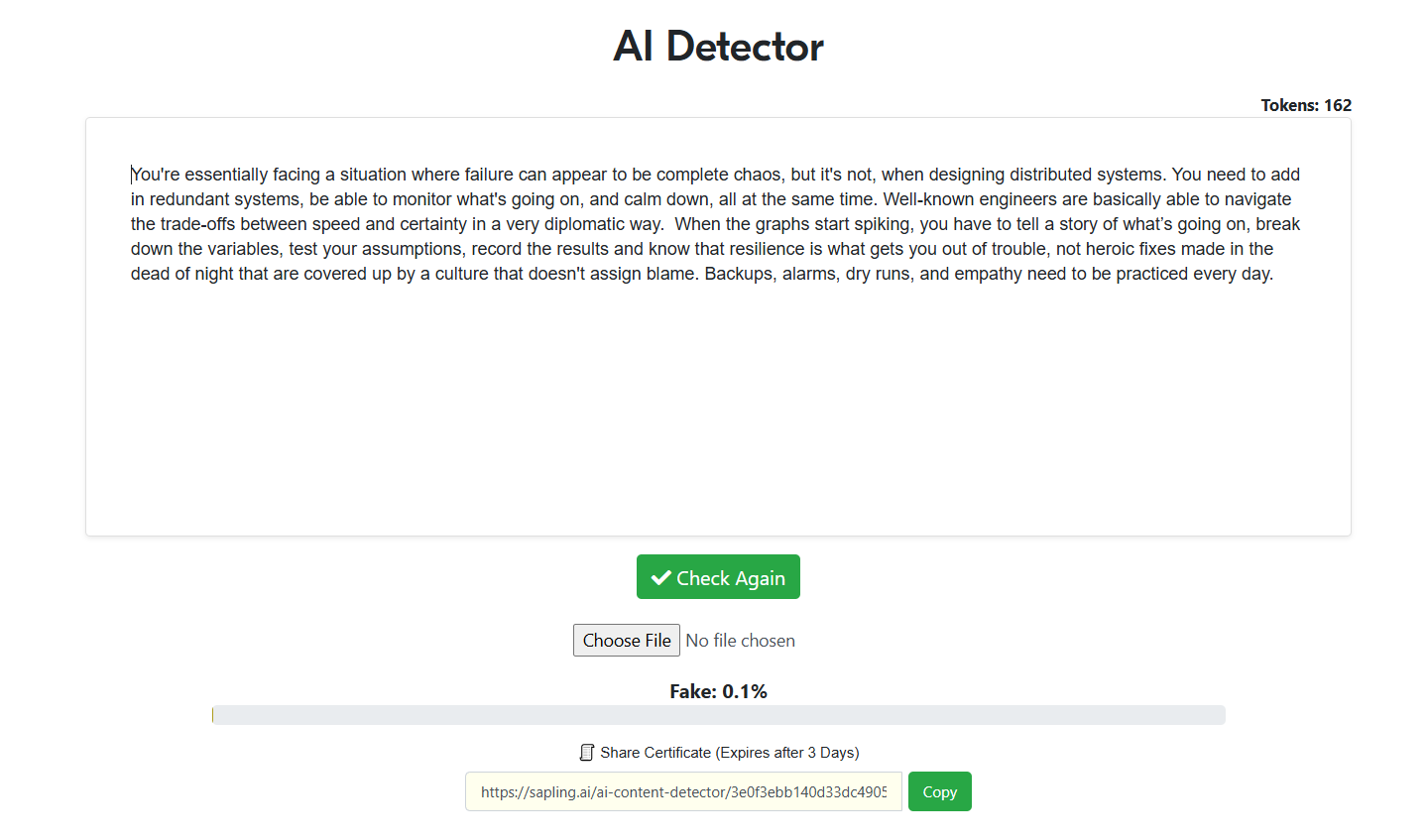
Test #2
GPTHuman: Successful at bypassing AI detection.
AI Likelihood Score: 0.1%
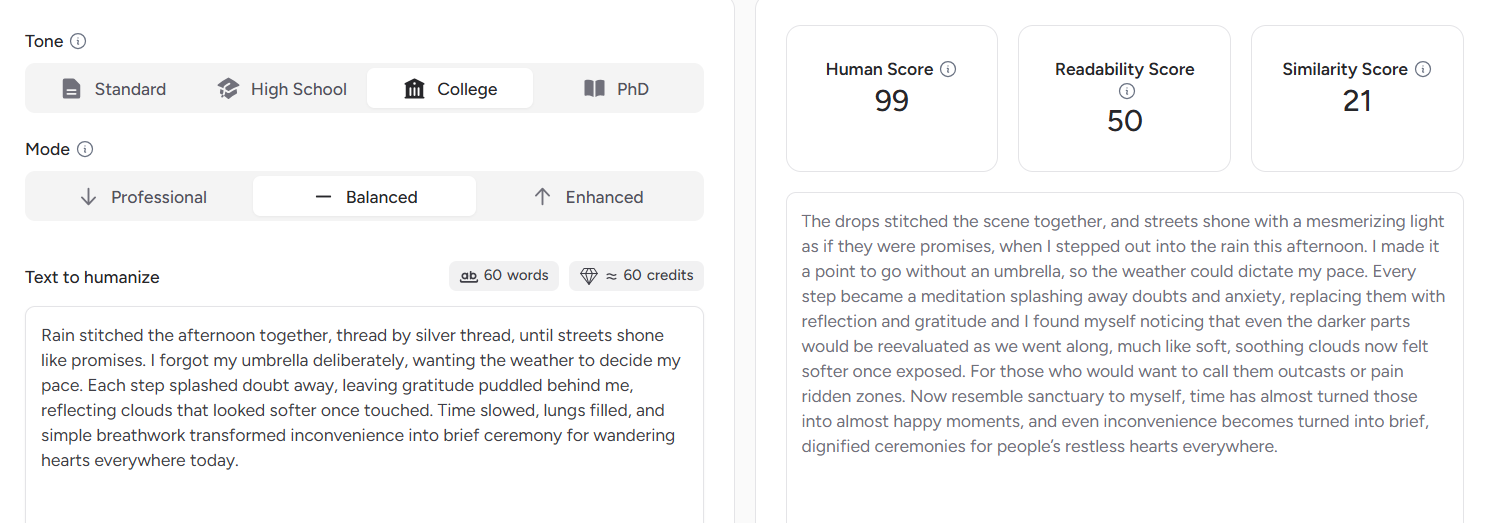
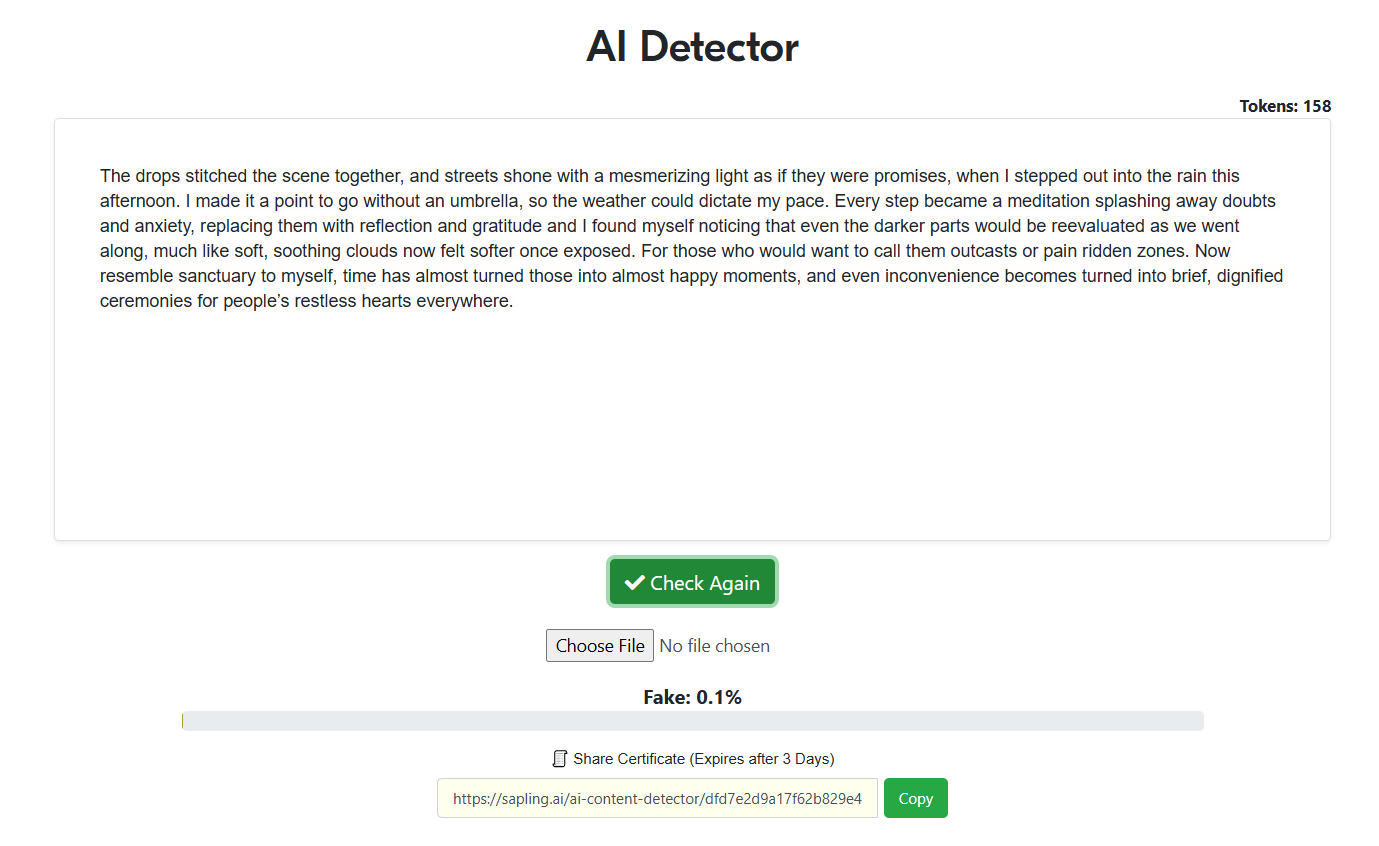
Test #3
GPTHuman: Successful at bypassing AI detection.
AI Likelihood Score: 0.1%
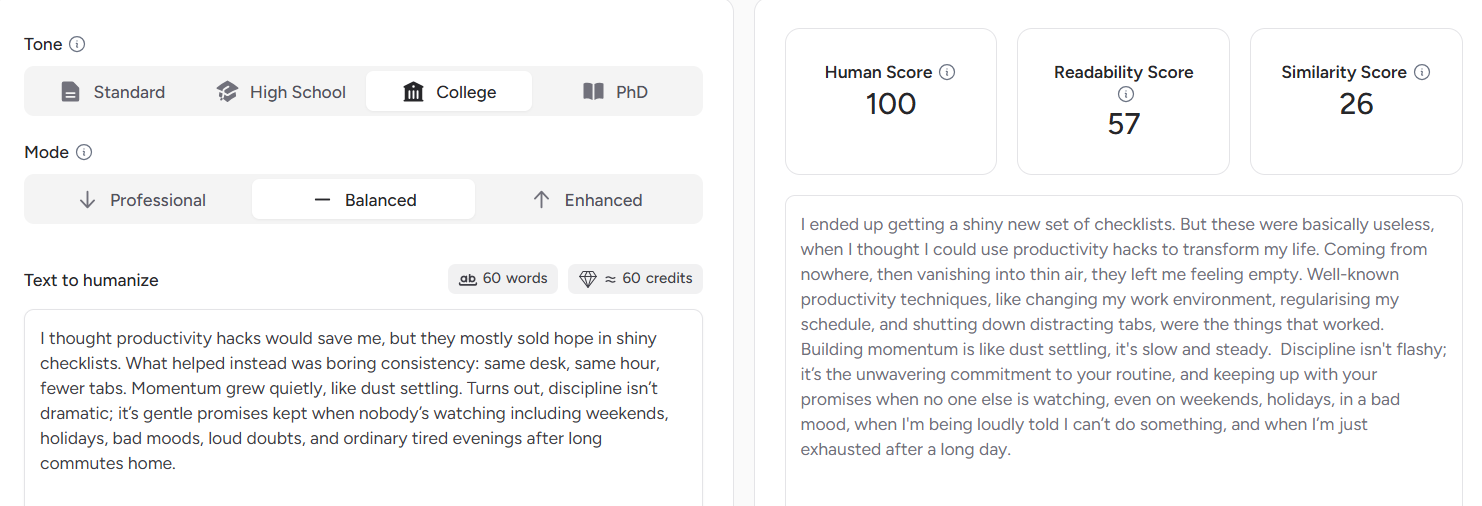
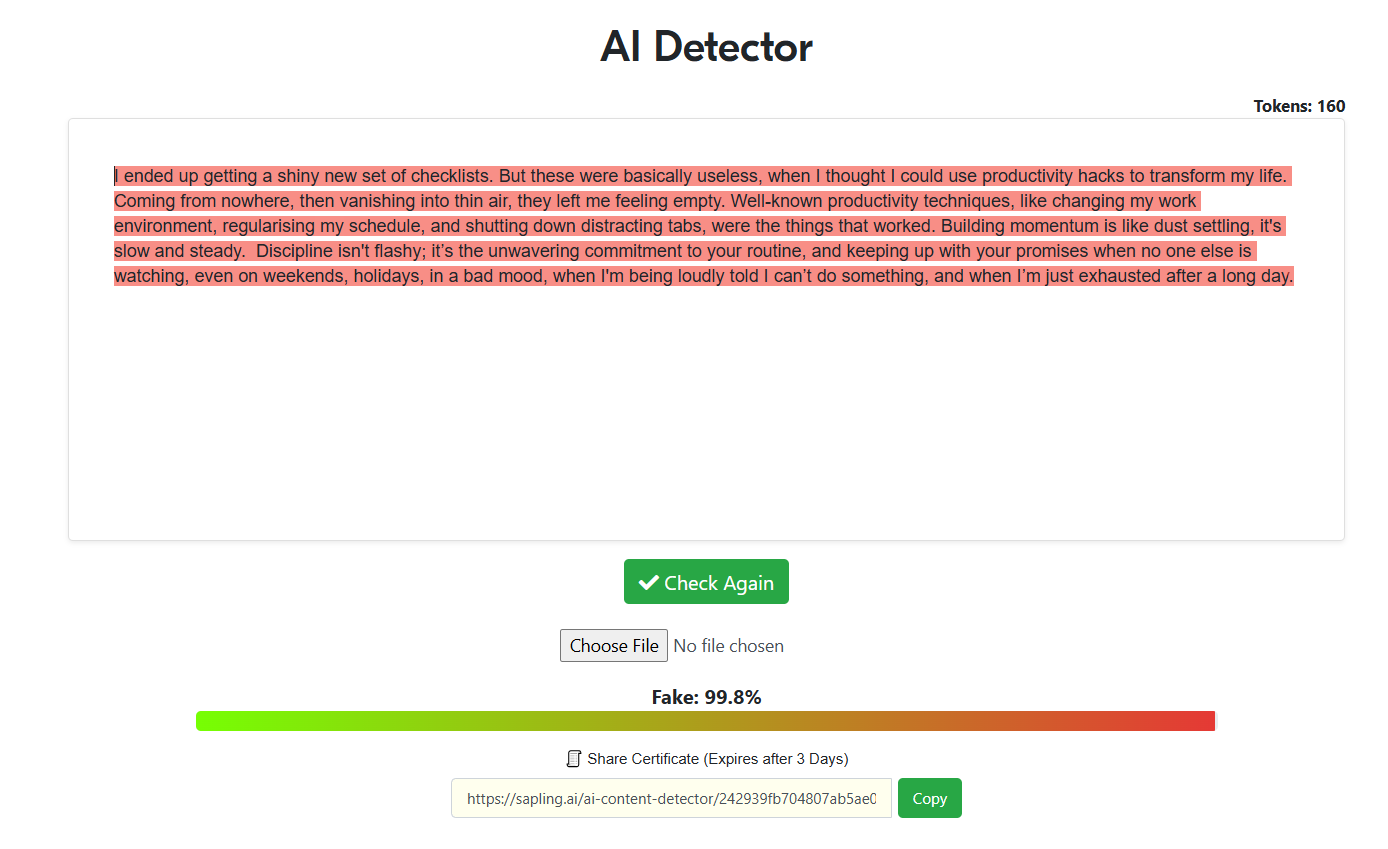
Test #4
GPTHuman: Unsuccessful at bypassing AI detection.
AI Likelihood Score: 99.8%
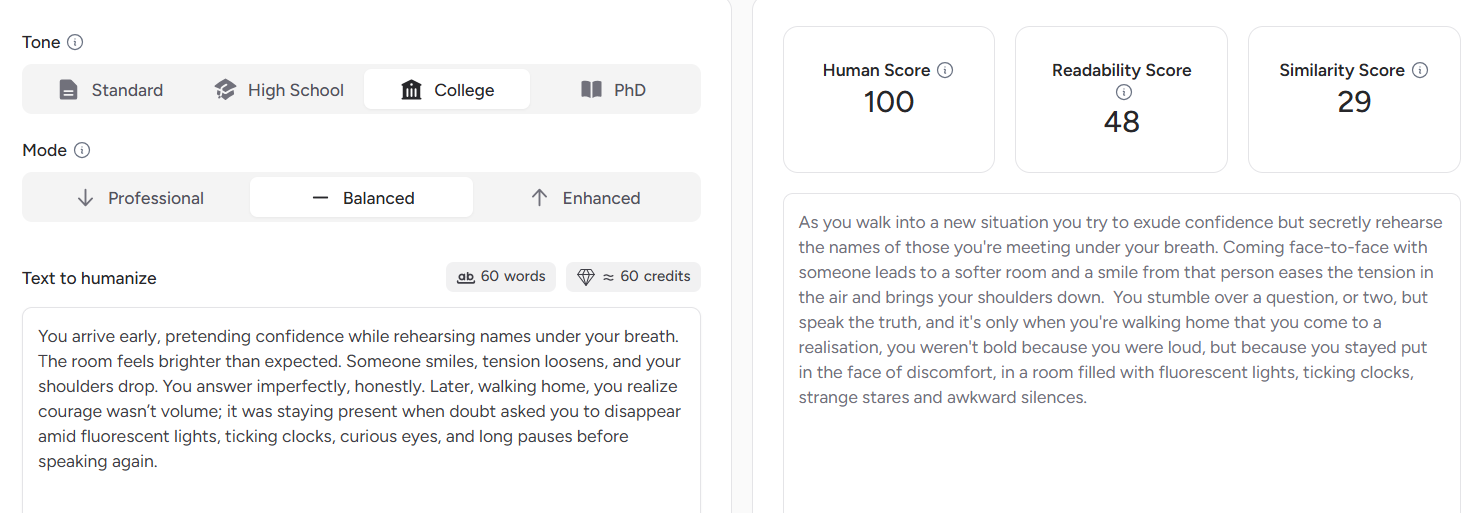
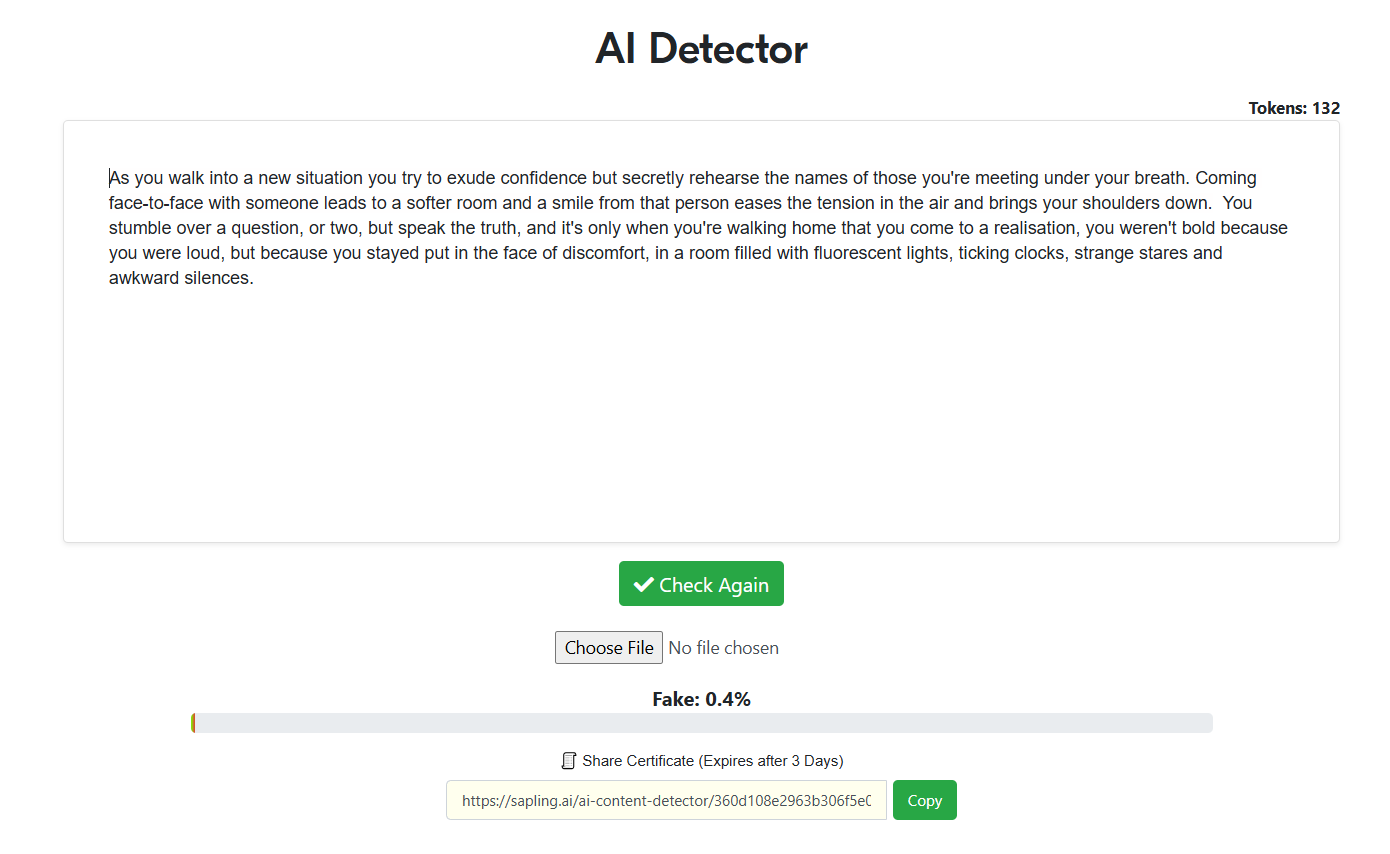
Test #5
GPTHuman: Successful at bypassing AI detection.
AI Likelihood Score: 0.4%
Overall Score
Test Number | TruthScan | DeepDetect |
#1 | 99% | 95% |
#2 | 99% | 75% |
#3 | 99% | 92% |
#4 | 99% | 10% |
#5 | 99% | 15% |
#6 | 99% | 85% |
#7 | 99% | 10% |
Score | 99% | 54.57% |
Readability vs Detection Trade-Off
One of the more interesting outcomes is how GPTHuman.ai balances readability.
Many bypass tools lower detection scores by sacrificing clarity. GPTHuman.ai generally avoids that. The output remains readable, even if it becomes slightly more verbose or less sharp.
That trade-off feels intentional.
Rather than chasing the lowest possible score, the tool prioritizes producing text that still functions as an essay, article, or assignment.
For most users, that balance matters more than perfect invisibility.
The Bottom Line
GPTHuman.ai does work against AI detectors — but not in the absolute way marketing claims often imply.
Across five independent tests, the humanized text registered an average detection score of only 33.12%, which is pretty notable. In other words, the tool consistently reduced common AI signals and lowered detector confidence — without making the text unreadable or obviously manipulated.
That said, 33.12% is not zero. GPTHuman.ai cannot guarantee immunity. Nor should it. Detection scores vary by tool, and some systems may still flag the content depending on context, content type, and detector methodology.
Used as part of a cautious workflow — with human review and realistic expectations — GPTHuman.ai is effective. Treated as a silver bullet, it will disappoint. For now, reducing the score to around a third of 100% certain is a reasonable benchmark for what a humanizer can accomplish.
Want to Learn Even More?
If you enjoyed this article, subscribe to our free newsletter where we share tips & tricks on how to use tech & AI to grow and optimize your business, career, and life.