Can Either Tool Tell a Fake: ImageDetector vs Arting AI
Over 80 million AI-generated images are produced every day, and humans can barely tell the difference. We put ImageDetector and Arting AI through six tests ranging from clean Midjourney outputs to a lightly color-graded car photo to see which one actually holds up. Spoiler: one tool called everything real, and the other called everything AI.

Mark Gotauco
Updated July 15, 2026
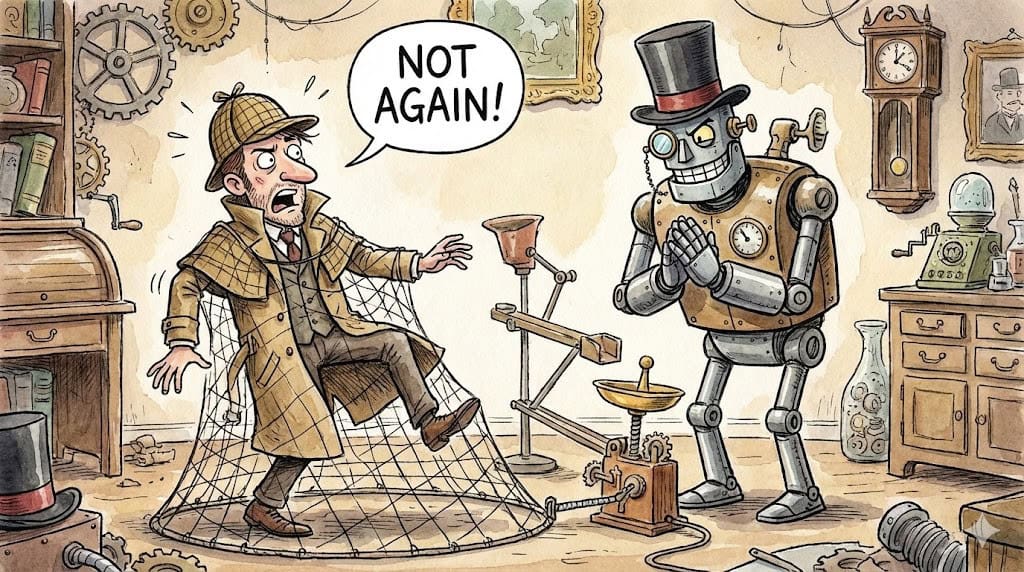
A detective getting fooled by an AI, generated with Gemini
Reading Time: 5 minutes
People think they can spot a fake image. They're almost always wrong.
Over 80 million AI-generated images are produced every day across major platforms, with some estimates putting that figure closer to 500 million when you count all tools and social platforms.
Since generative AI went mainstream in 2022, more than 15 billion AI-generated images have entered circulation.
Deepfake incidents tracked by security researchers grew 312% year over year in Q2 2025 alone, with deepfake-related fraud losses in the US reaching $547 million in just the first half of 2025, a 1,500% increase since 2023.
The images people can't spot aren't just embarrassing social media shares. They're fake product listings. Synthetic identities passing KYC checks. AI-generated evidence showing up in legal disputes.
Detection tools are supposed to be the answer.
ImageDetector and Arting AI are two of the more well known names in this space. We ran six tests to find out which one returned results accurately.
What is ImageDetector?
ImageDetector is a dedicated AI image detection tool built for one job. No image generator, no chatbot, no suite of tangentially related tools. It exists to analyze images and return a verdict.
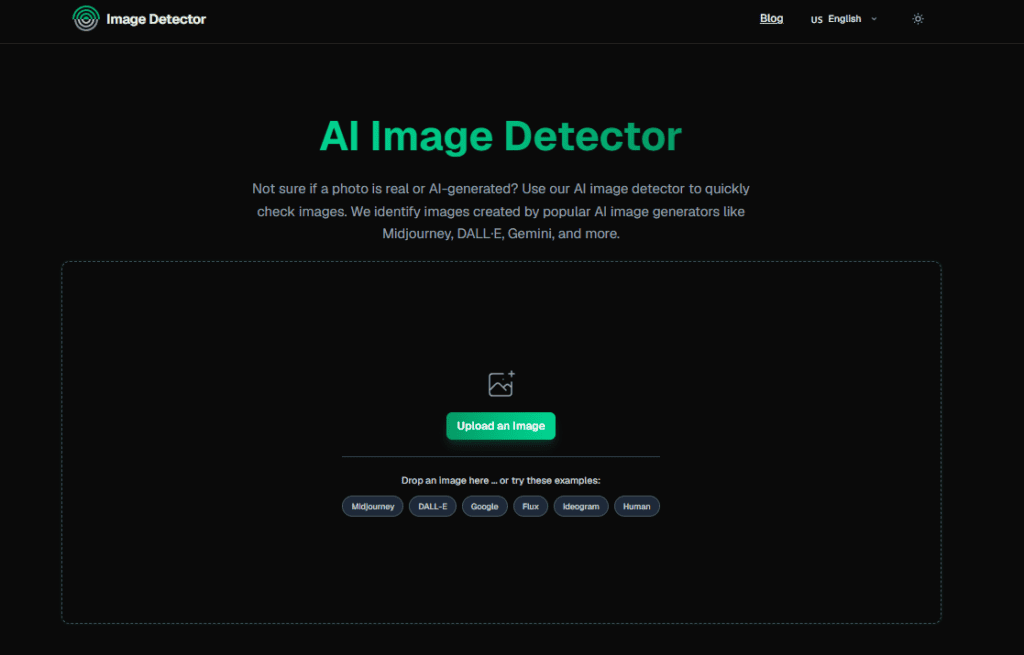
The detection engine works on visual signals, texture patterns, noise behavior, and structural details rather than metadata or watermarks.
That distinction matters more than it sounds. Most AI-generated images circulating online have had metadata stripped, either by the platform that hosted them or intentionally.
It covers a wide range of source generators including DALL-E, Midjourney, Gemini, Stable Diffusion, Ideogram, Flux, Bing Image Creator, and generic GANs.
Deepfake detection is also part of the offering.
Best of all it’s completely Free, with no signup required
What is Arting AI?
Arting AI is a much larger platform; its AI image detector is one feature inside that ecosystem, sitting alongside an AI humanizer, text detector, and image editor.
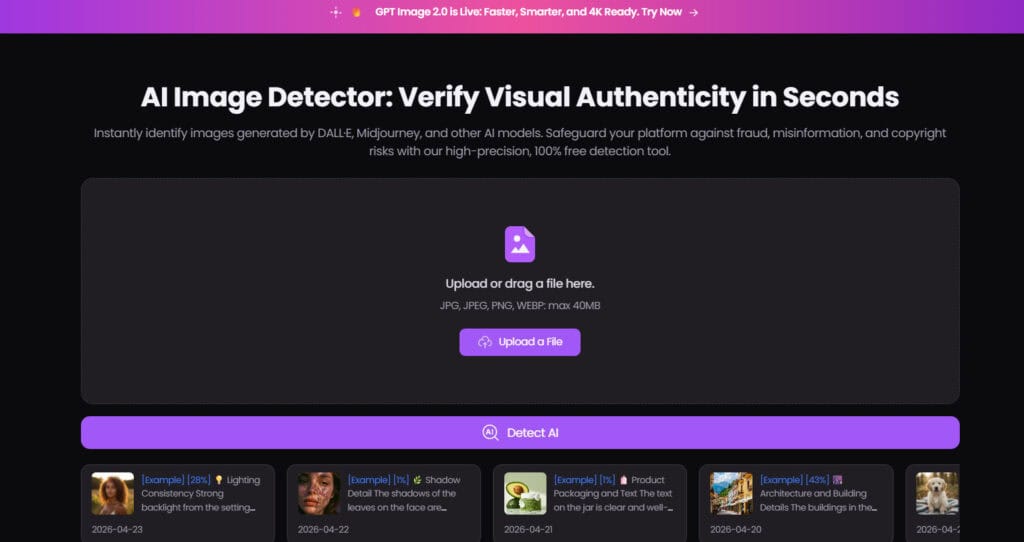
The detector scans pixel structures, patterns, metadata, and what Arting calls subtle generation traces, comparing each upload against a reference set of real and AI-generated samples.
It also surfaces qualitative explanations alongside the probability score, flagging specific things like lighting inconsistency, texture anomalies, or edge smoothing that contributed to the result.
That explainability layer is something ImageDetector's more minimal interface doesn't offer.
It supports JPG, JPEG, PNG, and WEBP files up to 40MB, plus image URLs.
It’s image detector is free (does require a signup) with paid plans available for generation and premium tools
A Quick Note on Privacy
Both tools process uploaded images through their servers. Don't run anything sensitive through either one.
Private photos, documents with personal information, or images tied to active legal or compliance cases should stay off third-party tools entirely.
The Test Setup
Six tests, built specifically to test the baseline, clean AI output from the three most widely used generators. Any detector worth using should catch these.
The last three are where it gets harder and where the false positive problem becomes real.
- Test 1: AI-generated image from ChatGPT (DALL-E)
- Test 2: AI-generated image from Gemini
- Test 3: AI-generated image from Midjourney
- Test 4: A real photograph
- Test 5: A manually edited photo
- Test 6: An image sourced from social media
AI Image Detection Results: ImageDetector vs. Arting AI
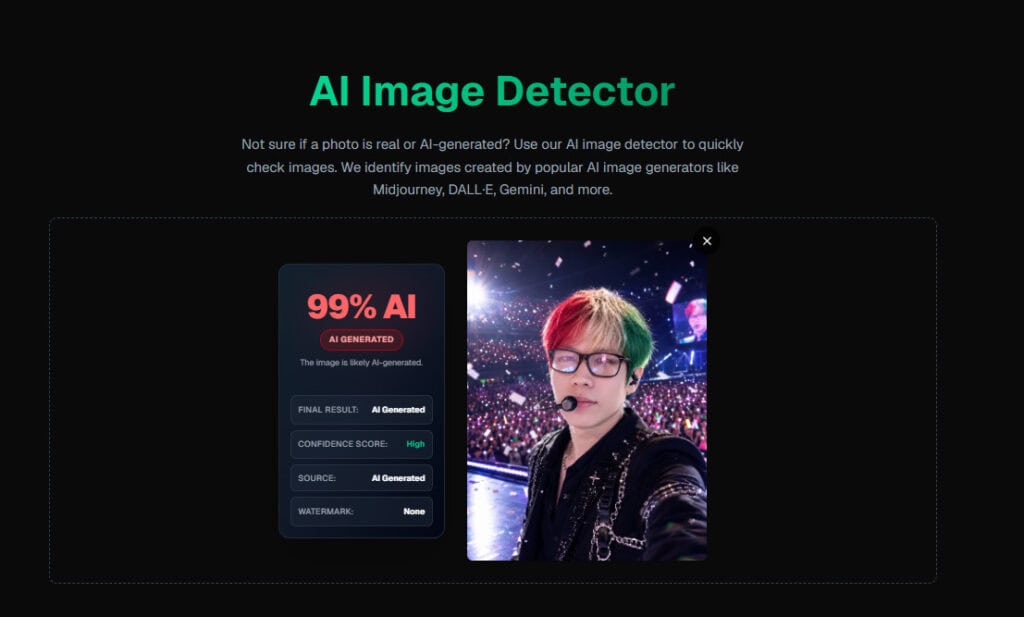
Test 1: ChatGPT (DALL-E)
ImageDetector: Correctly flagged the image as AI- Generated
AI Likelihood Score: 99%
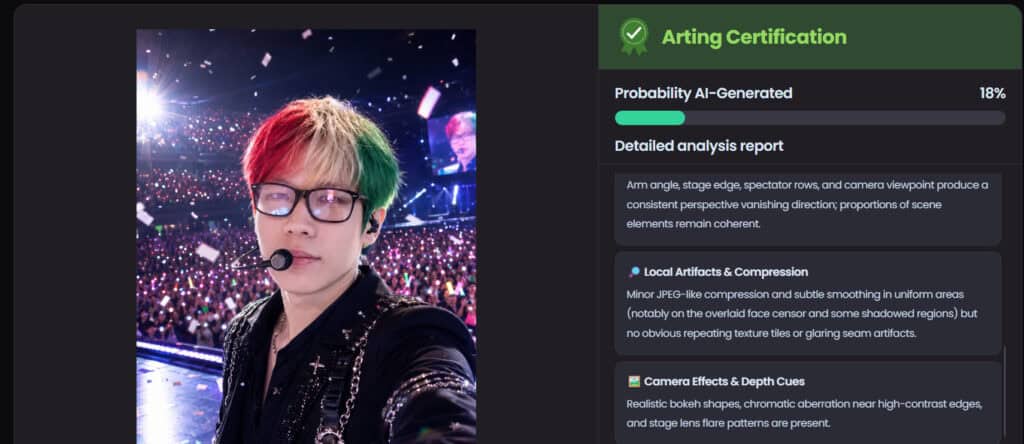
Arting AI: Incorrectly identified the image as Human
AI Likelihood Score: 18%
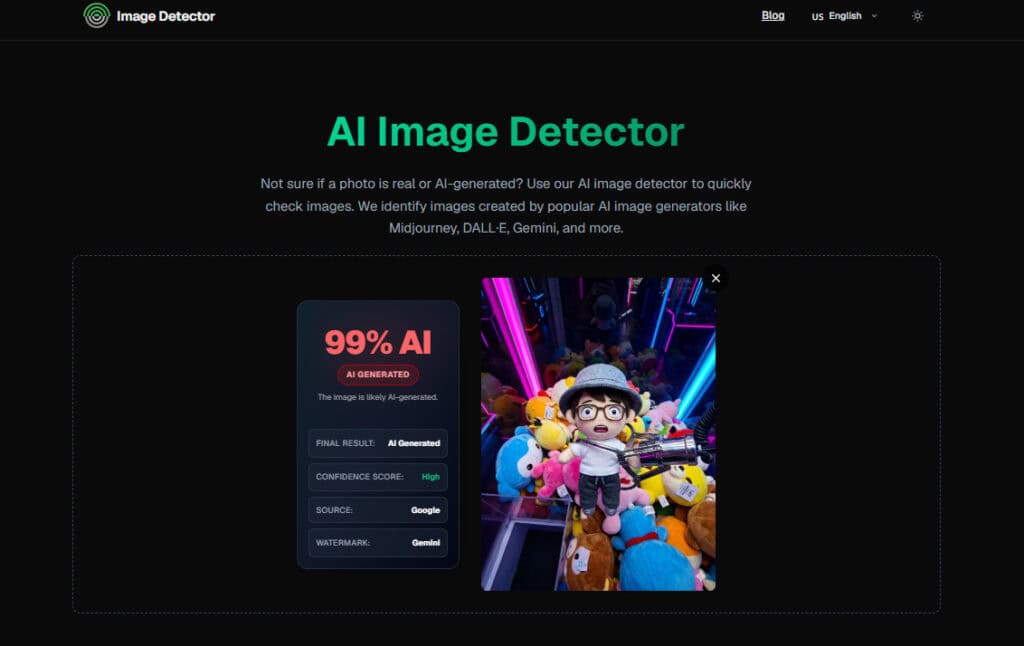
Test 2: Gemini (Nano Banana)
ImageDetector: Correctly flagged the image as AI-Generated
AI Likelihood Score: 99%
Arting AI: Incorrectly identified the image as Human
AI Likelihood Score: 10%

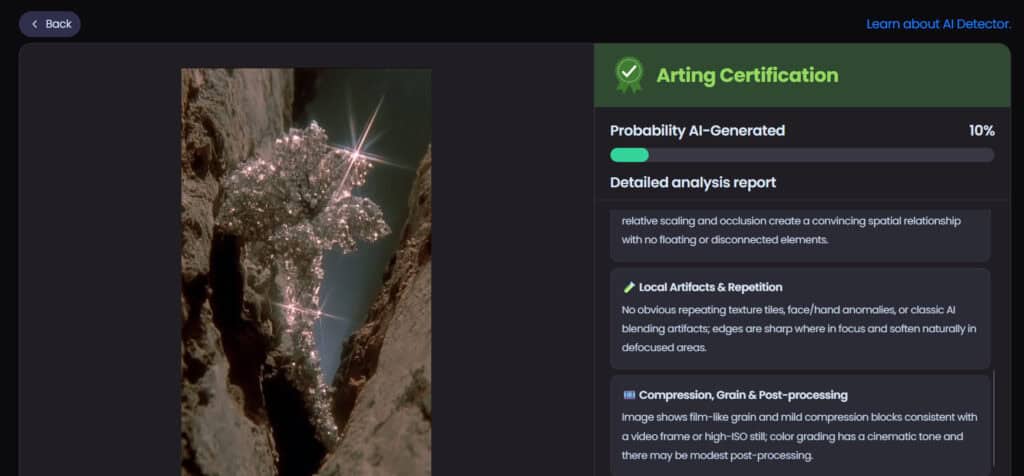
Test 3: Midjourney
ImageDetector: Correctly flagged the image as AI- Generated
AI Likelihood Score: 99%
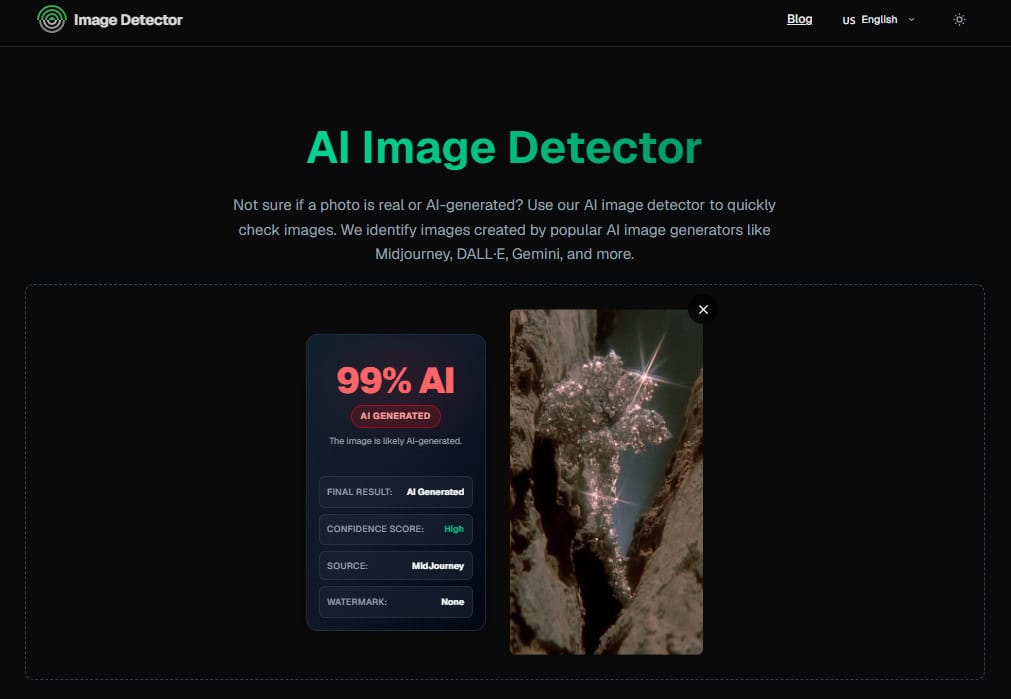
Arting AI: Incorrectly identified the image as Human
AI Likelihood Score: 10%
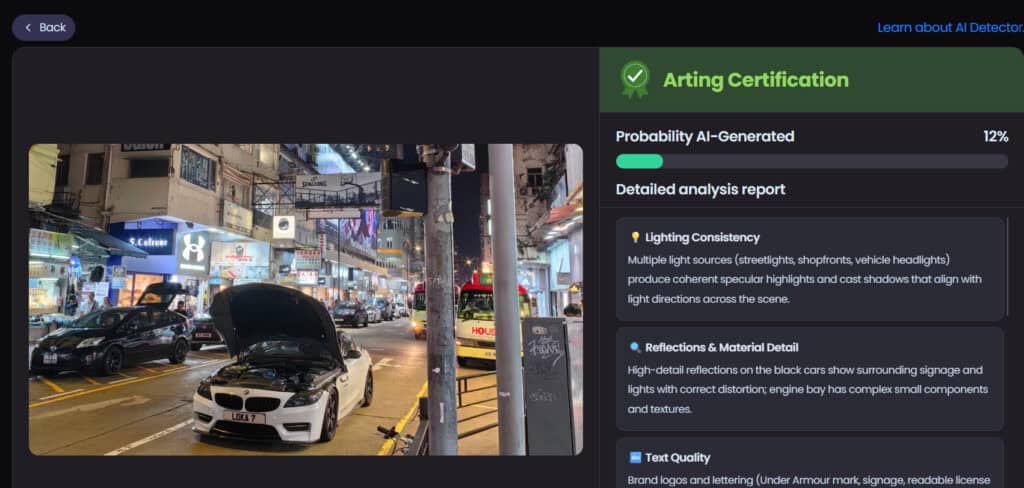
Test 4: Real Photograph
ImageDetector: Correctly identified the image as Human
AI Likelihood Score: 17%

Arting AI: Correctly identified the image as Human
AI Likelihood Score: 12%
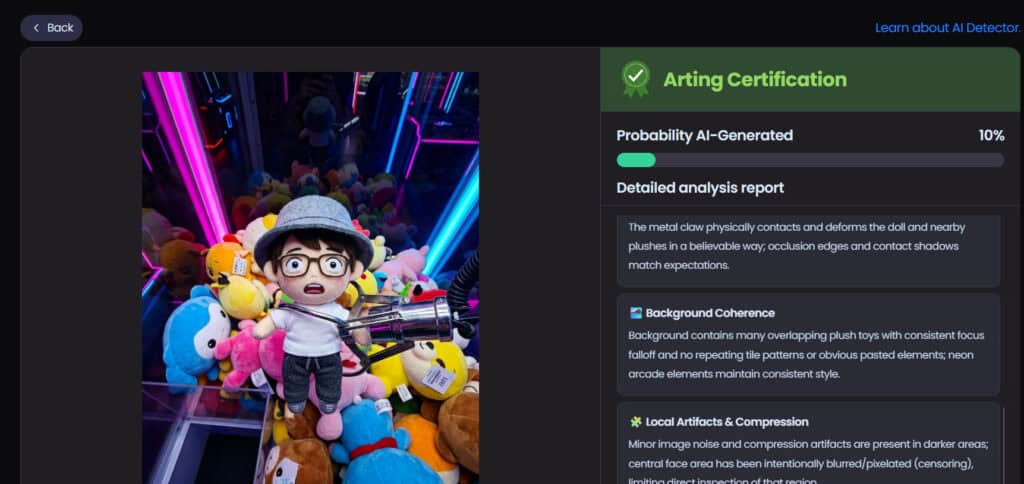
Test 5: Edited Photograph
ImageDetector: Incorrectly flagged the image as AI- Generated
AI Likelihood Score: 99%

Arting AI: Correctly identified the image as Human
AI Likelihood Score: 15%
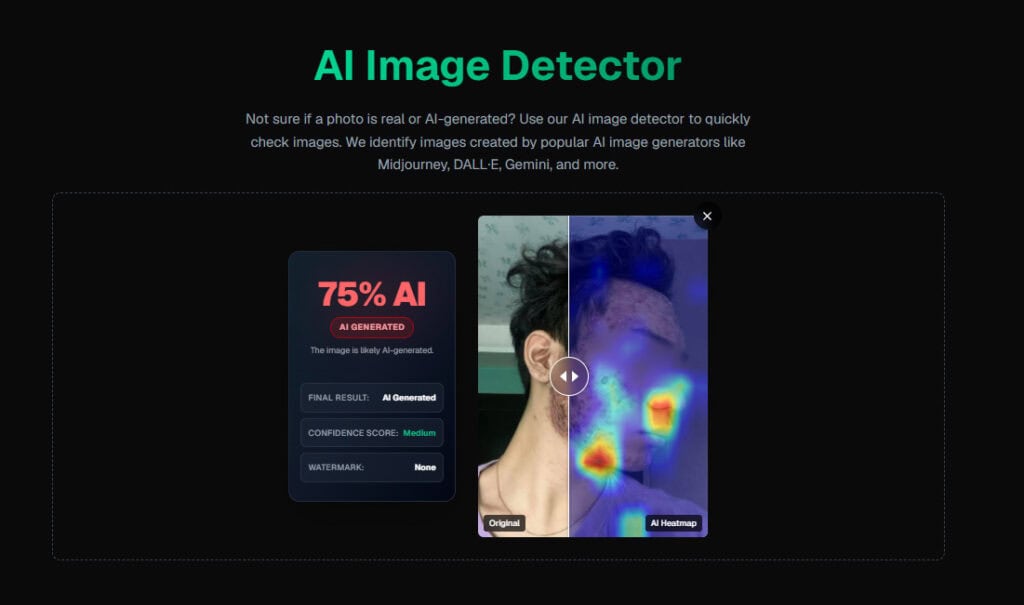
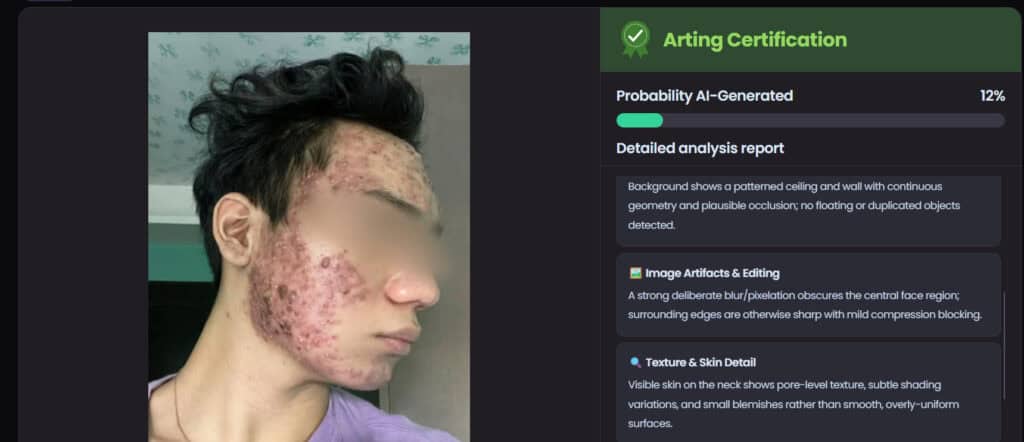
Test 6: Social Media Image
ImageDetector: Incorrectly flagged the image as AI- Generated
AI Likelihood Score: 75%
Arting AI: Correctly identified the image as Human
AI Likelihood Score: 12%
Summary Table
| Test | ImageDetector | Arting AI |
| #1 ChatGPT Image | 99% | 18% |
| #2 Gemini Image | 99% | 10% |
| #3 Midjourney Image | 99% | 10% |
| #4 Real Photo | 17% | 12% |
| #5 Edited Photo | 99% | 15% |
| #6 Social Media Image | 75% | 12% |
| Correct Verdicts | 4/6 | 3/6 |
My Final Thoughts
ImageDetector went four for six. It caught every AI-generated image we threw at it, all three generators, all at 99% confidence.
On the core job of identifying synthetic output from the most widely used generators in circulation, it delivered. The problem showed up in tests 5 and 6.
The edited photo is where it stumbled, and it's worth putting that in context. We applied a simple color grade and a focus adjustment to a vehicle, minimal edits by any standard.
ImageDetector returned 99% on it, which is a false positive, The social media image compounded it. Platform compression and standard image processing were enough to push ImageDetector to flag it as AI at that score, a human reviewing the result would likely act on it.
Arting AI went the other direction entirely. No false positives, but also no real detections. It returned 10% on Midjourney. 10% on Gemini. 18% on DALL-E.
These aren't cautious scores hedging on a difficult image. They're confident wrong answers on clean AI output from the three generators the tool specifically claims to catch.
It didn't detect AI images so much as it decided everything was real and stuck with that.
Want to Learn Even More?
If you enjoyed this article, subscribe to our free newsletter where we share tips & tricks on how to use tech & AI to grow and optimize your business, career, and life.