TruthScan vs. Illuminarty: Which AI Image Detector Gets It Right?
AI images are everywhere, but not all detectors are equal. Does Illuminarty have what it takes to bring down TruthScan?

John Angelo Yap
Updated February 17, 2026

Reading Time: 4 minutes
AI image detection used to be simple, mostly because anyone with two eyes can spot an AI image any time of day. Today, a good AI image detector has to do more than just catch obvious fakes. It needs to recognize different model signatures, understand artifacts hiding under clean lighting, and spot small inconsistencies even when the image looks perfectly normal to a human eye.
Two tools that claim they can do this? TruthScan and Illuminarty.
And if you're new to this space, these two have very different audiences. Illuminarty built its reputation by being one of the first widely-used AI image detectors. TruthScan, on the other hand, is part of a full security-grade AI detection suite. It’s built for speed, forensic-level investigations, and enterprise use cases.
So the question becomes: when both claim to detect AI-generated images, which one is actually more accurate? And more importantly — which one should you trust?
Let’s break it down.
What is TruthScan?
TruthScan is part of an AI detection suite built for enterprise-level authenticity checks. It’s not just for images — it handles AI text, audio, deepfakes, email scams, and real-time monitoring. But for this article, we’re focusing on the AI Image Detector.

Here’s what sets TruthScan apart:
- Designed for forensic-level accuracy
- Part of a larger ecosystem of detection tools
- Ultra-fast detection (under 100ms)
- Built to catch both AI-generated and AI-manipulated images
- Consistently strong performance across different AI models
- Doesn't rely on one single “tell-tale sign” — it analyzes multiple signals in parallel
If you run a business, a moderation pipeline, or anything involving user-submitted content, TruthScan is built for you. It's the opposite of a “novelty checker.”
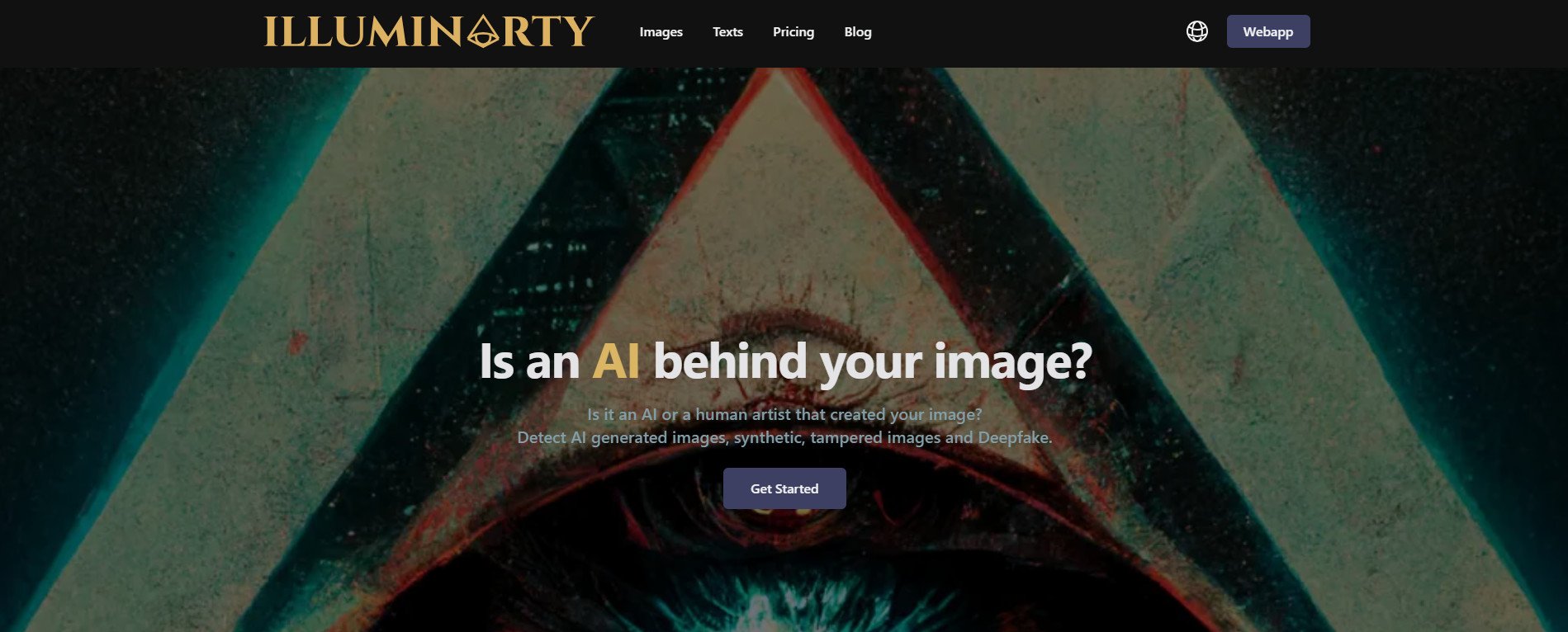
What is Illuminarty?
Illuminarty is one of the more well-known AI image detectors on the internet. It’s simple, straightforward, and lets you quickly check whether an image looks AI-generated.
Its biggest strengths:
- Very beginner-friendly
- Clean interface
- Quick classification
- Decent handling of basic AI artifacts
Illuminarty focuses on clarity over depth. You upload, you get a percentage, and you move on. It’s built for people who need a quick answer — not necessarily a forensic-level breakdown.
Where it starts to struggle is with newer AI models (especially photorealistic ones) and images with heavy post-processing.
But for lightweight verification of images straight out of an AI image generator like Midjourney, it does its job.
TruthScan vs. Illuminarty: Checking AI Images
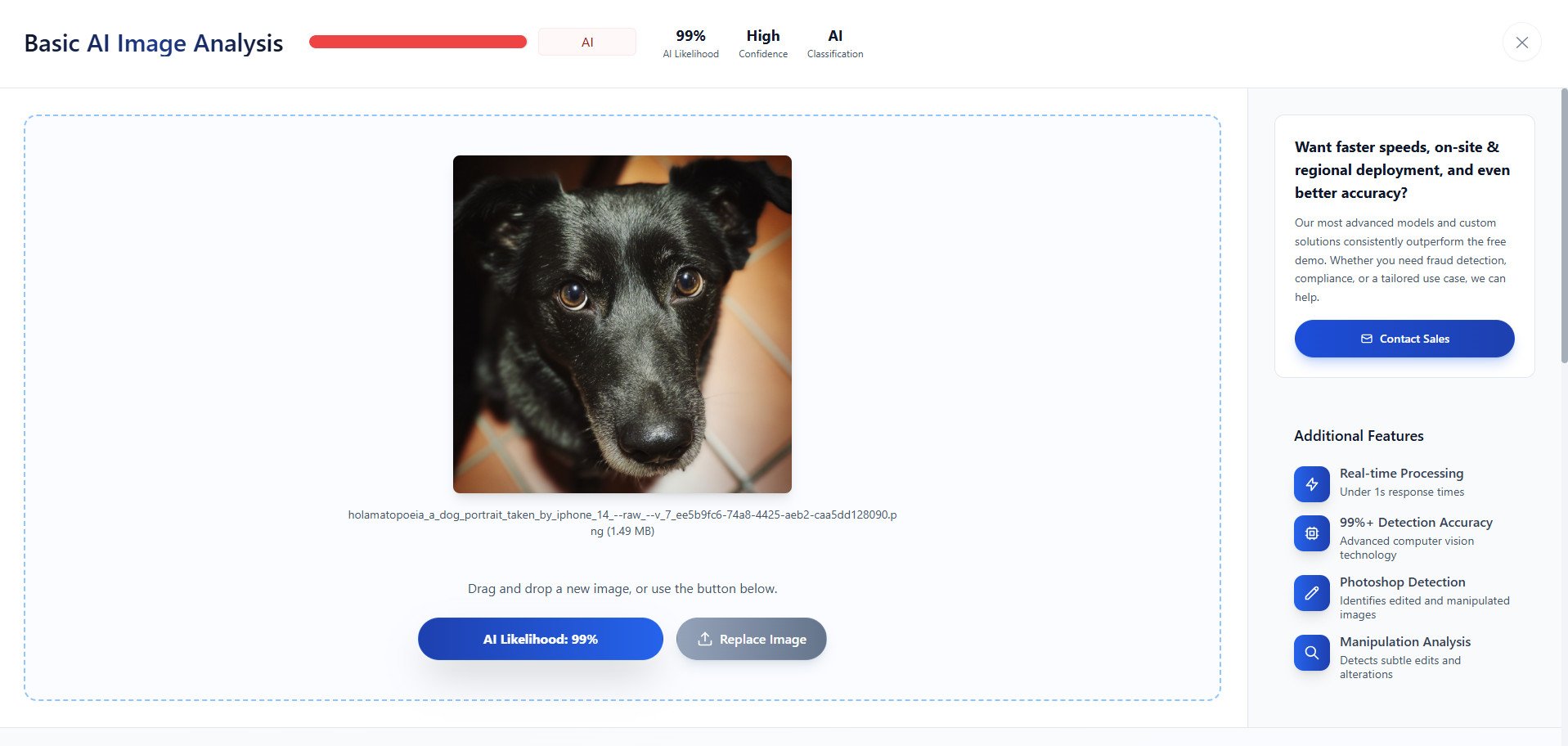
Test #1
Truthscan: Correctly classified image as AI-generated.
AI Likelihood Score: 99%
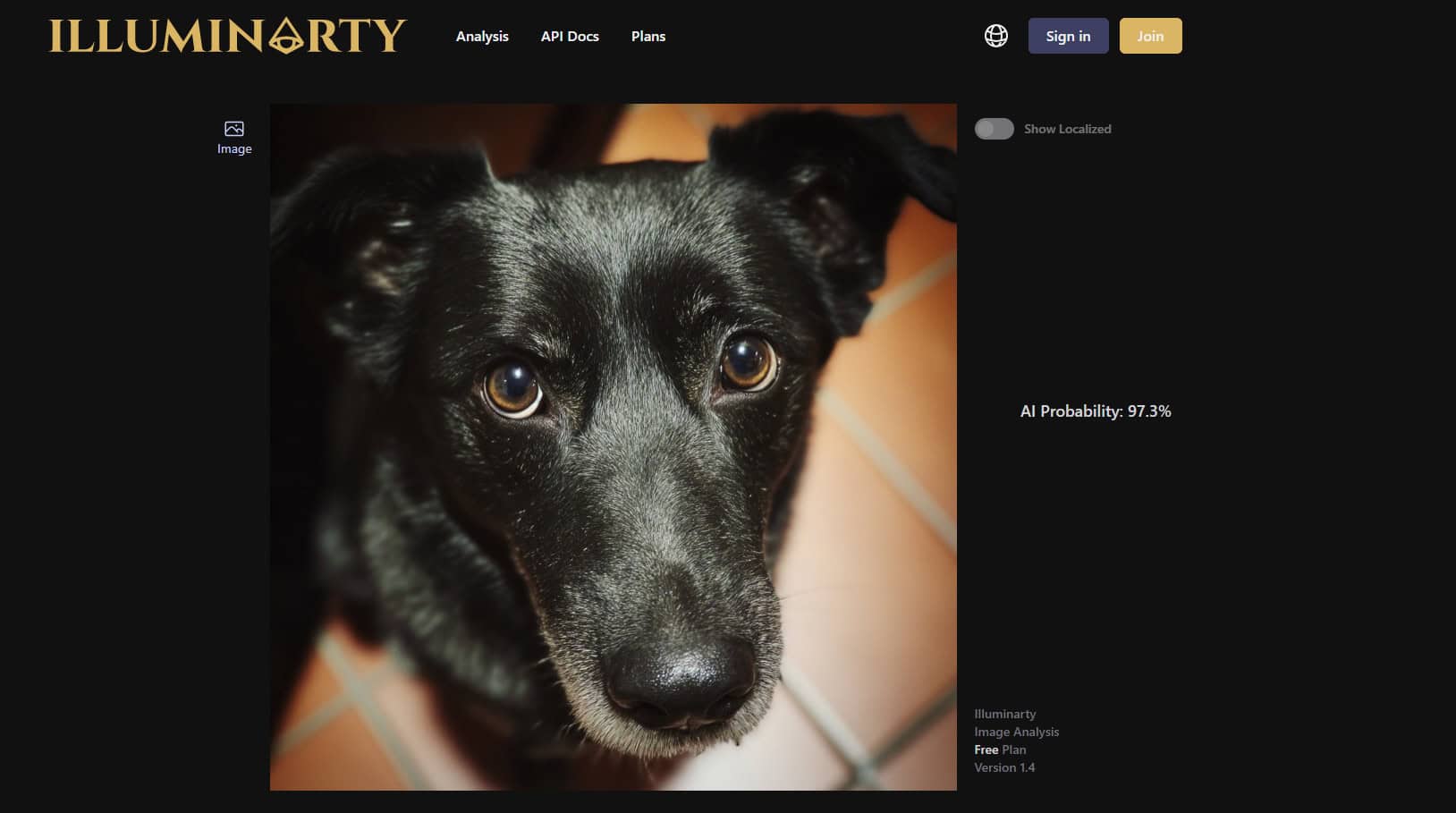
Illuminarty: Correctly classified image as AI-generated.
AI Likelihood Score: 97.3%
Test #2
Truthscan: Correctly classified image as AI-generated.
AI Likelihood Score: 99%
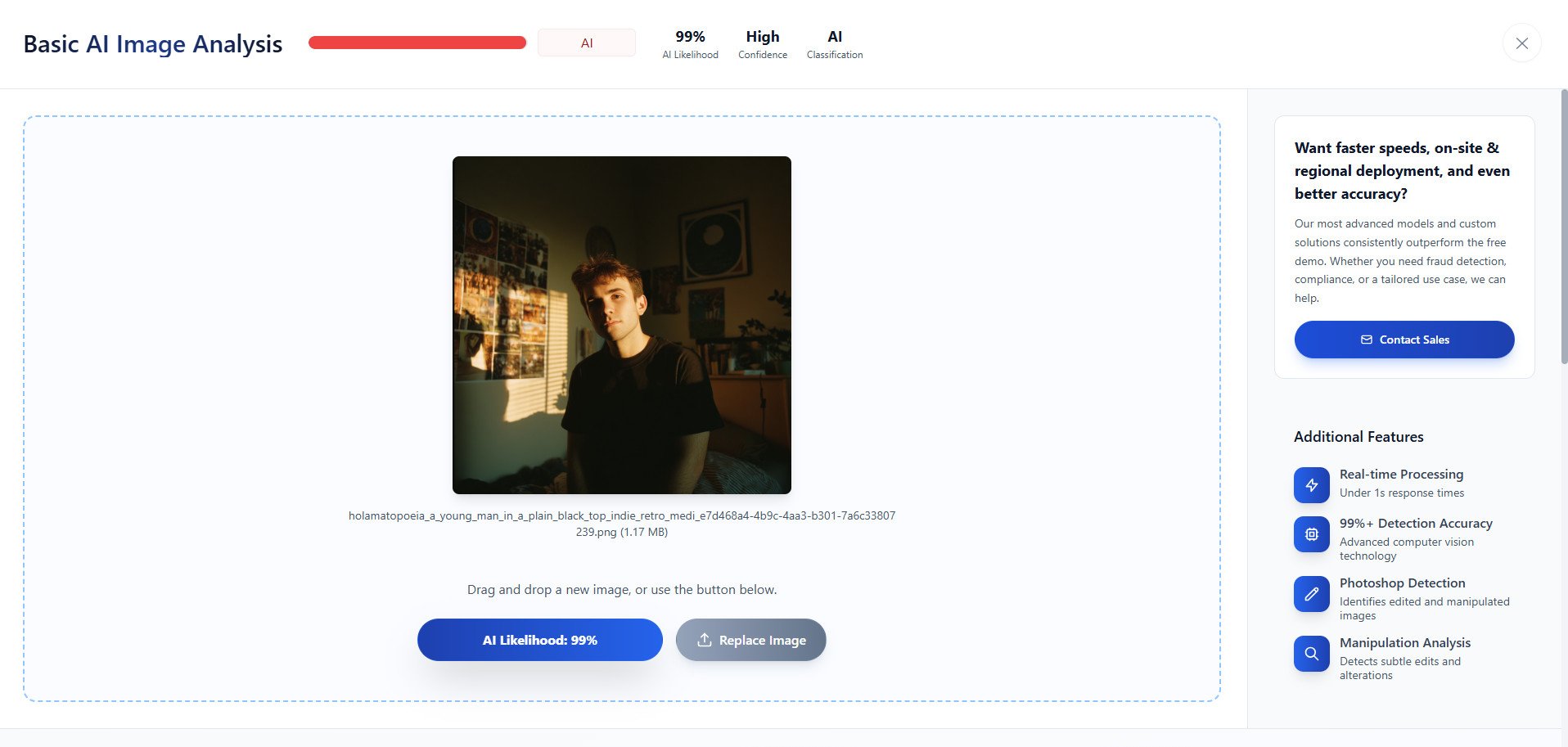
Illuminarty: Correctly classified image as AI-generated.
AI Likelihood Score: 81.2%
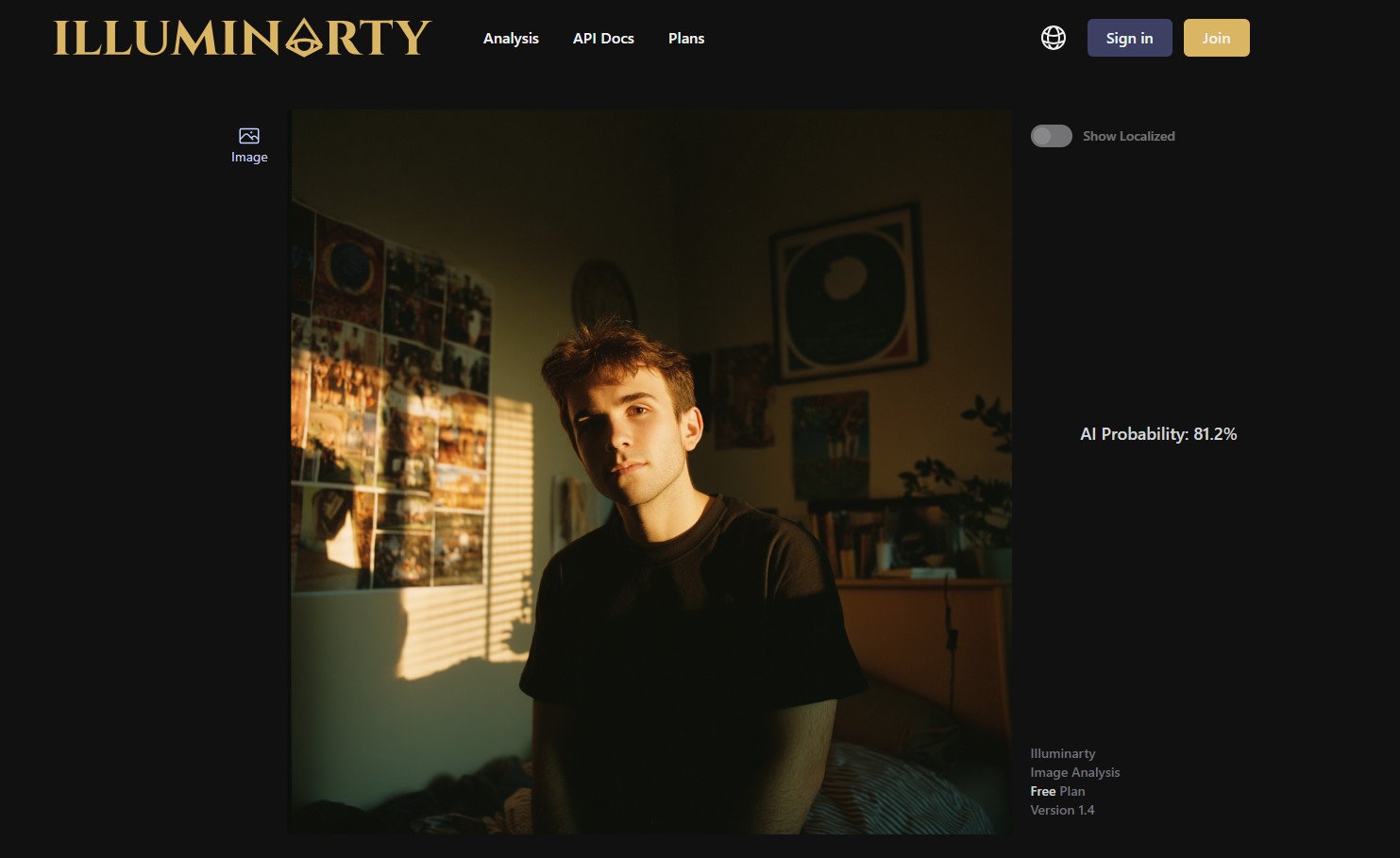
Test #3
Truthscan: Correctly classified image as AI-generated.
AI Likelihood Score: 99%
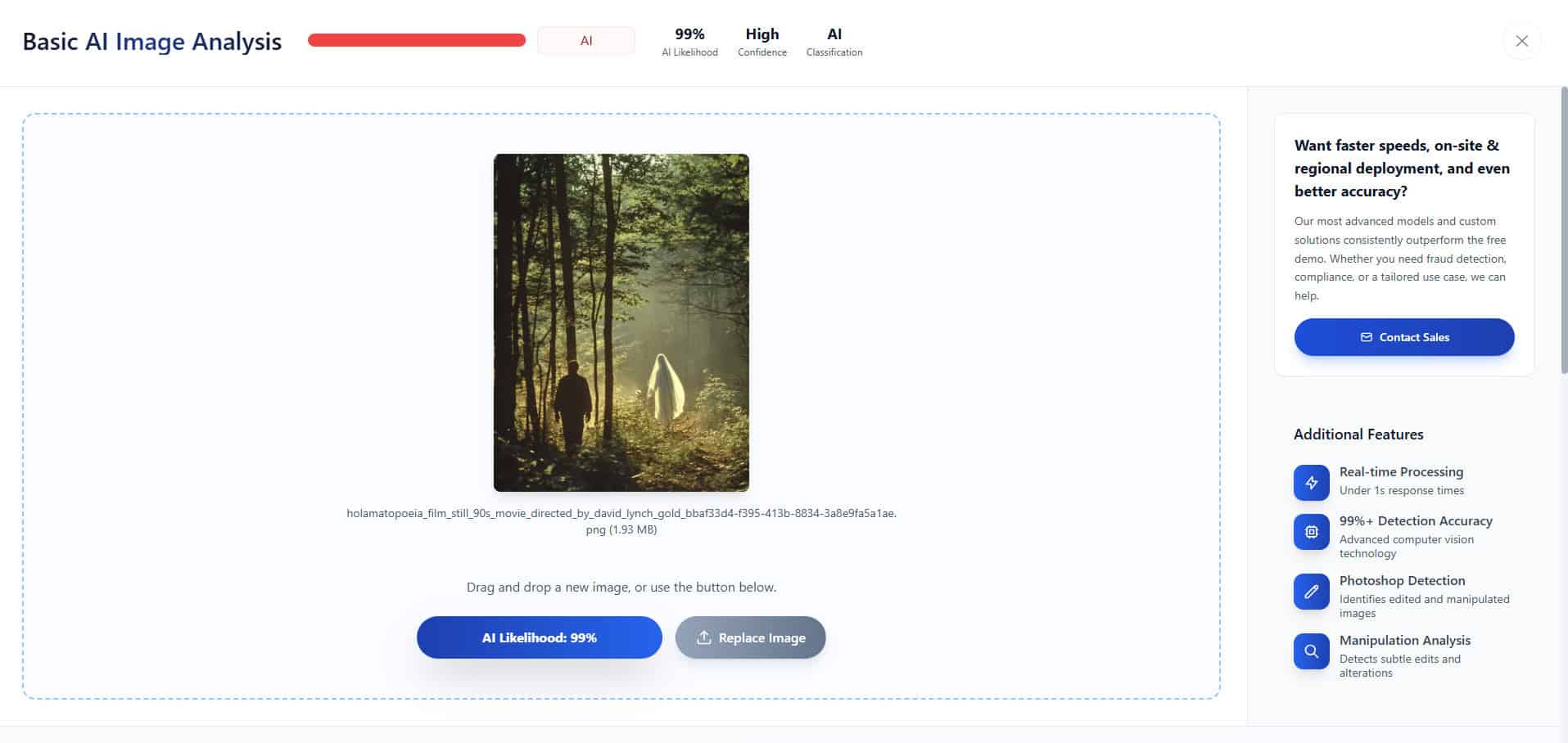
Illuminarty: Correctly classified image as AI-generated.
AI Likelihood Score: 92.3%
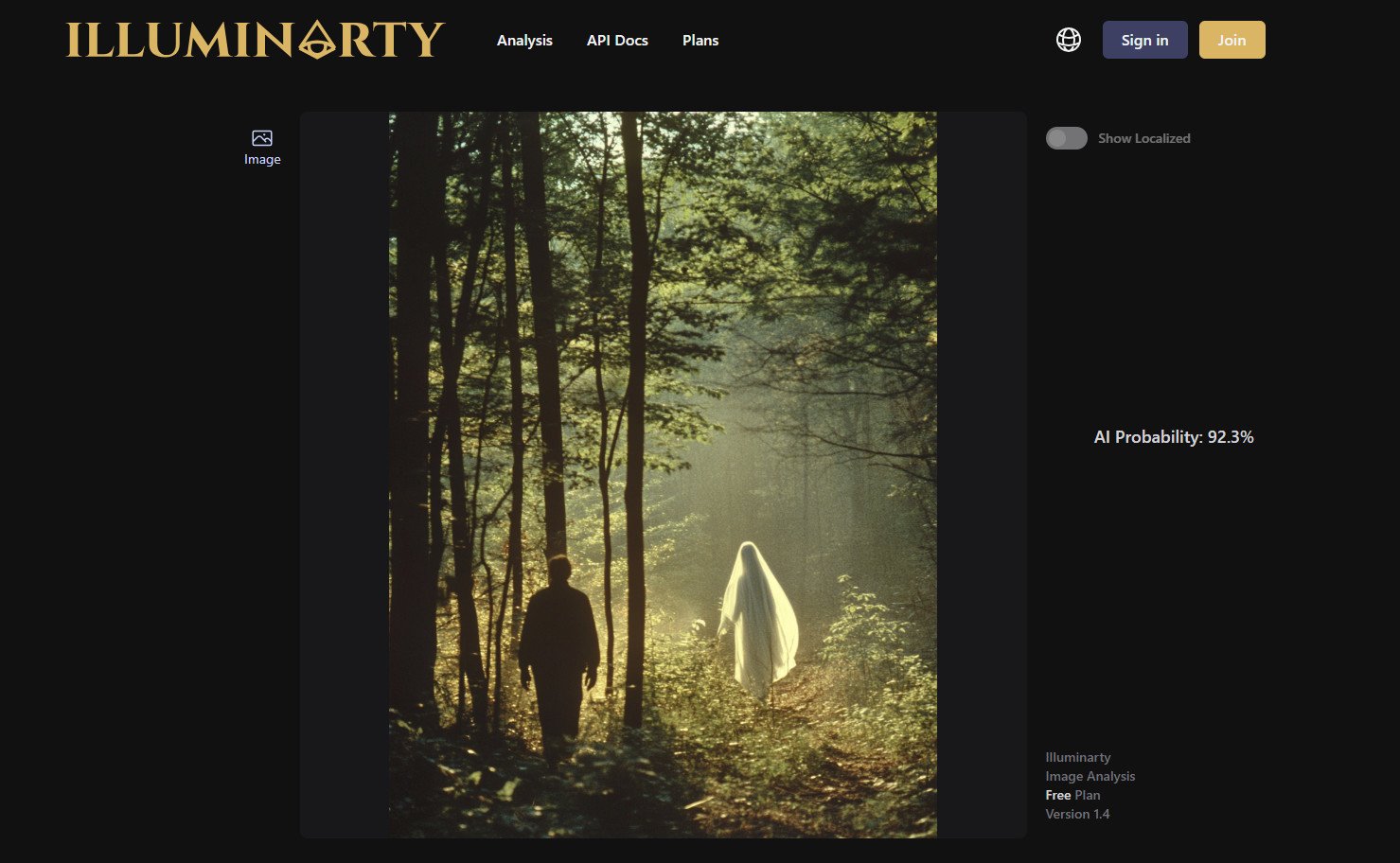
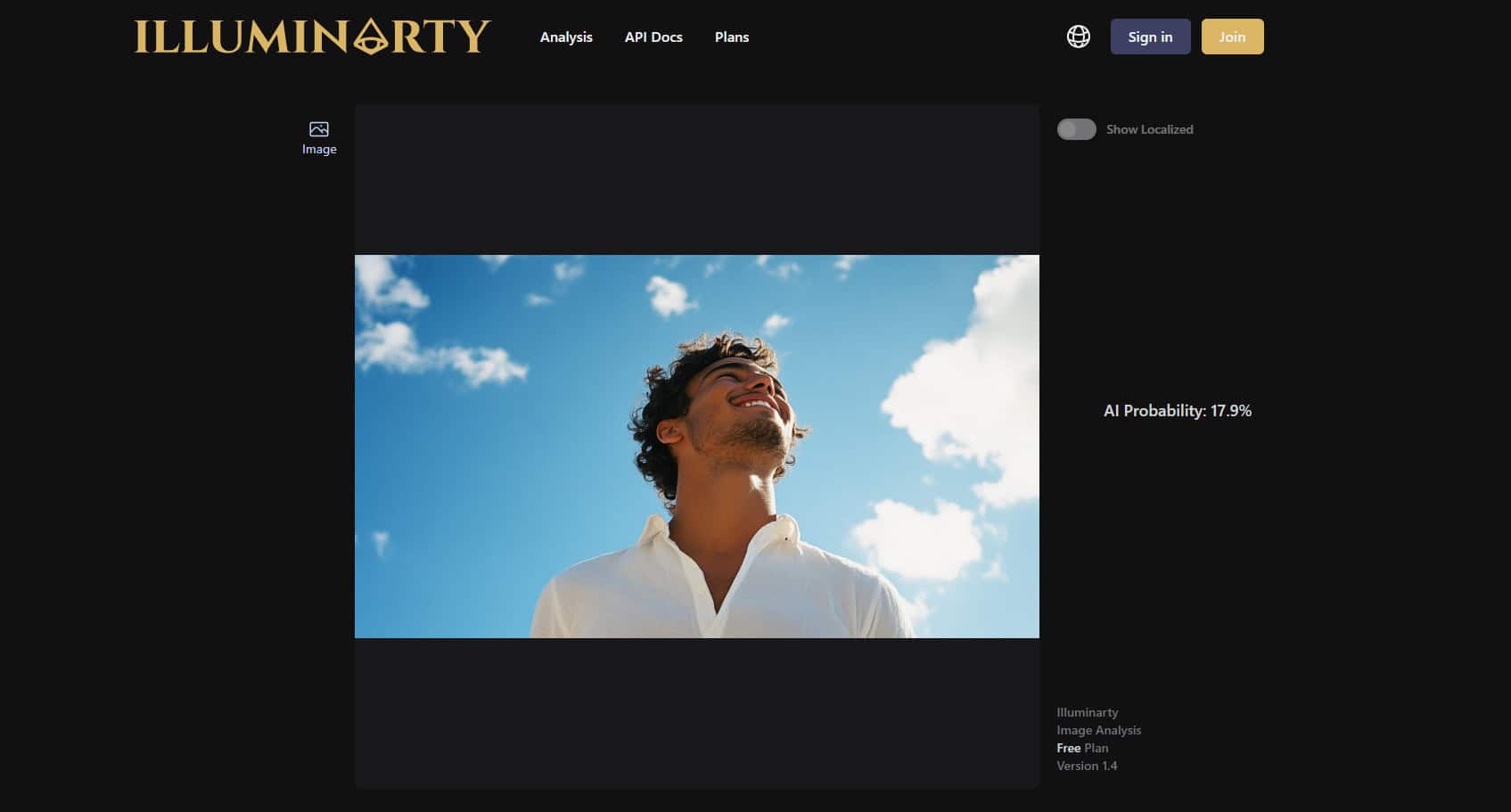
Test #4
Truthscan: Correctly classified image as AI-generated.
AI Likelihood Score: 99%
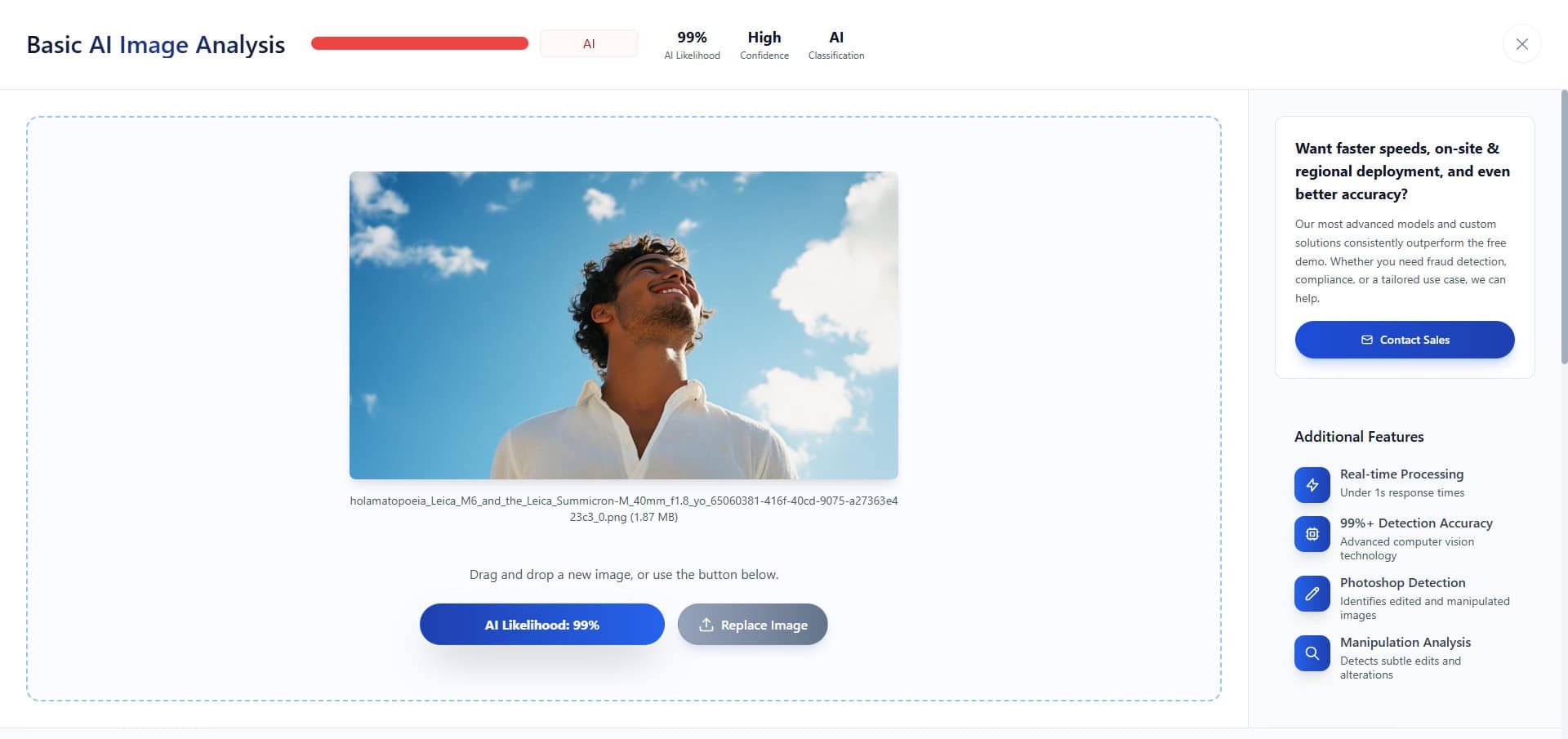
Illuminarty: Incorrectly classified image as human.
AI Likelihood Score: 17.9%
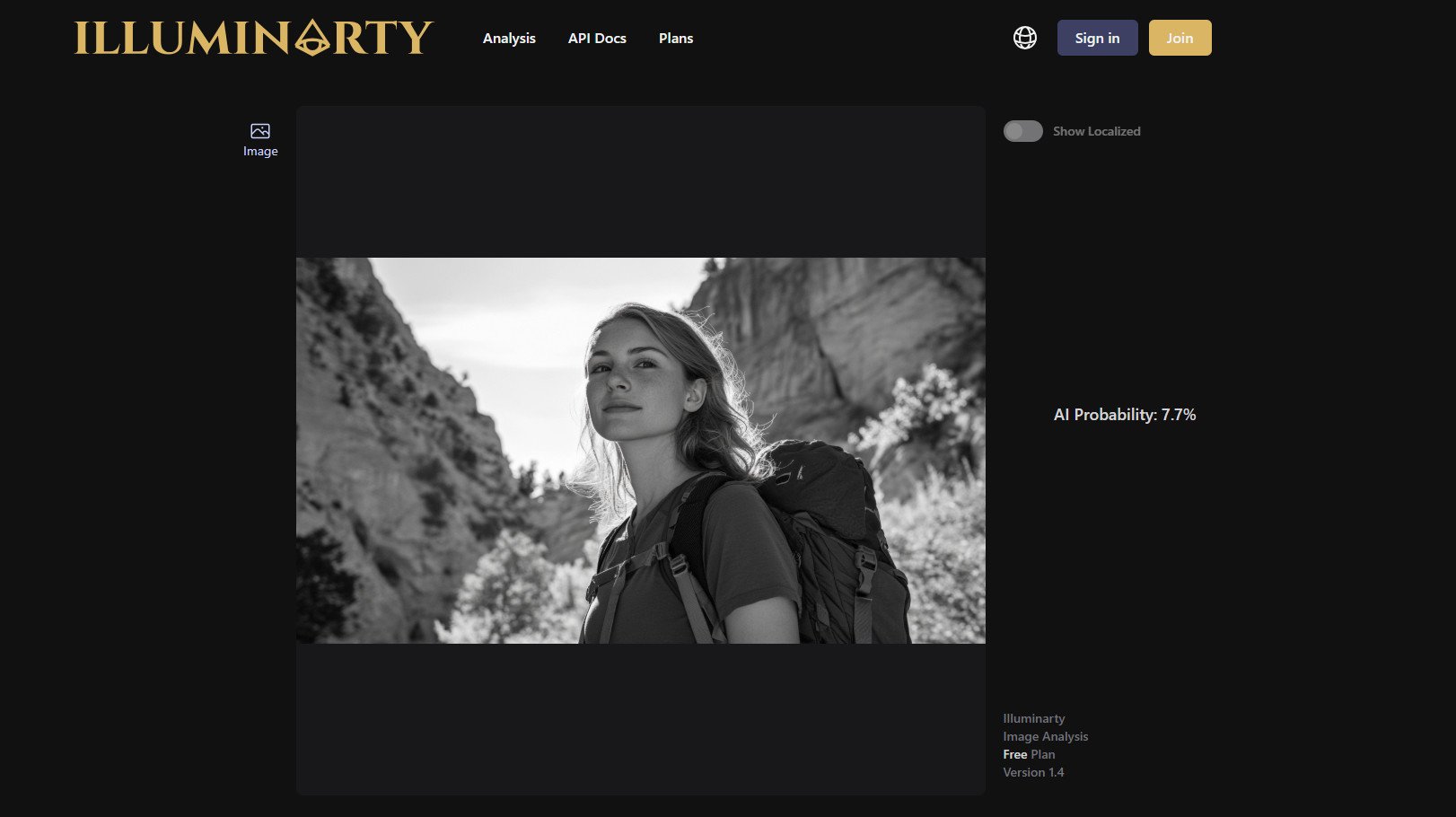
Test #5
Truthscan: Correctly classified image as AI-generated.
AI Likelihood Score: 99%
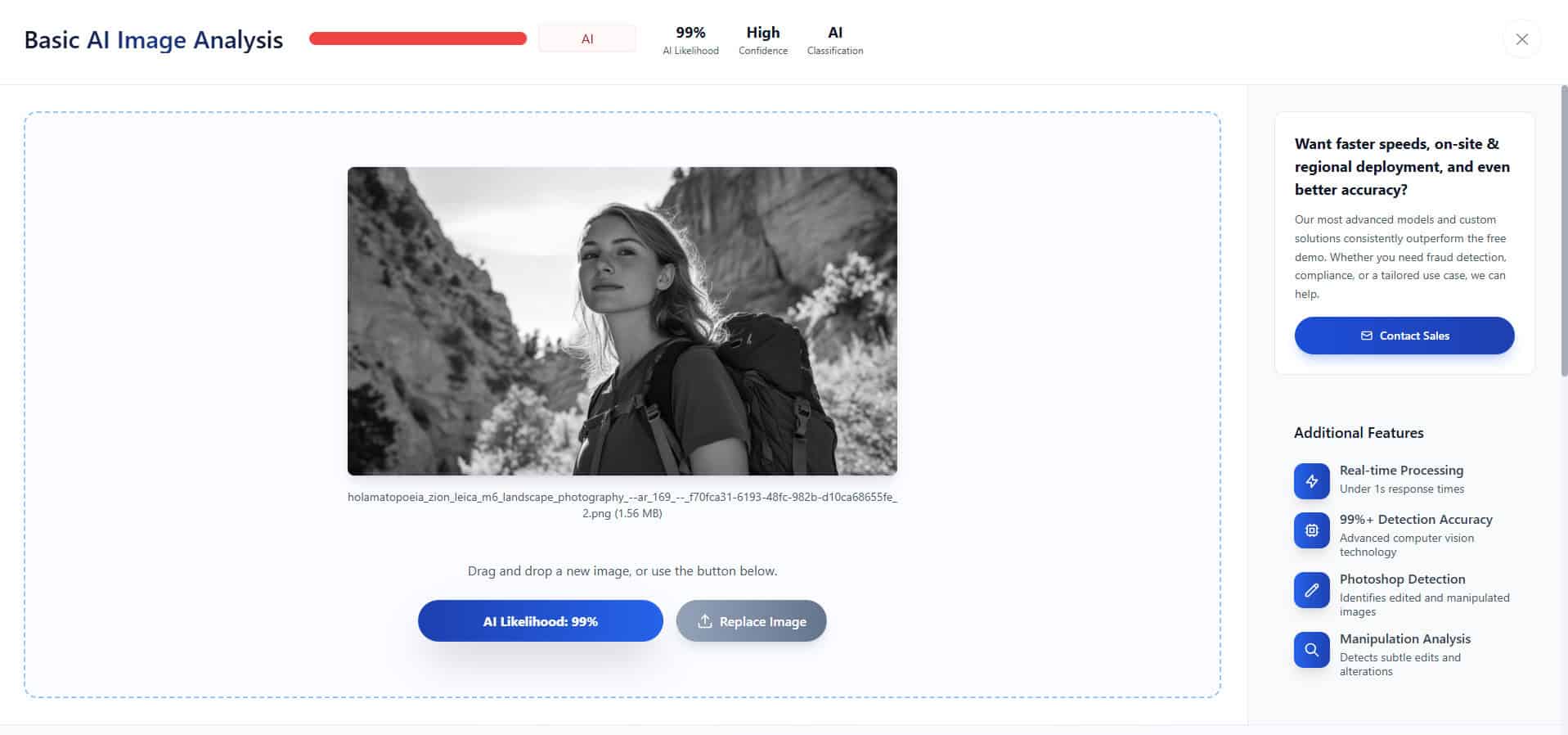
Illuminarty: Incorrectly classified image as human.
AI Likelihood Score: 7.7%
Test #6
Truthscan: Correctly classified image as AI-generated.
AI Likelihood Score: 99%
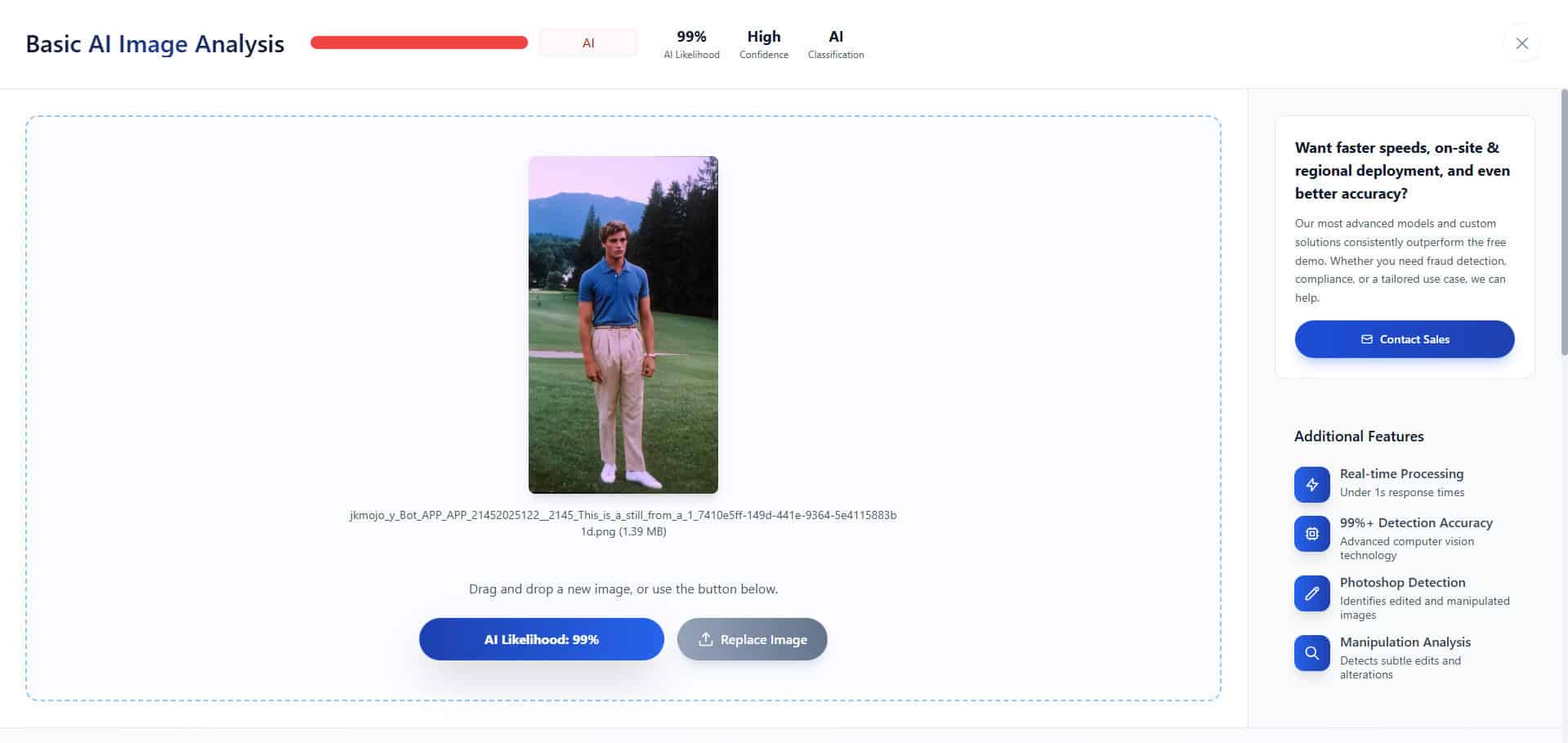
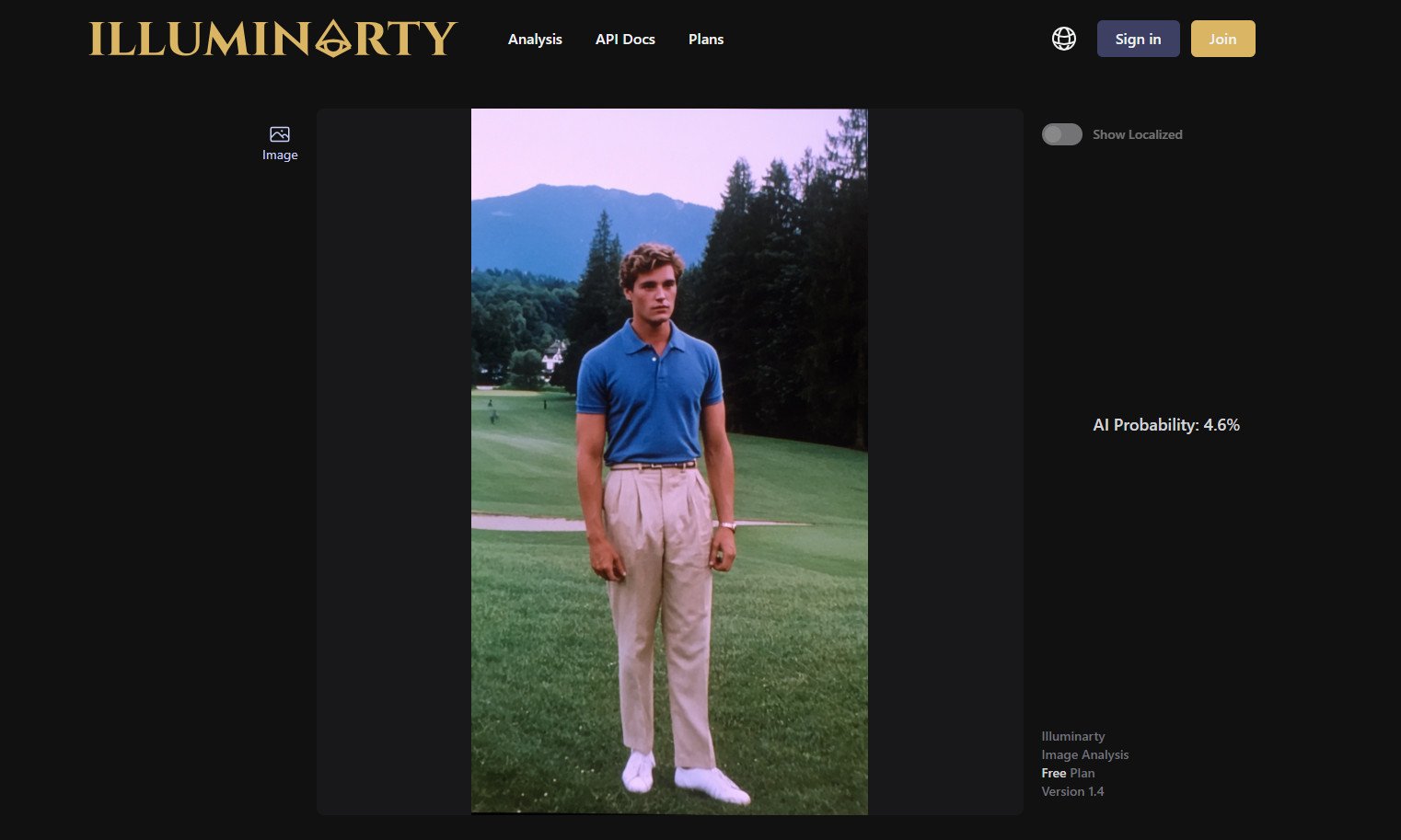
Illuminarty: Incorrectly classified image as human.
AI Likelihood Score: 4.6%
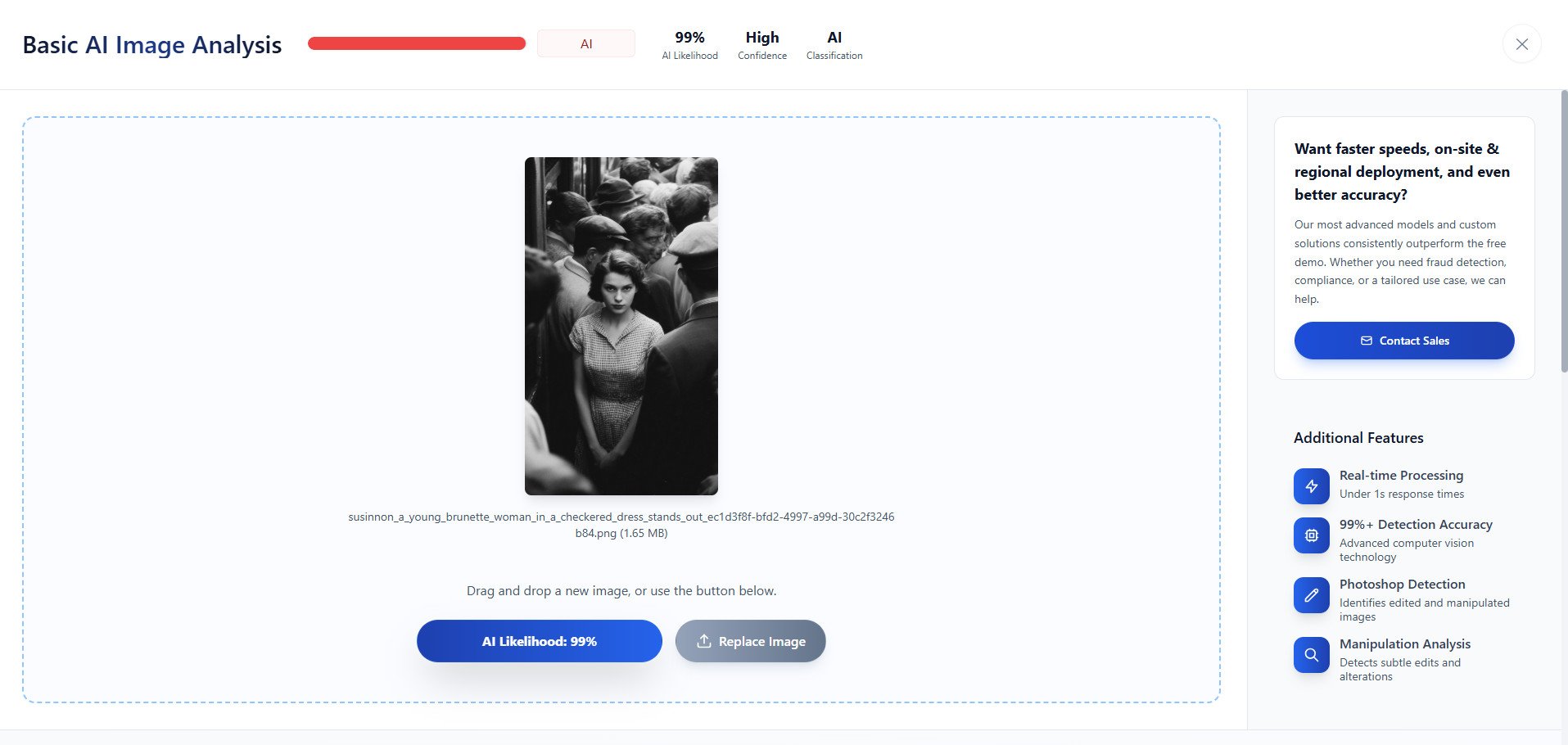
Test #7
Truthscan: Correctly classified image as AI-generated.
AI Likelihood Score: 99%
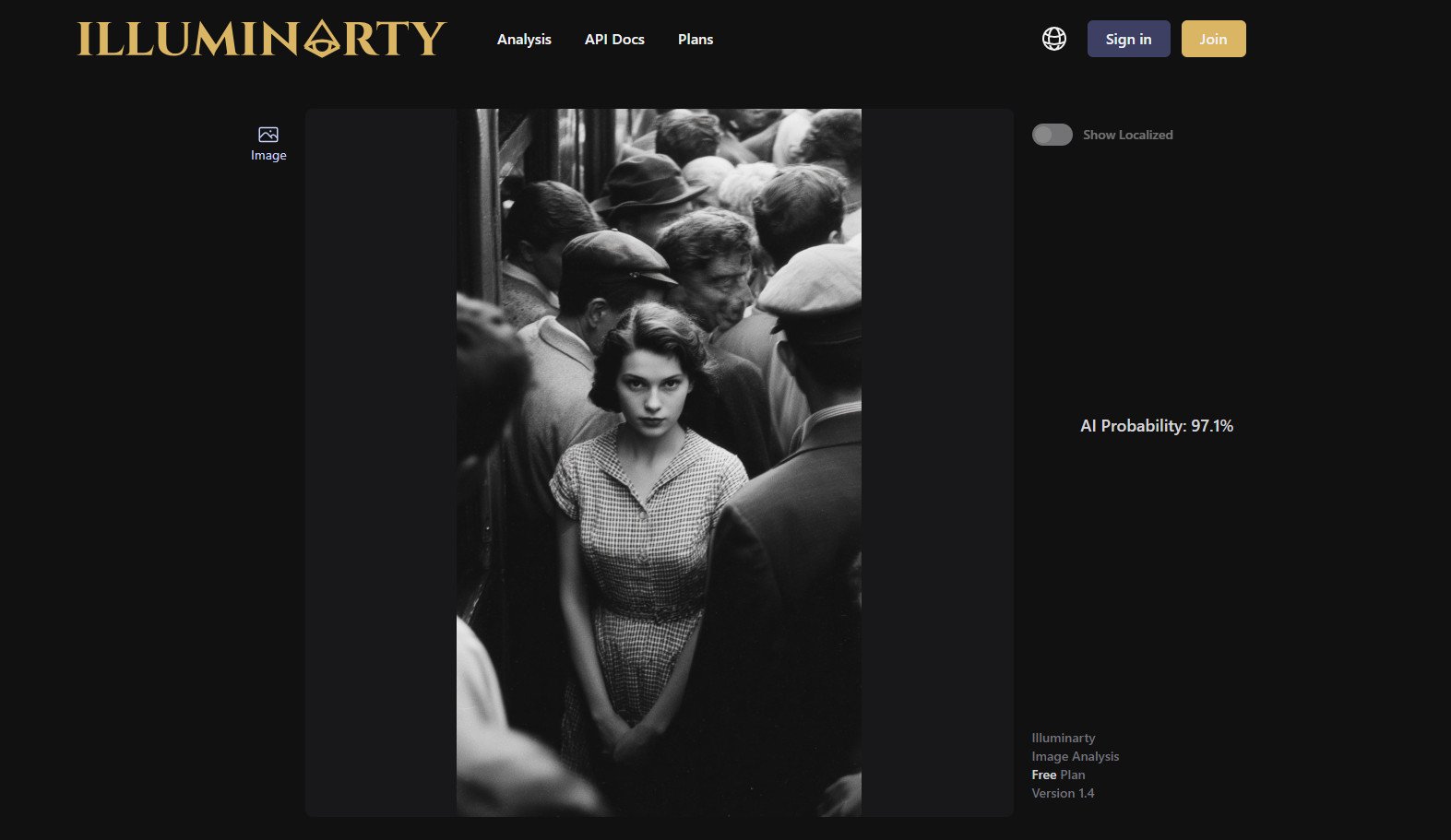
Illuminarty: Correctly classified image as AI-generated.
AI Likelihood Score: 97.1%
Average Score
Test Number
TruthScan
AI Or Not
#1
99%
97.3%
#2
99%
81.2%
#3
99%
92.3%
#4
99%
17.9%
#5
99%
7.7%
#6
99%
4.6%
#7
99%
97.1%
Score
99%
56.87%
The Bottom Line
After running both tools through the same batch of images, the gap between them can’t be bigger. Illuminarty landed at 56.87% accuracy, which honestly isn’t terrible for a lightweight, public-facing tool built for casual checks. If all you need is a quick sanity check for an image circulating on social media, Illuminarty still has value.
But then you look at TruthScan’s score (a near-perfect 99% accuracy) and the difference becomes undeniable. It caught subtle manipulations, newer model signatures, and images that would easily slip past most detectors. And it did all this fast, consistently, and without wavering across different image types.
This is the kind of accuracy you build moderation pipelines around: the kind you trust in investigations, workflows, and real-world decision-making. TruthScan is the clear winner — not by a hair, but by a landslide.
Want to Learn Even More?
If you enjoyed this article, subscribe to our free newsletter where we share tips & tricks on how to use tech & AI to grow and optimize your business, career, and life.