TruthScan vs. Reality Defender: Who Detects AI Images More Accurately?
TruthScan and Reality Defender are some of the most familiar names in AI detection space today. Which actually justifies its fame?

John Angelo Yap
Updated February 17, 2026
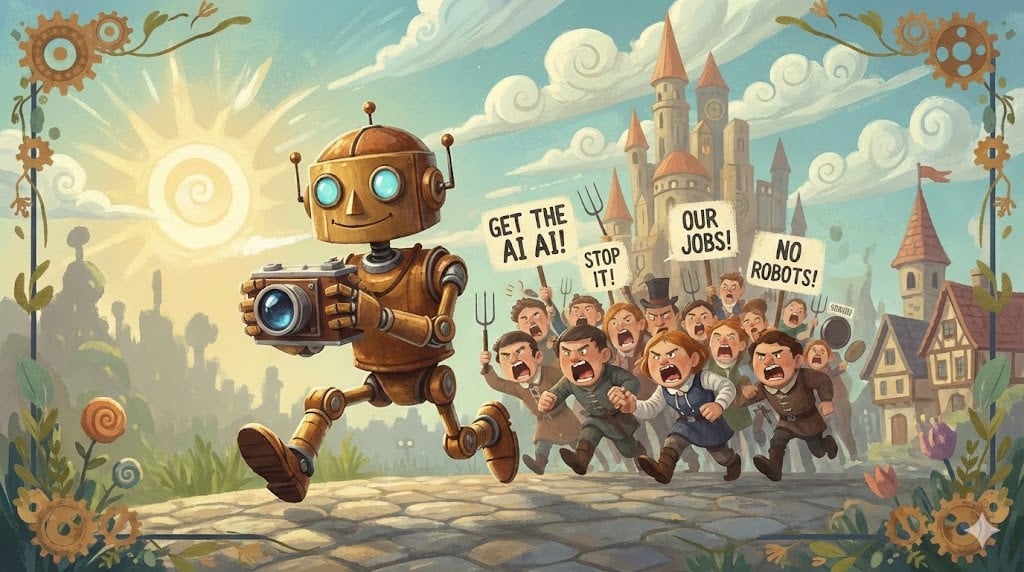
A robot getting chased by an angry mob, generated with Gemini
Reading Time: 4 minutes
AI-generated images are everywhere. They’re showing up in places where accuracy actually matters — news feeds, job applications, legal documents, even identity verification. And once you’re past the “wow, that looks real” phase, the next question becomes much more practical: how do you reliably tell what’s fake?
That’s where AI image detectors come in. But not all of them are built for the same audience.
In this comparison, I’m looking at TruthScan and Reality Defender, two tools that approach AI image detection from very different angles. One is designed to be accessible and immediately usable. The other is built like enterprise security infrastructure. Both are serious products — just aimed at very different problems.
What is TruthScan?
TruthScan positions itself as a complete AI detection suite, not just a single-purpose checker. While this article focuses on its AI image detection capabilities, that’s only one part of a broader platform that also includes:
- AI text detection
- Deepfake video analysis
- Voice and audio detection
- Email scam detection
- Real-time monitoring tools
The common theme is speed and accessibility. TruthScan is designed to work out of the box, without requiring technical setup, custom integrations, or developer resources. You upload content, get a result, and move on.
For image detection specifically, TruthScan focuses on identifying whether an image is AI-generated or manipulated — the kind of question everyday users, journalists, students, and content moderators actually ask.
What is Reality Defender?
Reality Defender is an entirely different kind of tool.
It’s an enterprise-grade deepfake detection platform, built primarily for organizations that need continuous, large-scale protection against synthetic media. Banks, governments, defense organizations, and major tech companies — that’s the audience here.
Let’s Talk Accessibility
TruthScan is built for direct use. You don’t need technical knowledge. You don’t need an engineering team. You don’t need to think about deployment environments or SDKs. You upload an image and get an answer.
Reality Defender, on the other hand, is intentionally not built that way.
- That’s not a flaw — it’s a design choice. Reality Defender is optimized for:
- Real-time protection inside existing platforms
- Automated moderation at massive scale
- Integration into internal security pipelines
But for individual creators, researchers, or journalists, that same strength becomes a barrier. Without a third-party interface, Reality Defender is simply inaccessible to most people. To use this tool, you’ll need to:
- Have basic knowledge of nodes.
- Have worked with APIs before.
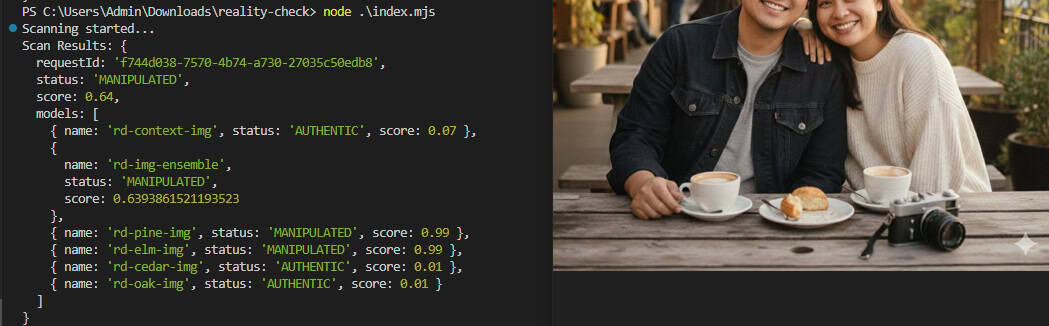
For reference, this is what my screen looked like testing the tool.
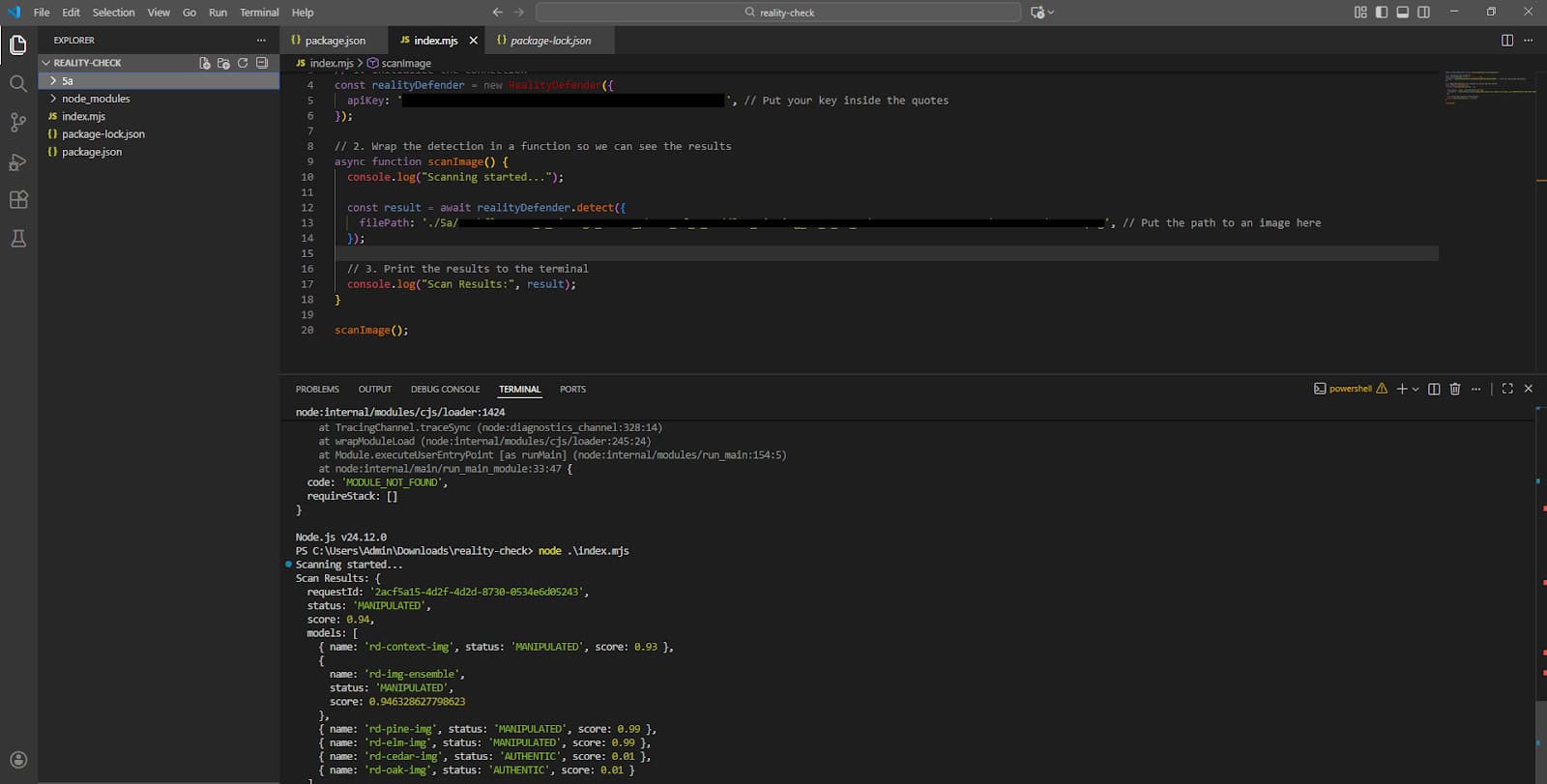
Fairly simple for developers, but completely alien to laypeople.
So while both tools detect AI images, they’re solving very different problems.
TruthScan vs. Reality Defender: AI Detection
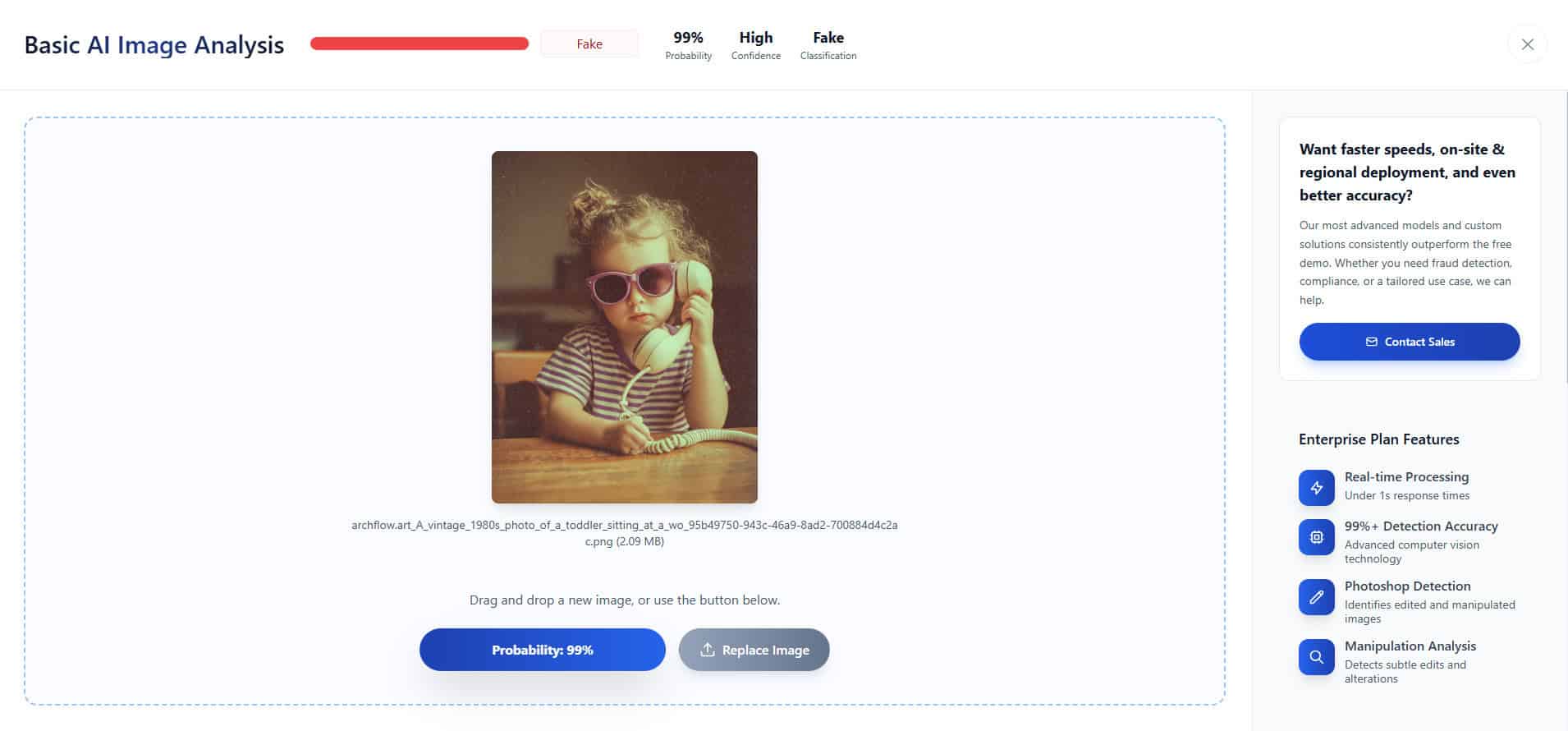
Test #1
TruthScan: Correctly classified image as AI-generated.
Confidence Score: 99%
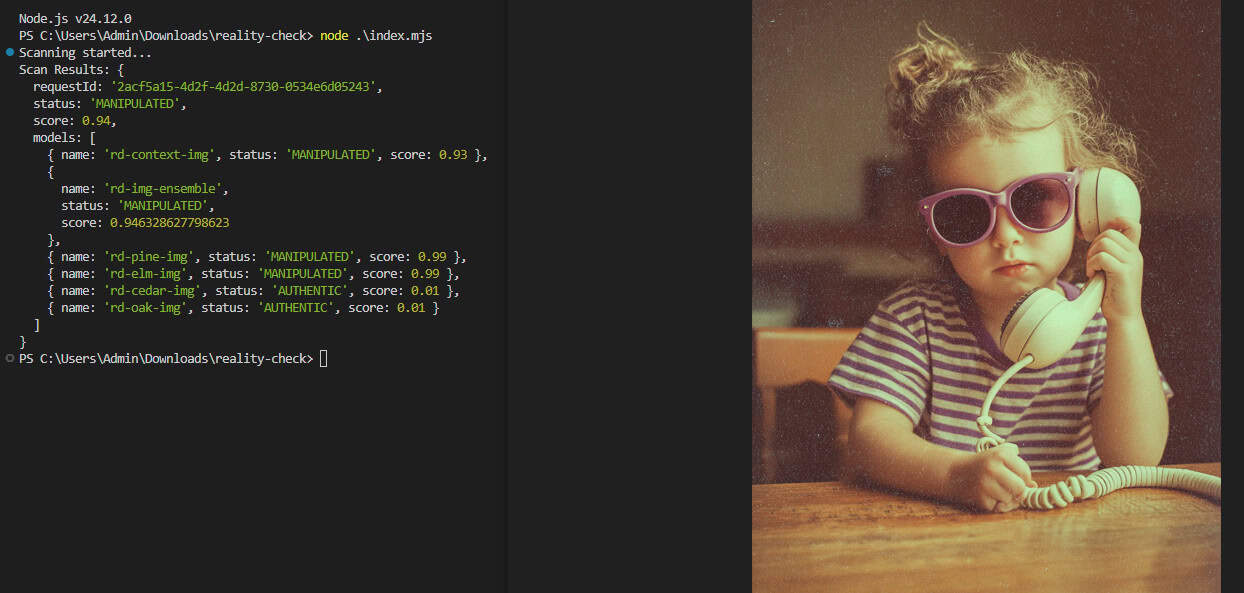
Reality Defender: Correctly classified image as AI-generated.
Confidence Score: 94%
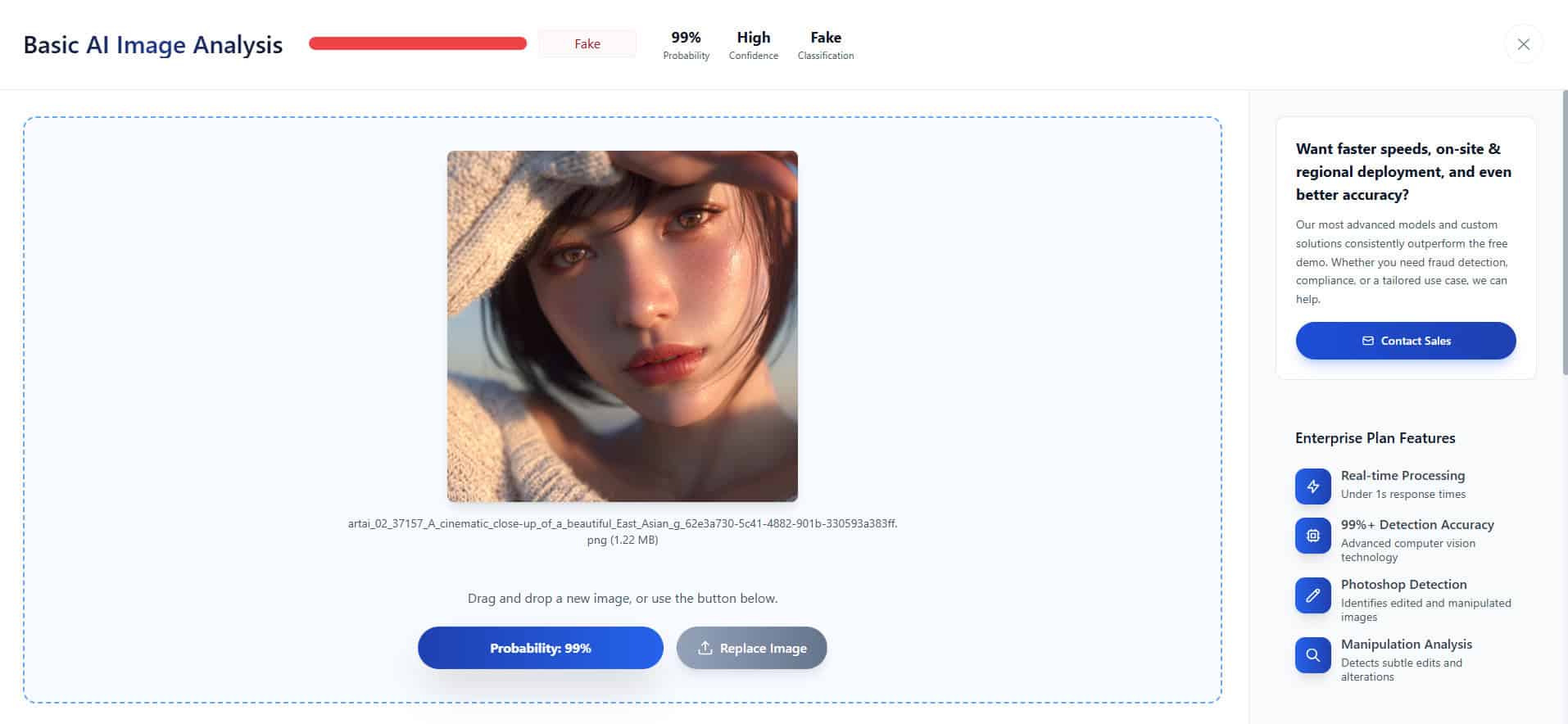
Test #2
TruthScan: Correctly classified image as AI-generated.
Confidence Score: 99%
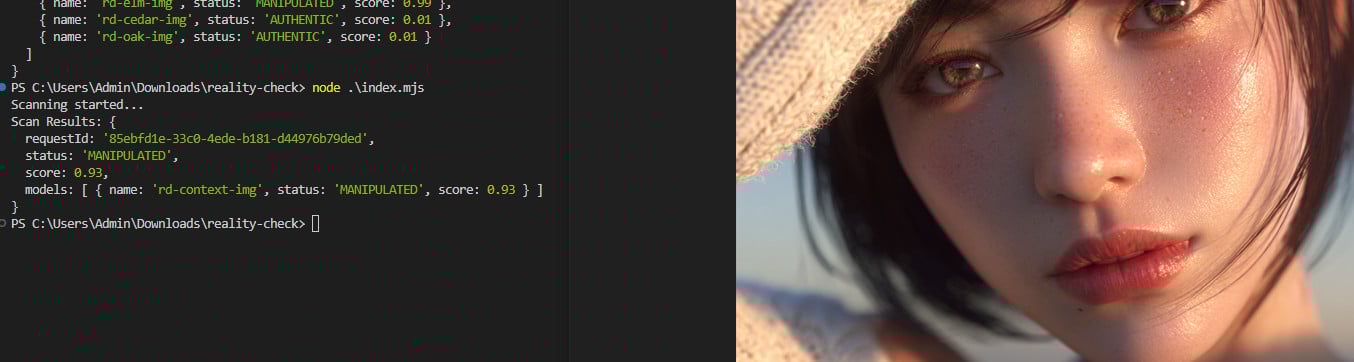
Reality Defender: Correctly classified image as AI-generated.
Confidence Score: 93%
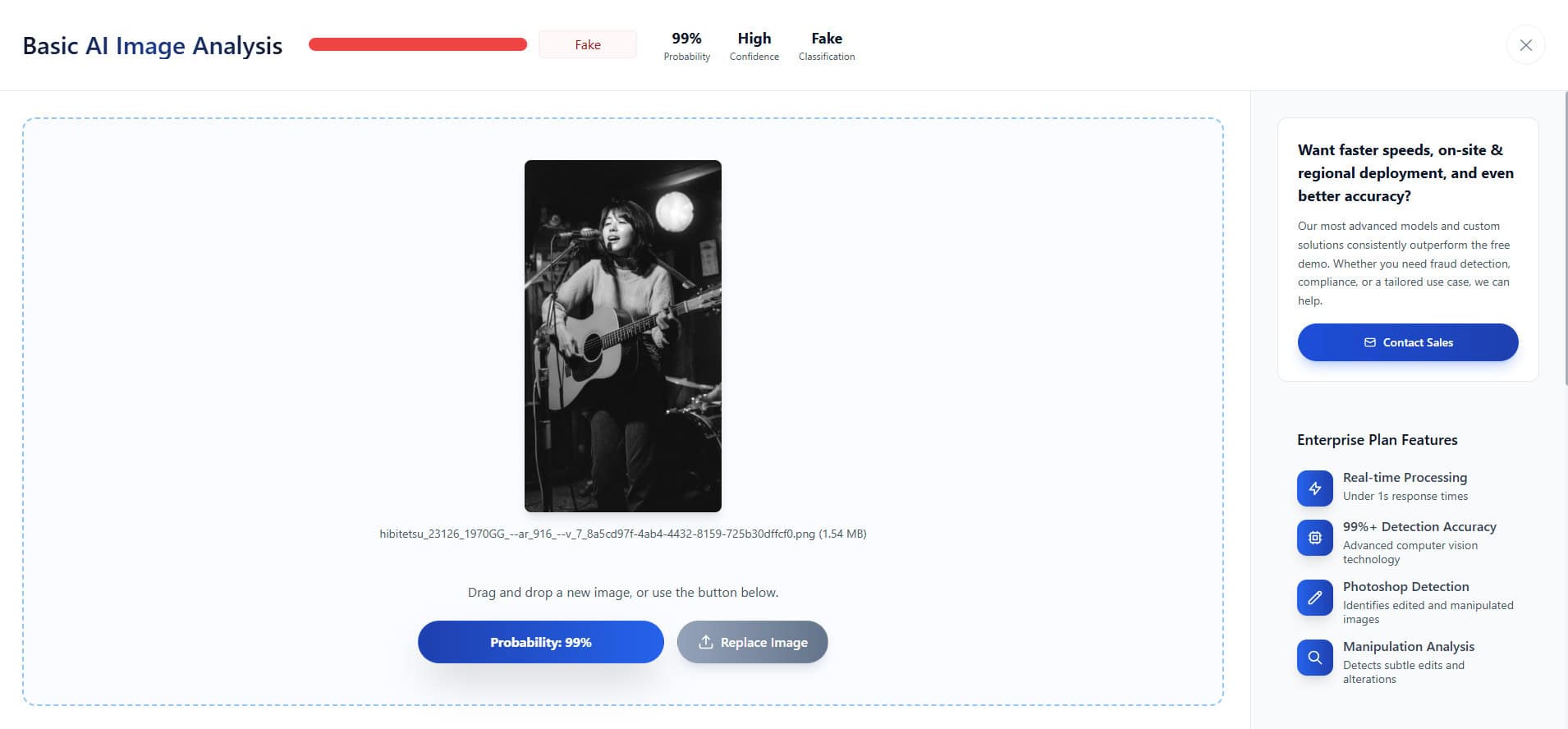
Test #3
TruthScan: Correctly classified image as AI-generated.
Confidence Score: 99%
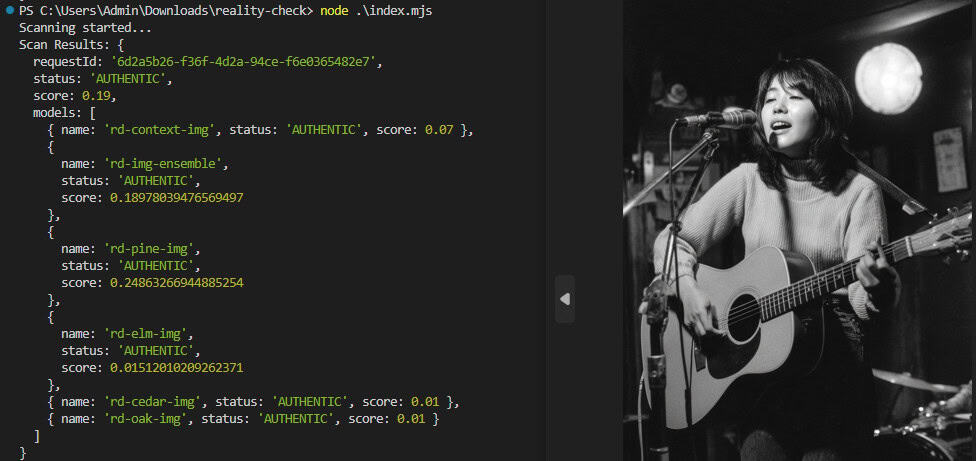
Reality Defender: Incorrect classified image as human-created.
Confidence Score: 19%
Test #4
TruthScan: Correctly classified image as AI-generated.
Confidence Score: 99%
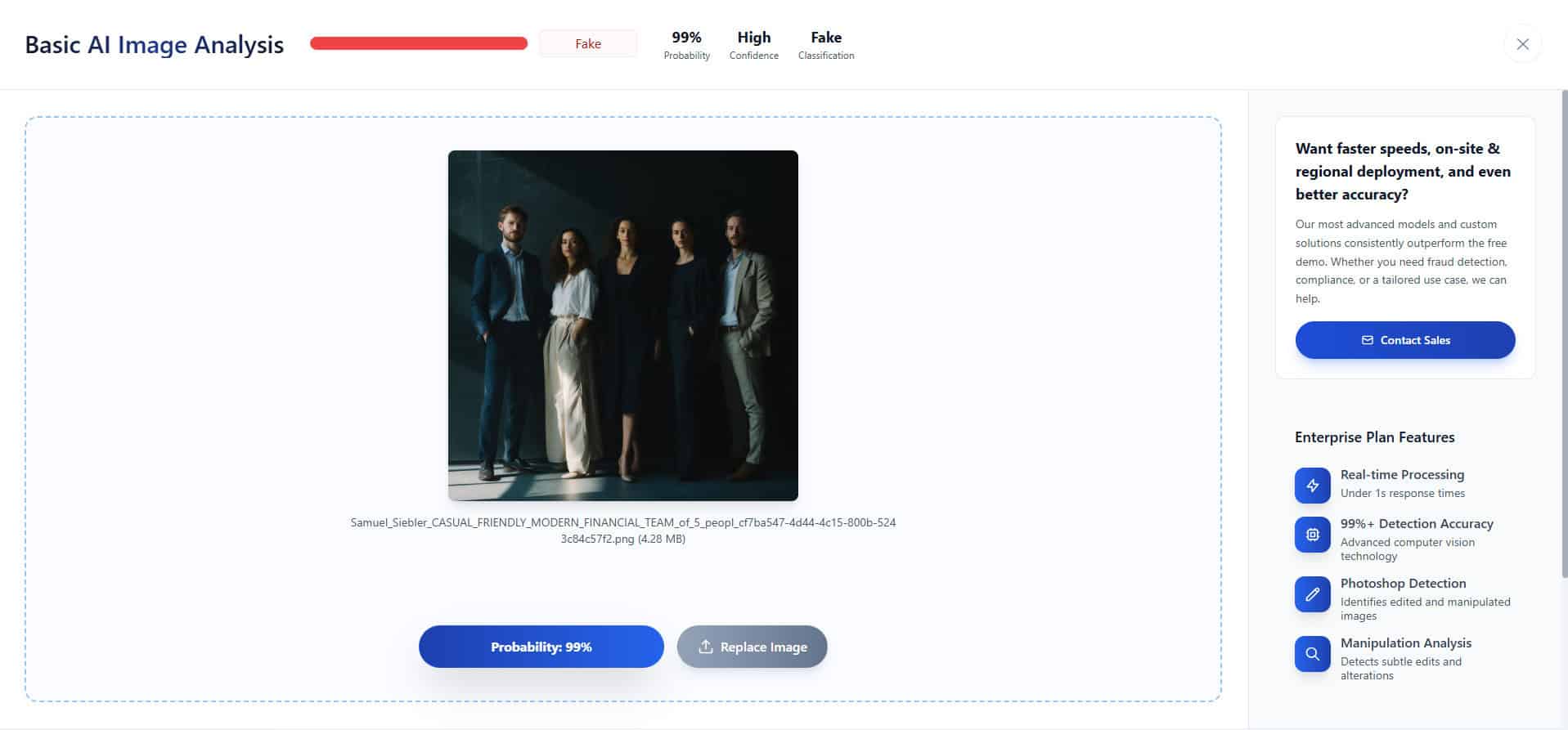
Reality Defender: Correctly classified image as AI-generated.
Confidence Score: 93%
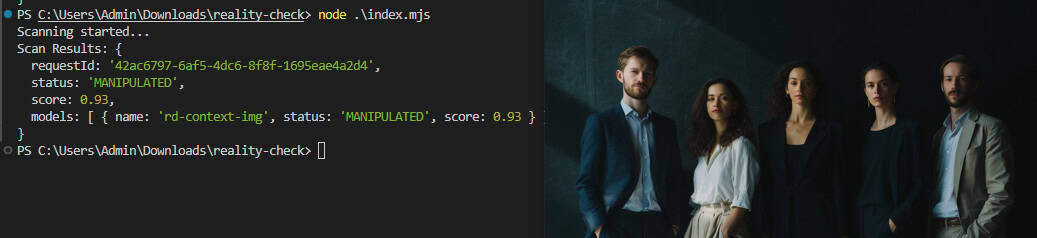
Test #5
TruthScan: Correctly classified image as AI-generated.
Confidence Score: 99%
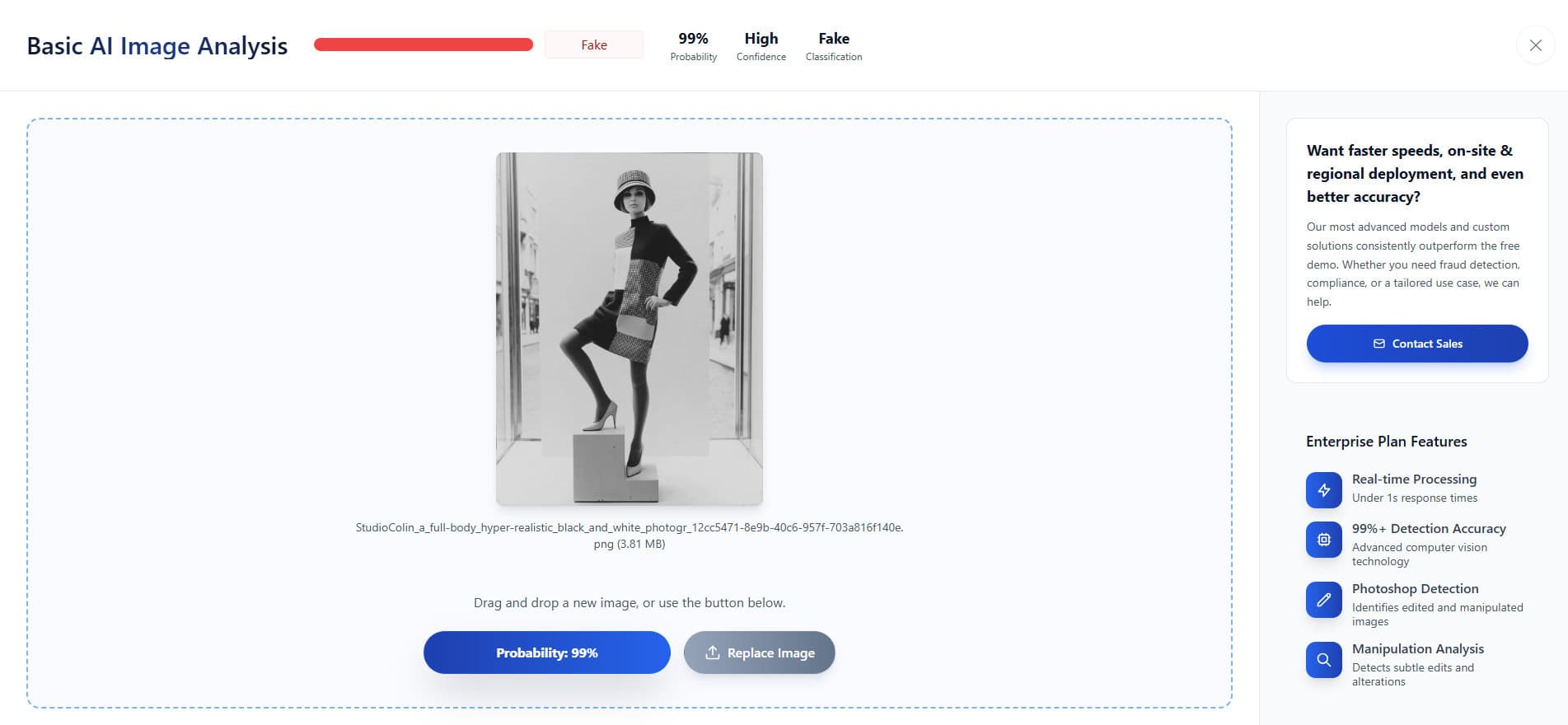
Reality Defender: Correctly classified image as AI-generated.
Confidence Score: 93%

Test #6
TruthScan: Correctly classified image as AI-generated.
Confidence Score: 99%
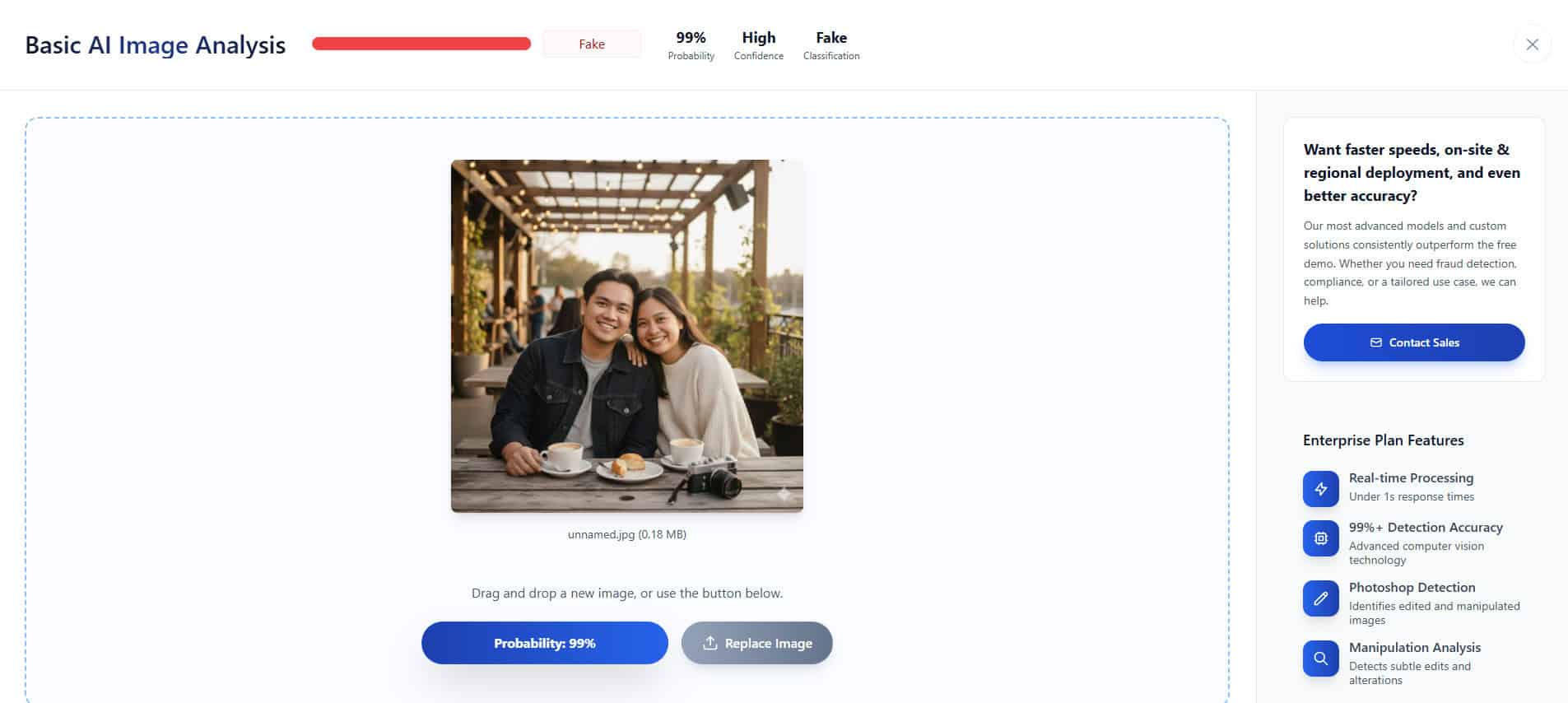
Reality Defender: Correctly classified image as AI-generated.
Confidence Score: 64%
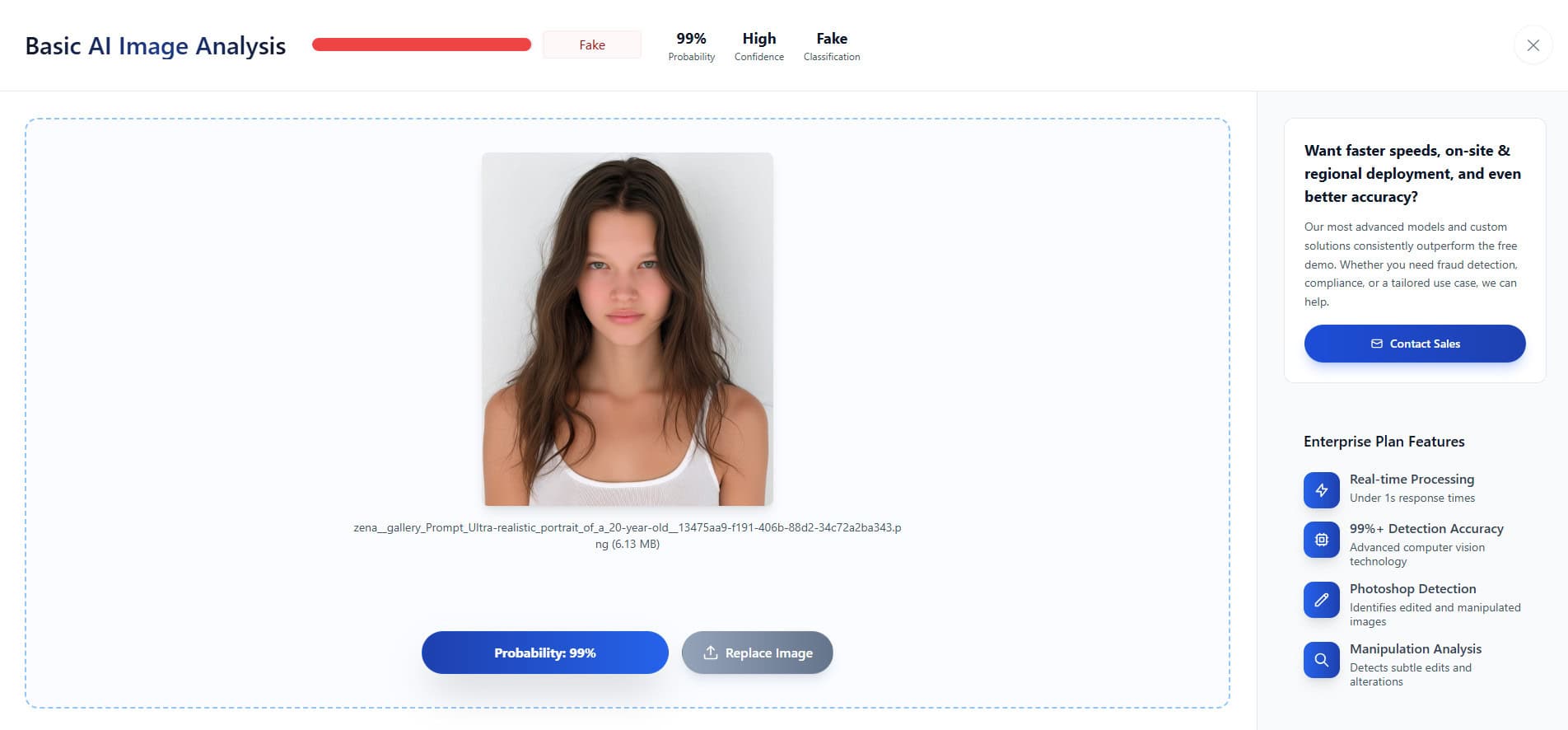
Test #6
TruthScan: Correctly classified image as AI-generated.
Confidence Score: 99%
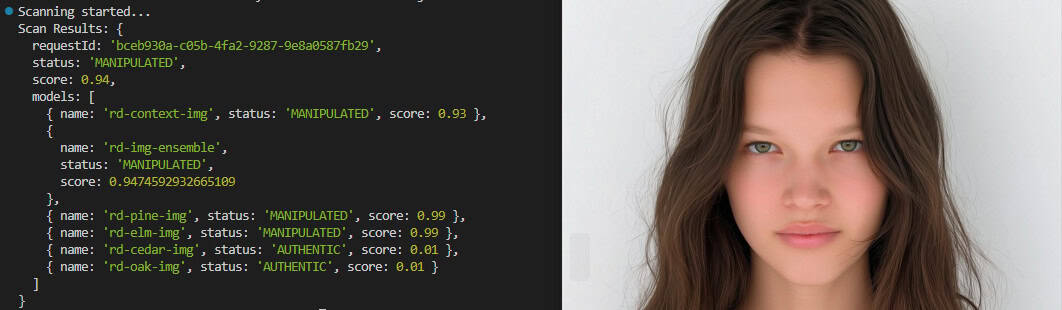
Reality Defender: Correctly classified image as AI-generated.
Confidence Score: 94%
Average Score
Test Number | TruthScan | Reality Defender |
#1 | 99% | 94% |
#2 | 99% | 93% |
#3 | 99% | 19% |
#4 | 99% | 93% |
#5 | 99% | 93% |
#6 | 99% | 64% |
#7 | 99% | 94% |
Score | 99% | 78.57% |
The Bottom Line
TruthScan clocked in at a 99% correctness rate, which is an exceptionally strong result for AI image detection — especially in a landscape where generators are evolving fast and visual artifacts are getting harder to spot. At that level of accuracy, TruthScan isn’t just “good enough”; it’s reliable in a way that actually builds trust over repeated use.
Reality Defender landed at 78.57%, which is still a solid performance, particularly given its enterprise-focused, probabilistic approach. In high-security environments, that kind of signal is often combined with additional context, human review, and layered defenses — and in that setting, Reality Defender still absolutely makes sense.
But when you look at raw image detection accuracy alone, TruthScan clearly comes out ahead.
What makes this result even more notable is how TruthScan delivers it. You don’t need an API, a development team, or a custom integration. You just upload an image and get an answer — and in this case, that answer was correct almost every time.
Reality Defender remains an impressive piece of infrastructure for organizations securing large-scale systems. But if the question is who detects AI images more accurately in practice, the testing points decisively toward TruthScan.
Want to Learn Even More?
If you enjoyed this article, subscribe to our free newsletter where we share tips & tricks on how to use tech & AI to grow and optimize your business, career, and life.