Dub.co vs. FirstPromoter: What’s the Right Affiliate Platform for SaaS
If you’re weighing Dub.co against FirstPromoter, this article focuses less on marketing claims and more on practical differences.

John Angelo Yap
Updated March 24, 2026

Dub.co vs. Firstpromoter, generated with GPT
Reading Time: 5 minutes
Affiliate programs tend to start small.
A handful of partners, a few tracked referrals, and a spreadsheet that mostly makes sense. At that stage, almost any affiliate tool will do the job. The real differences only start to matter once affiliates become a meaningful growth channel rather than an experiment.
That’s where the comparison between Dub.co and FirstPromoter becomes relevant.
Both are popular with SaaS companies. Both integrate with subscription billing. And both promise to make affiliate management easier.
They just approach the problem from very different angles.
What Is Dub.co?
Dub.co is a partner management platform built for SaaS companies that have outgrown simple affiliate tools and need attribution infrastructure that scales with them.
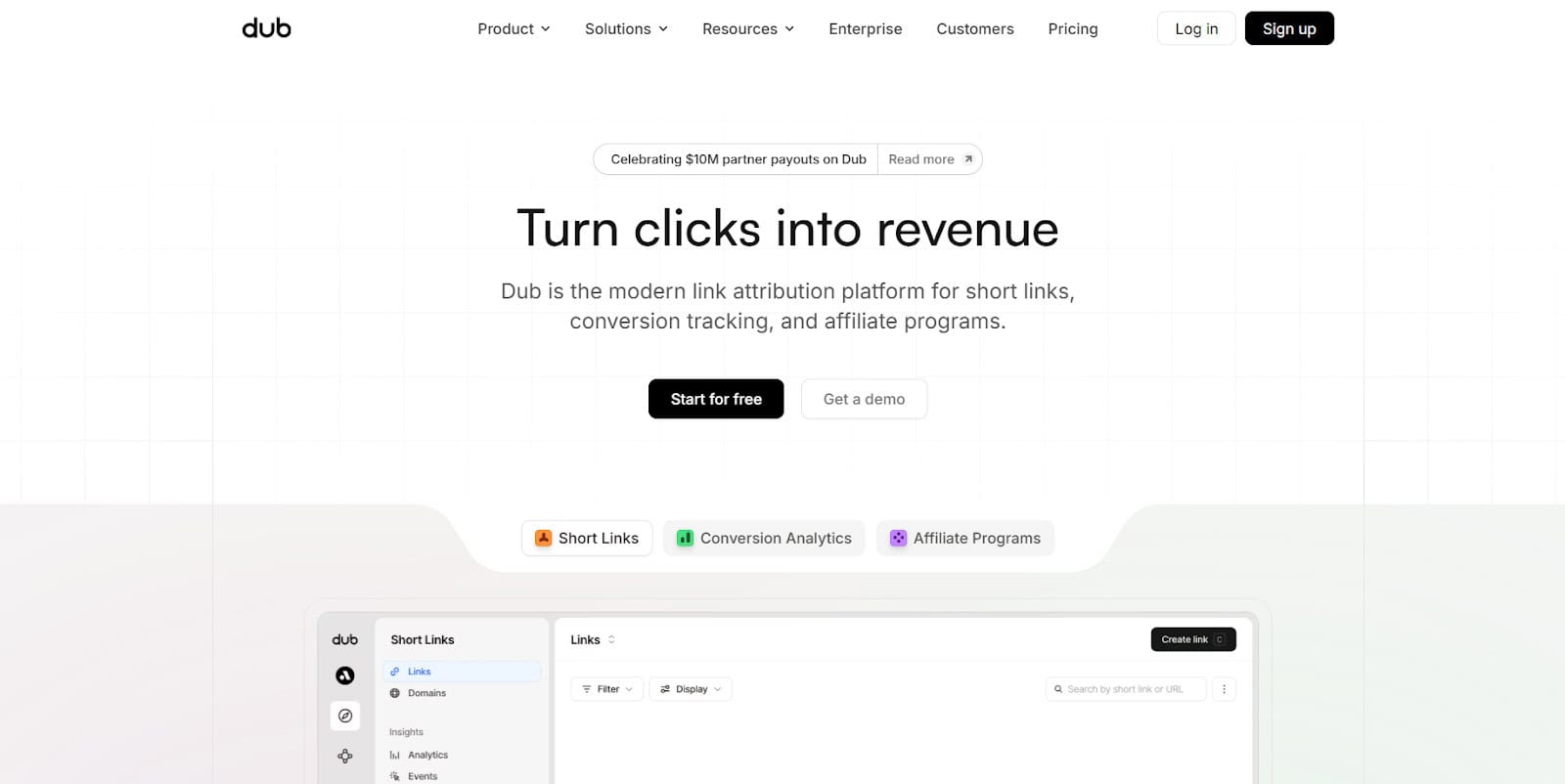
Its Dub Partners module, is built on infrastructure that powers 100M+ conversion events per month and has facilitated over $595M in partner-driven revenue.
Every click, signup, upgrade, and refund gets tied back to its source all 10,000+ partners — so commission data is always accurate and payouts never require manual reconciliation.
That focus on clean data is what separates it from tools built purely around managing promoters and their earnings.
Dub Partners starts at $75/month for it's Business plan (there is a Pro plan worth $25/month that covers Dub Links and does not include affiliate management).
What Is FirstPromoter?
FirstPromoter is an affiliate and referral marketing platform built specifically for subscription-based businesses and SaaS companies.
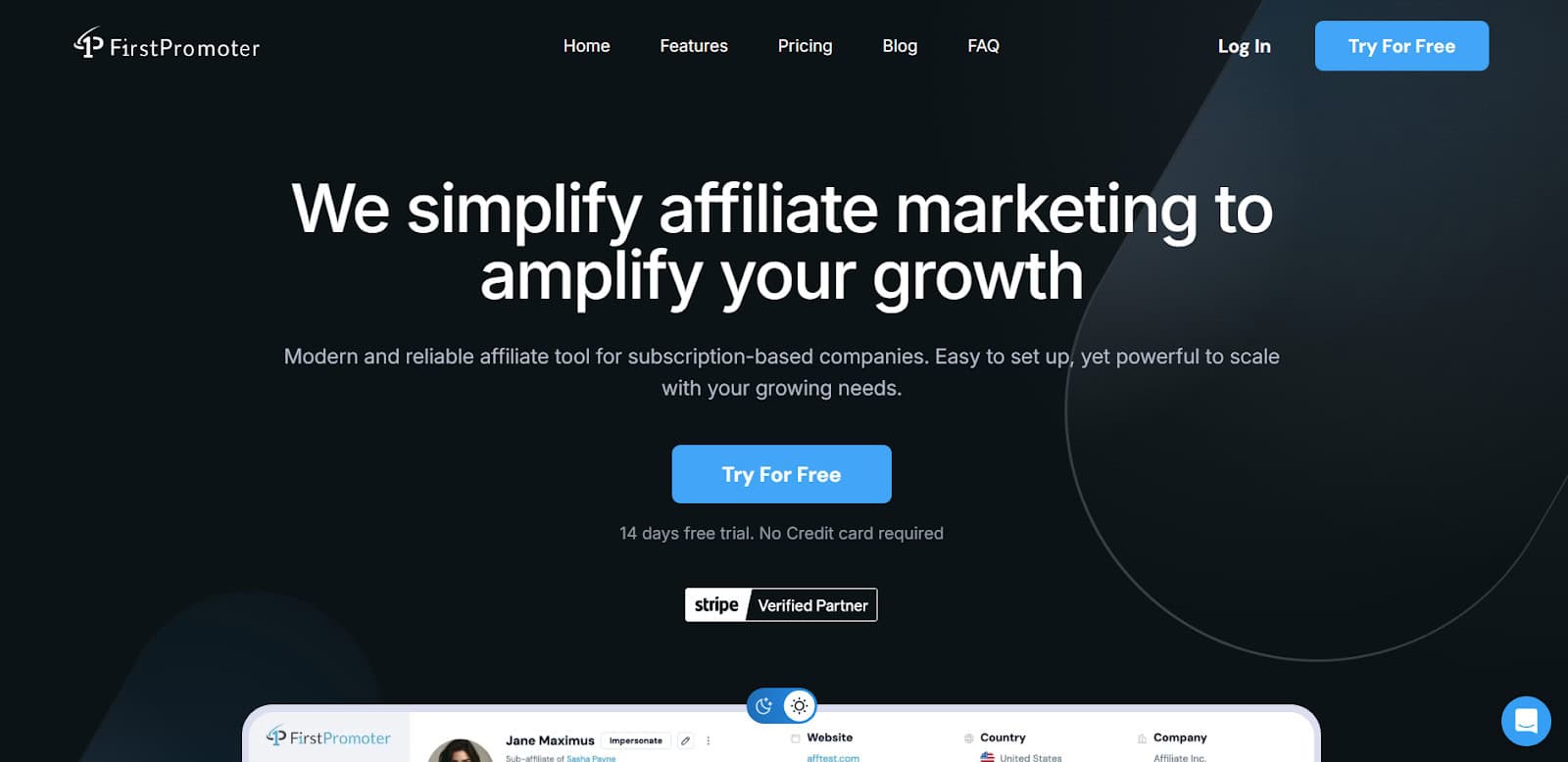
It focuses on helping teams launch, manage, and scale affiliate programs without heavy setup or custom development.
Over the years, FirstPromoter has evolved from a basic referral tool into a more complete affiliate platform, with stronger automation, reporting, and a redesigned interface aimed at growing programs.
Let’s Compare Dub and First Promoter
Attribution vs. Affiliate Management
At a high level, this is the most important distinction.
Dub.co is built around partner-driven attribution. The platform tracks how partners perform across channels, campaigns, and users — then feeds that data directly into commissions and payouts.
FirstPromoter is built specifically to run affiliate and referral programs. Everything is optimized around managing promoters and their earnings.
Neither approach is inherently better. They simply serve different priorities.
Tracking and Analytics Depth
FirstPromoter offers solid analytics out of the box. It tracks clicks, conversions, recurring payments, upgrades, downgrades, and churn. For many SaaS teams, that visibility is enough to run a healthy affiliate program.

The dashboard is intuitive, and there’s very little friction when getting started. You can see who your top promoters are, how much revenue they generate, and what commissions are owed.
Dub Partners goes deeper.
Affiliate data is one slice of a much larger attribution picture. You can analyze partners by traffic source, geography, device, and event type, and watch conversion events stream in real time.

Dub also relies on server-side tracking, which reduces duplicate events and attribution errors a common issue in larger programs where accuracy directly affects payouts and trust.
Payouts
Dub.co has the best-in-class Stripe integration for affiliate tracking that handles recurring sales, free trials, refunds, expansion, and churn events.
On the payout side, Dub makes things incredibly simple — all it takes is one click. There are no CSV exports. This allows you to reliably handle partner revenue attribution without requiring any manual reconciliation.
If a refund or chargeback happens in Stripe, Dub automatically detects it and marks the corresponding commission accordingly.
FirstPromoter relies heavily on PayPal for payouts. While PayPal works fine for smaller programs, payouts can occasionally fail and when they do, companies are responsible for manually resolving those failures.
That adds real operational overhead as a program grows.
Tax Handling
Tax handling is another quiet but important difference.
FirstPromoter does not provide built-in tax compliance. Teams typically rely on third-party services to collect forms and prepare tax documents as their affiliate base grows.
Dub Partners automates U.S. tax compliance directly, handling W-9s, W-8s, and 1099-NEC preparation. This doesn’t matter much at the start — but it matters a lot once affiliates generate meaningful income.
Reward Structures and Incentives
FirstPromoter offers flexible commission setups: one-time rewards, recurring percentages, fixed payouts, and even multi-tier structures. For most affiliate programs, this covers the basics well.
Dub Partners expands the model further.
Affiliates can be rewarded not just for sales, but for clicks and leads. Rewards can change based on conditions like location or performance, and commissions can be time-limited or lifetime-based.
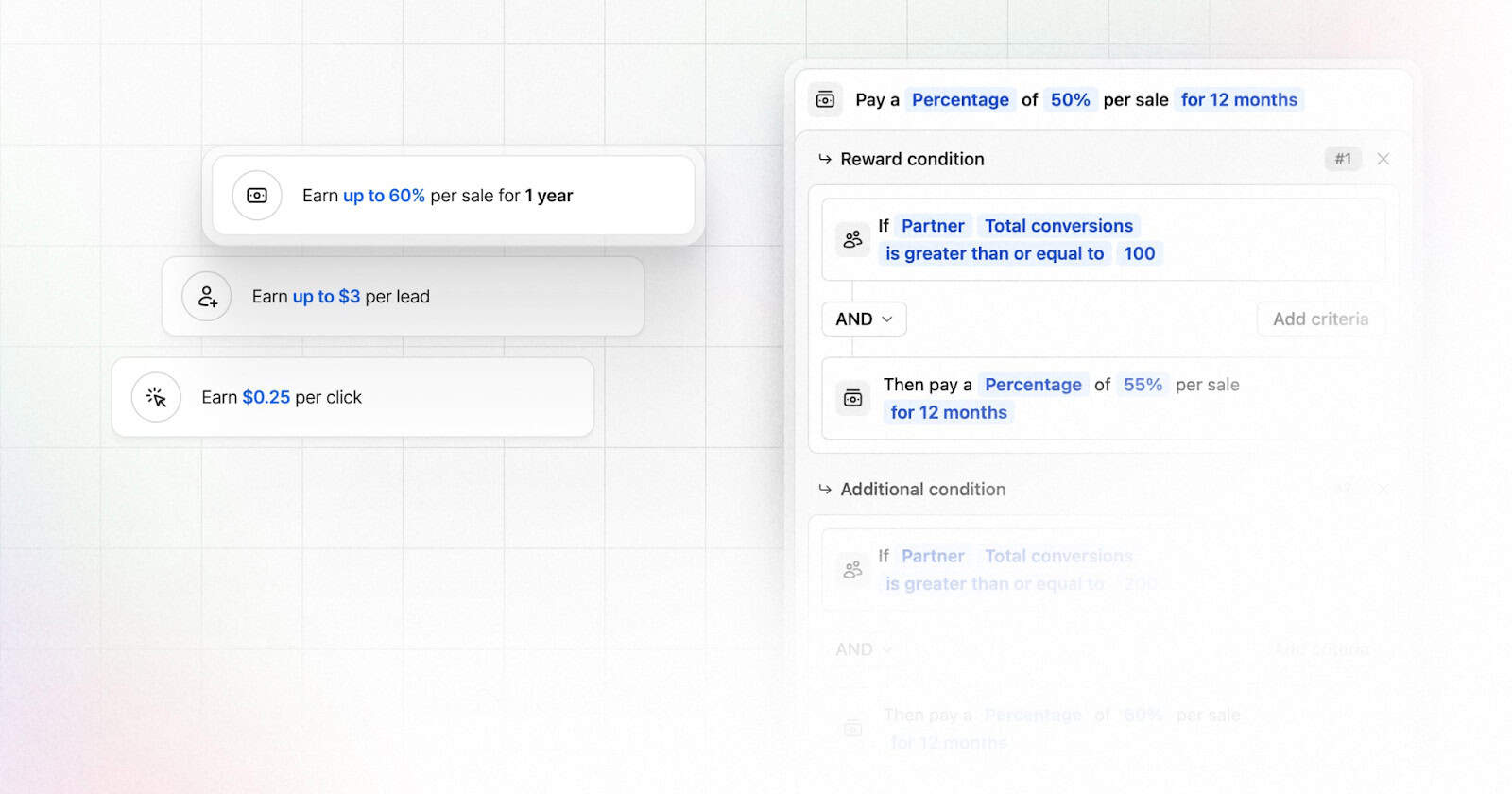
Dub also introduces bounties — bonus rewards tied to milestones or content creation. These aren’t required to run a program, but they offer another lever for activating high-performing partners beyond passive link sharing.
Partner Experience and White Labeling
FirstPromoter includes branding, assets, and messaging tools. Teams can embed the affiliate dashboard into their product, though deeper customization may require more setup.
Dub Partners focuses on reducing friction for both sides. Affiliates don't need to manage multiple logins across programs, and payouts happen automatically without withdrawal fees in most cases.
White-labeled partner dashboards can be embedded quickly using pre-built components — a meaningful advantage for teams that want a polished partner experience without overly complicated coding.
When Should You Use Them?
| Dub.co | FirstPromoter | |
|---|---|---|
| Attribution depth | First click to final sale | Solid affiliate-level tracking |
| Payouts | One-click, fully automated | PayPal-dependent, manual cleanup risk |
| Stripe integration | Native, automatic reconciliation | Integration present, manual reconciliation common |
| Tax compliance | Built-in (W-9, W-8, 1099-NEC) | Third-party required |
| Partner network | 8,000+ active partners | No built-in network |
| Pricing | From $75/month for Dub Partners $25 for Dub Links only | Subscription-based, lower entry point |
Final Thoughts
FirstPromoter is a more than capable tool for teams in the early stages of building an affiliate program.
If your program is small, your payout volume is manageable, and you don't need deep attribution data, it gets the job done.
But affiliate programs don't stay small forever. And when they grow, the cracks will start to show.
Dub.co is built for that moment. Payouts are automated, attribution is accurate, tax compliance is handled, and there's a network of 10,000+ active partners ready to plug into.
It's the right tool for teams that want their affiliate program to grow without the overhead that usually come with it.
Want to Learn Even More?
If you enjoyed this article, subscribe to our free newsletter where we share tips & tricks on how to use tech & AI to grow and optimize your business, career, and life.


