Dub.co vs. PartnerStack: Which Partner Platform Is Better in 2026?
Choosing between Dub.co and PartnerStack often depends on how structured your partner programs are. Let’s talk about their differences.

John Angelo Yap
Updated March 24, 2026

Dub.co vs. PartnerStack, generated with GPT
Reading Time: 6 minutes
Partner programs are a strategic lever for SaaS companies that want to expand reach without sinking all their budget into paid ads.
They turn creators, affiliates, agencies, and resellers into revenue-driving channels.
Two tools often considered in this space are Dub.co (specifically via its Dub Partners module) and PartnerStack.
At first glance, both promise to help you manage affiliate and referral programs, automate payouts, and grow partner revenue.
But when you look closer, the differences in scope, focus, and ease of scaling become clearer.
In this article, we'll break down what these platforms are, what they offer, and which one might fit your needs best.
What Is Dub.co?
Dub.co is a modern affiliate marketing and partner management platform built for SaaS companies that want to grow partner-driven revenue without the enterprise overhead.
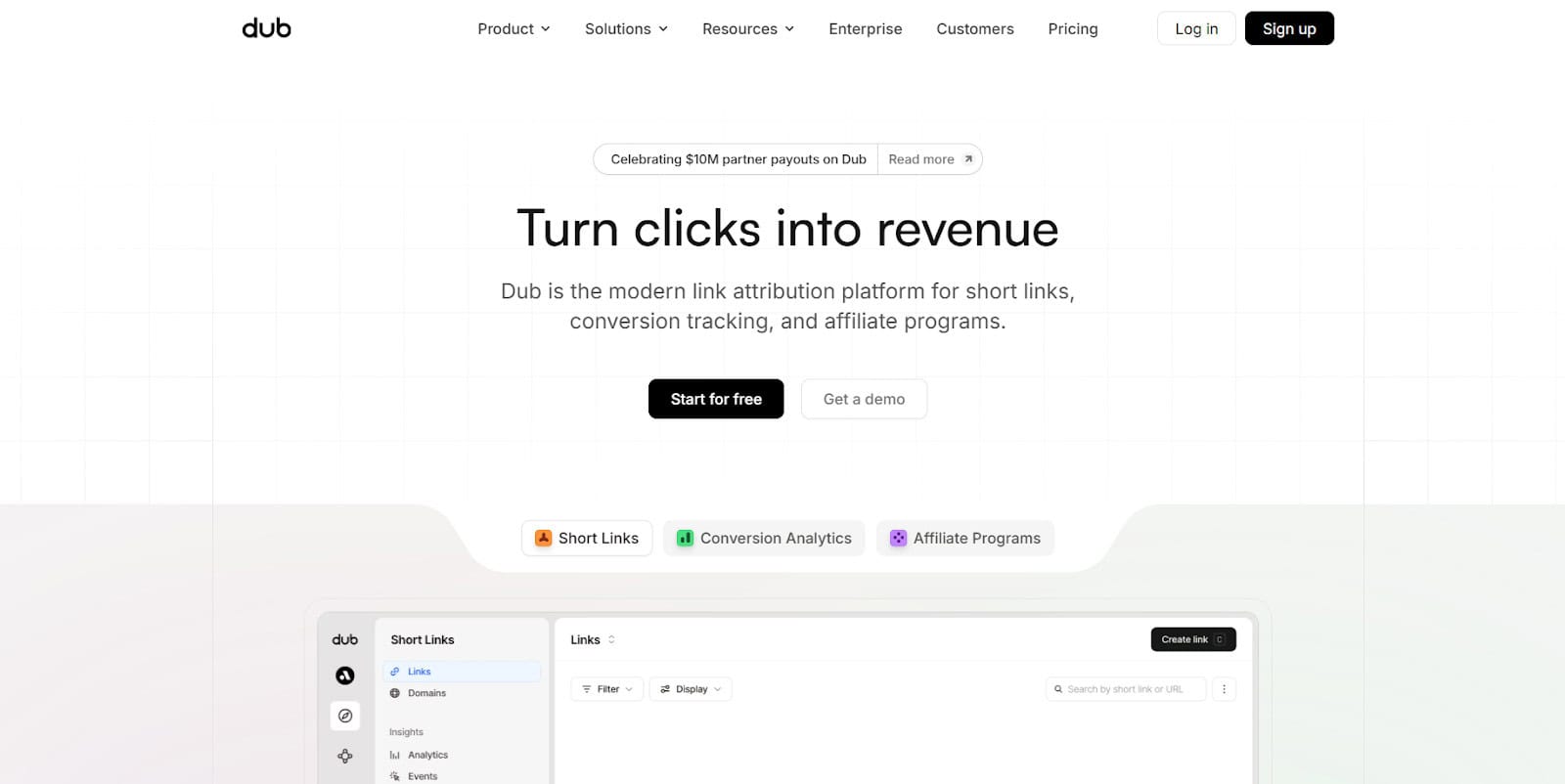
Its Dub Partners module is built on top of enterprise-grade attribution infrastructure that powers 100M+ click and conversion events every single month.
Its network of 10,000+ active partners gives companies built-in distribution from day one instead of starting from scratch.
Think Dropbox's "Refer a Friend" program, or Framer's partner program that generates $8M in payouts annually.
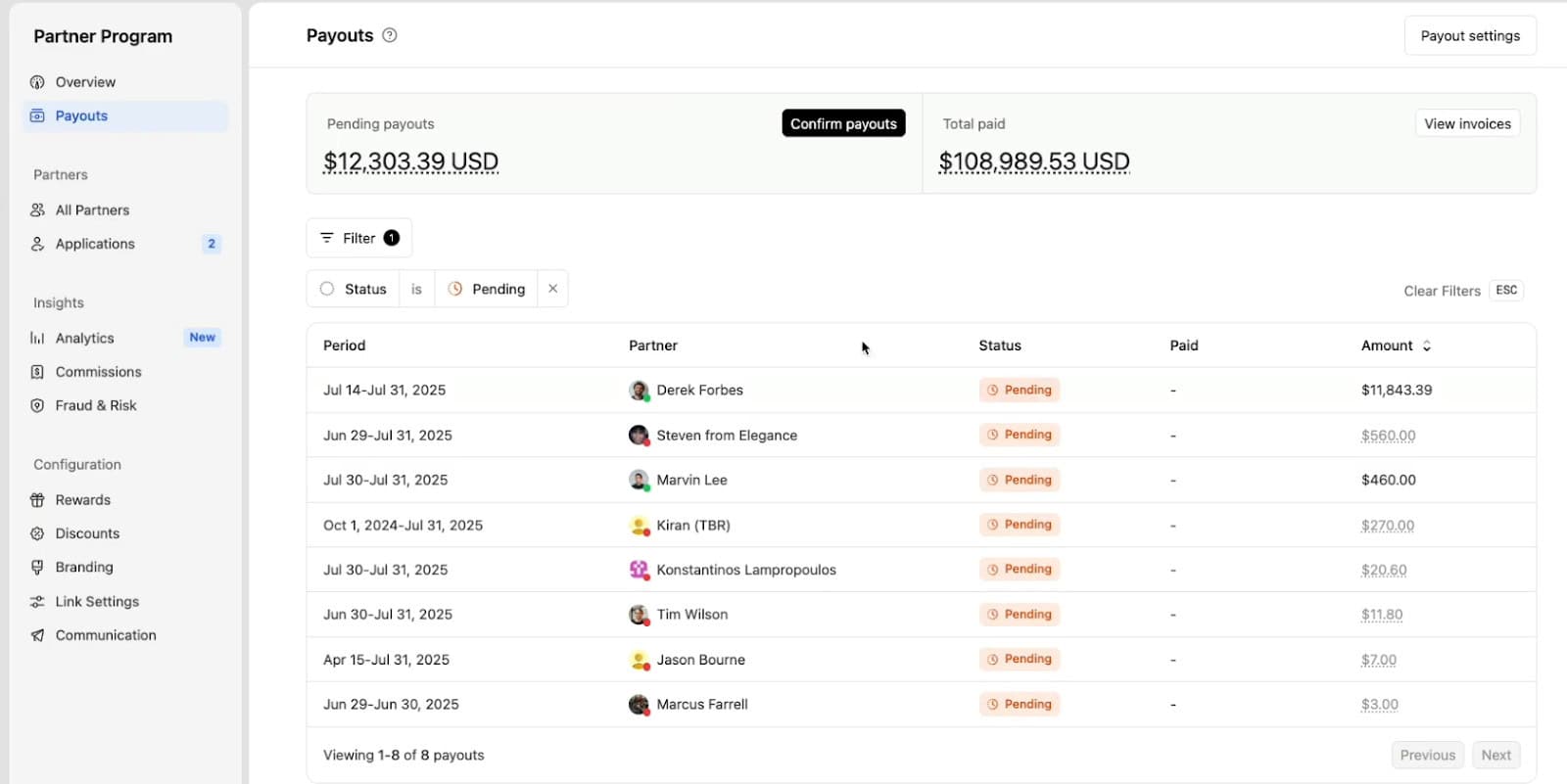
Here's what Dub Partners gives you out of the box:
- Flexible reward structures — pay-per-click, pay-per-lead, or pay-per-sale with flat or percentage-based commissions, configurable per partner
- 1-click global payouts through best-in-class Stripe integration with built-in invoicing and tax compliance.
- Dual-sided incentives — reward partners and give their referred customers a discount at the same time, driving stronger word-of-mouth
- AI landing page generator to create a branded program page that drives partner signups
- Embedded referral dashboard — onboard users into your referral program directly inside your app, no third-party signup required
- White-labeling so the entire experience stays on your brand
Several teams have migrated to Dub directly from PartnerStack (including Kick and Privy) citing flexibility and ease of use as the primary drivers.
What Is PartnerStack?
PartnerStack is a partner ecosystem management platform originally built with B2B SaaS companies in mind. Its goal is to help businesses launch, manage, and scale partnerships.

Where Dub.co leads with partner revenue attribution and automation, PartnerStack is positioned more like a partner relationship management (PRM) tool with affiliate and incentive primitives built in.
It’s positioned more like a partner relationship management (PRM) tool with affiliate and incentive primitives built in, rather than a link-first analytics platform.
Feature Comparison
Both platforms address partner and affiliate management, but they do so from slightly different angles.
Attribution & Tracking
Dub.co
Built around partner revenue attribution across clicks, leads, and revenue events. It avoids fragmented data by centralizing analytics and tying every conversion back to a unique partner link.
PartnerStack
Offers first-party tracking by setting cookies and synchronizing revenue data with your CRM and billing platforms. It provides a full-funnel view but can be impacted by cookie limitations unless advanced tracking setups are used.
The practical difference shows up once you scale. Dub's attribution model makes it easier to answer not just who generated revenue, but how — which content, channel, or sequence drove the outcome.
Partner Management & Onboarding
Dub.co
Includes an AI-powered landing page generator and an embedded referral dashboard that lets you onboard users as partners directly inside your app, no external signup required.
PartnerStack
Offers robust onboarding and content delivery tools, suited for multi-channel programs spanning resellers, affiliates, and co-sell partners.
For most SaaS teams running affiliate and referral programs, Dub gets you live faster with less overhead.
Payouts & Compliance
Dub.co
Features the best-in-class Stripe integration for affiliate tracking that handles recurring sales, free trials, refunds, expansion, and churn events. This allows you to reliably handle partner revenue attribution without requiring any manual reconciliation.
Payouts are just as clean all it takes is one click. There are no CSV exports and no payout failures that companies need to clean up themselves.
Tax compliance is handled automatically (W-9, 1099, W-8), and built-in invoicing is generated per payout.
PartnerStack
Also offers Stripe integration and automates payouts via global payment rails, but some users report data discrepancies that require hours of manual reconciliation between Stripe and PartnerStack.
Its monthly invoice cycle tends to be more process-heavy, with a higher likelihood of downstream errors requiring manual resolution.
Here's a breakdown of how Dub compares to PartnerStack in terms of Stripe data handling: video explanation.
Analytics & Insights
Dub.co
Analytics are tightly connected to attribution data from click through revenue events. Its real-time events stream and filtering by partner, geography, and device give teams operational data that guides day-to-day decisions.
PartnerStack
Tracks partner activity, revenue, and lifecycle stages across different partnership types. Reporting is better suited for program-level health monitoring than deep troubleshooting.
In practice, Dub’s analytics tend to feel more operational while PartnerStack’s reporting leans toward program-level visibility and health rather than deep attribution troubleshooting.
Pricing and Commitment
PartnerStack does not publish flat plans. Pricing is custom and tailored to your partnership scale, the number and type of channels you want to run, and the complexity of your programs.
Dub Partners starts at $75/month. Note that the $25/month plan applies to Dub Links only and does not include partner or affiliate management functionality.
Dub Partners pricing scales based on click volume, link quotas, and analytics retention.
Support and Ease of Use
PartnerStack’s interface is polished and robust, albeit non-modern, with workflows built for program managers handling multiple partner types.
Dub.co’s UI and controls feel more direct and nimble, especially for teams focused on affiliate/referral link performance and attribution.
Setup friction is generally higher with PartnerStack because of its breadth and outdated UI — Dub.co tends to be faster to launch and iterate without as much configuration overhead.
The Bottom Line
PartnerStack is a strong choice when your partnership strategy goes beyond affiliate links and into multi-channel ecosystems involving resellers, co-sell partners, and full lifecycle engagement.
Its marketplace depth and program infrastructure reflect that ambition.
Dub.co, through Dub Partners, excels when your priority is clear attribution, fully automated payouts with zero manual reconciliation, and a partner network you can tap into on day one.
With best-in-class Stripe integration, one-click payouts, 10,000+ network partners, and transparent pricing.
Dub gives growing SaaS teams everything they need to run a clean, scalable affiliate program without the enterprise overhead.
For many teams, the decision isn't "which is objectively better." It's about fit. But if your growth motion leans on attribution clarity, automation, and operational simplicity, Dub.co deserves first consideration.
Want to Learn Even More?
If you enjoyed this article, subscribe to our free newsletter where we share tips & tricks on how to use tech & AI to grow and optimize your business, career, and life.