TruthScan vs. QuillBot: Looking for the Better AI Detector
QuillBot built its reputation on rewriting. TruthScan built one on locating AI text. In the field of detection, who wins when they collide?

John Angelo Yap
Updated November 24, 2025

A detective reads AI-generated articles, generated with ChatGPT
Reading Time: 4 minutes
AI writing is evolving fast — and so is the tech designed to detect it.
What started as a small wave of simple “is this AI?” tools have now turned into a crowded market of detectors, humanizers, and rewriting engines. And while most people know QuillBot for its paraphrasing and grammar tools, it’s also joined the AI detection race.
On the other side, you’ve got TruthScan — a full-scale detection platform built to identify AI across text, images, voice, and video.
So how do they compare?
Is TruthScan’s forensic-level approach really more accurate than QuillBot’s quick-scan AI detector?
Or does QuillBot’s simplicity make it the better everyday choice?
Let’s find out.
What is TruthScan?
TruthScan isn’t just an AI text detector — it’s an entire AI detection suite. Designed for professional, enterprise-level use, it identifies AI-generated content across multiple formats, including text, images, videos, and even voice recordings.

At its core, the AI Text Detector is built for precision. It analyzes sentence structures, tone patterns, and statistical irregularities to determine whether something was machine-written or human-authored. But what sets TruthScan apart is its multi-layered approach:
- Linguistic Pattern Analysis – Detects the subtle rhythm and predictability of AI-generated sentences.
- Token Distribution Scanning – Flags text that uses overly consistent or “too smooth” phrasing common in large language models.
- Real-Time Monitoring – Runs detection in under 100 milliseconds, with full API integration for enterprise workflows.
It’s designed for more than just writers and educators. TruthScan is used by media outlets, research organizations, and content platforms that need to verify authenticity at scale — making it one of the most complete AI detection systems available today.
What is QuillBot?
If you’ve written anything online in the last few years, chances are you’ve used QuillBot at least once. Originally built as a paraphrasing and grammar correction tool, it helped students, professionals, and content creators refine their writing without losing clarity or tone.
Recently, though, QuillBot has expanded its scope — launching an AI Detector that aims to help users verify whether text was written by AI or a human.
Here’s how it works:
- Text Scanning: You paste in text (up to a word limit), and QuillBot scans it for patterns consistent with AI writing.
- Score Output: The result is displayed as a percentage, indicating how likely the content was AI-generated.
- Simplified Interface: It’s quick, minimal, and built right into the same dashboard as its rewriting and grammar tools.
It’s convenient and approachable — especially for students or writers who already use QuillBot for rewriting. But unlike TruthScan, QuillBot doesn’t go into why text was flagged as AI. You get a score, but not the reasoning behind it.
TruthScan vs. QuillBot: AI Likelihood Scores
Test #1
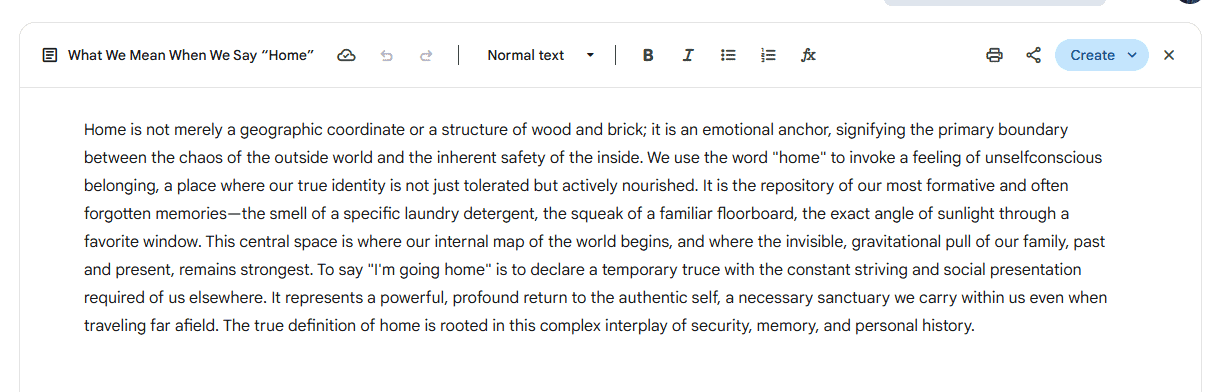
AI-Generated Text:
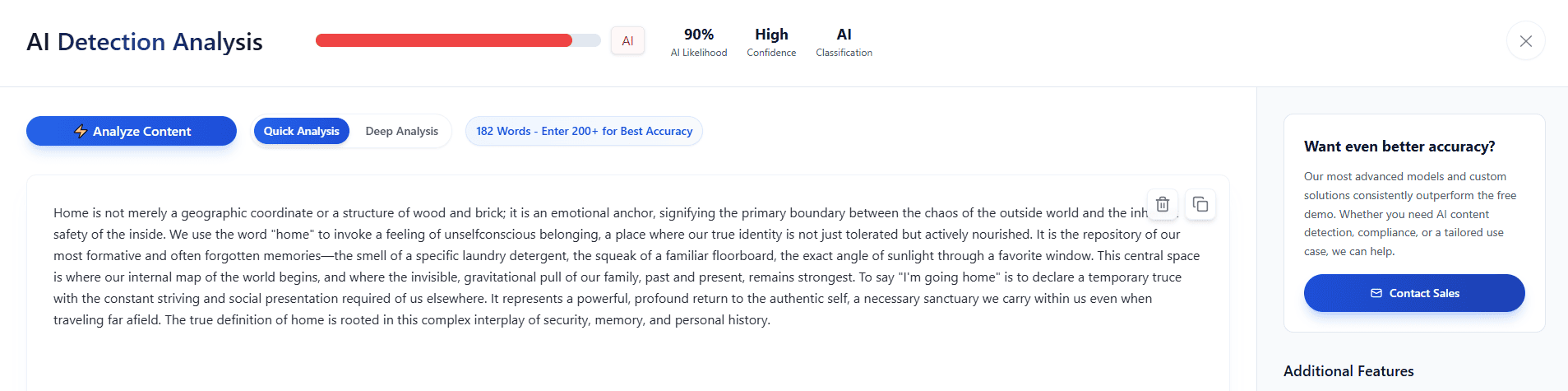
TruthScan: Correctly identified text as machine-generated.
AI Likelihood: 90%
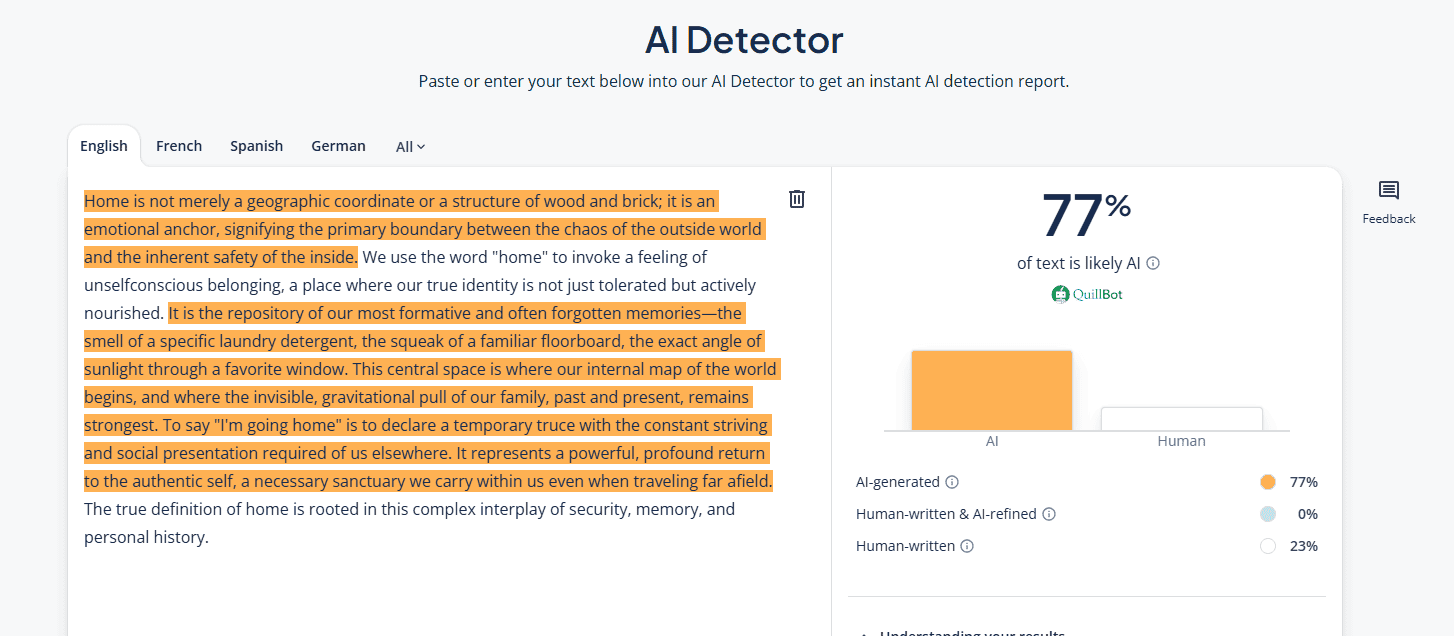
QuillBot: Correctly identified text as machine-generated.
AI Likelihood: 77%
Test #2
AI-Generated Text:
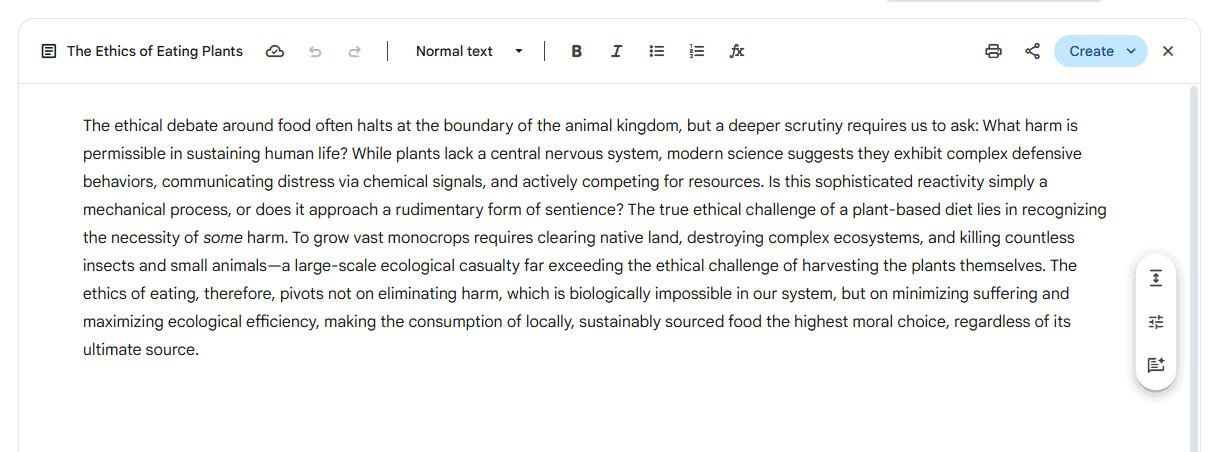
TruthScan: Correctly identified text as machine-generated.
AI Likelihood: 99%
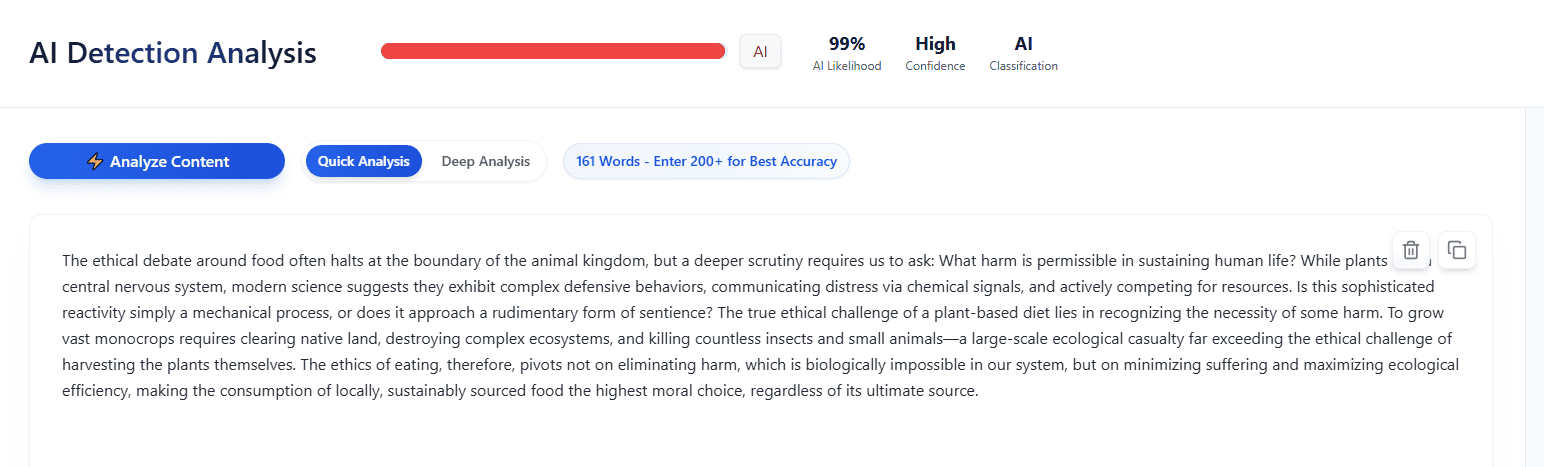
QuillBot: Correctly identified text as machine-generated.
AI Likelihood: 100%
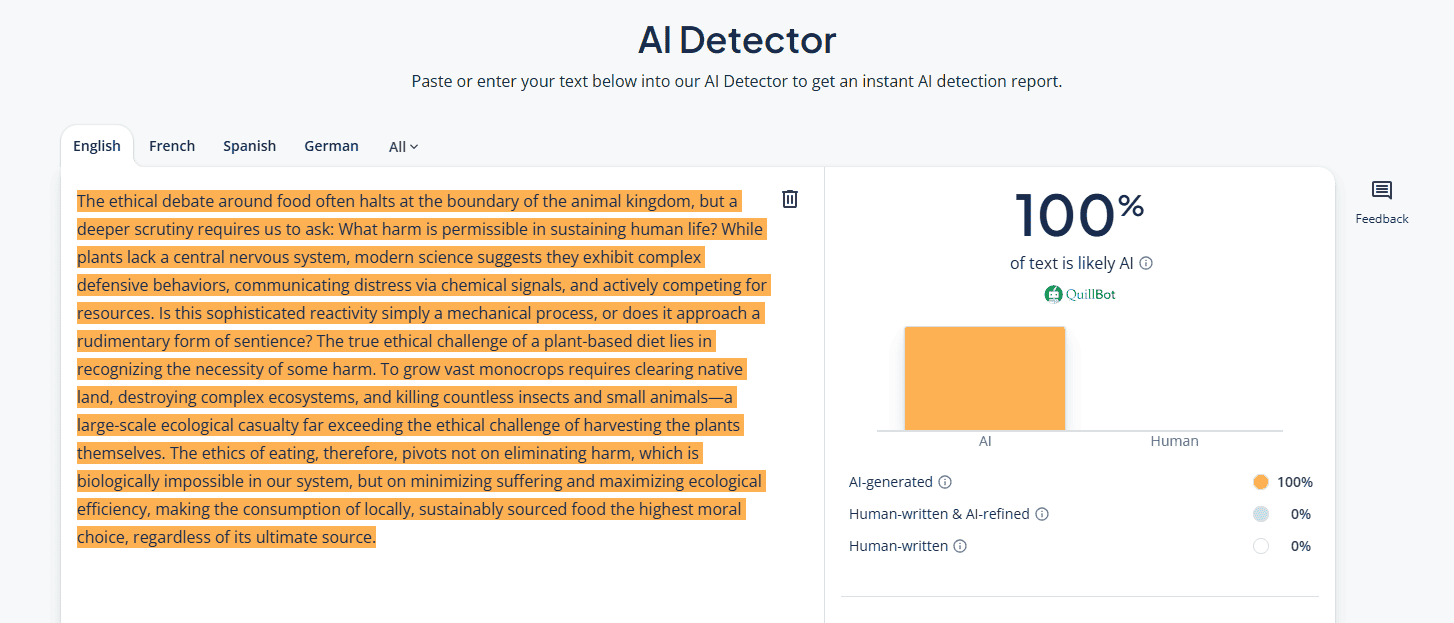
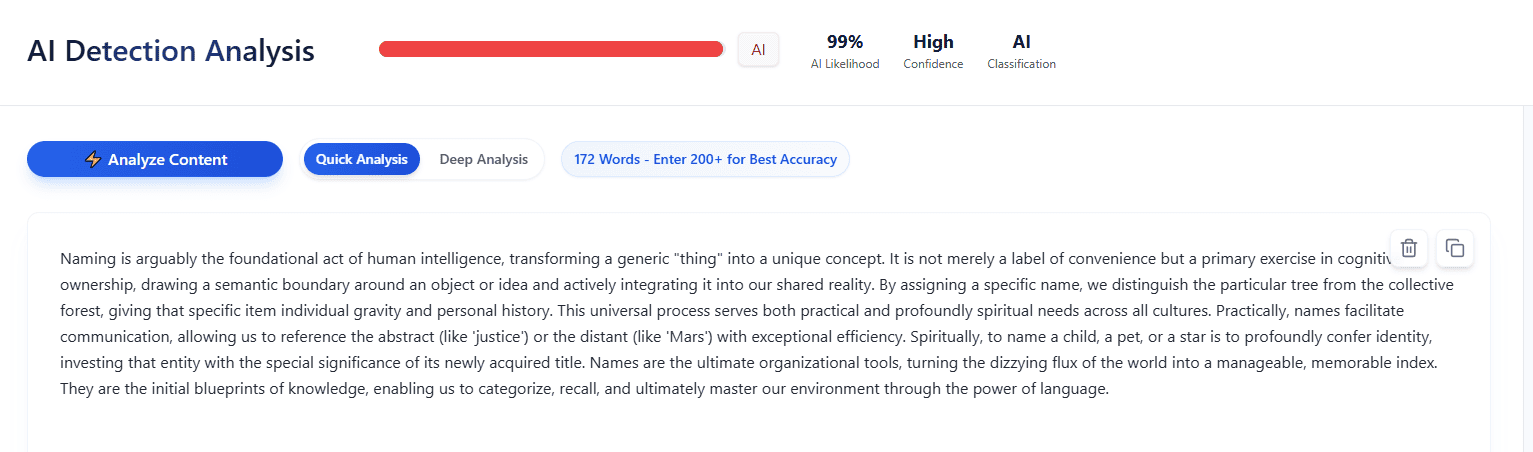
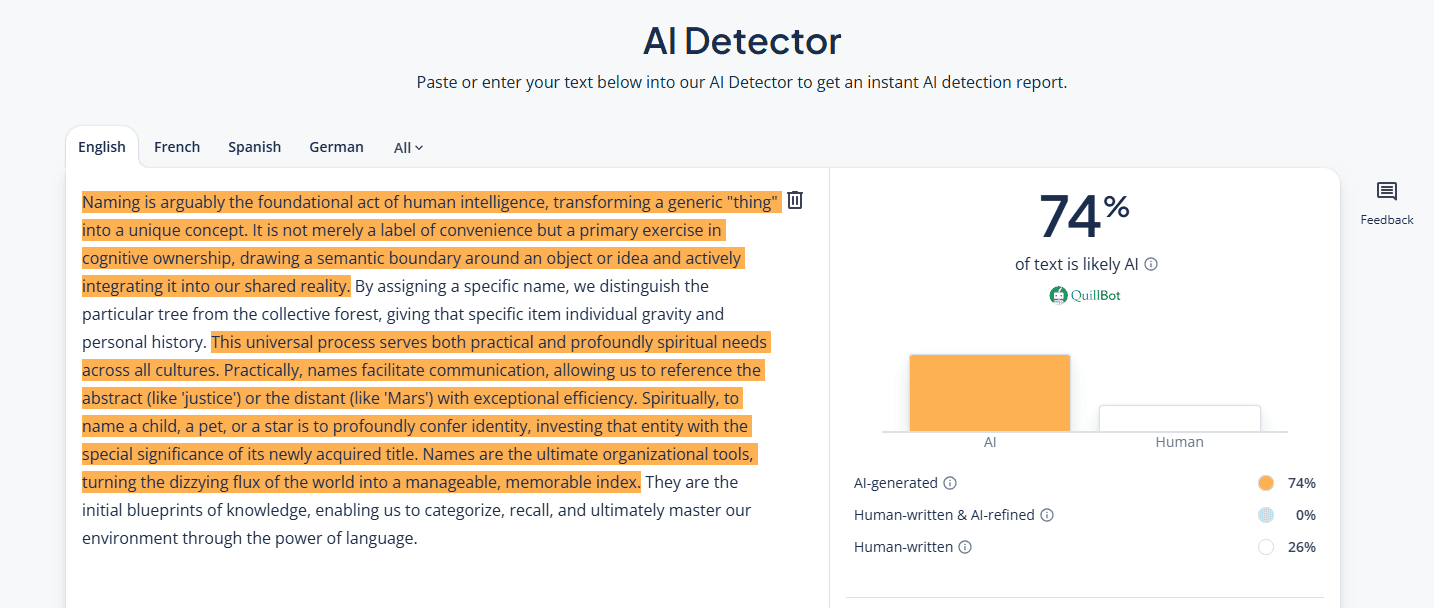
Test #3
AI-Generated Text:
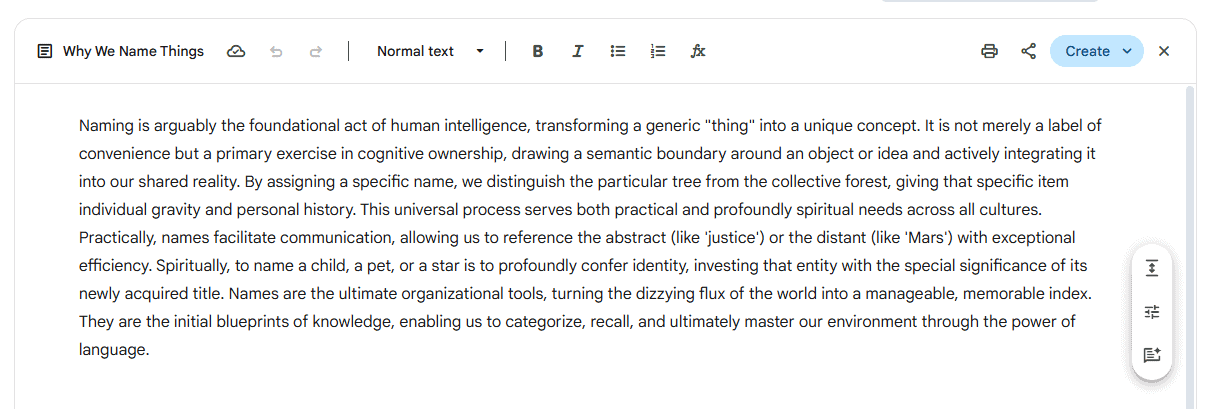
TruthScan: Correctly identified text as machine-generated.
AI Likelihood: 99%
QuillBot: Correctly identified text as machine-generated.
AI Likelihood: 74%
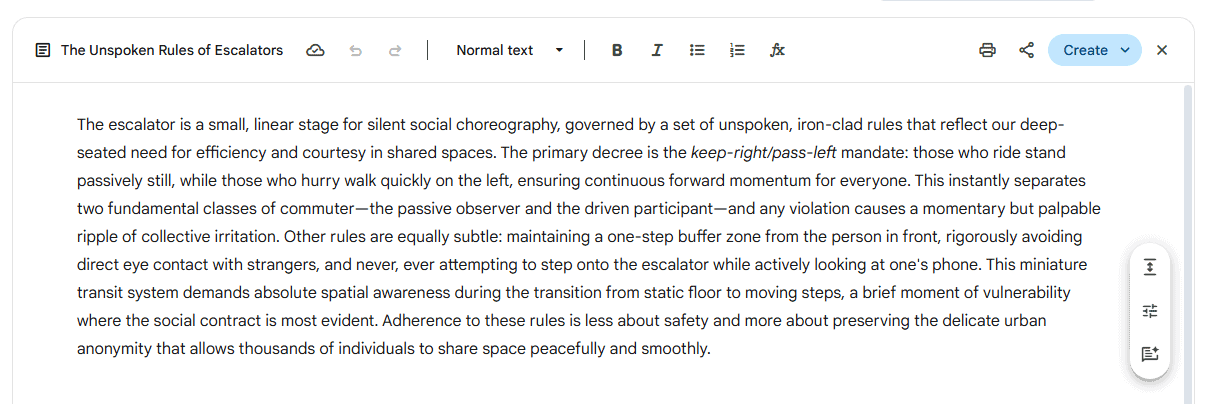
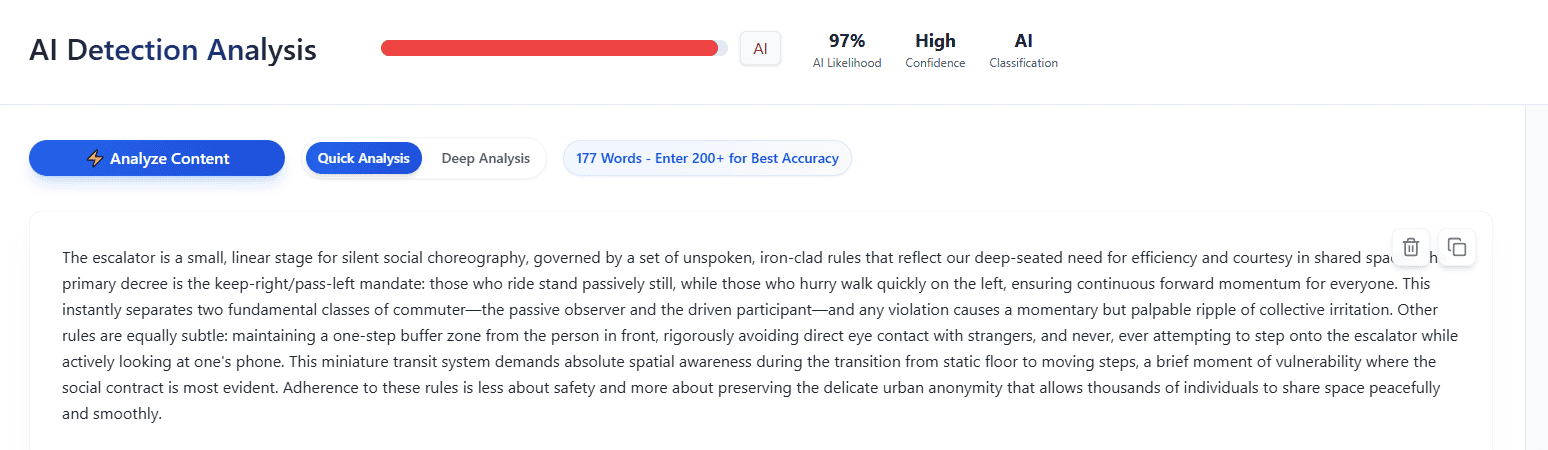
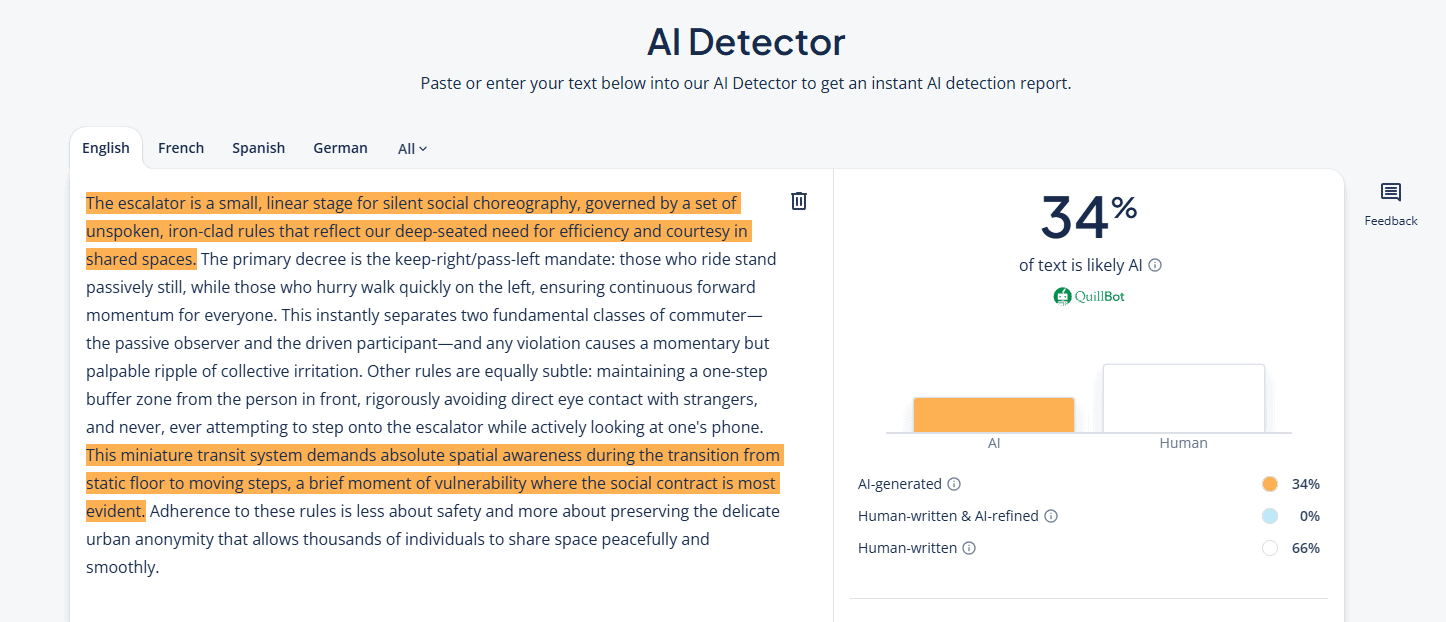
Test #4
AI-Generated Text:
TruthScan: Correctly identified text as machine-generated.
AI Likelihood: 97%
QuillBot: Incorrectly identified text as human-written.
AI Likelihood: 34%
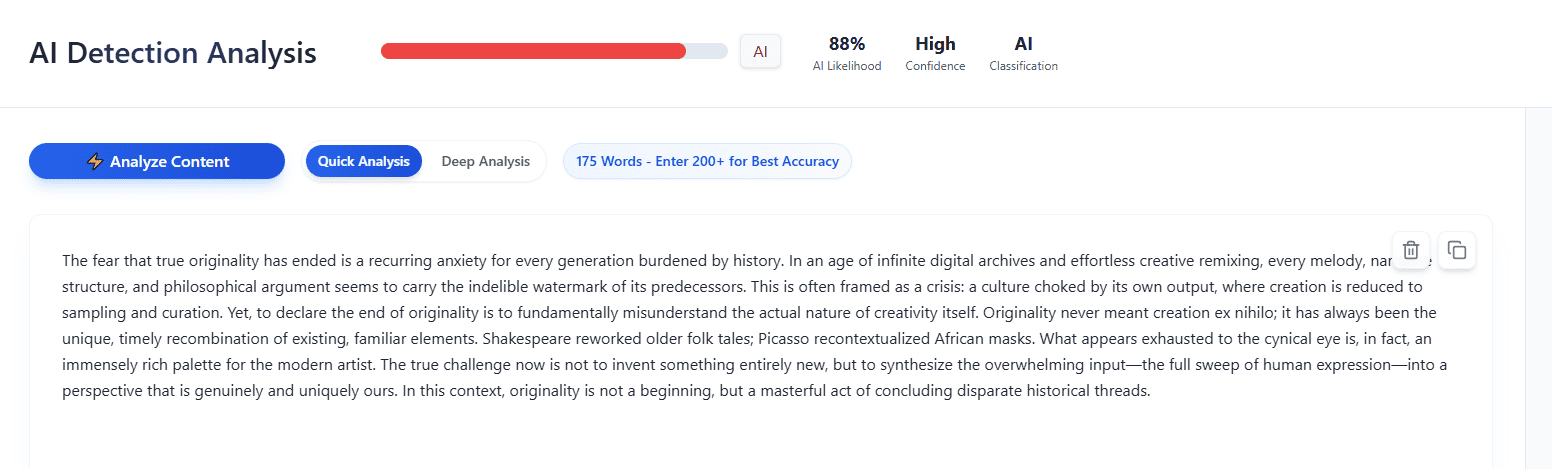
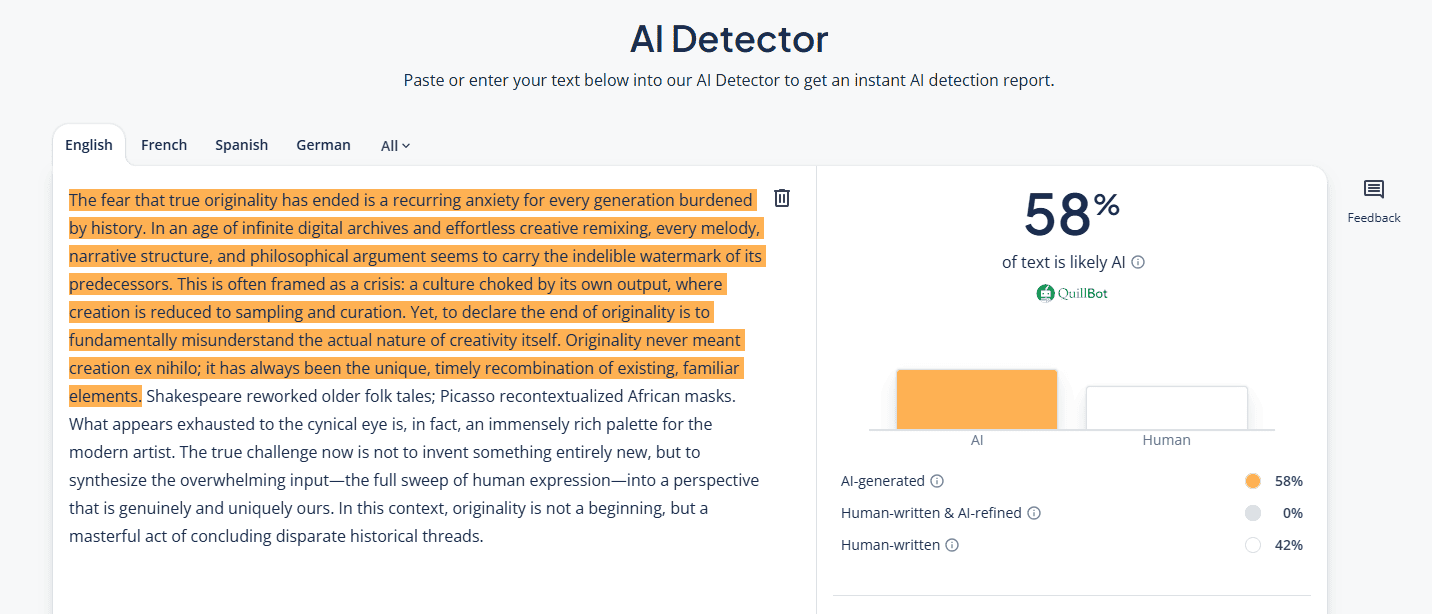
Test #5
AI-Generated Text:

TruthScan: Correctly identified text as machine-generated.
AI Likelihood: 88%
QuillBot: Detector confused.
AI Likelihood: 58%
Test #6
AI-Generated Text:
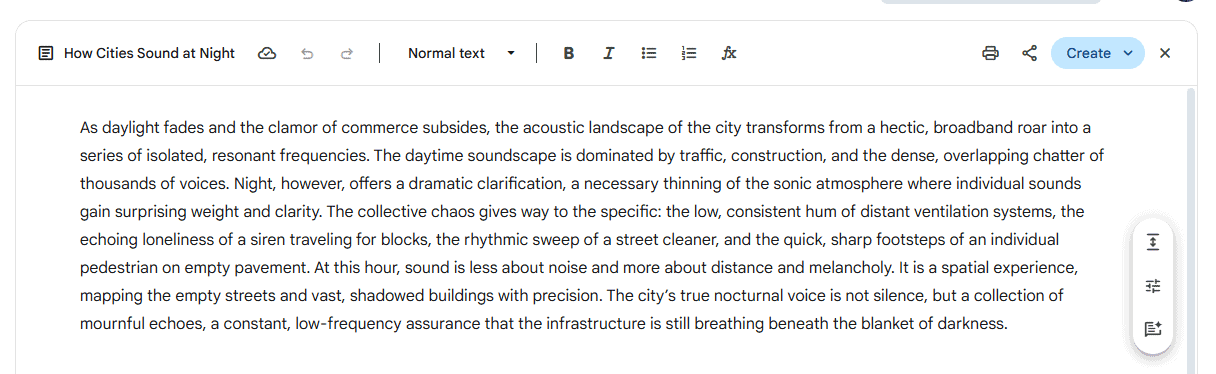
TruthScan: Correctly identified text as machine-generated.
AI Likelihood: 98%
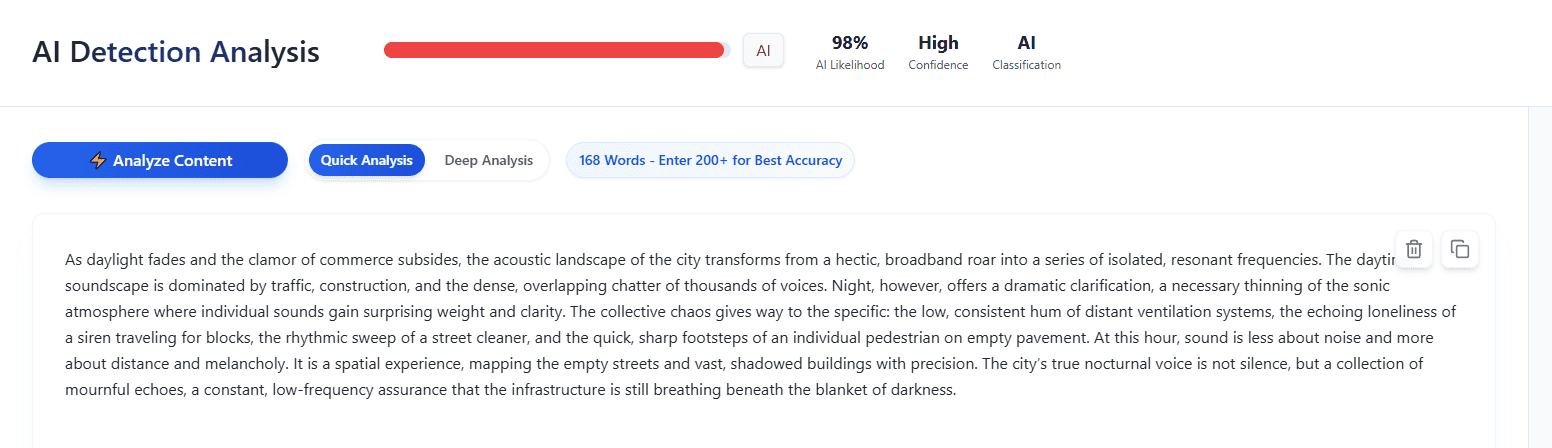
QuillBot: Detector confused.
AI Likelihood: 53%

Test #7
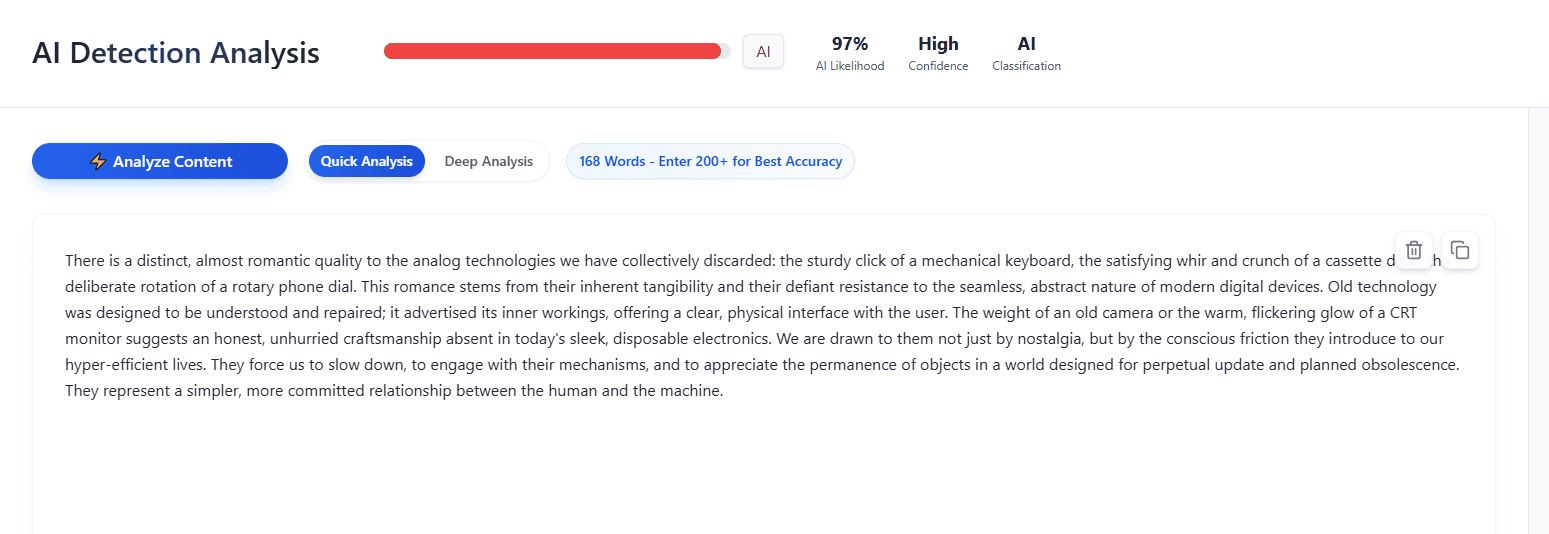
AI-Generated Text:
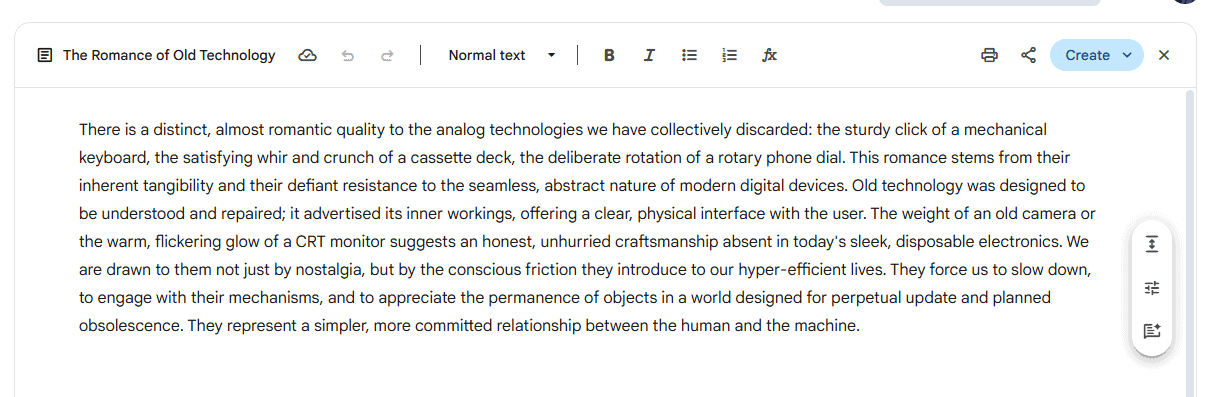
TruthScan: Correctly identified text as machine-generated.
AI Likelihood: 97%
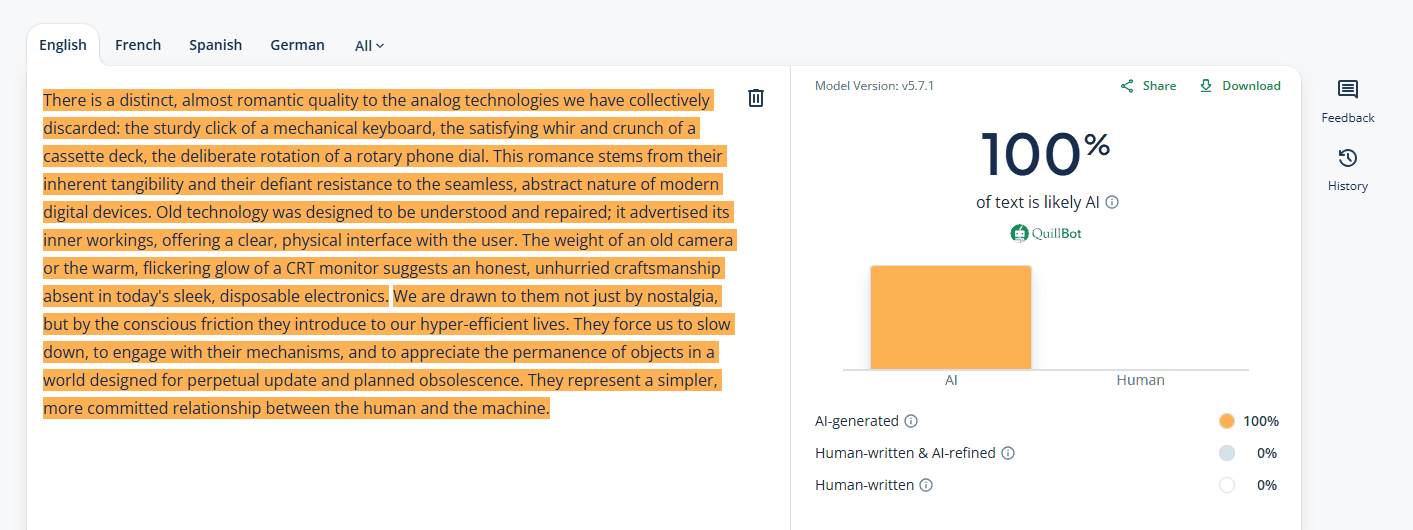
QuillBot: Correctly identified text as machine-generated.
AI Likelihood: 100%
Average Score
Test Number | TruthScan | QuillBot |
#1 | 90% | 77% |
#2 | 99% | 100% |
#3 | 99% | 74% |
#4 | 97% | 34% |
#5 | 88% | 58% |
#6 | 98% | 53% |
#7 | 97% | 100% |
Score | 95.43% | 70.85% |
The Bottom Line
After putting both detectors to the test, the results were clear — and surprisingly telling about where each tool shines.
TruthScan came in with a 95.43% correctness rate, confirming what its reputation has already hinted at: it’s one of the most precise AI detectors on the market right now. And it caught every AI-generated text.
QuillBot, meanwhile, scored a respectable 70.85% correctness. For a tool that wasn’t originally built around AI detection, that’s actually impressive. It’s fast, accessible, and perfectly suited for casual users who just want a quick scan before hitting “submit.”
That said, TruthScan clearly operates on a higher tier. It’s faster, more transparent, and far more reliable when accuracy matters most. QuillBot’s AI detector is convenient — but TruthScan is built for professionals who can’t afford to guess.
In short: QuillBot is good. TruthScan is exceptional.
Want to Learn Even More?
If you enjoyed this article, subscribe to our free newsletter where we share tips & tricks on how to use tech & AI to grow and optimize your business, career, and life.