TruthScan vs. Decopy AI Image Detector: Which Detects AI Images Better in 2026?
I’m putting TruthScan and Decopy AI in an image detection showdown. The gap was wider than I expected.

John Angelo Yap
Updated June 17, 2026

Detectives chasing after a robot painter, generated with Midjourney
Reading Time: 5 minutes
AI-generated images are getting harder to spot — and that’s both impressive and terrifying. What once looked like obvious deepfake material has become so refined that even trained eyes can’t always tell the difference.
Which is why tools like TruthScan and Decopy AI make sense. Both claim to detect AI-generated images with high precision, helping users verify whether a picture is real or machine-made. But as we’ve seen with text detection, promises of high accuracy don’t always hold up in real-world testing.
So today, we’re putting these two tools head-to-head. TruthScan brings enterprise-level detection and speed, while Decopy AI offers a simpler, more accessible approach. For 2026, the goal is to see which one performs better on the same image set and which one gives you more useful context when a result is borderline.
What Is TruthScan?
TruthScan has quickly become one of the most advanced AI detection suites out there. It’s not just an image detector — it’s a comprehensive AI detection ecosystem with tools designed to identify AI across text, images, audio, and even video.

Its AI Image Detector sits at the core of that system. Designed for real-time analysis, it can flag manipulated or synthetic visuals with sub-second detection speeds, and TruthScan now describes under-500ms results for enterprise deployments. That makes it viable not just for individuals, but for companies that need to verify hundreds or thousands of images per day, like journalists, content platforms, or cybersecurity teams.
A few things make TruthScan’s approach stand out:
- Multi-layered analysis: It doesn’t just look at pixels — it analyzes noise patterns, compression artifacts, and inconsistencies in lighting or texture that commonly appear in AI-generated content.
- Cross-model compatibility: It’s been trained to detect outputs from leading image generators like Midjourney, DALL·E, and Stable Diffusion, along with newer multimodal tools like OpenAI’s GPT-4o.
- Enterprise performance: It’s API-ready, supports bulk workflows, and has higher-volume plans for teams that need repeatable image checks instead of one-off uploads.
Pricing also matters if you are checking images at scale. TruthScan currently lists a free trial with 20,000 credits and paid plans starting at $49/month for 1,000,000 credits, while image scans consume credits per analyzed image.
For more image-detector comparisons in this cluster, see our TruthScan vs. Illuminarty AI detector test and Undetectable AI vs. Decopy AI image detector test.
What is Decopy AI?
Decopy AI started as a text-focused tool — detecting AI-generated essays, blogs, and articles — but it’s been steadily expanding into image detection as the need for visual verification grows.

Its AI Image Detector is still active and free-positioned, with a maximum upload size of 10MB. Decopy says it is trained on roughly 10 million images and can detect outputs from generators like Midjourney, Stable Diffusion, DALL-E, and Flux. The goal is to spot subtle deviations in texture, edge sharpness, and light behavior that signal synthetic generation.
TruthScan vs. Decopy AI Image Detector: Test Results
Quick caveat before the results: these are point-in-time tests from this image set, not a universal benchmark. Image detectors change, generators change, and borderline images should be reviewed with more than one signal.
Test #1
TruthScan: Correctly identified Midjourney image as machine-generated.
AI Image Likelihood: 97%
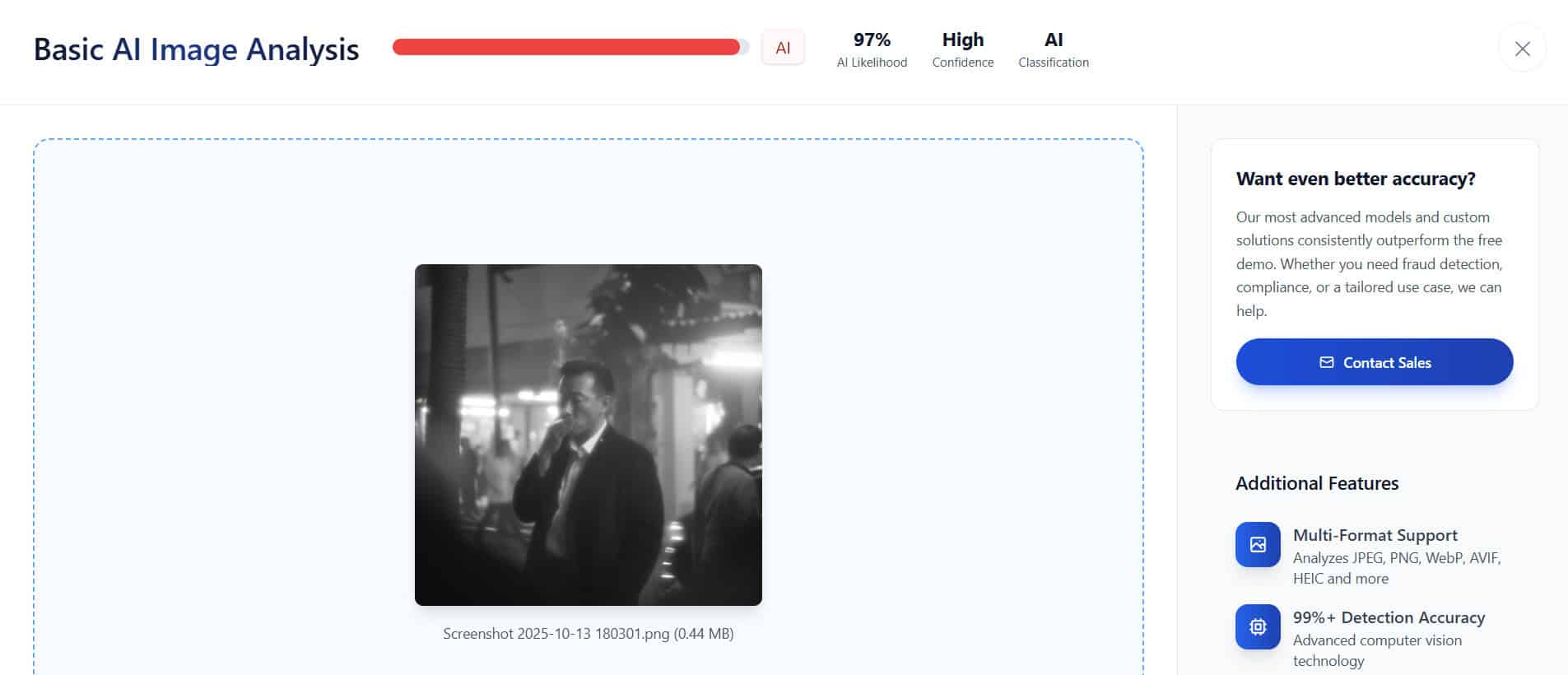
Decopy AI: Incorrectly identified Midjourney image as human-created.
AI Image Likelihood: 0%

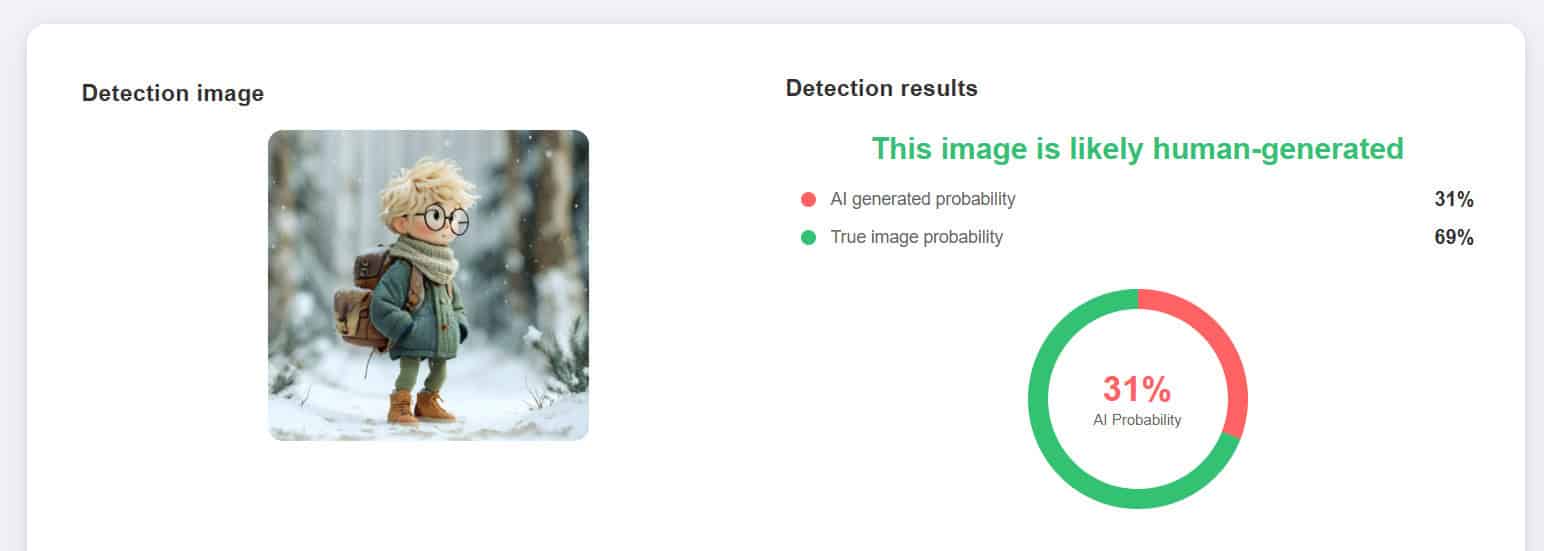
Test #2
TruthScan: Correctly identified Midjourney image as machine-generated.
AI Image Likelihood: 98%
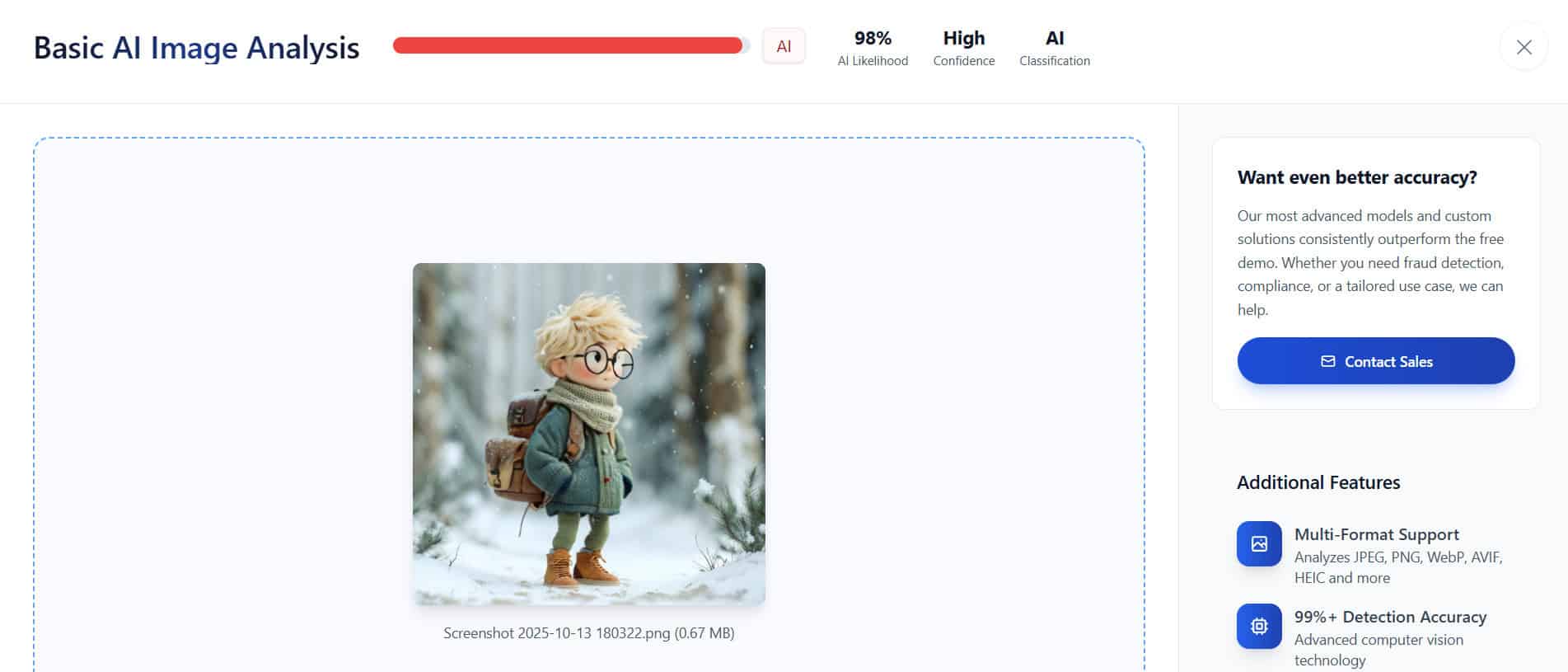
Decopy AI: Incorrectly identified Midjourney image as human-created.
AI Image Likelihood: 31%
Test #3
TruthScan: Correctly identified Midjourney image as machine-generated.
AI Image Likelihood: 97%
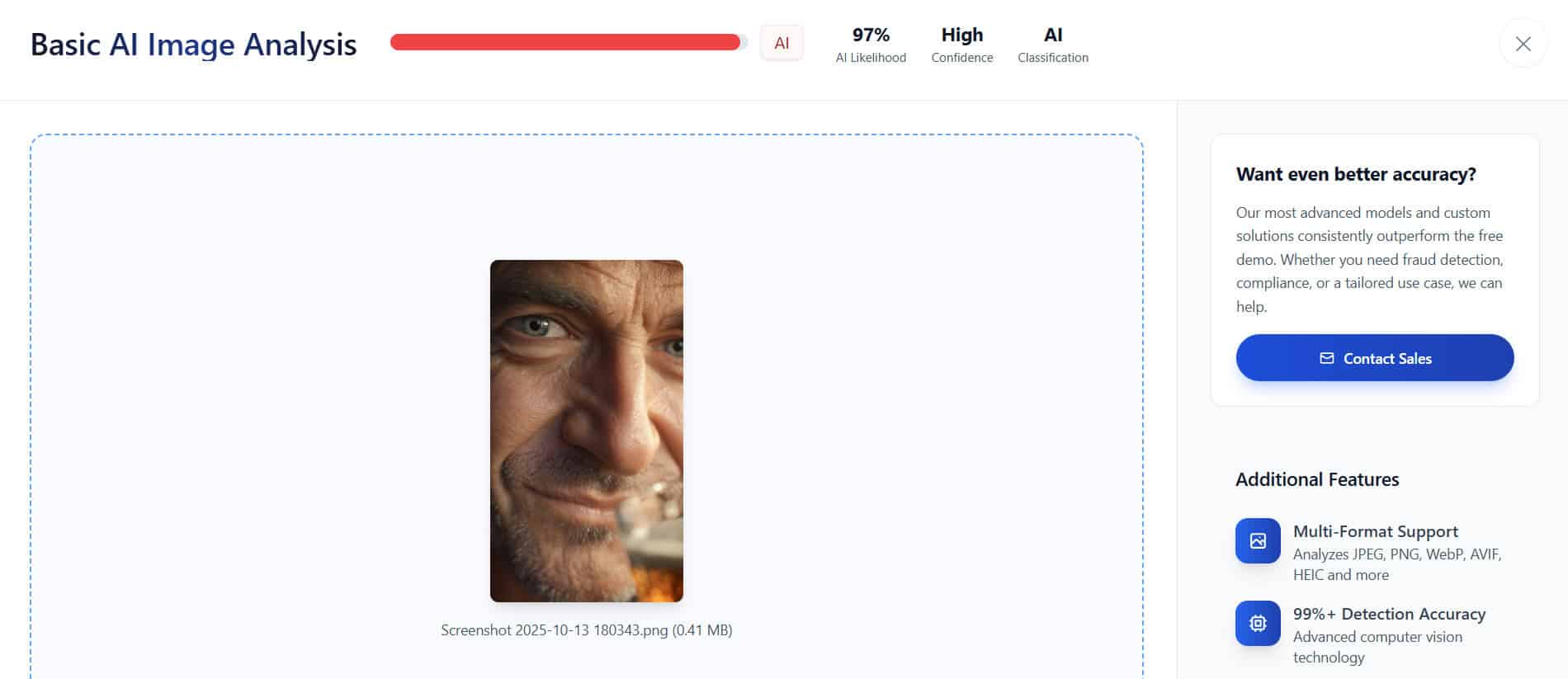
Decopy AI: Correctly identified Midjourney image as machine-generated.
AI Image Likelihood: 91%
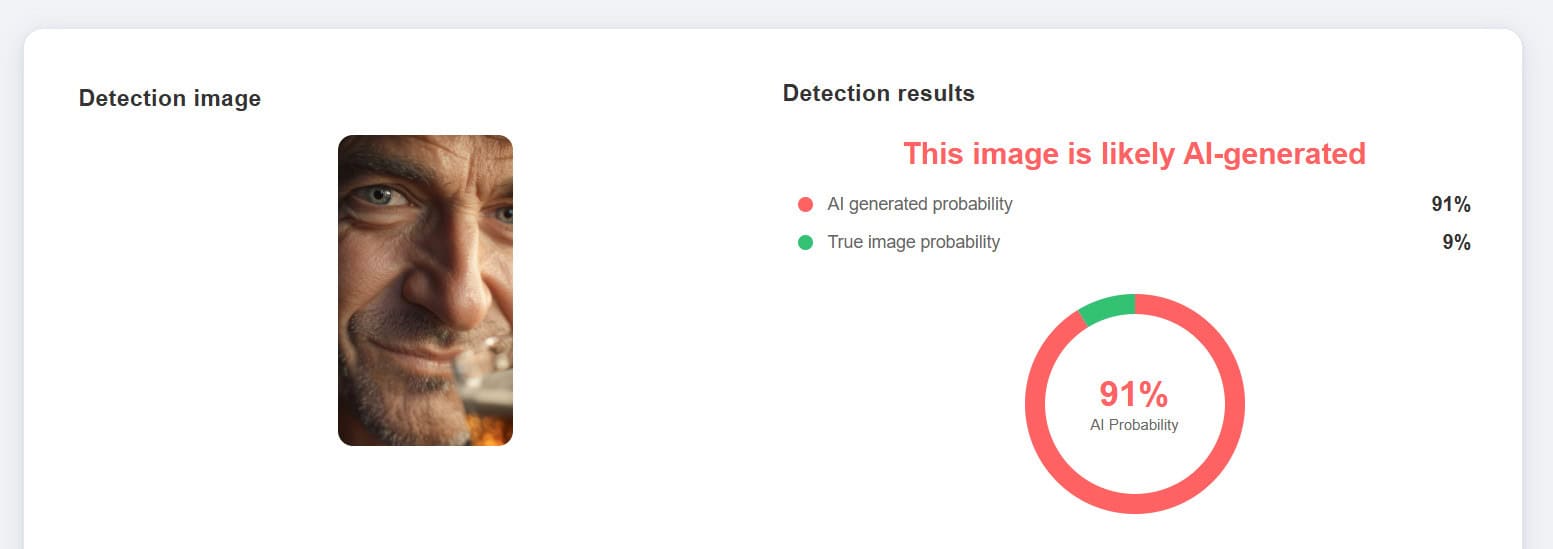
Test #4
TruthScan: Correctly identified Midjourney image as machine-generated.
AI Image Likelihood: 98%
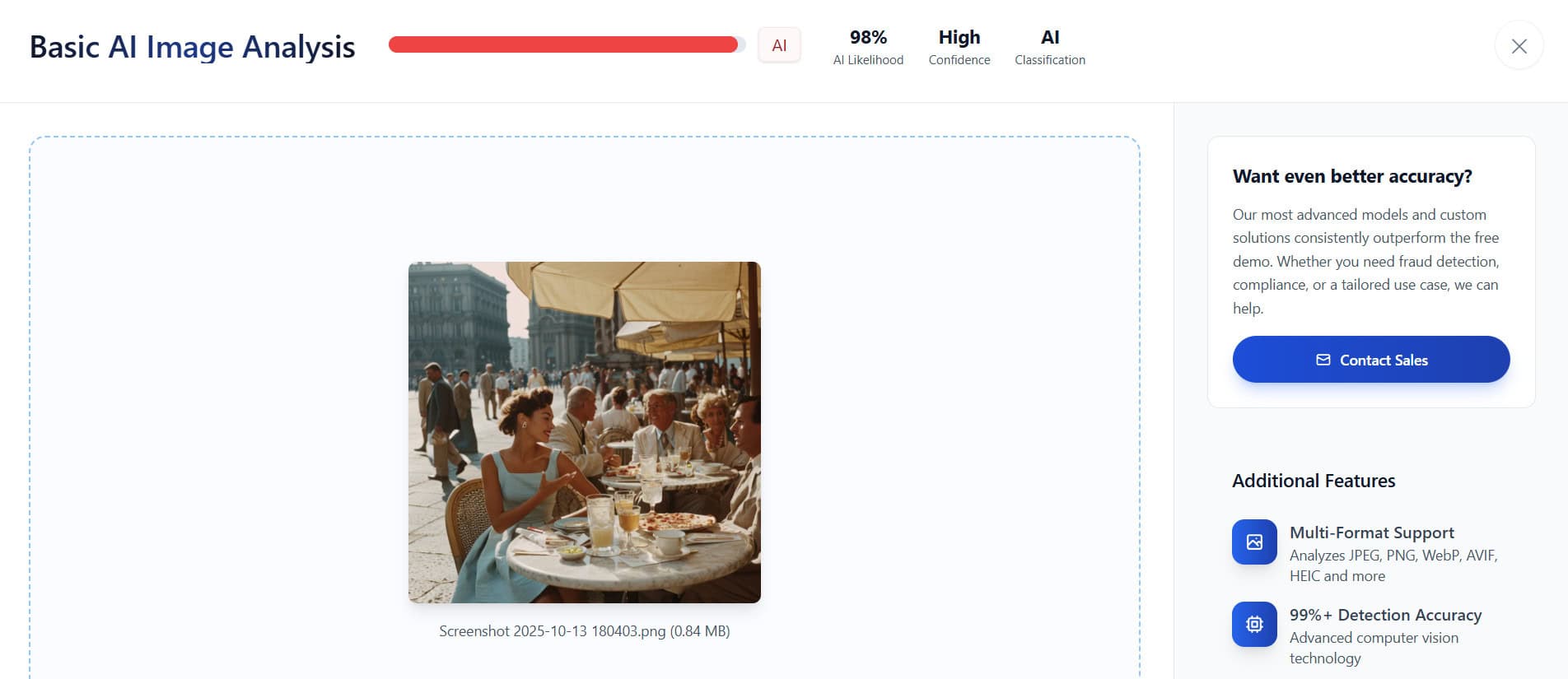
Decopy AI: Correctly identified Midjourney image as machine-generated.
AI Image Likelihood: 99%

Test #5
TruthScan: Correctly identified Midjourney image as machine-generated.
AI Image Likelihood: 97%
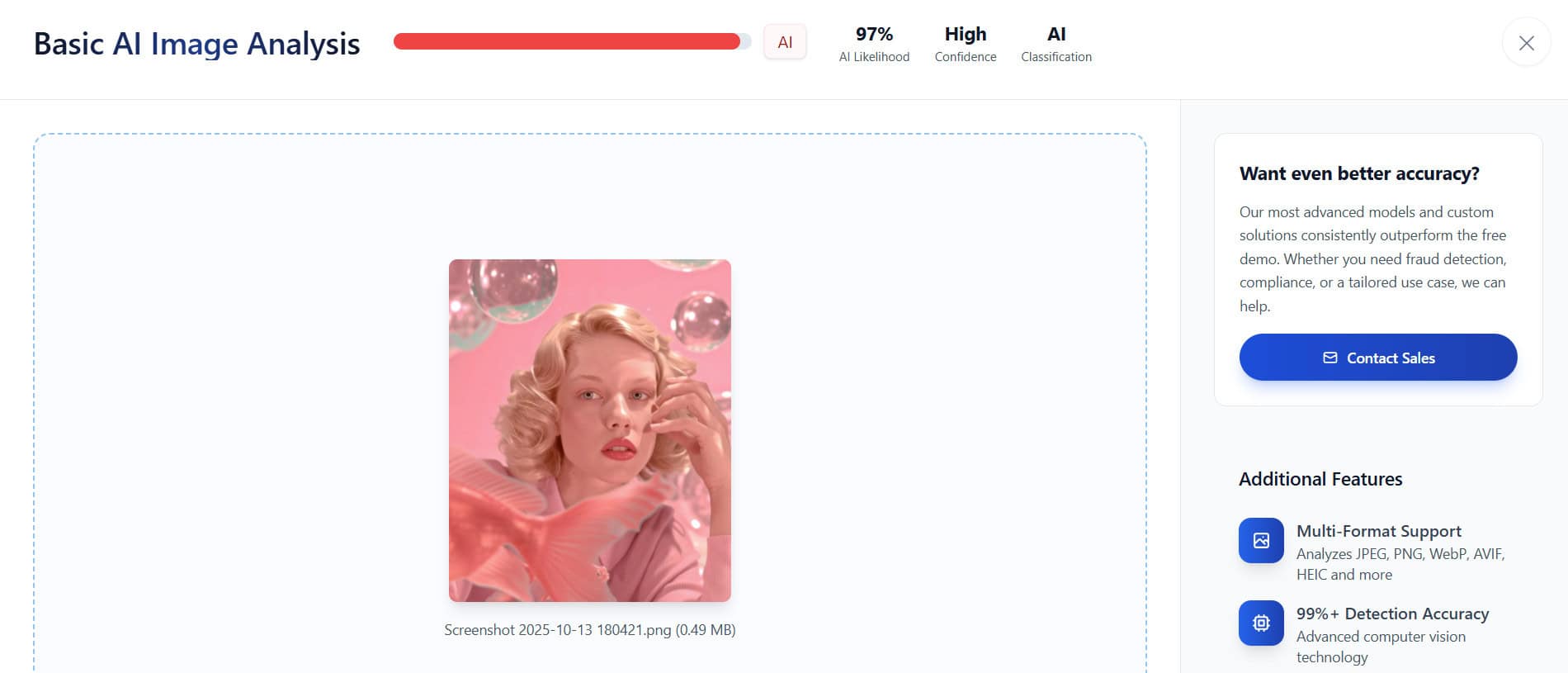
Decopy AI: Correctly identified Midjourney image as machine-generated.
AI Image Likelihood: 83%
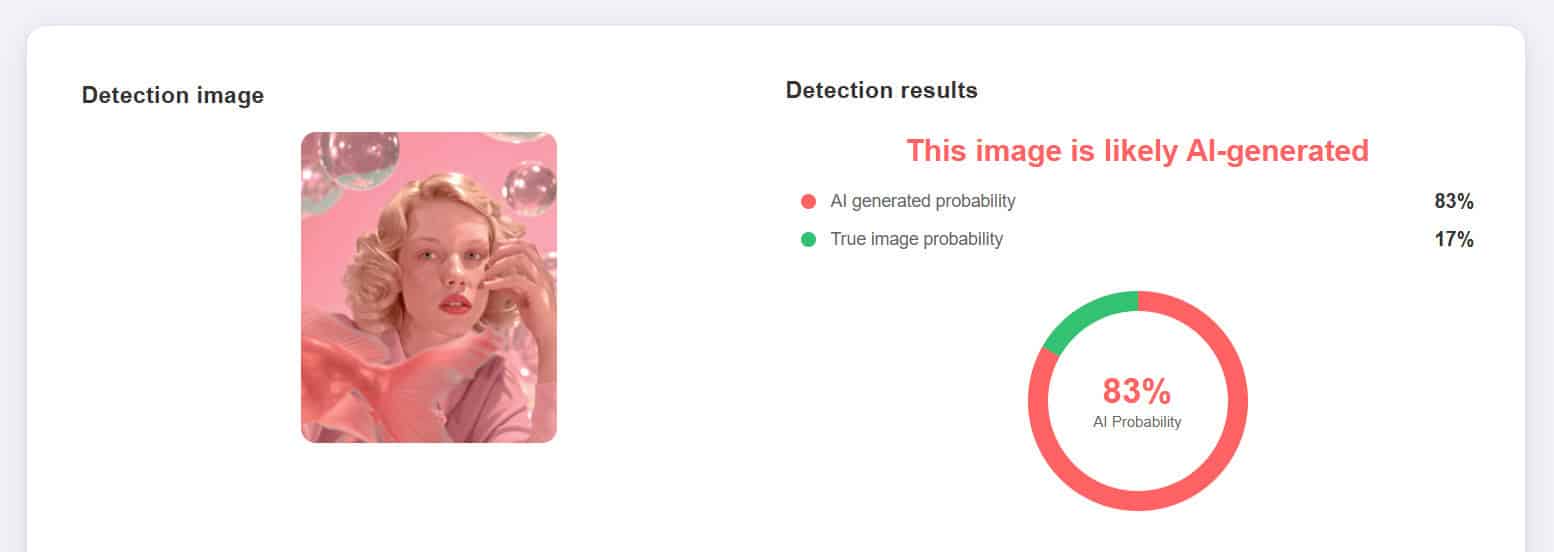
Test #6
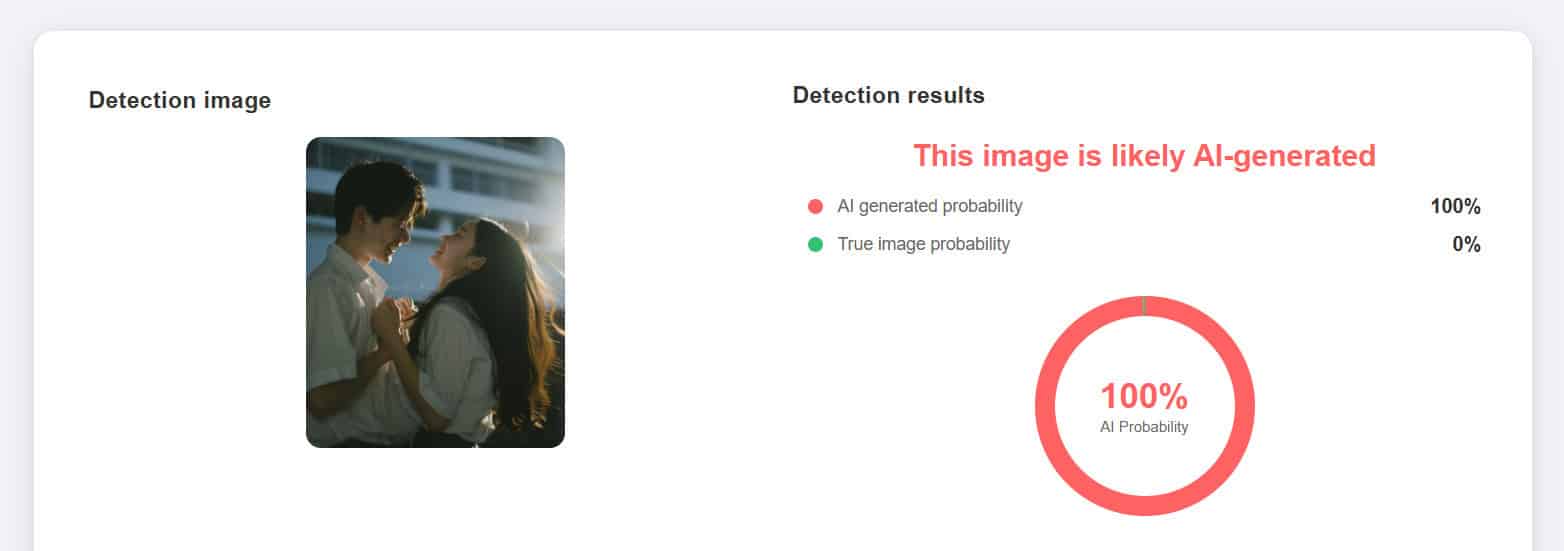
TruthScan: Correctly identified Midjourney image as machine-generated.
AI Image Likelihood: 97%
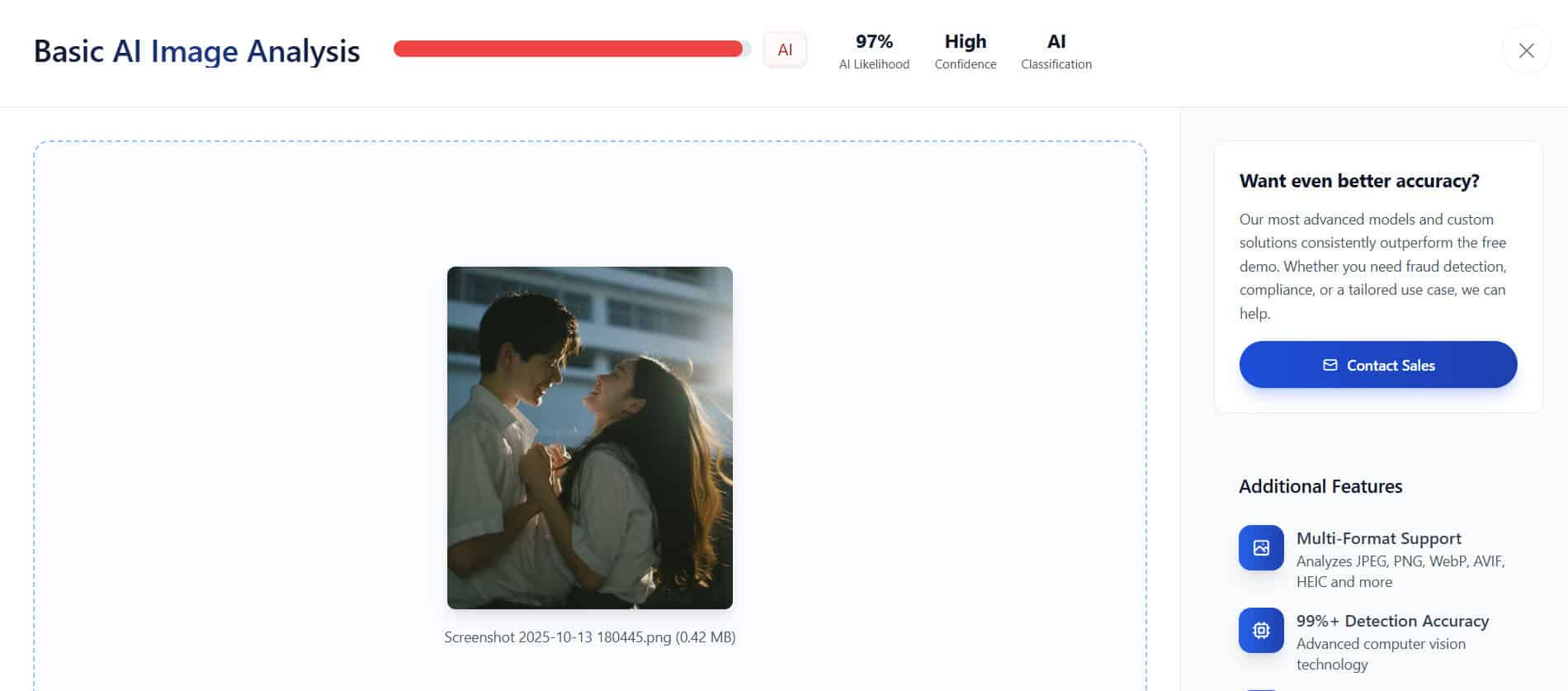
Decopy AI: Correctly identified Midjourney image as machine-generated.
AI Image Likelihood: 100%
Test #7
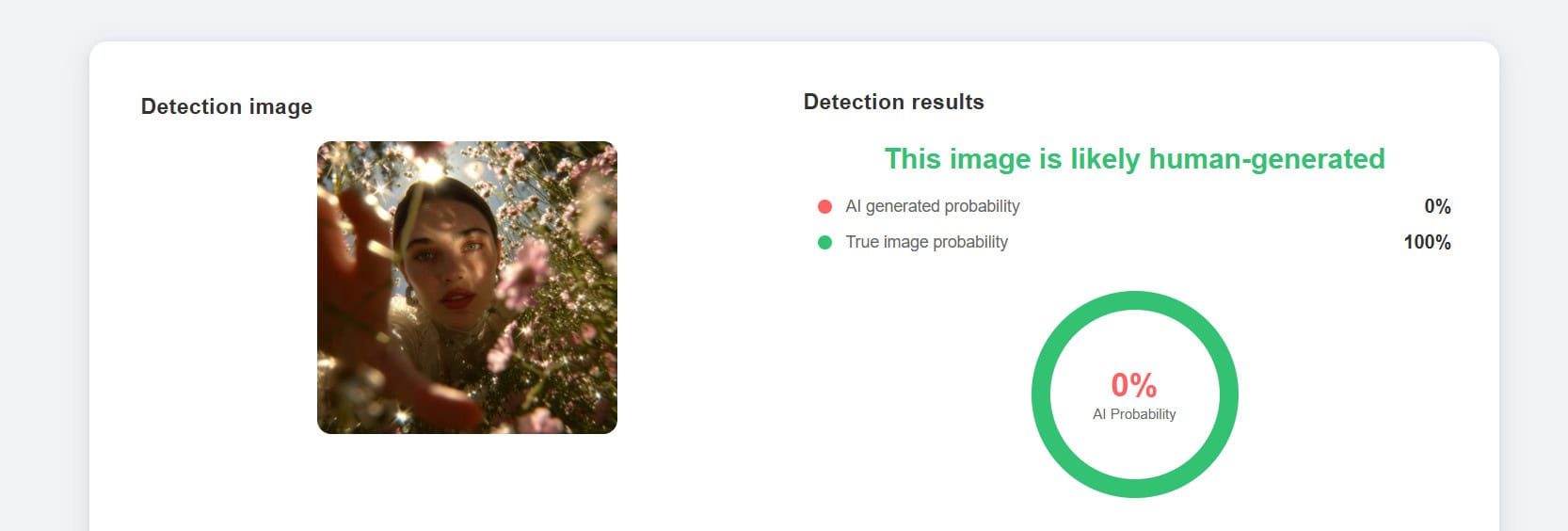
TruthScan: Detector unsure.
AI Image Likelihood: 42%
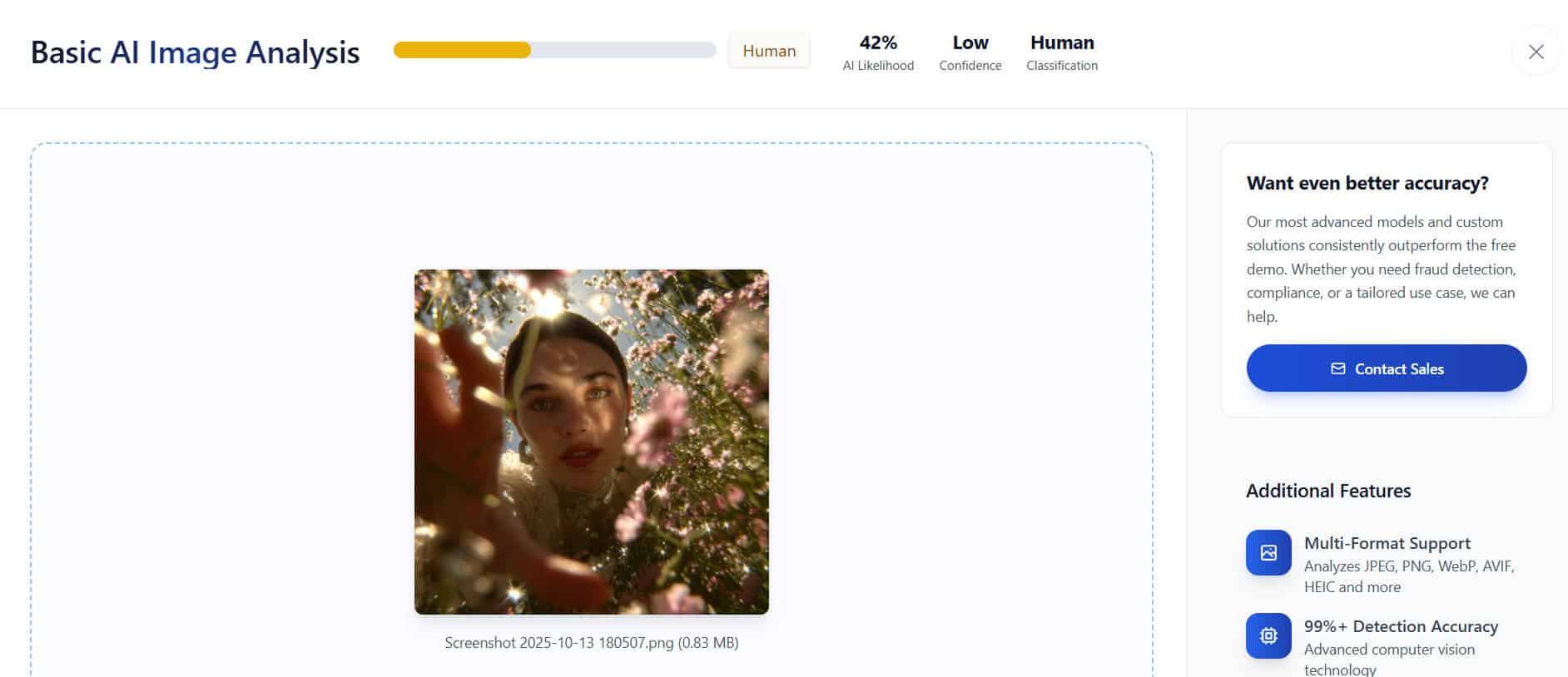
Decopy AI: Incorrectly identified Midjourney image as human-created.
AI Image Likelihood: 0%
Average Score
Test Number | TruthScan | Decopy AI |
#1 | 97% | 0% |
#2 | 98% | 31% |
#3 | 97% | 91% |
#4 | 98% | 99% |
#5 | 97% | 83% |
#6 | 97% | 100% |
#7 | 42% | 0% |
Score | 89.43% | 57.71% |
The Bottom Line
After running both tools through the same set of AI-generated images, the results favored the tool with stronger confidence scoring and more consistent high-probability calls.
TruthScan came out ahead with an 89.43% correctness rate in this sample set, demonstrating strong consistency across different types of AI images. It did not just pick up on obvious tells like texture mismatches. It also caught finer details, like slight depth distortions and unnatural lighting shifts.
Decopy AI, on the other hand, landed at 57.71% correctness. That is usable for casual checks, especially for a free-positioned image detector, but it struggled with more modern, high-fidelity AI imagery in this test.
For low-stakes curiosity, Decopy AI is worth trying. For serious image verification, TruthScan is the stronger pick here because it gives a clearer probability score and performed better across the full image set.
Want to Learn Even More?
If you enjoyed this article, subscribe to our free newsletter where we share tips & tricks on how to use tech & AI to grow and optimize your business, career, and life.