Undetectable AI vs. Decopy AI Image Detector: Which Wins in 2026?
Can Decopy AI really detect modern AI-generated images, or is Undetectable AI still the standard?

John Angelo Yap
Updated June 17, 2026
A detective catching a machine-generated painting, generated by Gemini
Reading Time: 5 minutes
There’s a quiet arms race happening right now in the world of AI tools — and it’s not just about writing anymore.
Try Undetectable AI to inspect AI-generated content and compare detection results before you trust one tool.
AI image generation has gotten so good that it’s no longer obvious what’s real and what’s not. Don’t even get me started on Sora and their AI video feed. As a result, tools built to detect AI visuals are becoming just as critical as the ones built to generate them.
Undetectable AI and Decopy AI are two platforms that both started in the text detection space — but are now expanding into visual territory. Both claim their detectors can spot whether an image was made by AI. For 2026, the useful question is how they compare on the same image set and which one gives you more context when a result is borderline.
That’s what I wanted to find out.
So I ran both tools through a set of AI-generated images to see how they stack up. But before we get into that (which I’ll handle in the testing section below), let’s talk about what these two tools actually offer and how they approach AI detection.
What is Undetectable AI?
Undetectable AI has come a long way from being just a humanizer for text. Its broader toolkit now includes writing, detection, career, and image tools — from its Writing Style Replicator to newer features like a Resume Builder, Smart Applier, and an Image Detector powered by TruthScan.
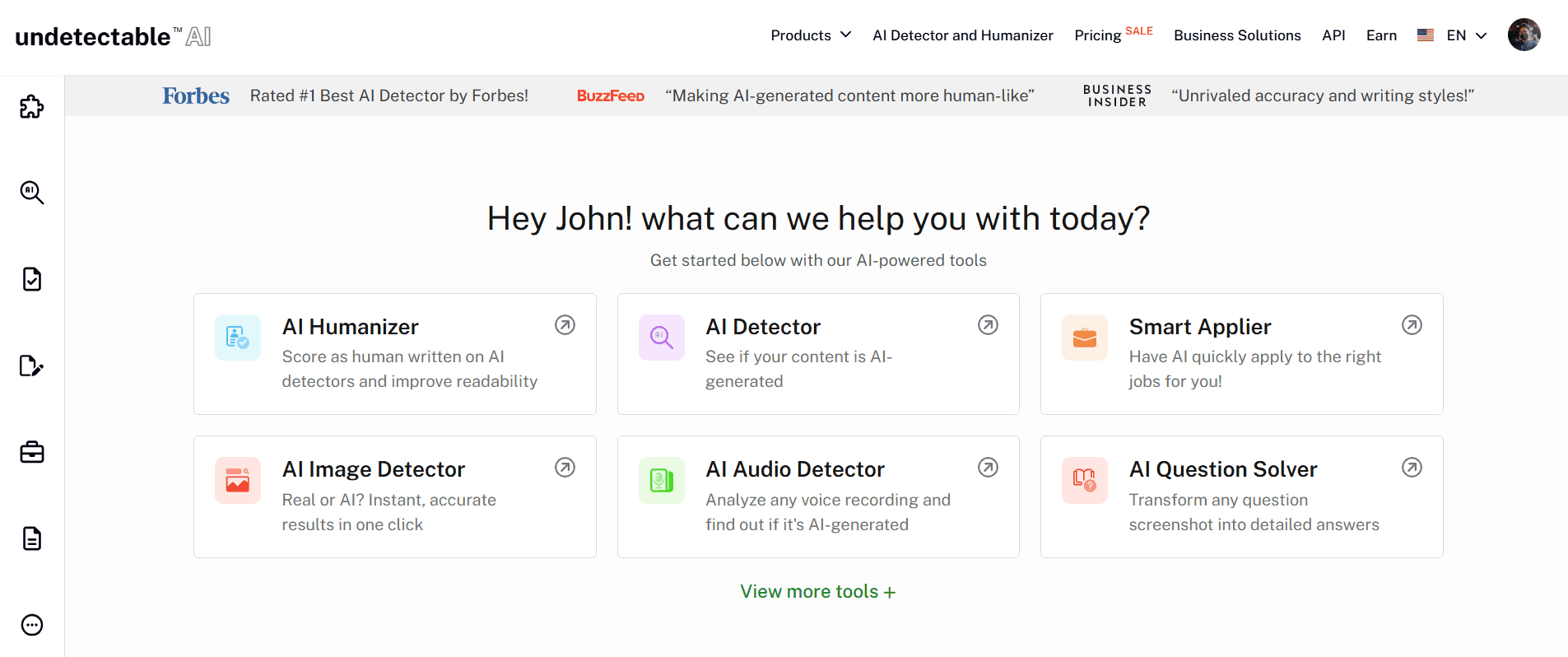
The AI Image Detector, powered by TruthScan, works much like the rest of Undetectable AI’s lineup — fast, clean, and privacy-safe. It scans an image, evaluates its pixel-level data, and returns a probability score indicating whether the image was generated or edited by AI.
It’s simple to use. Upload an image, click detect, and within seconds, you’ll get a clear verdict — often accompanied by a short explanation of what tipped the system off (lighting inconsistencies, texture uniformity, pattern repetition, etc.).
Undetectable AI’s advantage has always been its focus on humanization. Unlike most tools that try to catch AI, this one understands what makes content look human — and reverses that understanding to detect when something feels off. It’s fast, web-based, and intuitive — the kind of detector you’d expect from a company that knows both sides of the AI equation.
What is Decopy AI?
Decopy AI, on the other hand, started out as a simple writing tool before branching out into a wide range of AI-related utilities. Its current lineup includes an AI Detector, AI Humanizer, and AI Summarizer — and of course, its AI Image Detector.
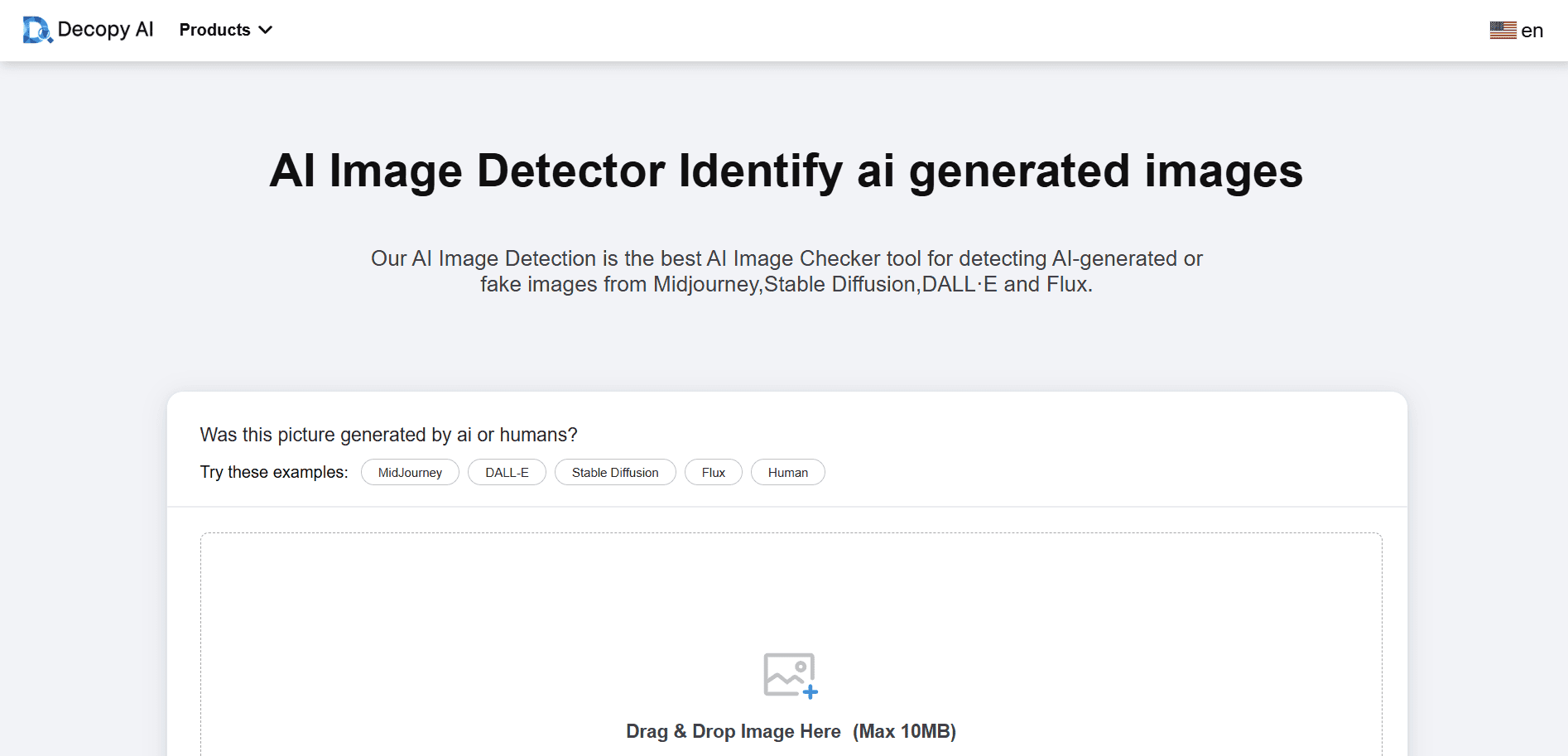
The Decopy AI Image Detector is still active and free-positioned, with a maximum upload size of 10MB. Decopy says it is trained on roughly 10 million images and names generators like Midjourney, Stable Diffusion, DALL-E, and Flux. It analyzes pixel noise patterns, texture uniformity, and metadata, but as the test below shows, the current product claims were stronger than its observed performance in this sample set.
Undetectable AI vs. Decopy AI Image Detector: Test Results
Quick caveat before the results: these are point-in-time tests from this image set, not a universal benchmark. Image detectors change, generators change, and borderline images should be checked with more than one signal.
Test #1
Undetectable AI: Correctly identified Midjourney image as machine-generated.
AI Image Likelihood: 97%
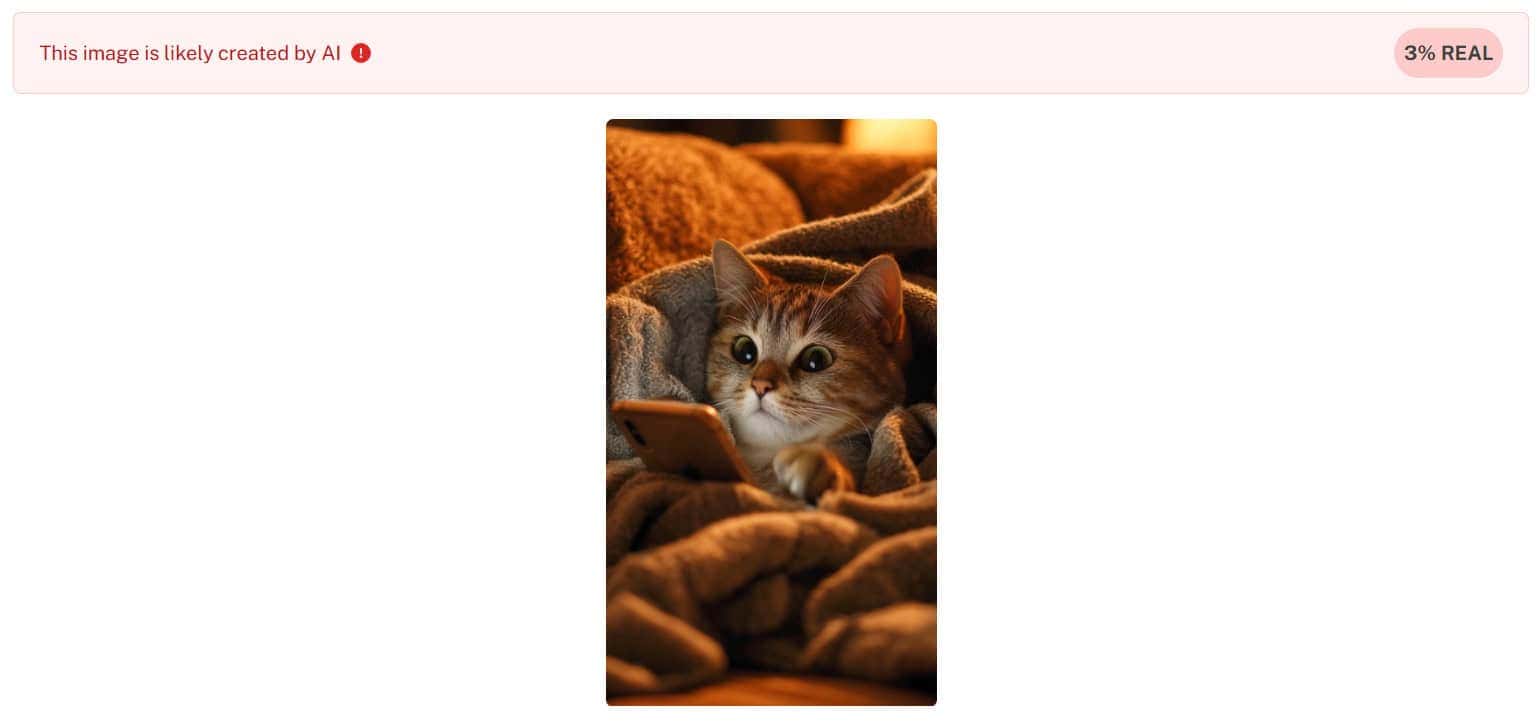
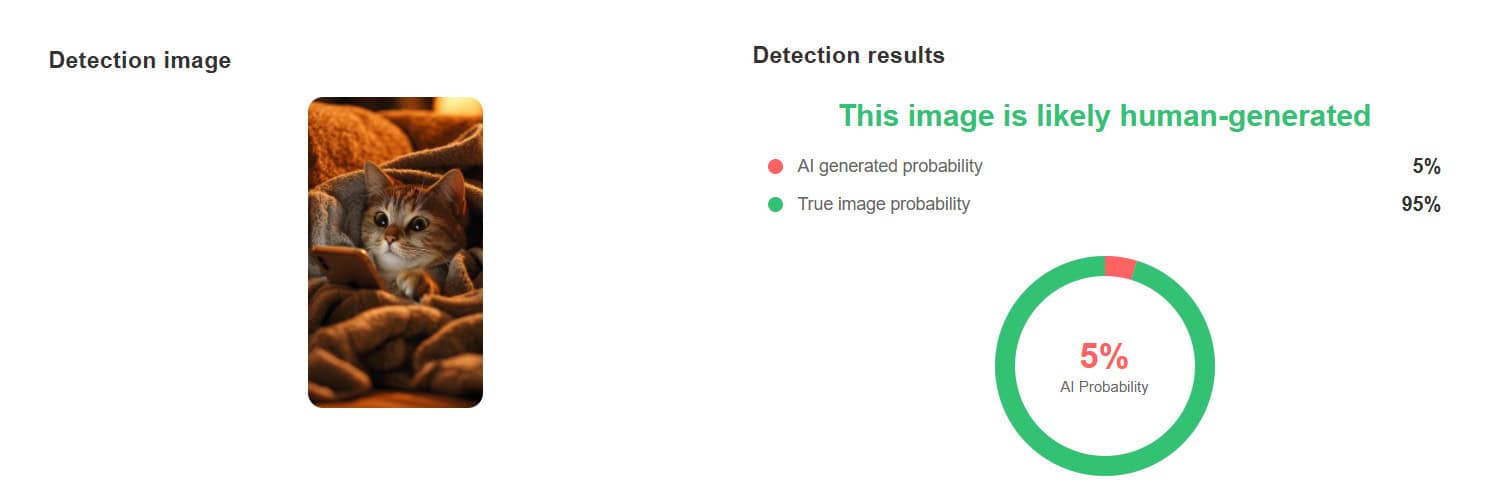
Decopy AI: Incorrectly identified Midjourney image as human-created.
AI Image Likelihood: 5%
Test #2
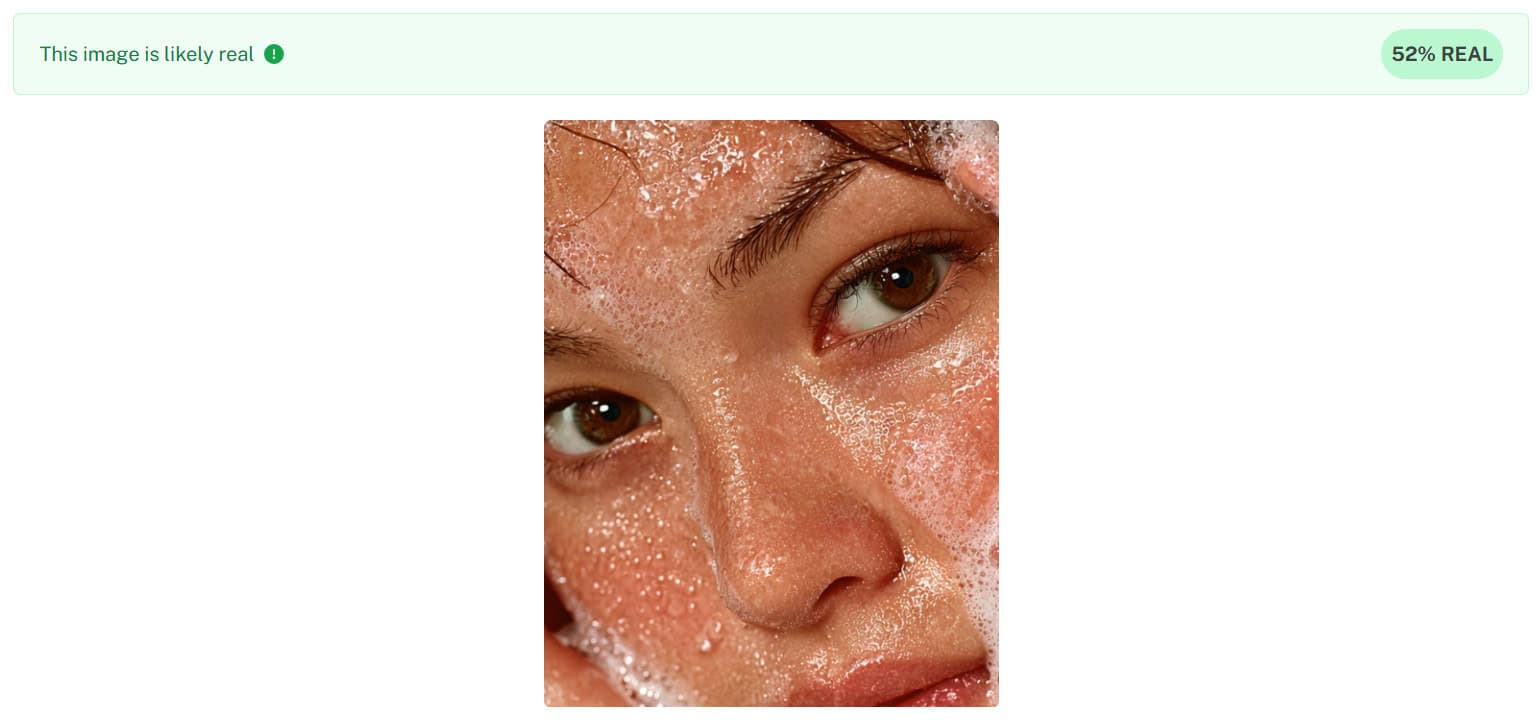
Undetectable AI: Detector unsure.
AI Image Likelihood: 48%
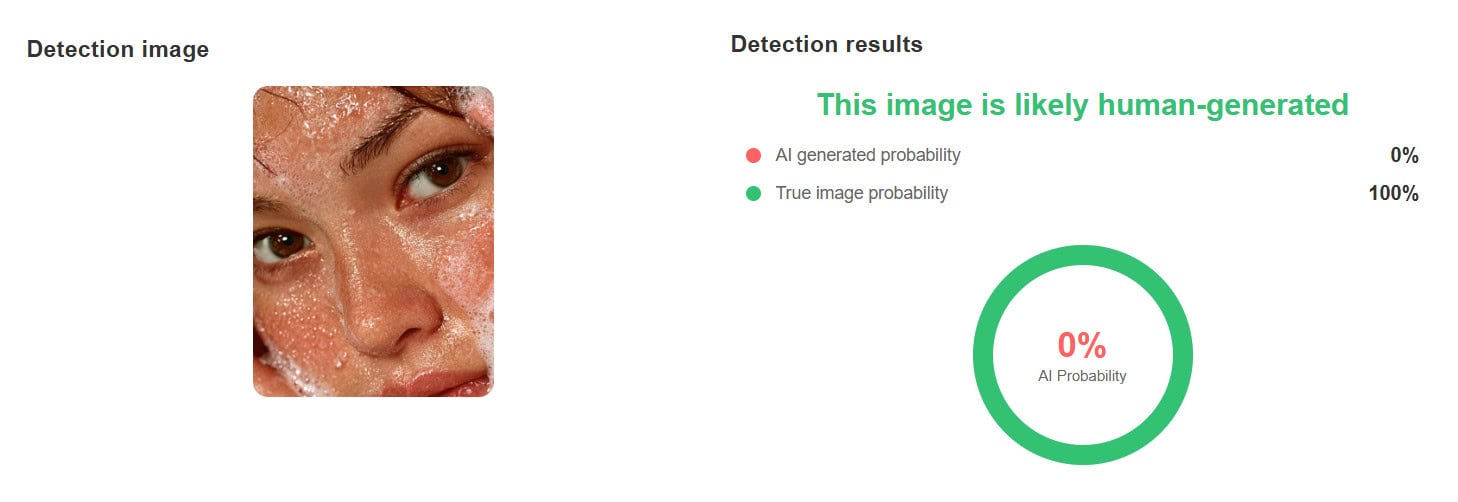
Decopy AI: Incorrectly identified Midjourney image as human-created.AI Image Likelihood: 0%
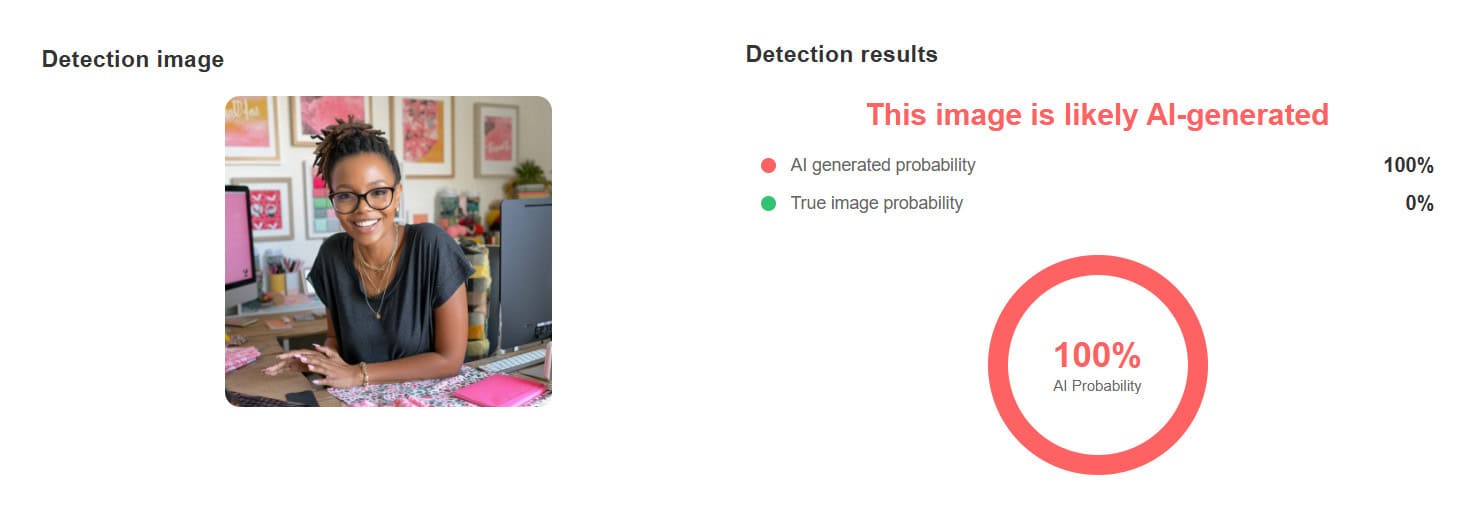
Test #3
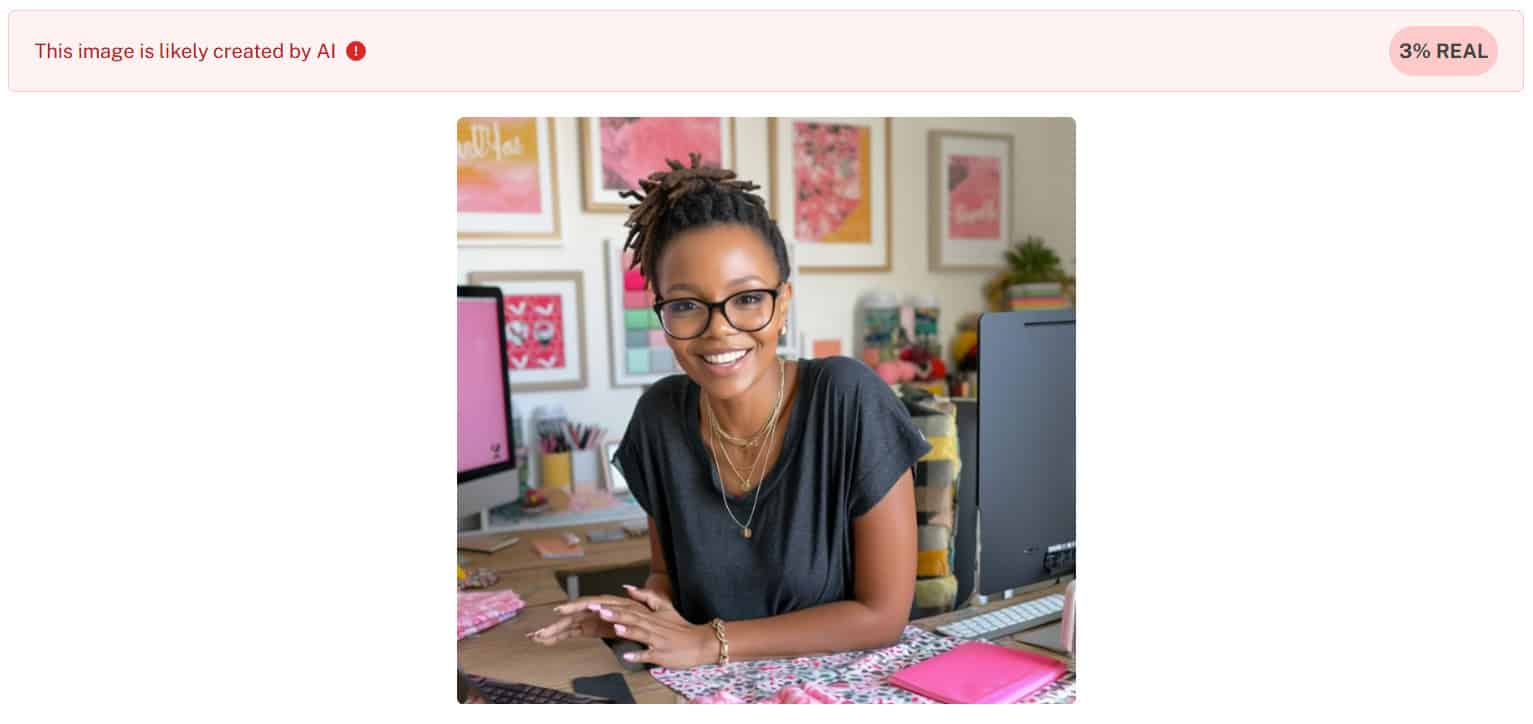
Undetectable AI: Correctly identified Midjourney image as machine-generated.
AI Image Likelihood: 97%
Decopy AI: Correctly identified Midjourney image as machine-generated.
AI Image Likelihood: 100%
Test #4
Undetectable AI: Correctly identified Midjourney image as machine-generated.
AI Image Likelihood: 97%

Decopy AI: Incorrectly identified Midjourney image as human-created.
AI Image Likelihood: 0%

Test #5
Undetectable AI: Correctly identified Midjourney image as machine-generated.
AI Image Likelihood: 97%
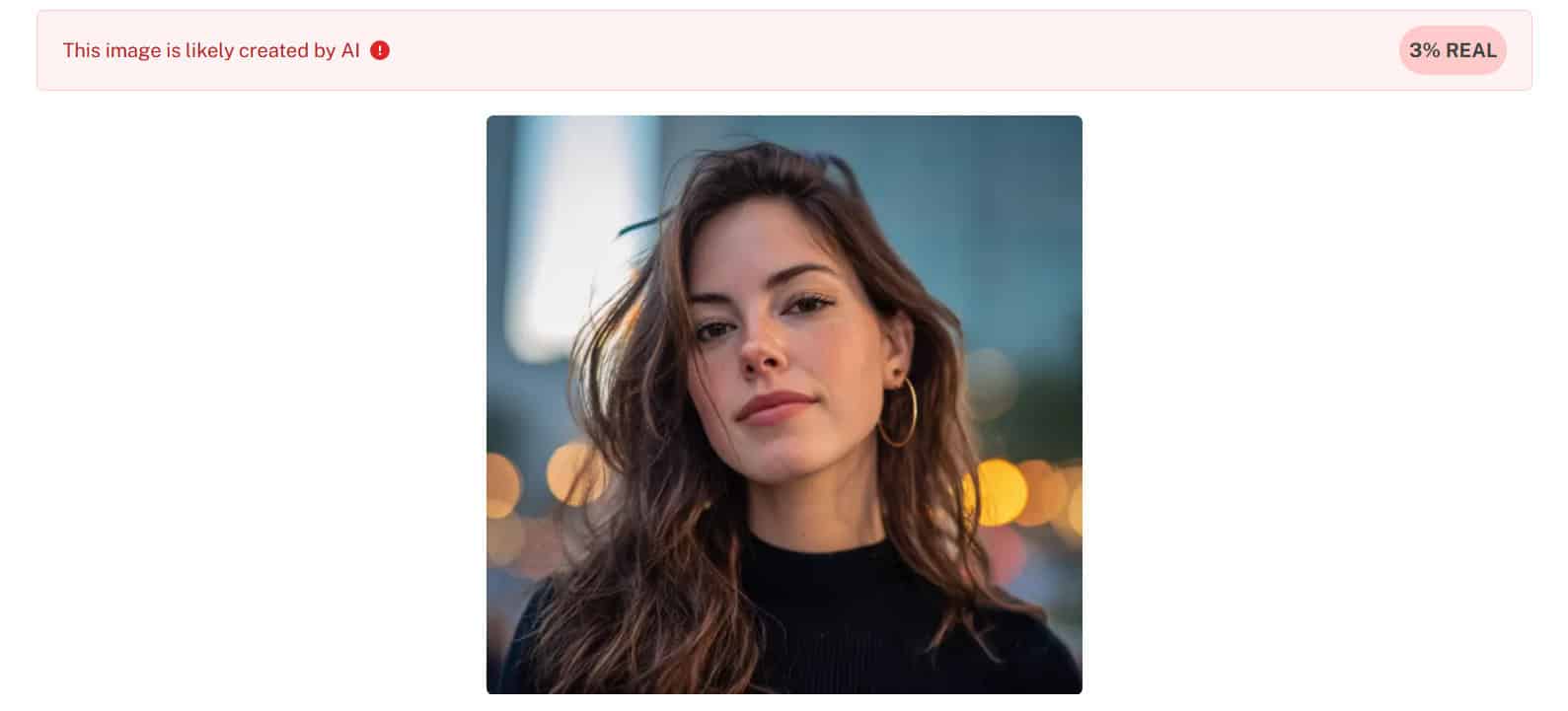
Decopy AI: Incorrectly identified Midjourney image as human-created.
AI Image Likelihood: 4%

Test #6
Undetectable AI: Correctly identified Midjourney image as machine-generated.
AI Image Likelihood: 98%
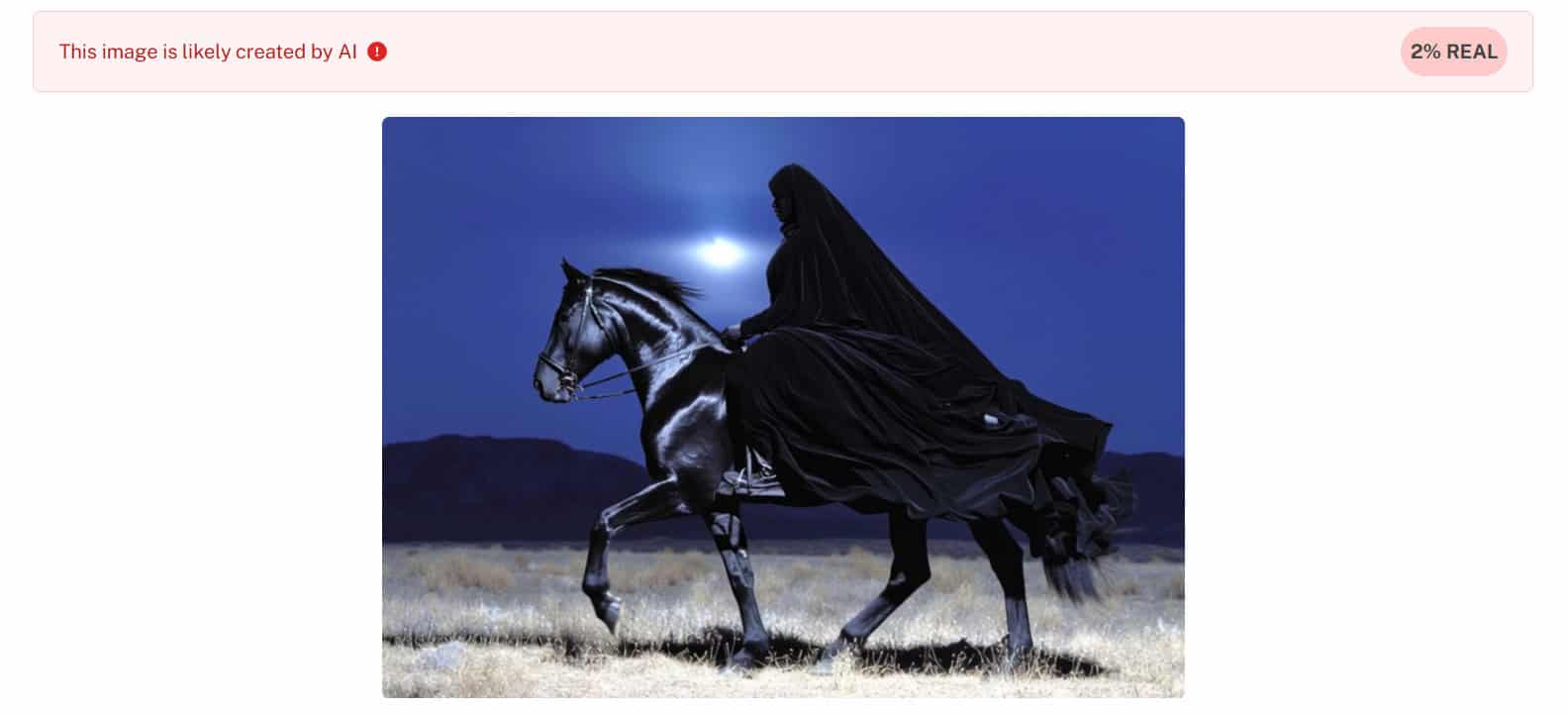
Decopy AI: Incorrectly identified Midjourney image as human-created.
AI Image Likelihood: 36%

Test #7
Undetectable AI: Correctly identified Midjourney image as machine-generated.
AI Image Likelihood: 94%

Decopy AI: Incorrectly identified Midjourney image as human-created.
AI Image Likelihood: 0%
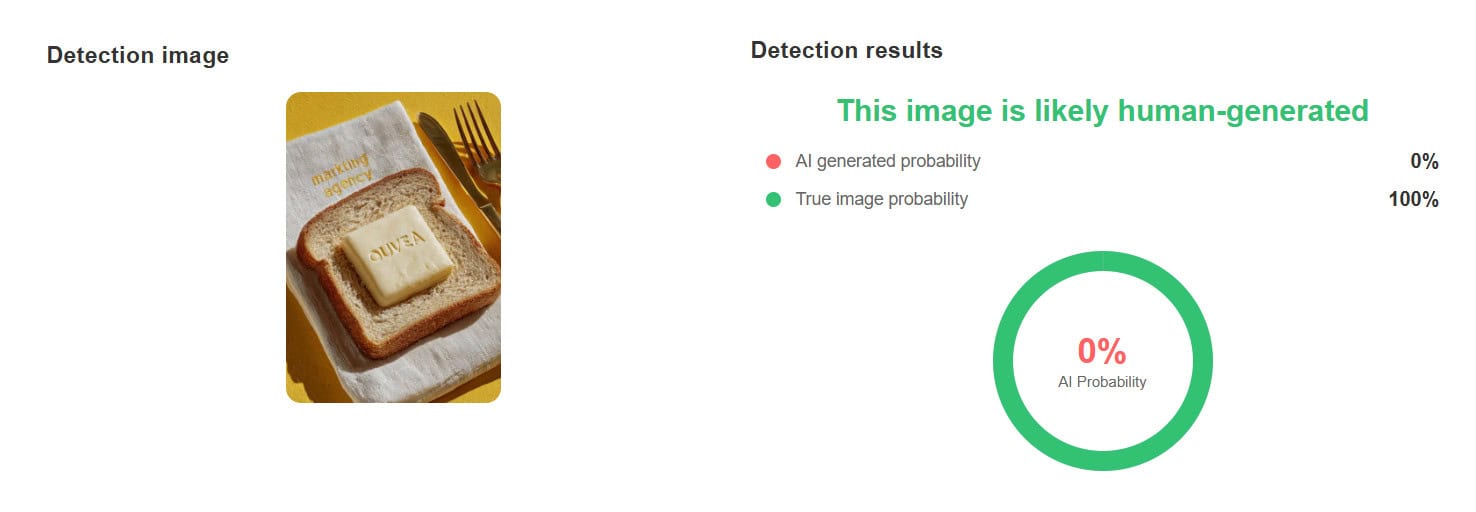
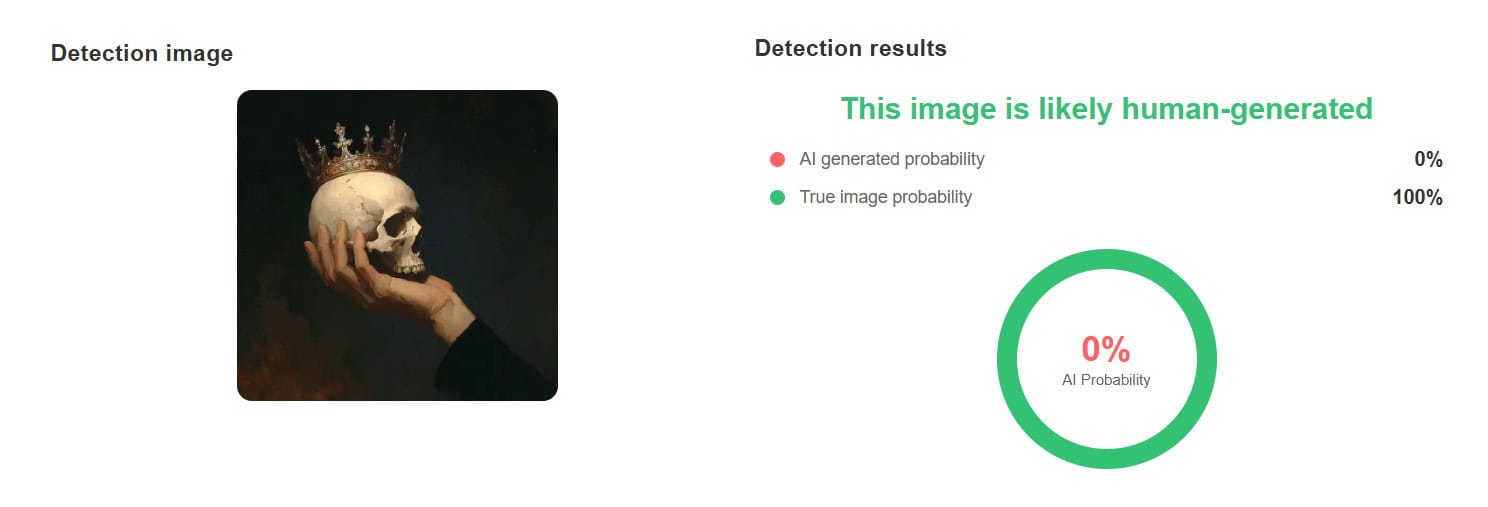
Test #8
Undetectable AI: Correctly identified Midjourney image as machine-generated.
AI Image Likelihood: 98%
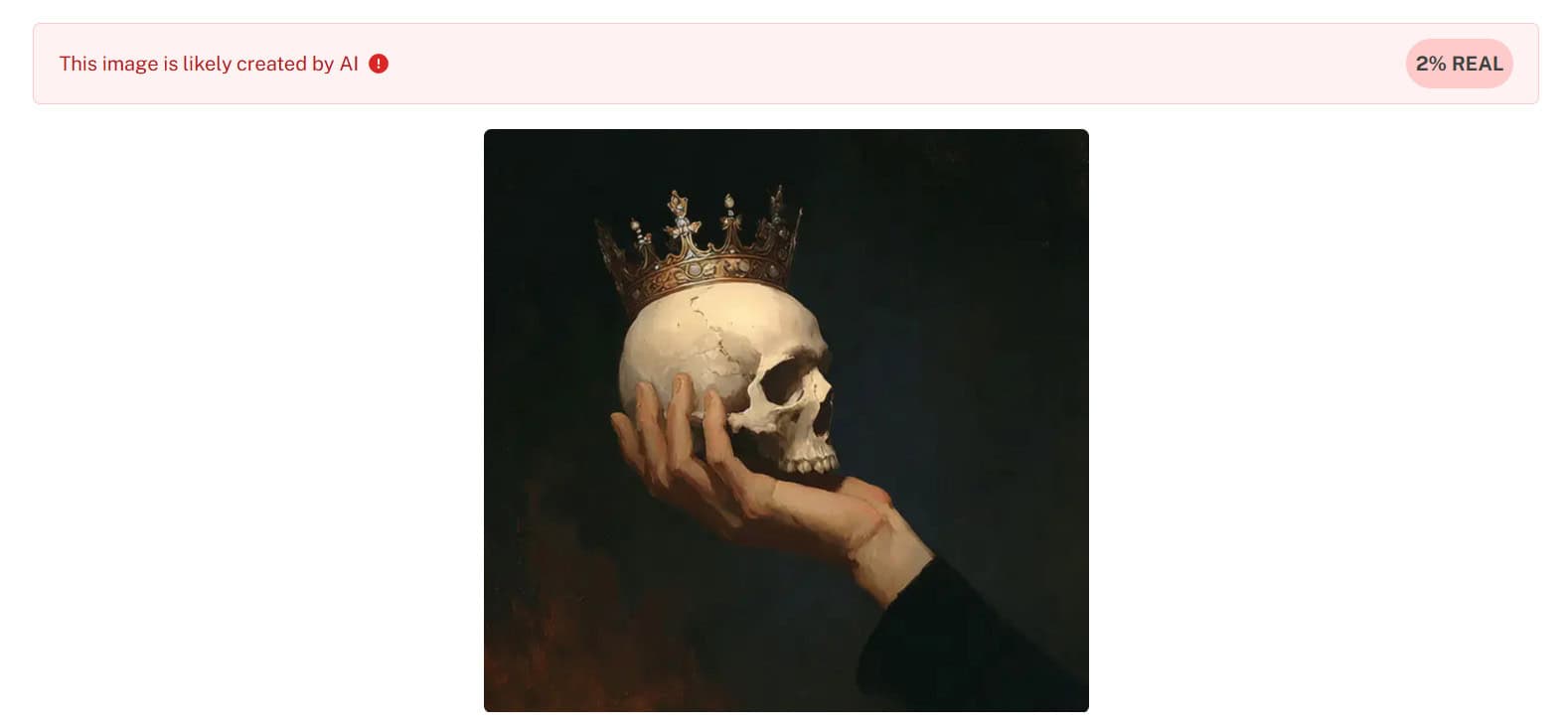
Decopy AI: Incorrectly identified Midjourney image as human-created.
AI Image Likelihood: 0%
Overall Score
Test Number | Undetectable AI | Decopy AI |
#1 | 97% | 5% |
#2 | 48% | 0% |
#3 | 97% | 100% |
#4 | 97% | 0% |
#5 | 97% | 4% |
#6 | 98% | 36% |
#7 | 94% | 0% |
#8 | 98% | 0% |
Score | 90.75% | 18.12% |
For related image-detector comparisons, see our TruthScan vs Decopy AI image detector test and TruthScan vs Illuminarty AI detector test.
Current Undetectable AI Image Detector Specs
Undetectable AI's image detector is currently powered by TruthScan. It supports JPG, PNG, and PDF uploads up to 10MB, returns a verdict with a confidence score, and says uploaded images are not stored after analysis.
That matters for these tests because the product is not just giving a basic yes-or-no answer. The confidence score makes borderline results easier to interpret, especially with images from generators such as Midjourney, DALL-E, Stable Diffusion, Adobe Firefly, Canva AI, and similar tools.
The Bottom Line
After running both tools through multiple image tests, the difference in this sample set was not close. Undetectable AI scored 90.75% correctness. Decopy AI, meanwhile, landed at 18.125%, struggling to correctly classify even some of the more obvious AI visuals.
Undetectable AI felt more ready for practical image checks here. It was fast, more accurate, and more useful because the confidence score gives you more context than a basic yes/no label.
If accuracy is your main priority, Undetectable AI is the better pick in this test. Decopy AI still has potential as a free-positioned image checker, but I would not rely on it alone for important image-authenticity decisions.
Want to Learn Even More?
If you enjoyed this article, subscribe to our free newsletter where we share tips & tricks on how to use tech & AI to grow and optimize your business, career, and life.