TruthScan vs. Illuminarty AI Detector: Which Image Checker Gets It Right?
AI images are everywhere, but not all detectors are equal. Does Illuminarty have what it takes to bring down TruthScan?

John Angelo Yap
Updated June 17, 2026
Reading Time: 5 minutes
What is TruthScan?
TruthScan is part of an AI detection suite built for enterprise-level authenticity checks. It’s not just for images — it handles AI text, audio, deepfakes, email scams, and real-time monitoring. But for this article, we’re focusing on the AI Image Detector. Here’s what sets TruthScan apart:
- Designed for forensic-level accuracy
- Part of a larger ecosystem of detection tools
- Sub-second detection, with TruthScan currently describing under-500ms enterprise deployments
- Built to catch both AI-generated and AI-manipulated images
- Consistently strong performance across different AI models
- Doesn't rely on one single “tell-tale sign” — it analyzes multiple signals in parallel
What Is the Illuminarty AI Detector?
Illuminarty is one of the more well-known AI image detectors on the internet. It’s simple, straightforward, and lets you quickly check whether an image looks AI-generated. Its biggest strengths:
- Very beginner-friendly
- Clean interface
- Quick classification
- Decent handling of basic AI artifacts
TruthScan vs. Illuminarty AI Detector: Image Test Results
Test #1
TruthScan: Correctly classified image as AI-generated. AI Likelihood Score: 99%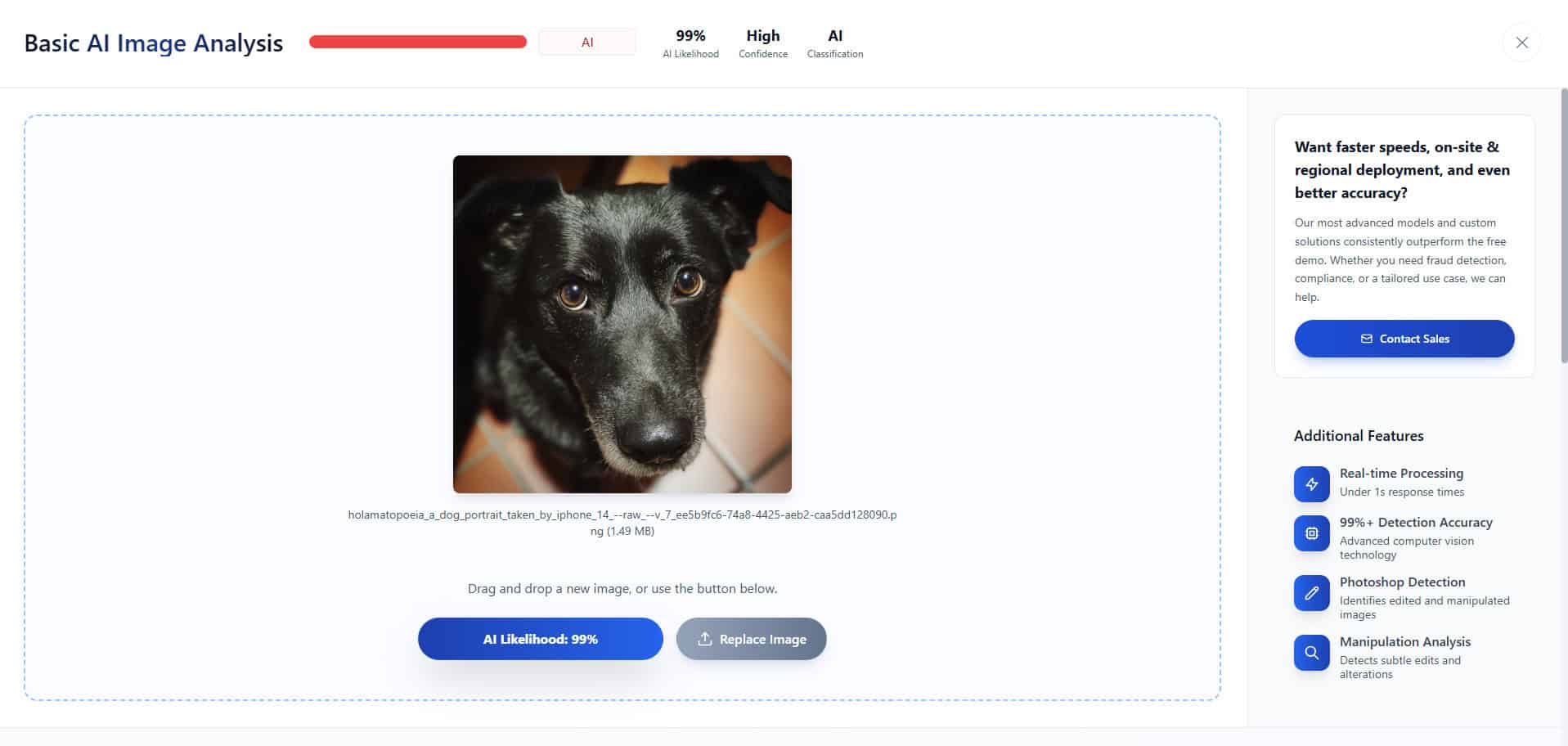 Illuminarty: Correctly classified image as AI-generated.
AI Likelihood Score: 97.3%
Illuminarty: Correctly classified image as AI-generated.
AI Likelihood Score: 97.3%

Test #2
TruthScan: Correctly classified image as AI-generated. AI Likelihood Score: 99%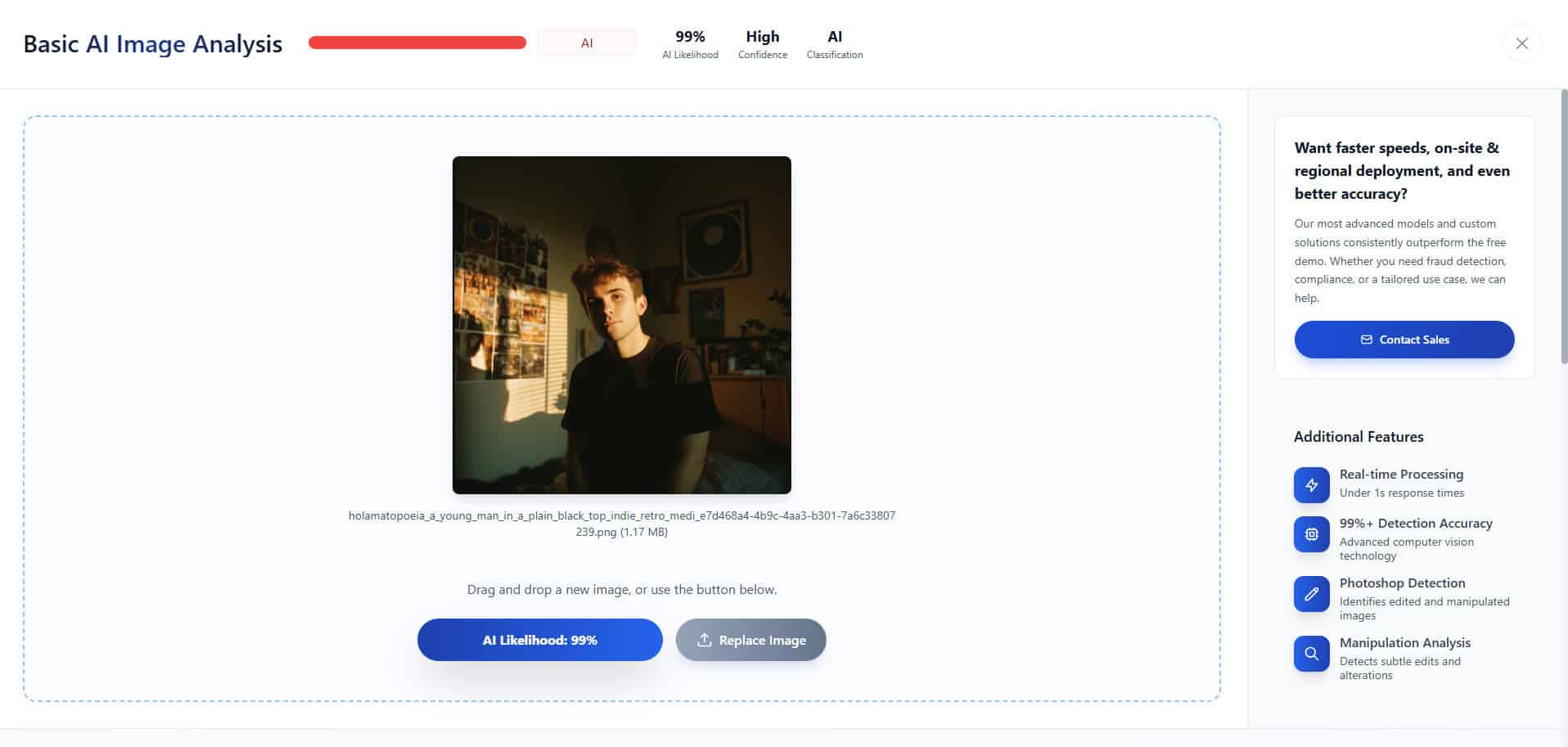 Illuminarty: Correctly classified image as AI-generated.
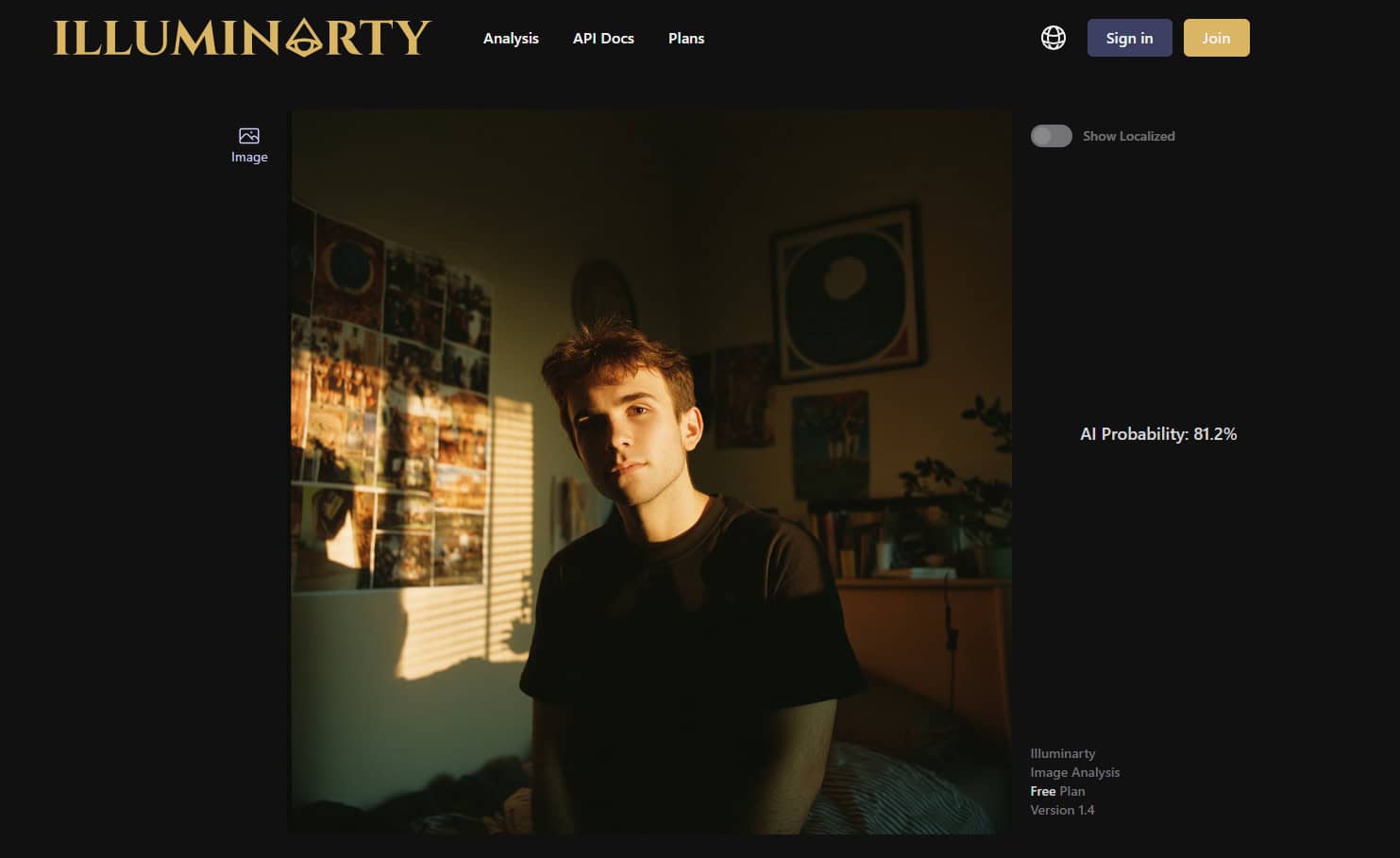
AI Likelihood Score: 81.2%
Illuminarty: Correctly classified image as AI-generated.
AI Likelihood Score: 81.2%
Test #3
TruthScan: Correctly classified image as AI-generated. AI Likelihood Score: 99%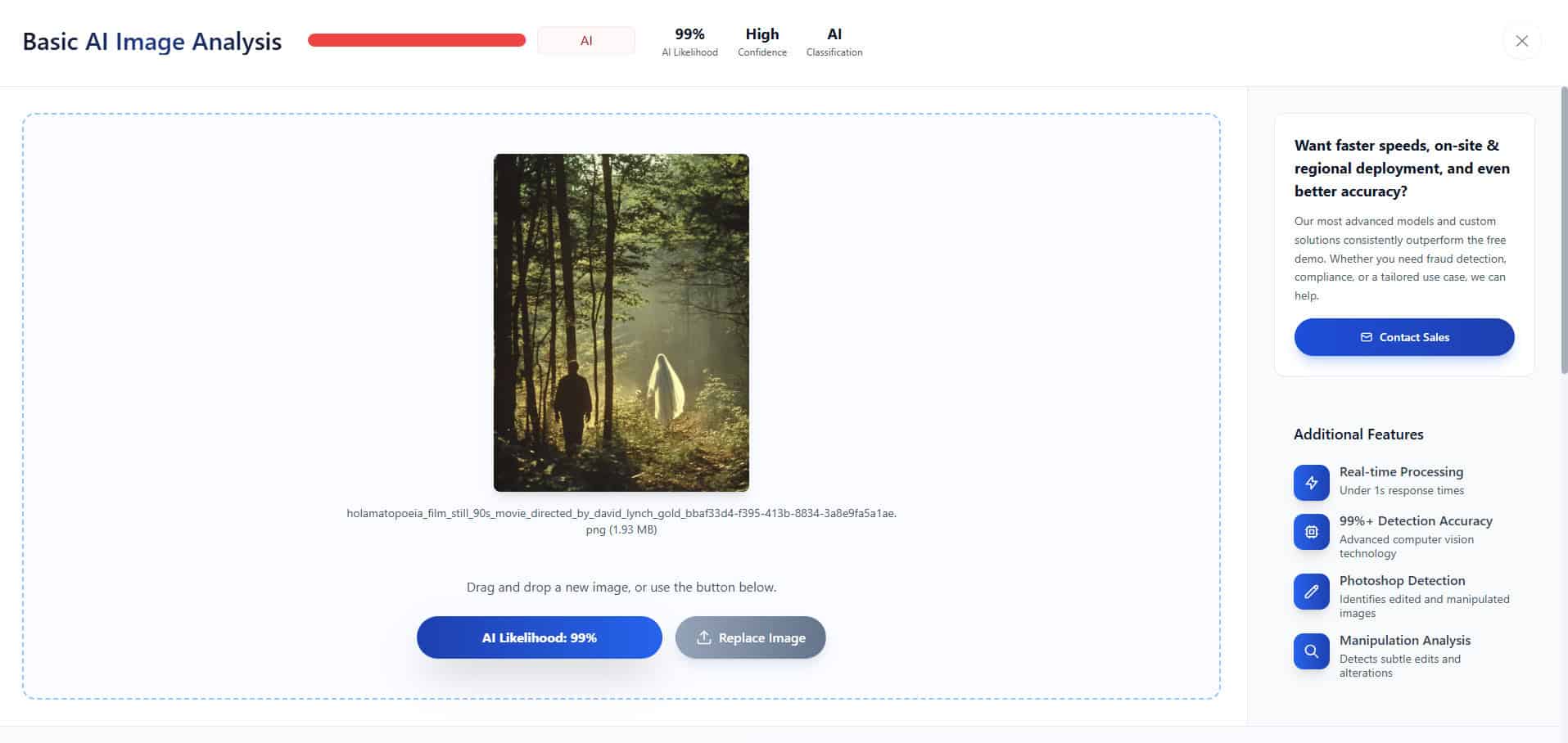 Illuminarty: Correctly classified image as AI-generated.
AI Likelihood Score: 92.3%
Illuminarty: Correctly classified image as AI-generated.
AI Likelihood Score: 92.3%

Test #4
TruthScan: Correctly classified image as AI-generated. AI Likelihood Score: 99% Illuminarty: Incorrectly classified image as human.
AI Likelihood Score: 17.9%
Illuminarty: Incorrectly classified image as human.
AI Likelihood Score: 17.9%

Test #5
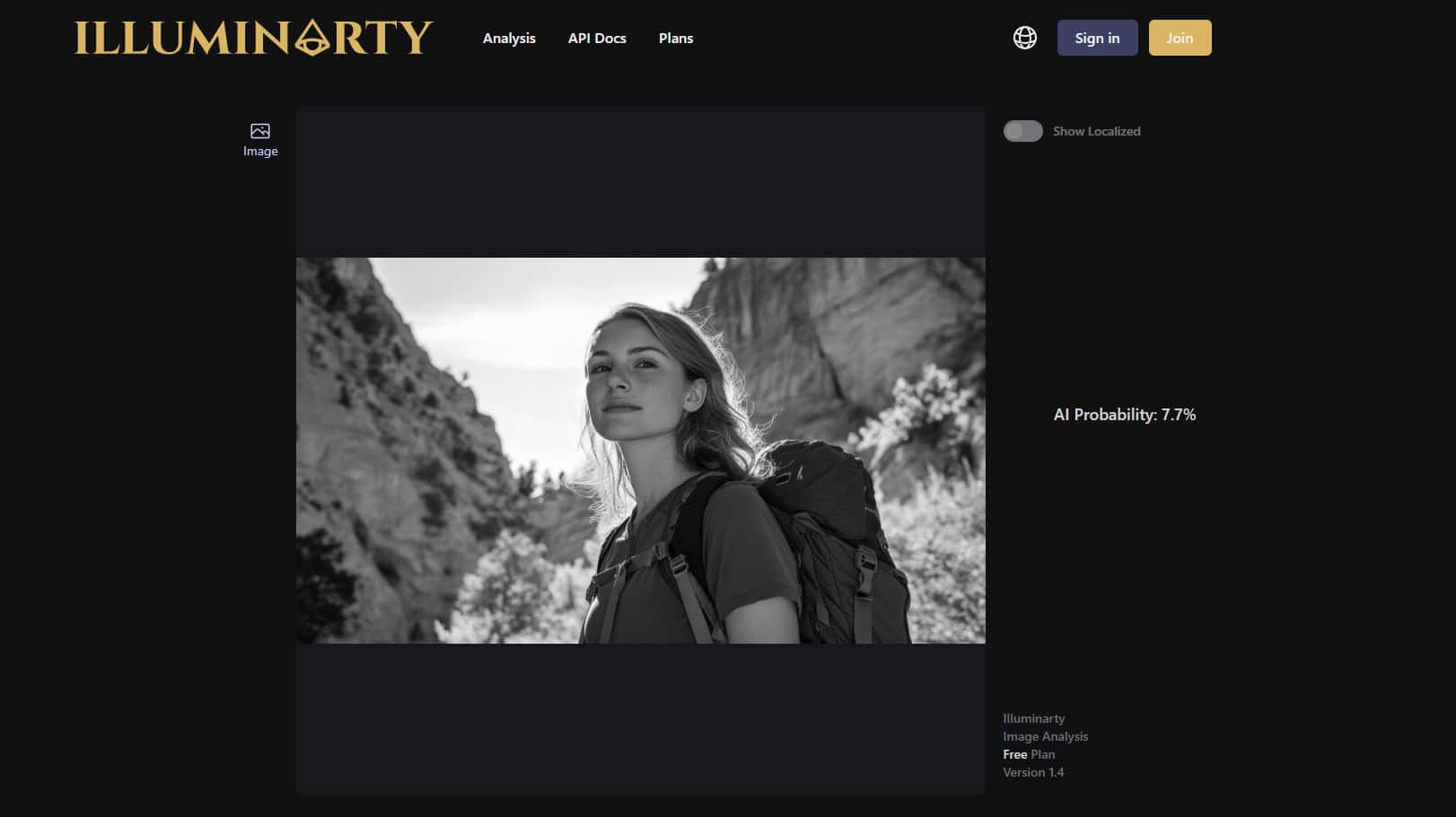
TruthScan: Correctly classified image as AI-generated. AI Likelihood Score: 99% Illuminarty: Incorrectly classified image as human.
AI Likelihood Score: 7.7%
Illuminarty: Incorrectly classified image as human.
AI Likelihood Score: 7.7%
Test #6
TruthScan: Correctly classified image as AI-generated. AI Likelihood Score: 99% Illuminarty: Incorrectly classified image as human.
AI Likelihood Score: 4.6%
Illuminarty: Incorrectly classified image as human.
AI Likelihood Score: 4.6%

Test #7
TruthScan: Correctly classified image as AI-generated. AI Likelihood Score: 99% Illuminarty: Correctly classified image as AI-generated.
AI Likelihood Score: 97.1%
Illuminarty: Correctly classified image as AI-generated.
AI Likelihood Score: 97.1%

Average Score
Test Number TruthScan Illuminarty #1 99% 97.3% #2 99% 81.2% #3 99% 92.3% #4 99% 17.9% #5 99% 7.7% #6 99% 4.6% #7 99% 97.1% Score 99% 56.87%These are our results from a 7-image test set, not a universal accuracy benchmark. Detector models change, so rerun important images before making a fresh 2026 accuracy claim.
Want a quick second opinion without using a full enterprise workflow? Undetectable AI’s image detector is powered by TruthScan and gives a clear verdict with a confidence score.
Try Undetectable AI to inspect AI-generated content and compare detection results before you trust one tool.
Current TruthScan Image Detector Specs
TruthScan's image detector is built for AI-generated and manipulated image detection. It returns a verdict with a confidence score and is positioned for modern generators such as Midjourney, DALL-E, Stable Diffusion, Adobe Firefly, Canva AI, and other image models.
For Gold Penguin's testing, the confidence score is the important part. It gives more context than a simple binary label, especially when a real photo has been edited or an AI image looks unusually natural.
The Bottom Line
After running both tools through the same batch of images, TruthScan was clearly stronger in this test set. Illuminarty landed at 56.87% accuracy, which honestly isn’t terrible for a lightweight, public-facing tool built for casual checks. If all you need is a quick sanity check for an image circulating on social media, Illuminarty still has value. But then you look at TruthScan’s score (a 99% result in this test) and the difference becomes clear. It caught subtle manipulations, newer model signatures, and images that would easily slip past many lightweight detectors in this sample. That is the kind of result you want before building a moderation workflow around a detector. TruthScan is the clear winner here, especially if you care about confidence scores, image manipulation signals, and a tool that can fit into a broader detection process.Want to Learn Even More?
If you enjoyed this article, subscribe to our free newsletter where we share tips & tricks on how to use tech & AI to grow and optimize your business, career, and life.