TruthScan AI Detection... An In-Depth Review!
TruthScan feels less like a “detector” and more like a full AI threat suite — and the testing numbers back that up. This is how TruthScan does in 2026 against popular AI detection tools.

John Angelo Yap
Updated June 18, 2026

AI Detection in 2026, Generated with GPT
Reading Time: 9 minutes
TruthScan is one of those platforms that sounds almost too broad at first.
Run your writing through Undetectable AI to see detection risk and clean it up before you submit or publish.
AI text detection, AI image detection, AI video detection, deepfake detection, voice detection, fake PDF/receipt checks, real-time detection, image content moderation — it’s an entire “AI authenticity” suite, not just a single checker. And unlike a lot of lightweight detectors that feel like hobby projects, TruthScan positions itself as an enterprise tool from day one.
This review is meant to answer the only question that matters: does it actually work — and if so, for who?
To keep this useful (and not just another feature dump), this review includes:
- A clear testing methodology (with space for real results)
- Comparisons against other enterprise-level detectors
- What the results mean in the real world (false positives, policy risk, moderation workflows)
- A verdict that ties directly to test outcomes
Who TruthScan Is
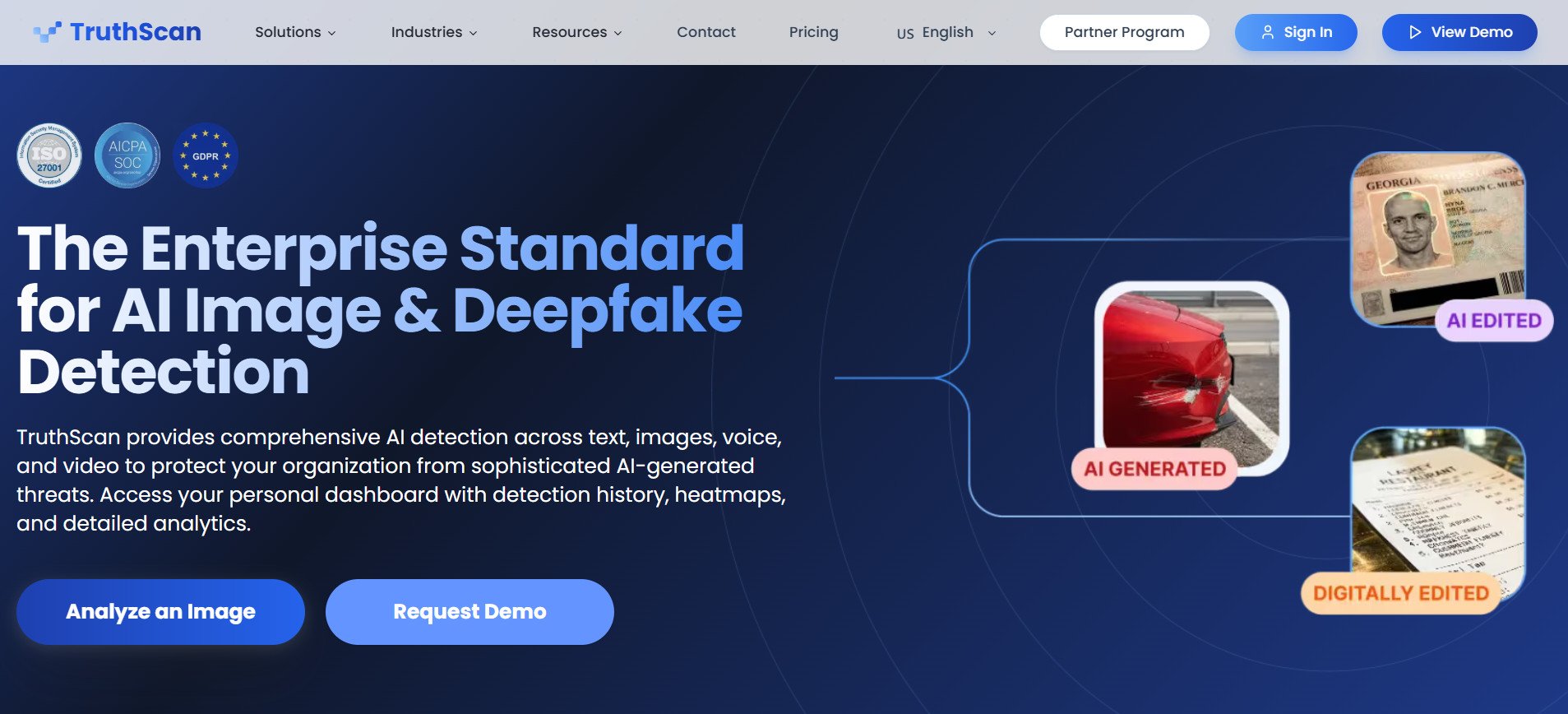
TruthScan markets itself as an enterprise AI detection and content security platform — and it backs that up with enterprise language across the site: SOC 2 Type II compliance, API integration, support tiers, deployment options, and SLAs.
That framing matters. A detector that’s “good enough” for personal checks can still be a liability in education, media, compliance, or trust & safety.
TruthScan’s pitch is essentially: fast, scalable, multi-modal AI detection for organizations that can’t afford to guess.
What TruthScan is (and what it isn’t)
TruthScan is best understood as a detection suite, not a single AI checker.
The platform supports multimodal detection across text, images, video, and audio, with credit-based usage (e.g., per-word for text, per-image for images).
The tools most relevant to this review:
AI Text Detector
Designed to flag AI-generated writing (essays, articles, emails, etc.) and score likelihood / confidence. TruthScan also claims its models are trained to handle paraphrased or “humanized” AI content.
AI Image Detector
Designed to detect AI-generated or manipulated images, and TruthScan’s pricing page suggests it includes “detection heatmaps & visual analysis” and a history dashboard.
Other Tools
- AI Video Detector
- AI Voice Detector
- Deepfake Detection
- Fake Receipt Detection
- Fake PDF Detection
- Real-time Detection
- Image Content Moderation
Pricing and Credits Structure
TruthScan still offers a free trial with 20,000 credits and no credit card required. The current public plan ladder is more complete than a simple free-versus-enterprise split: Professional is $49/month for 1,000,000 credits, Silver is $199/month for 5,000,000 credits, Gold is $499/month for 17,000,000 credits, Platinum is $999/month for 50,000,000 credits, and Enterprise uses volume discounts.
| Plan | Monthly credits | Listed price |
|---|---|---|
| Free trial | 20,000 | Free |
| Professional | 1,000,000 | $49/month |
| Silver | 5,000,000 | $199/month |
| Gold | 17,000,000 | $499/month |
| Platinum | 50,000,000 | $999/month |
| Enterprise | Custom / volume | Contact sales |
Credits are applied differently by media type:
- Text: 1 credit per word
- Images: 1,000 credits per image
- Video: 50,040 credits per minute
- Audio: 1,500 credits per minute
This matters because “accuracy” without cost context is misleading. A detector that’s slightly better but 10× more expensive may be the wrong choice for a newsroom or moderation queue.
The thing is — although these credits are not free for their full product, TruthScan DOES have a free trial for AI image and text detection. No upfront costs at all, but I would not frame that as unique anymore. Plenty of detector tools now have some free-access path; the real comparison is how much text, image, audio, or video you can analyze before limits start mattering.
Testing Methodology
A lot of competitor reviews include a results table — but often leave out the most important details: how the test was actually run.
- The same content is tested in the same order.
- No edits are made between tools (no “fixing” the text or images).
- Scores are recorded as-is.
- Any “confidence” labels / sentence-level flags are captured.
- Screenshots are saved for proof
One important limitation: this is a directional benchmark, not a lab-grade study. The text side uses 8 AI-written samples and the image side uses 8 AI-generated images. That is enough to compare this small test set, but it does not measure every model, every writing style, every image category, or false-positive behavior on human-written work and human-made images.
For more information:
For AI Text Detection
Sample size and content types
- Sample size: 8
- Sources of AI text: ChatGPT (4) and Gemini (4)
- General word count per sample: 500
Competition
- Sapling (often positioned as enterprise-grade detection)
- Grammarly AI detector (widely accessible baseline)
For AI Image Detection
AI image test set
- Sample size: 8
- AI image sources: Midjourney (4) and GPT (4)
Competition
AI Text Detection Test
Test #1
AI-Generated Essay:
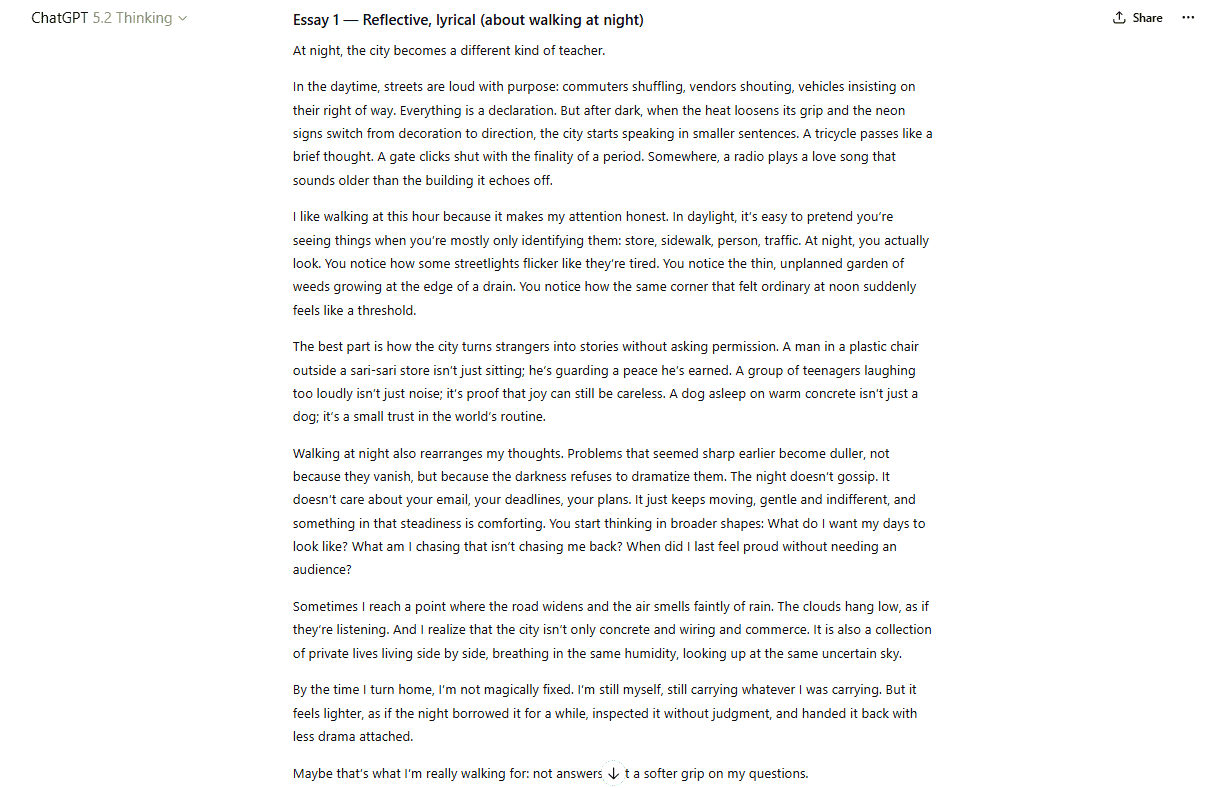
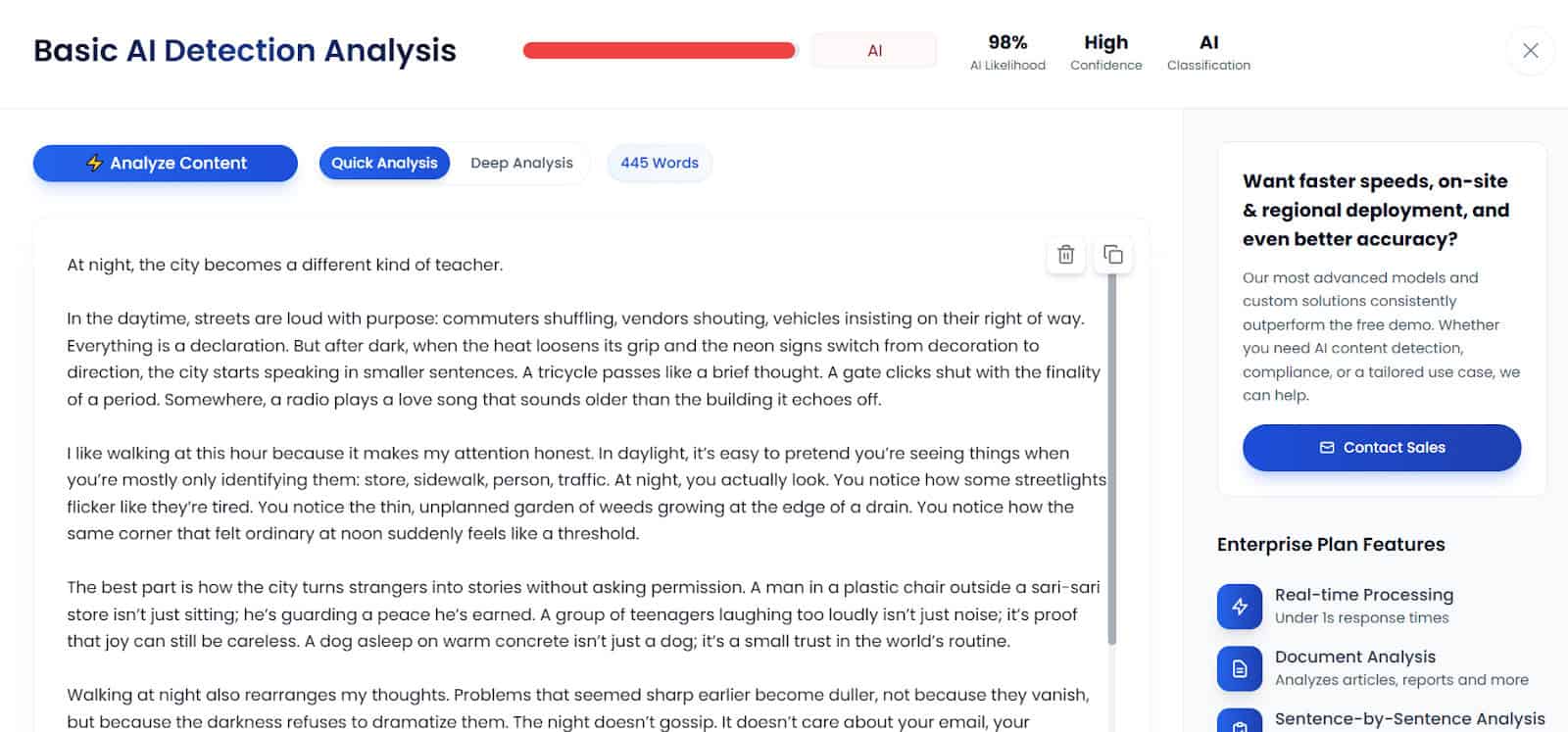
TruthScan: Correctly identified text as AI-generated.
AI Likelihood Score: 98%
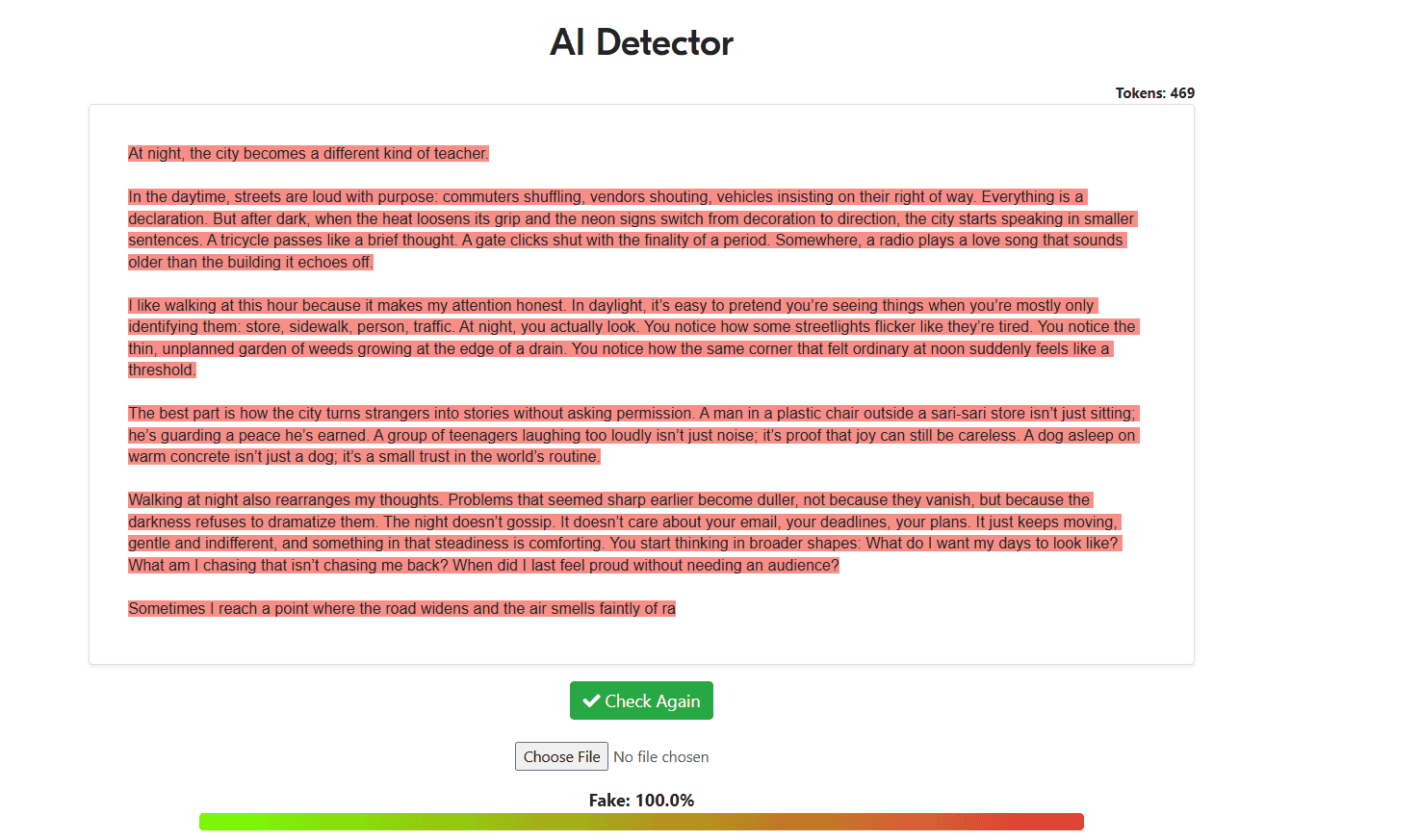
Sapling: Correctly identified text as AI-generated.
AI Likelihood Score: 100%
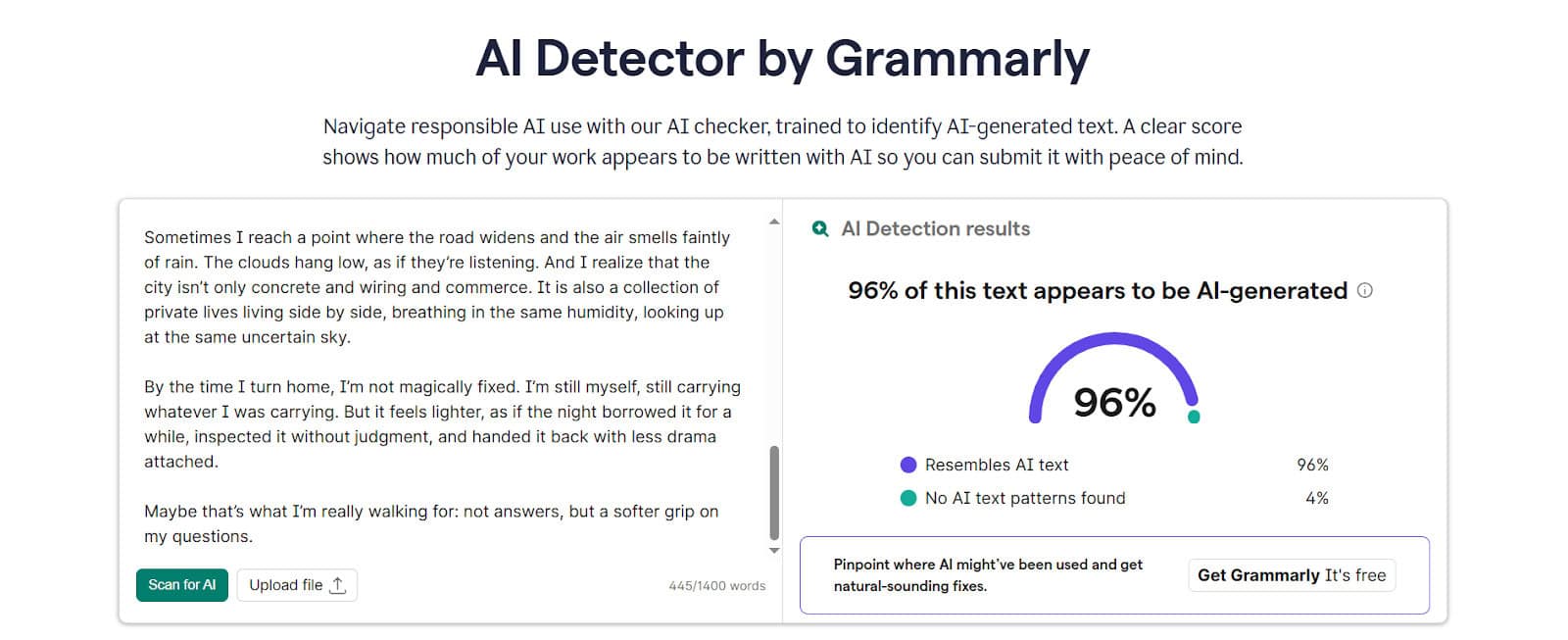
Grammarly: Correctly identified text as AI-generated.
AI Likelihood Score: 96%
Test #2
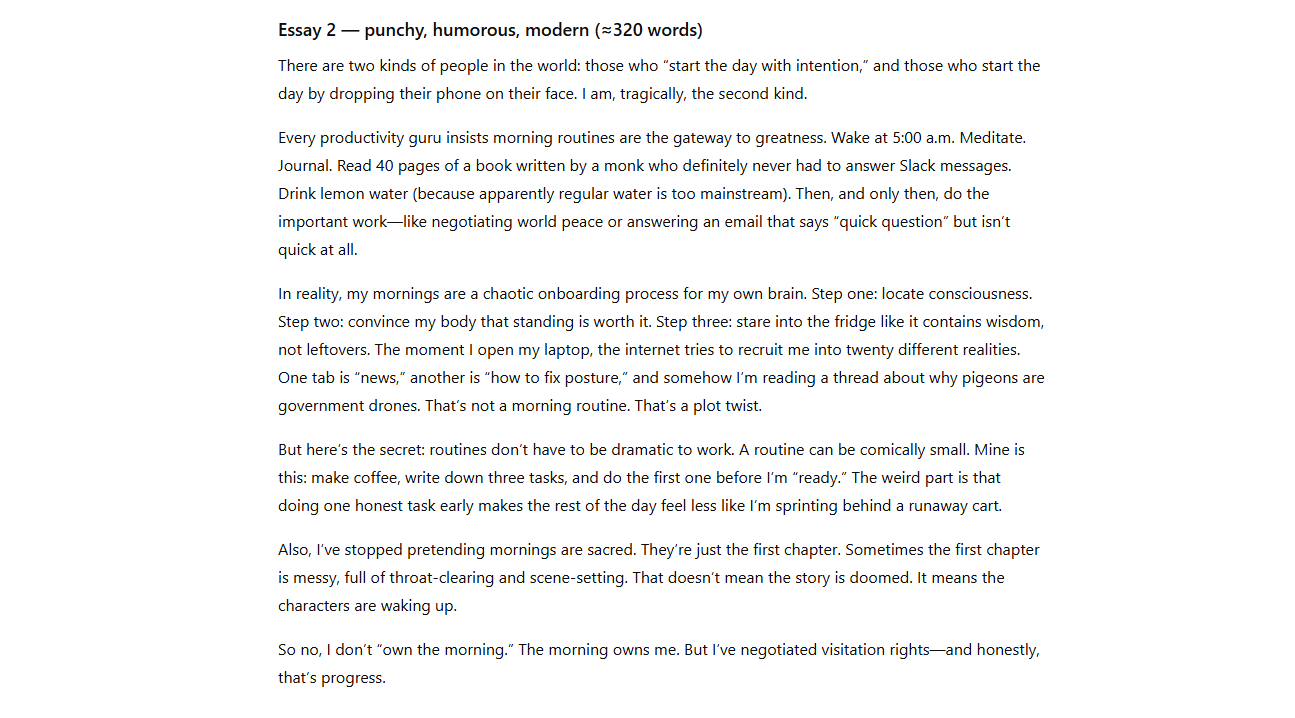
AI-Generated Essay:
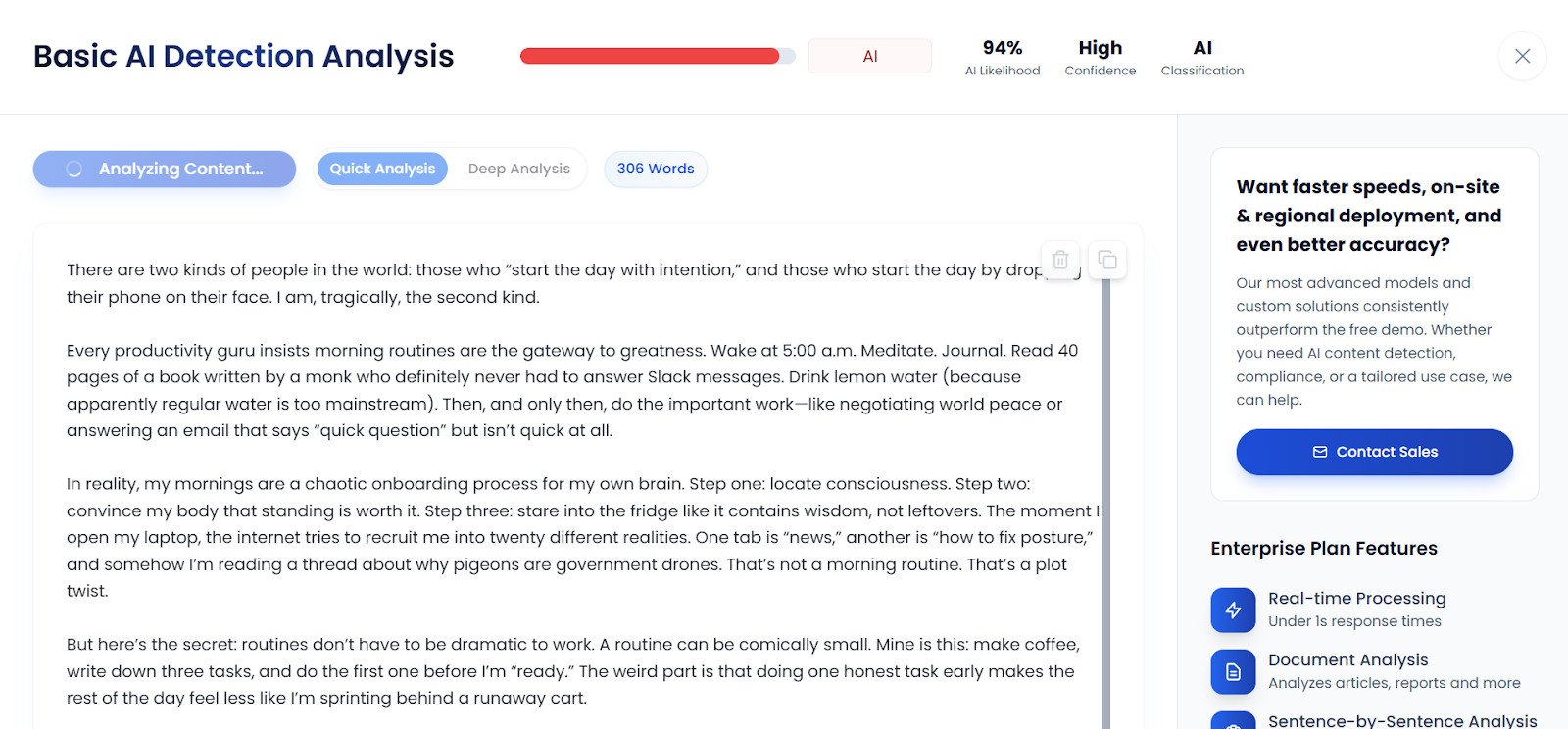
TruthScan: Correctly identified text as AI-generated.
AI Likelihood Score: 94%
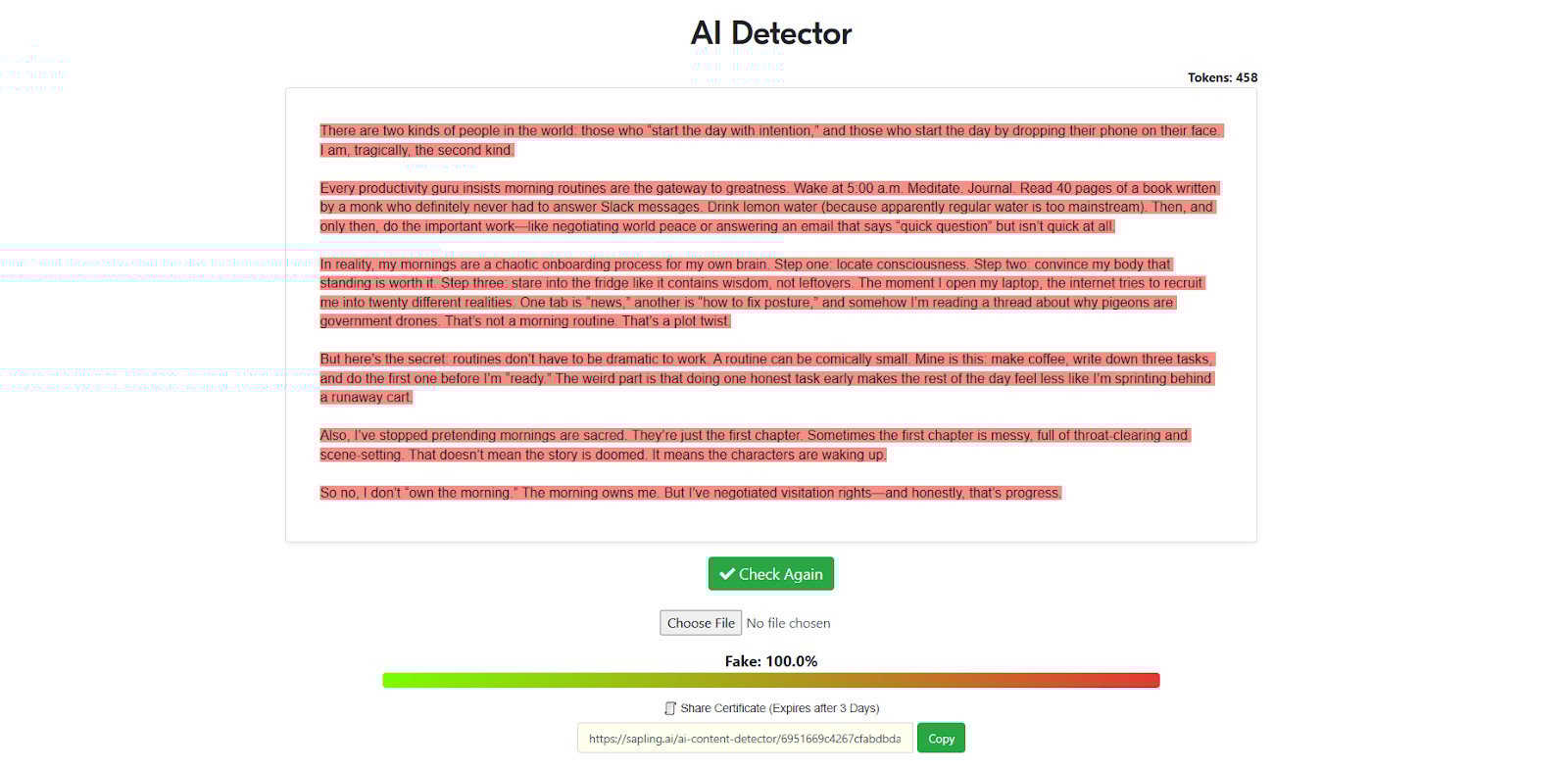
Sapling: Correctly identified text as AI-generated.
AI Likelihood Score: 100%
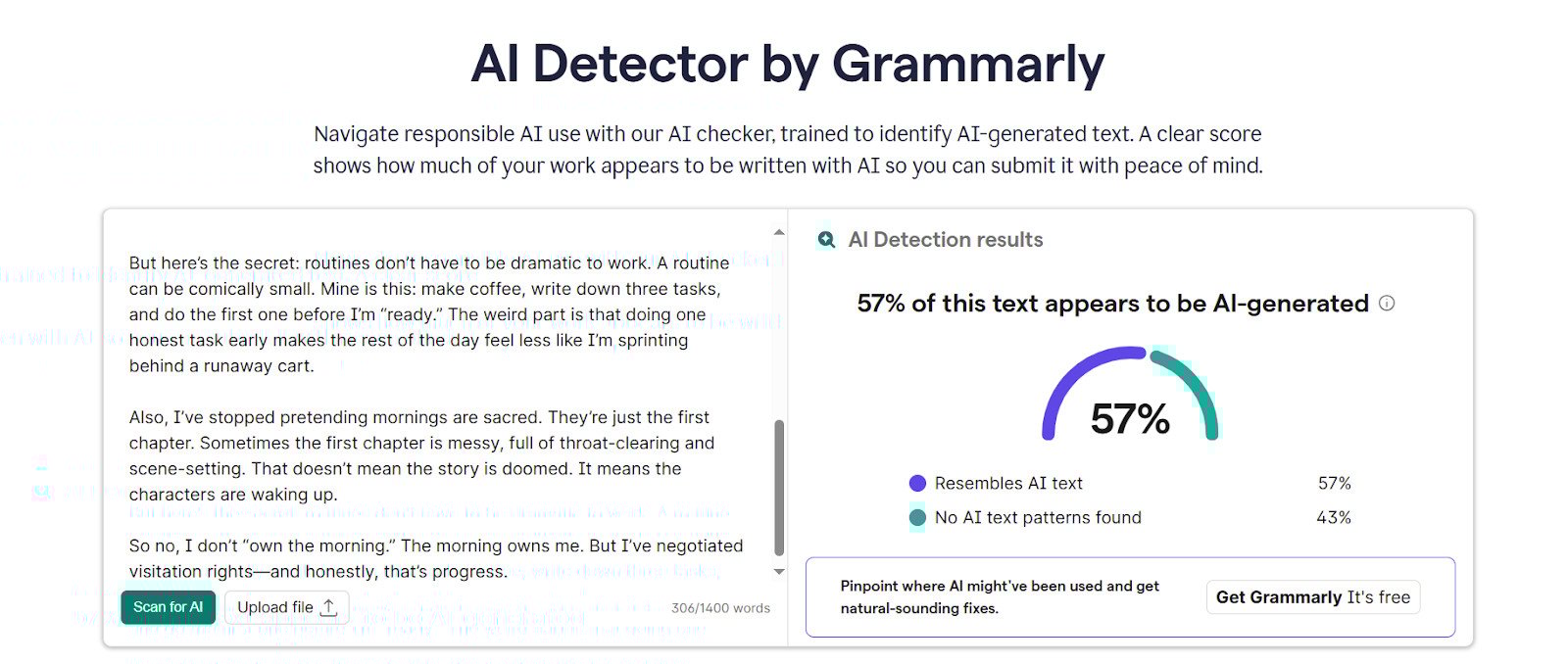
Grammarly: AI detector confused.
AI Likelihood Score: 57%
Test #3
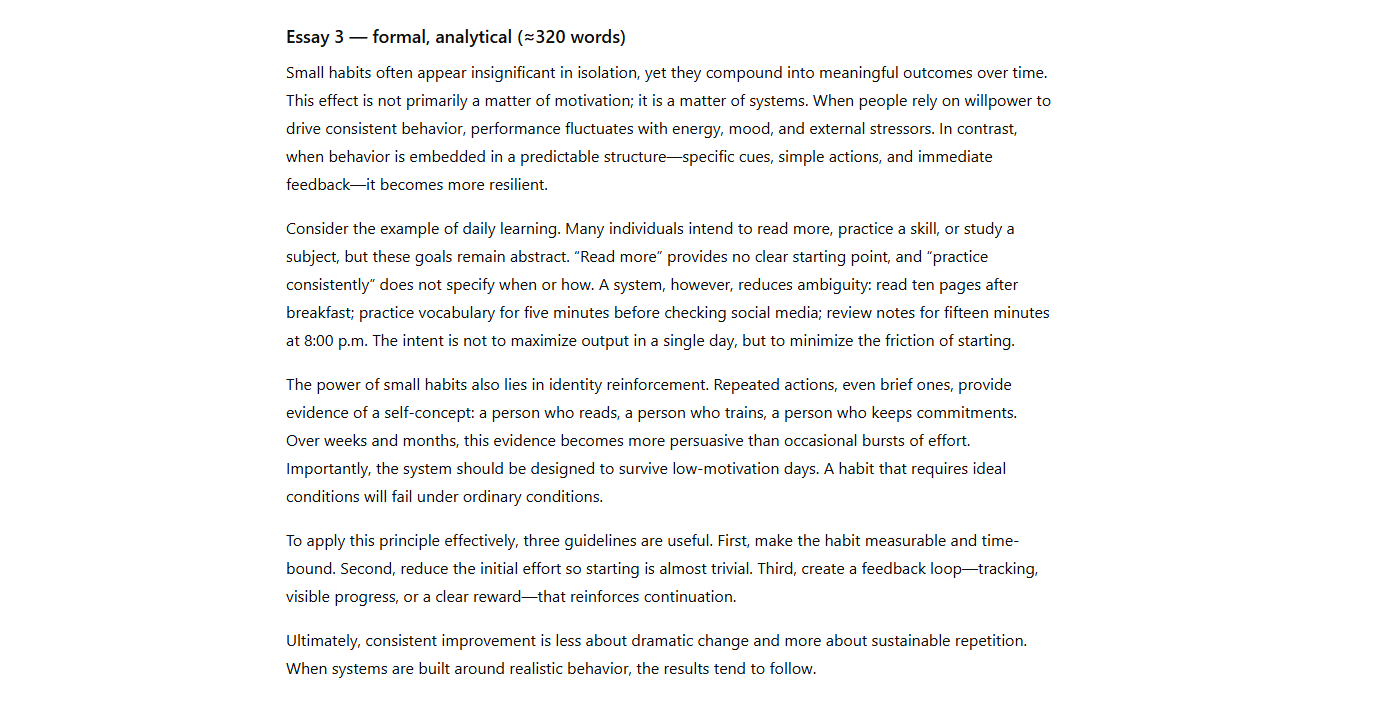
AI-Generated Essay:
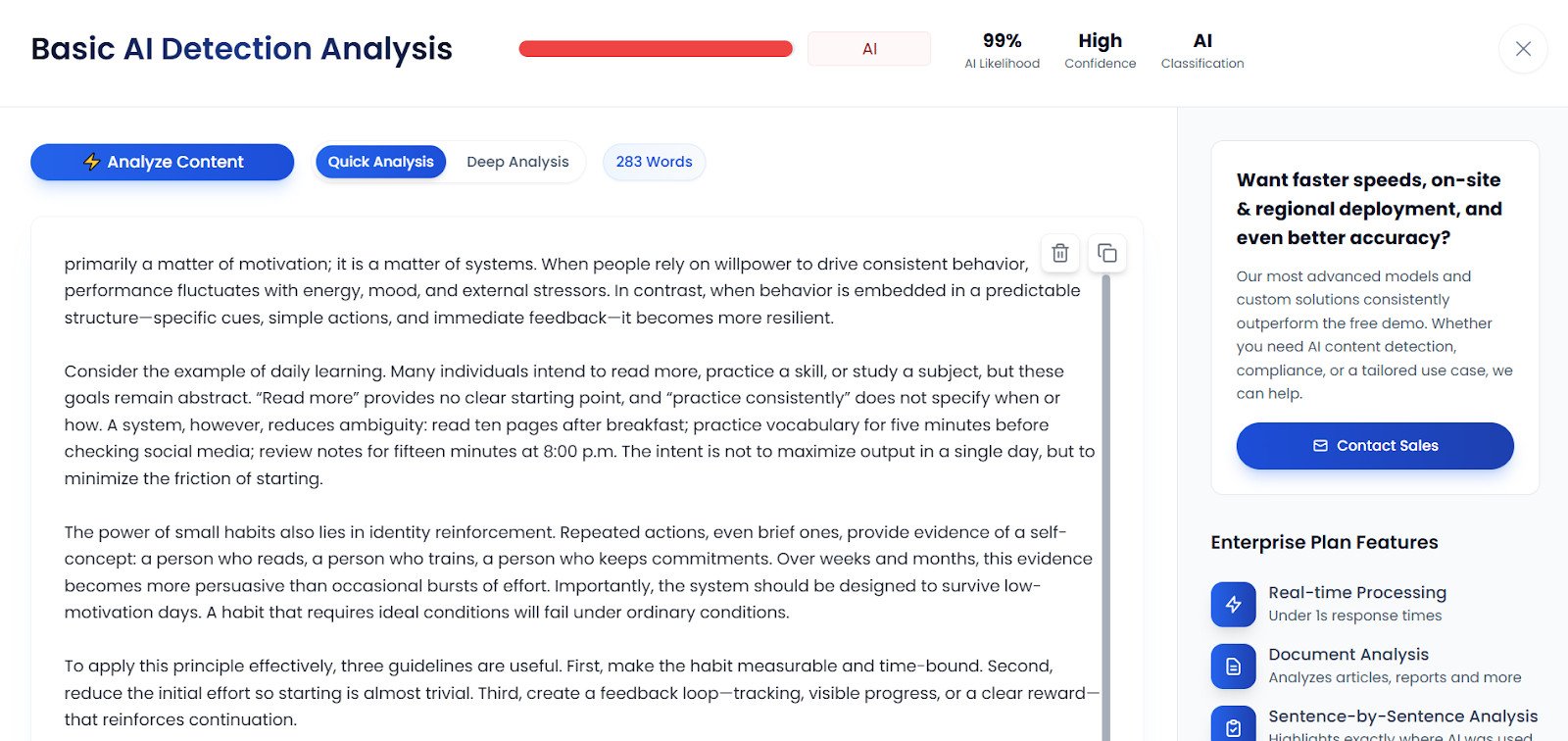
TruthScan: Correctly identified text as AI-generated.
AI Likelihood Score: 99%
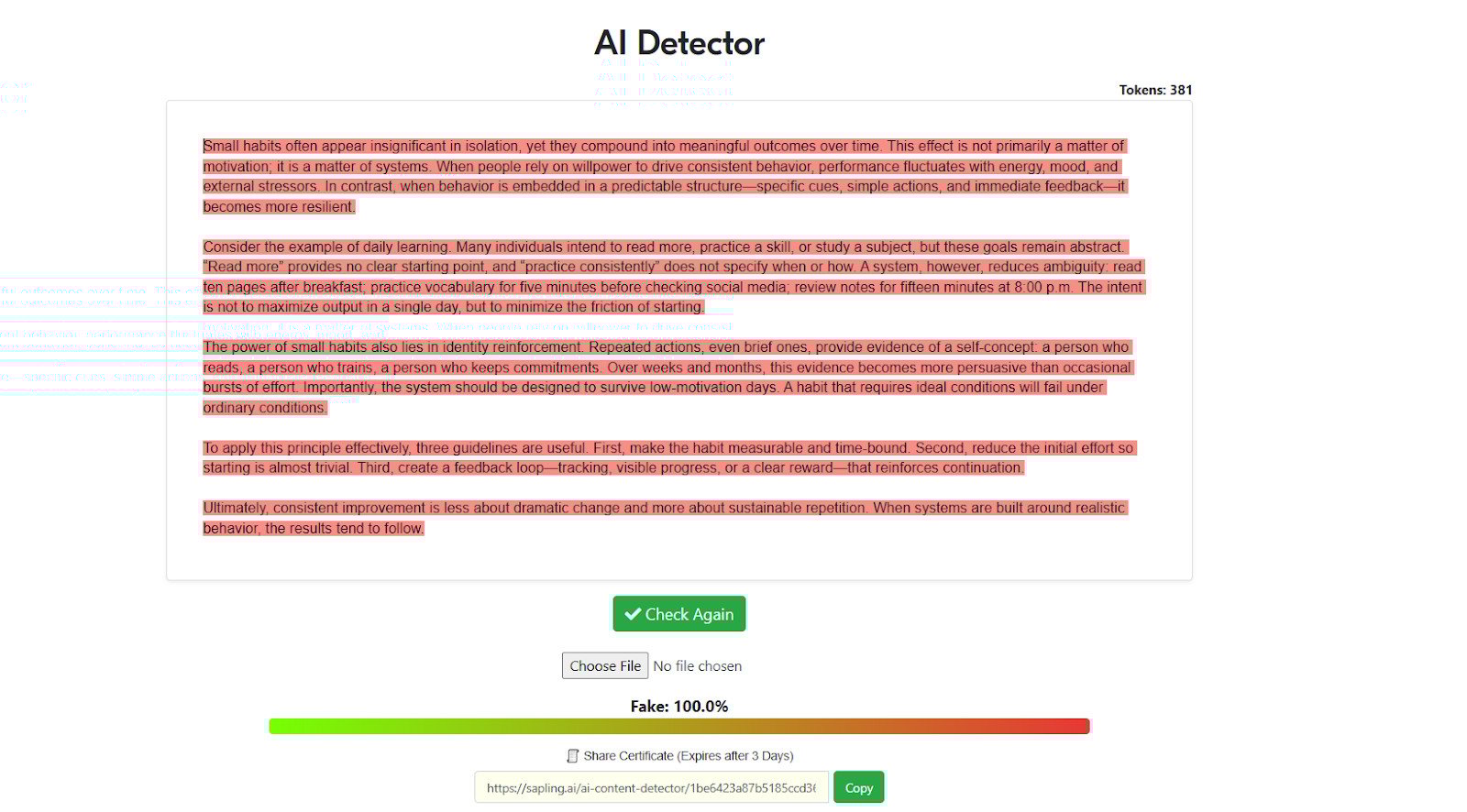
Sapling: Correctly identified text as AI-generated.
AI Likelihood Score: 100%
Grammarly: Correctly identified text as AI-generated.
AI Likelihood Score: 75%
Test #4
AI-Generated Essay:
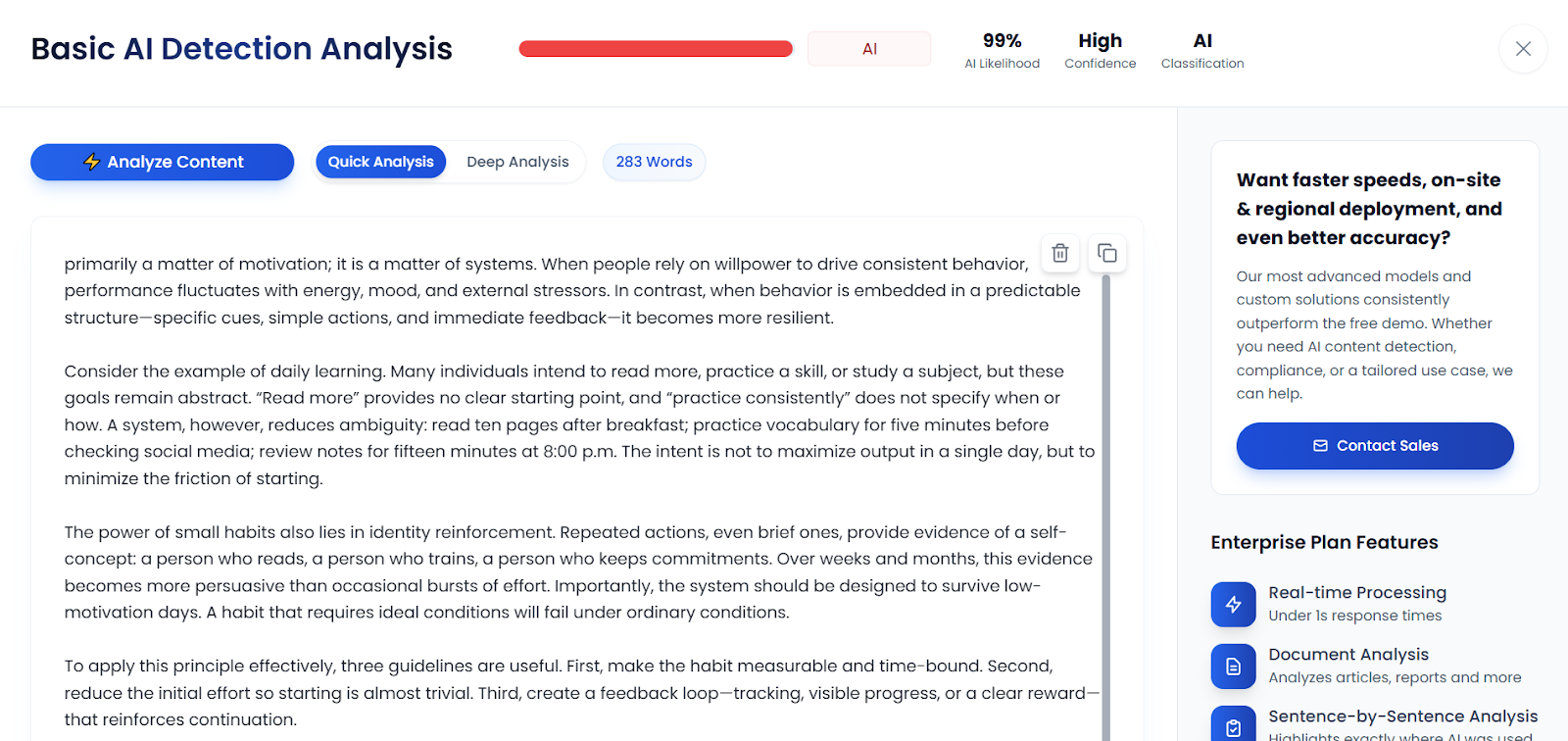
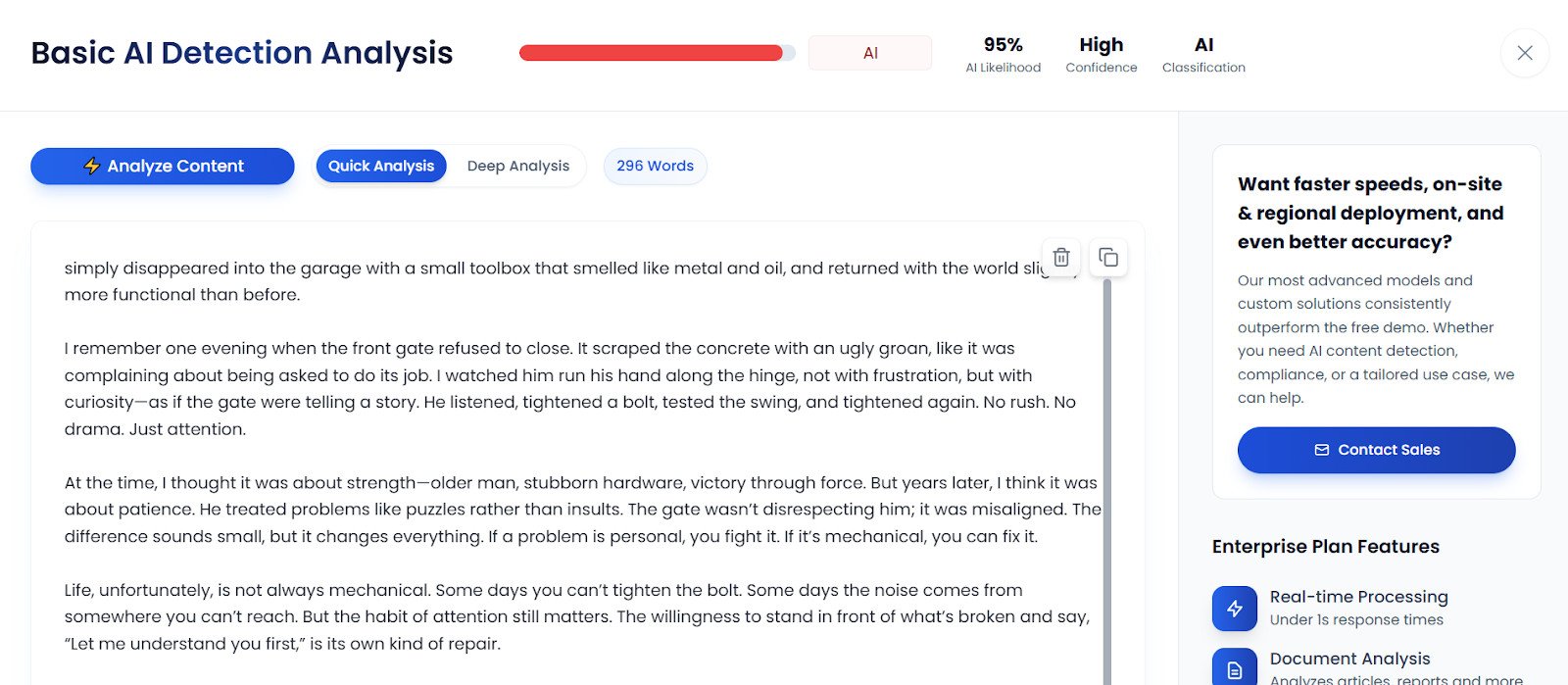
TruthScan: Correctly identified text as AI-generated.
AI Likelihood Score: 95%
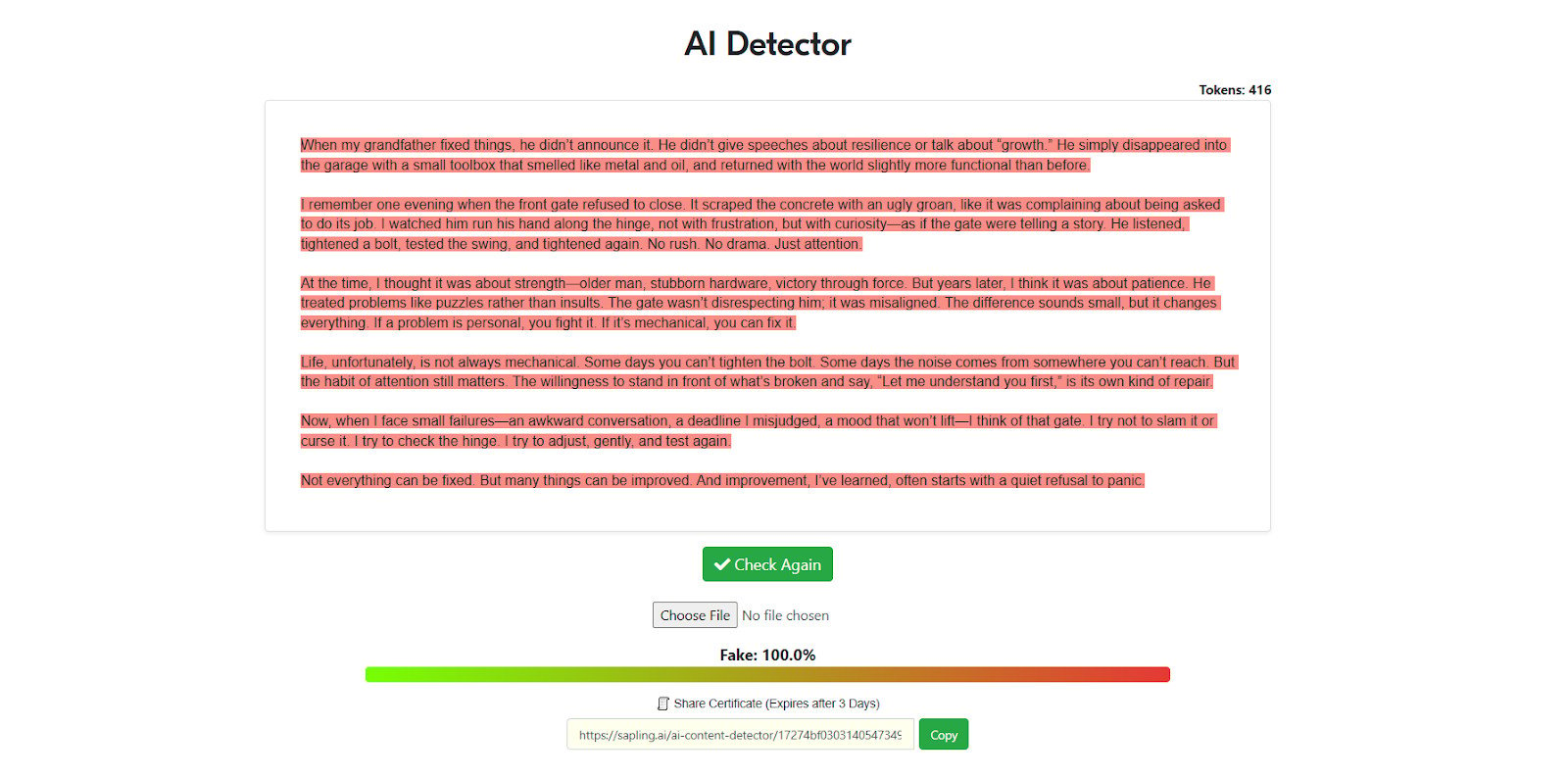
Sapling: Correctly identified text as AI-generated.
AI Likelihood Score: 100%
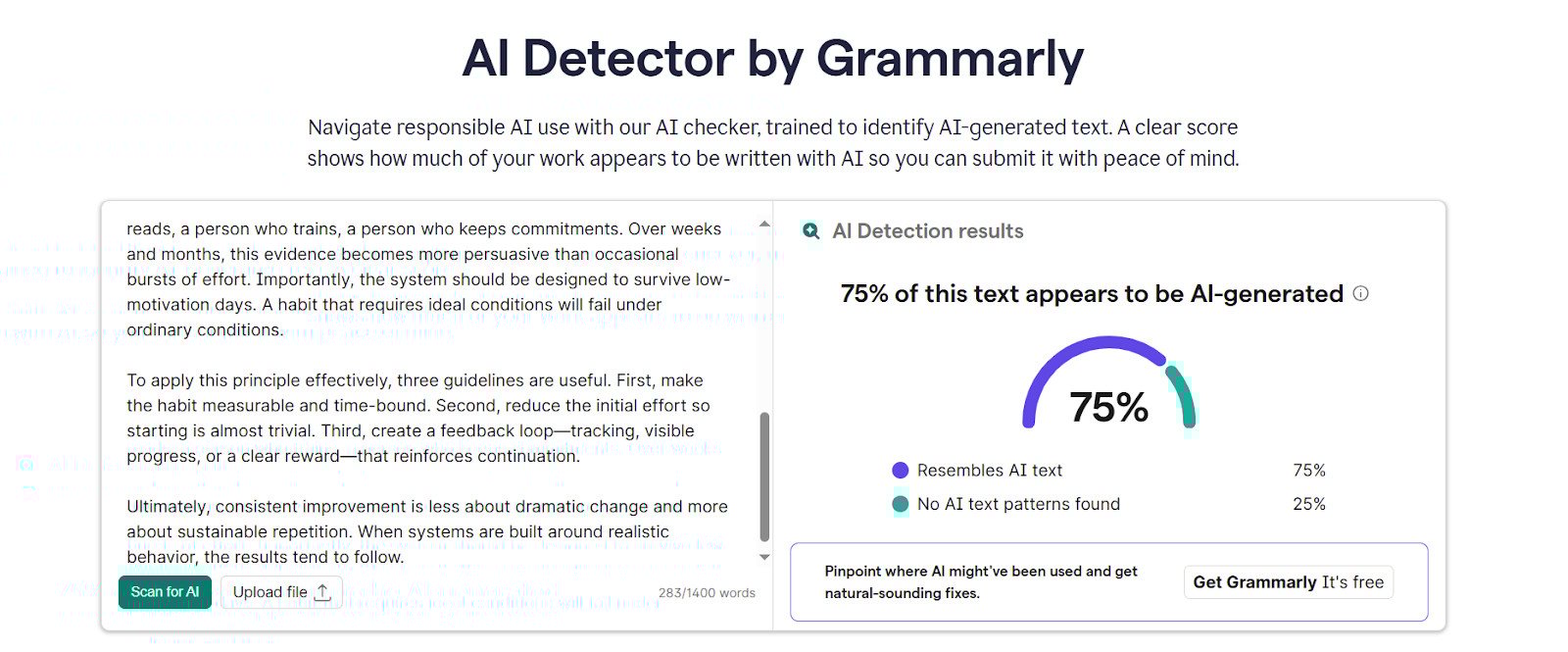
Grammarly: Correctly identified text as AI-generated.
AI Likelihood Score: 100%
Test #5
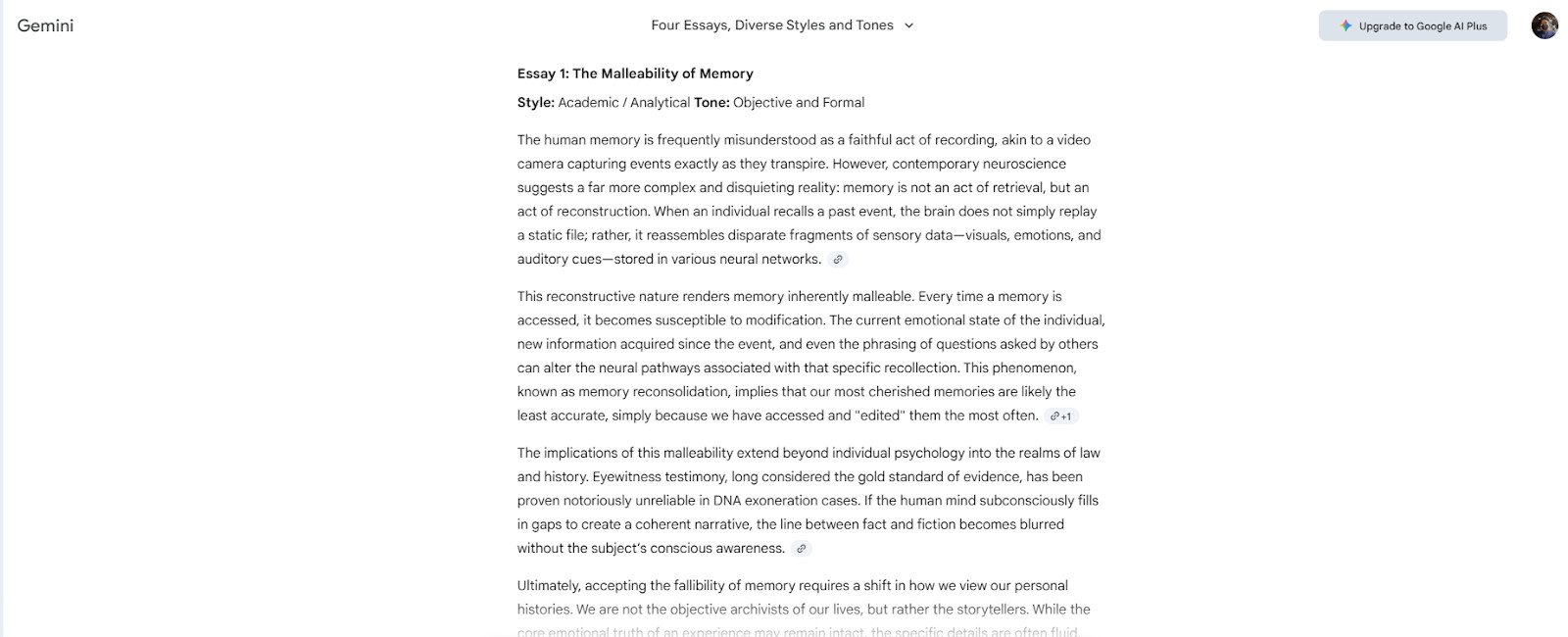
AI-Generated Essay:
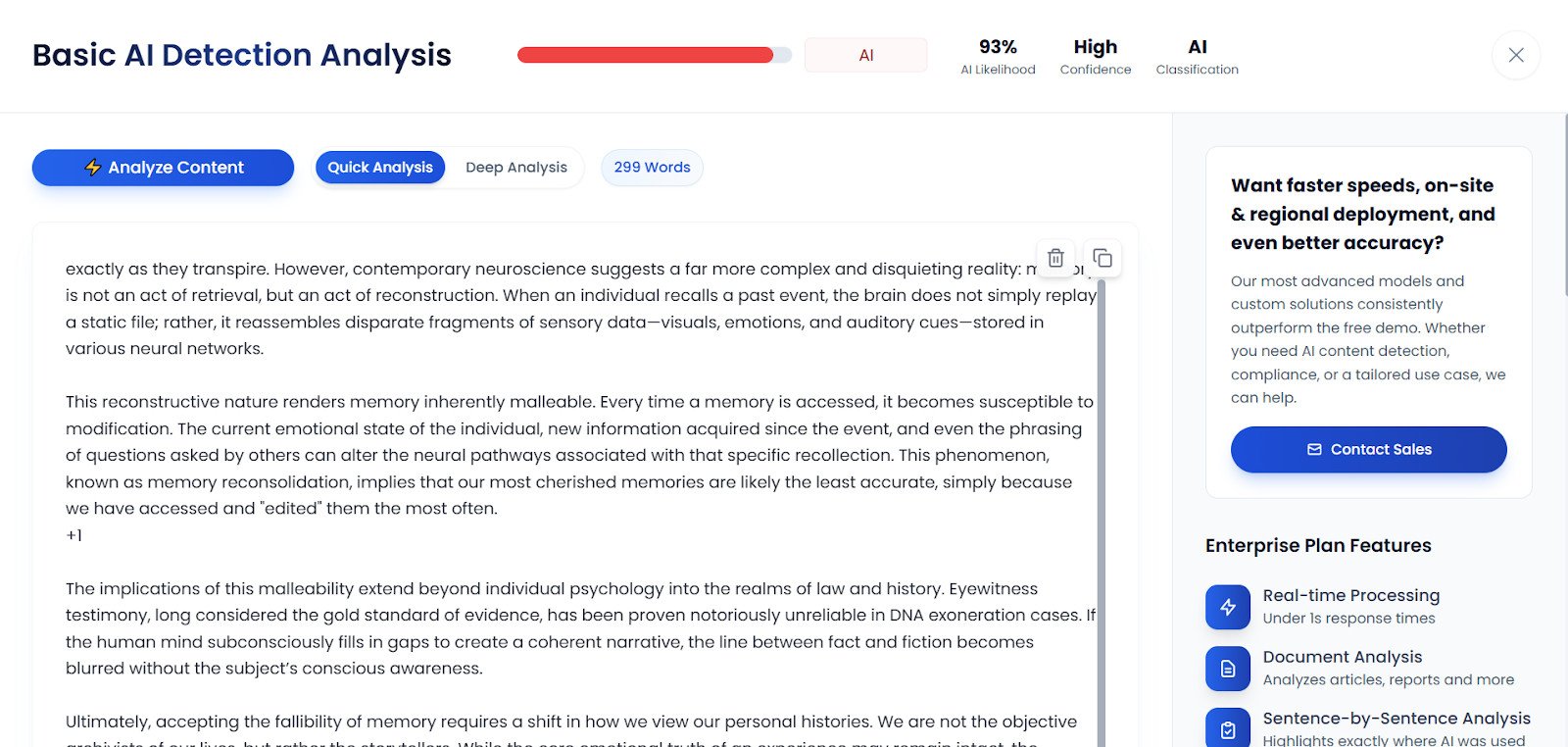
TruthScan: Correctly identified text as AI-generated.
AI Likelihood Score: 93%
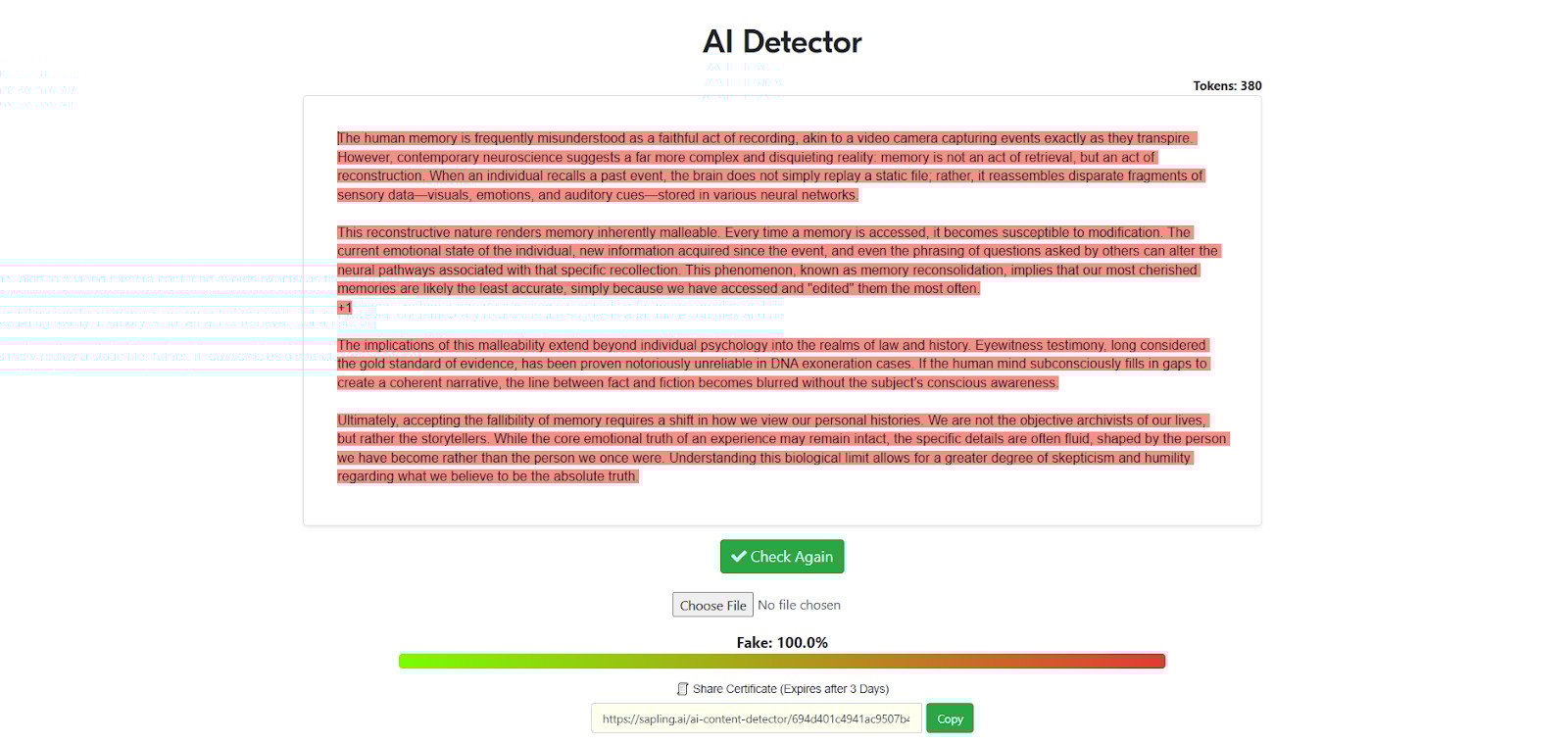
Sapling: Correctly identified text as AI-generated.
AI Likelihood Score: 100%
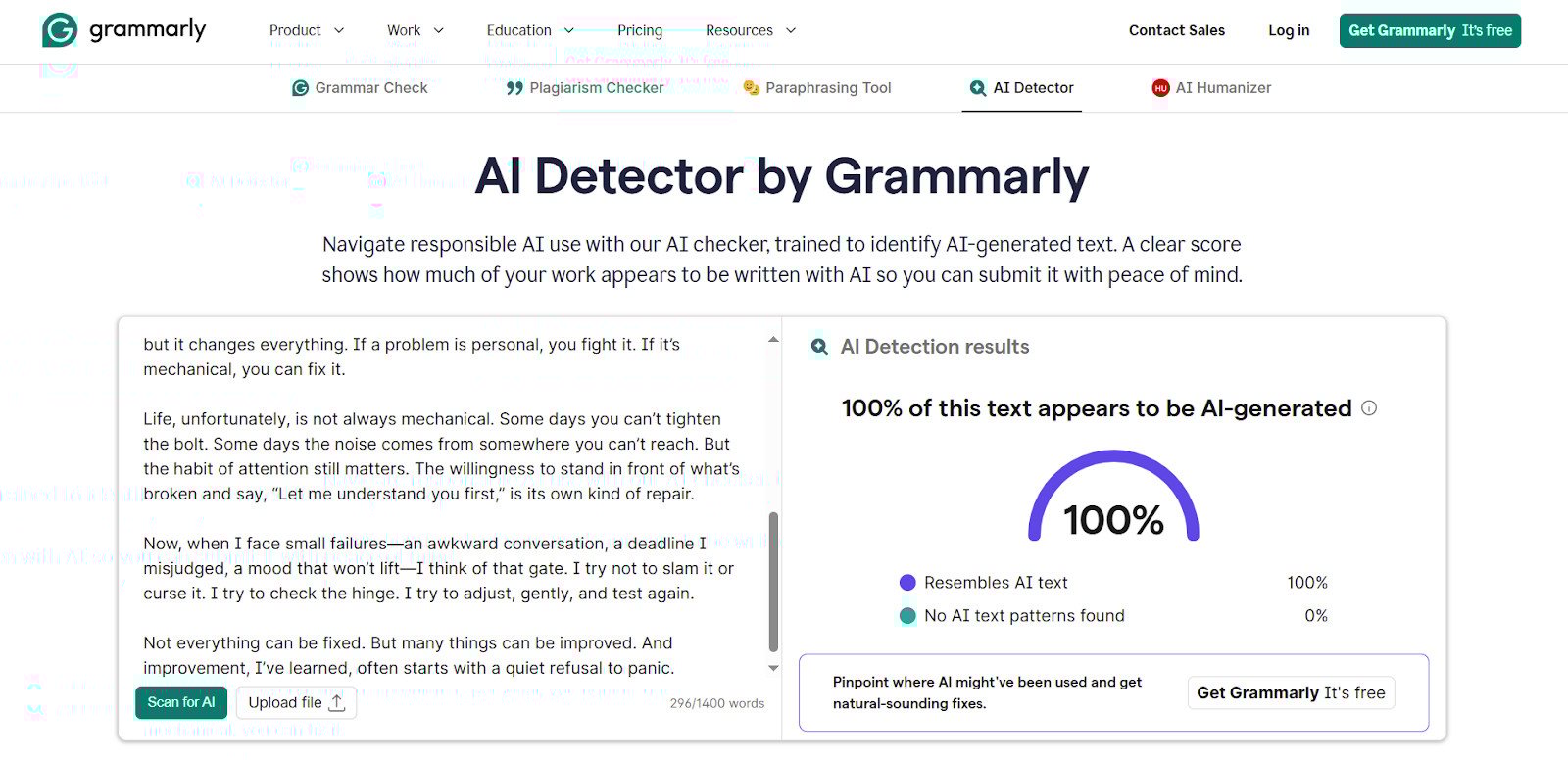
Grammarly: Correctly identified text as AI-generated.
AI Likelihood Score: 92%
Test #6
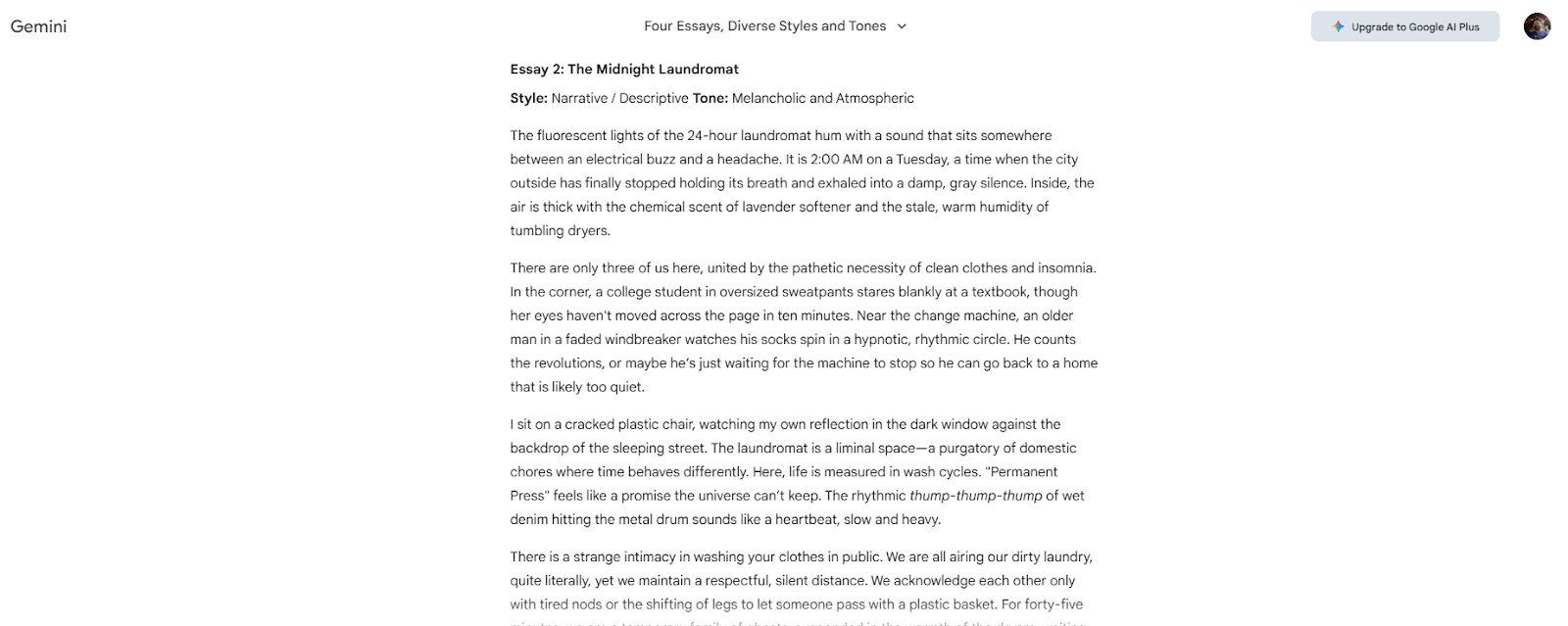
AI-Generated Essay:
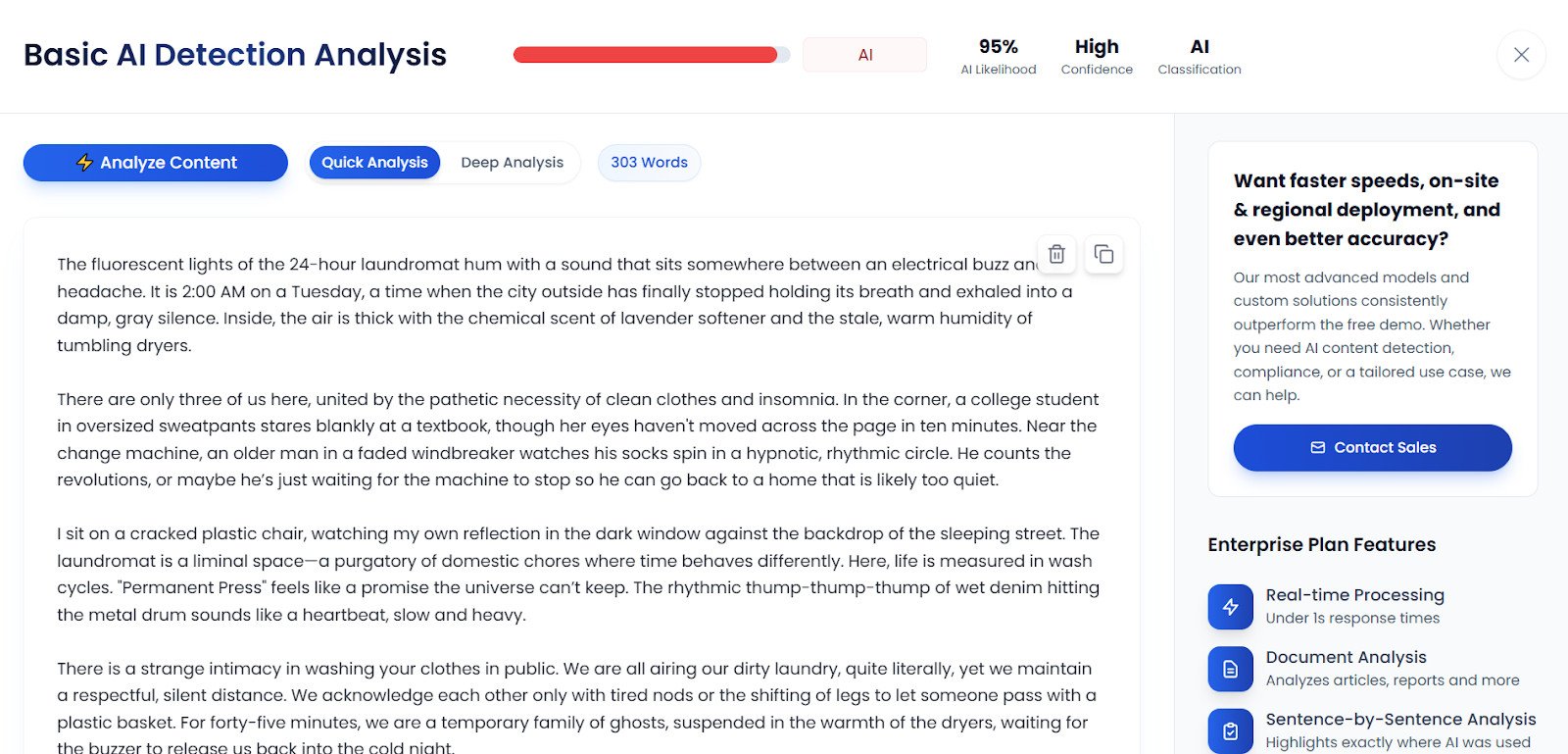
TruthScan: Correctly identified text as AI-generated.
AI Likelihood Score: 95%
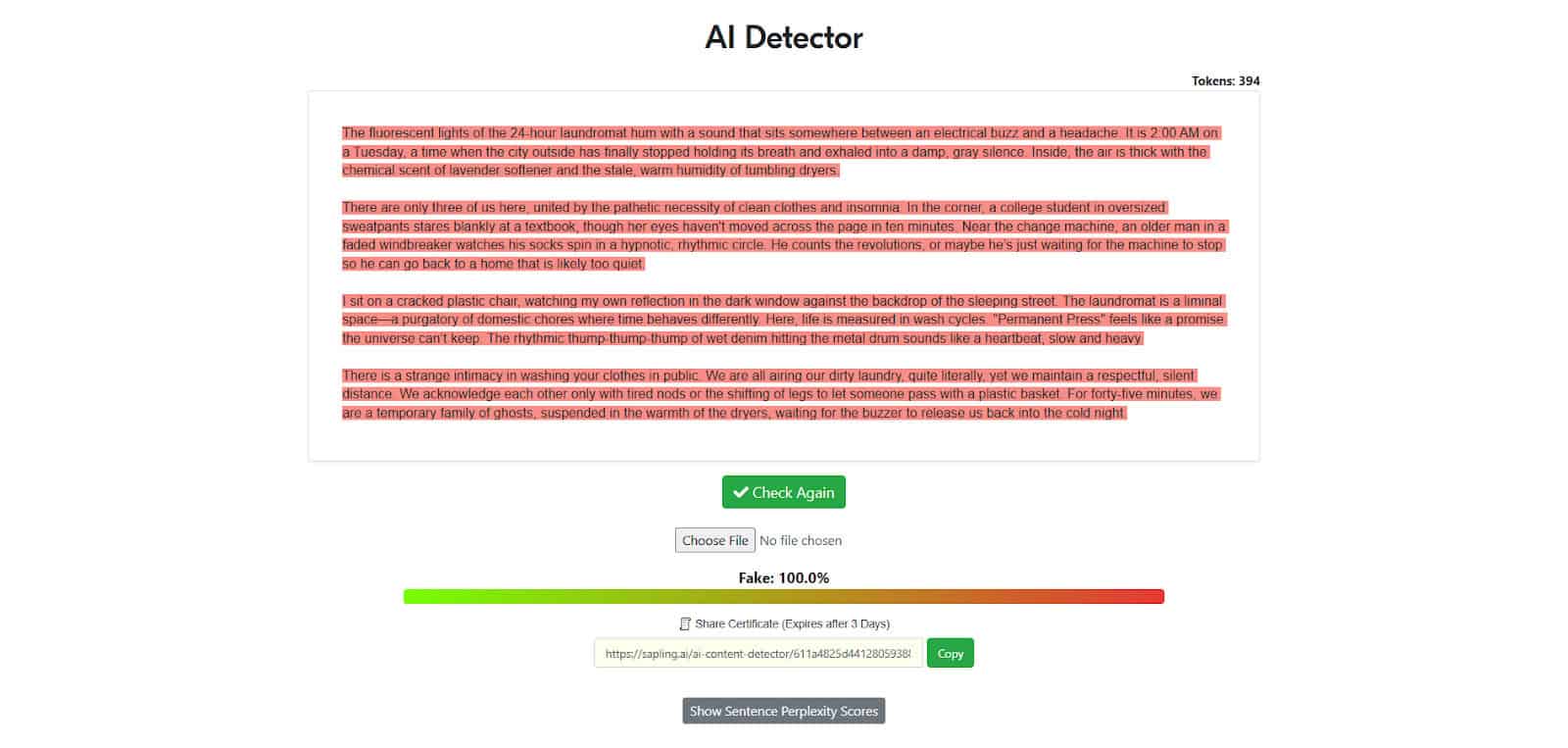
Sapling: Correctly identified text as AI-generated.
AI Likelihood Score: 100%
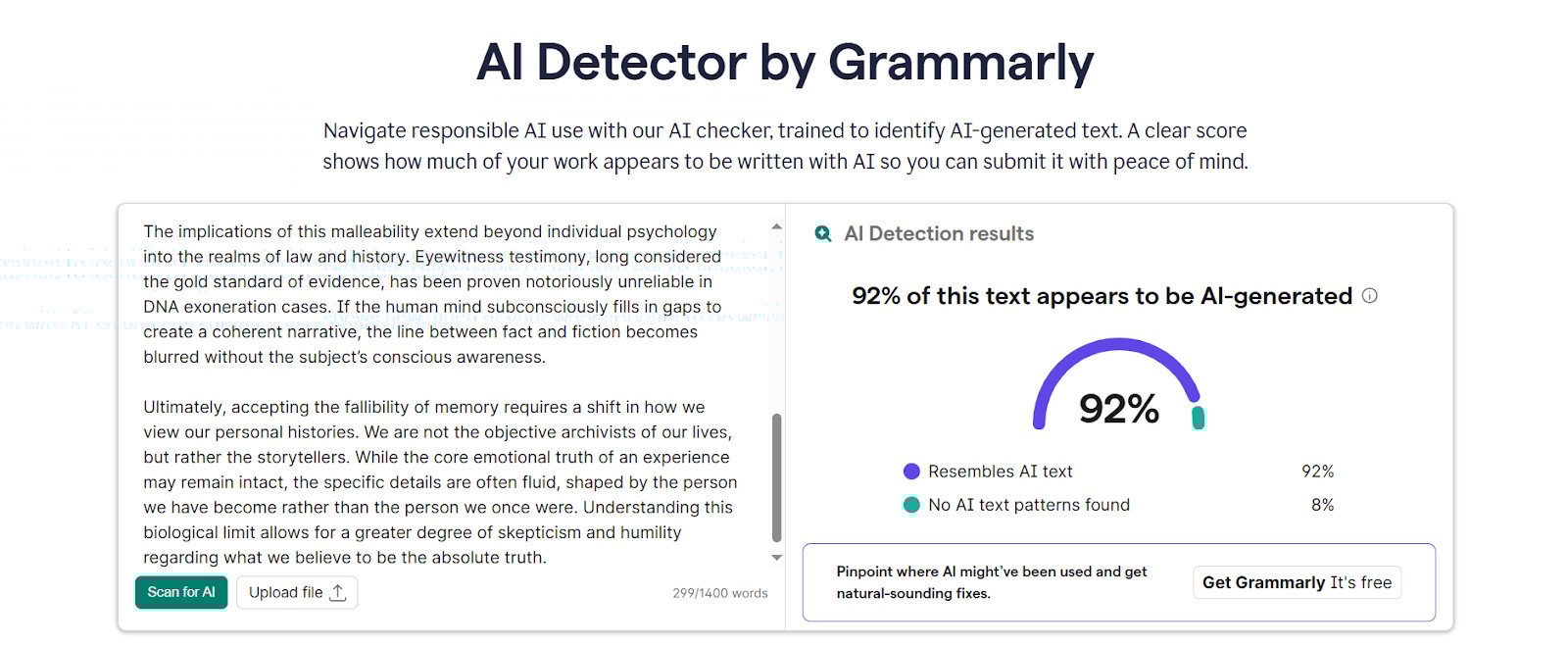
Grammarly: AI detector confused.
AI Likelihood Score: 58%
Test #7
AI-Generated Essay:
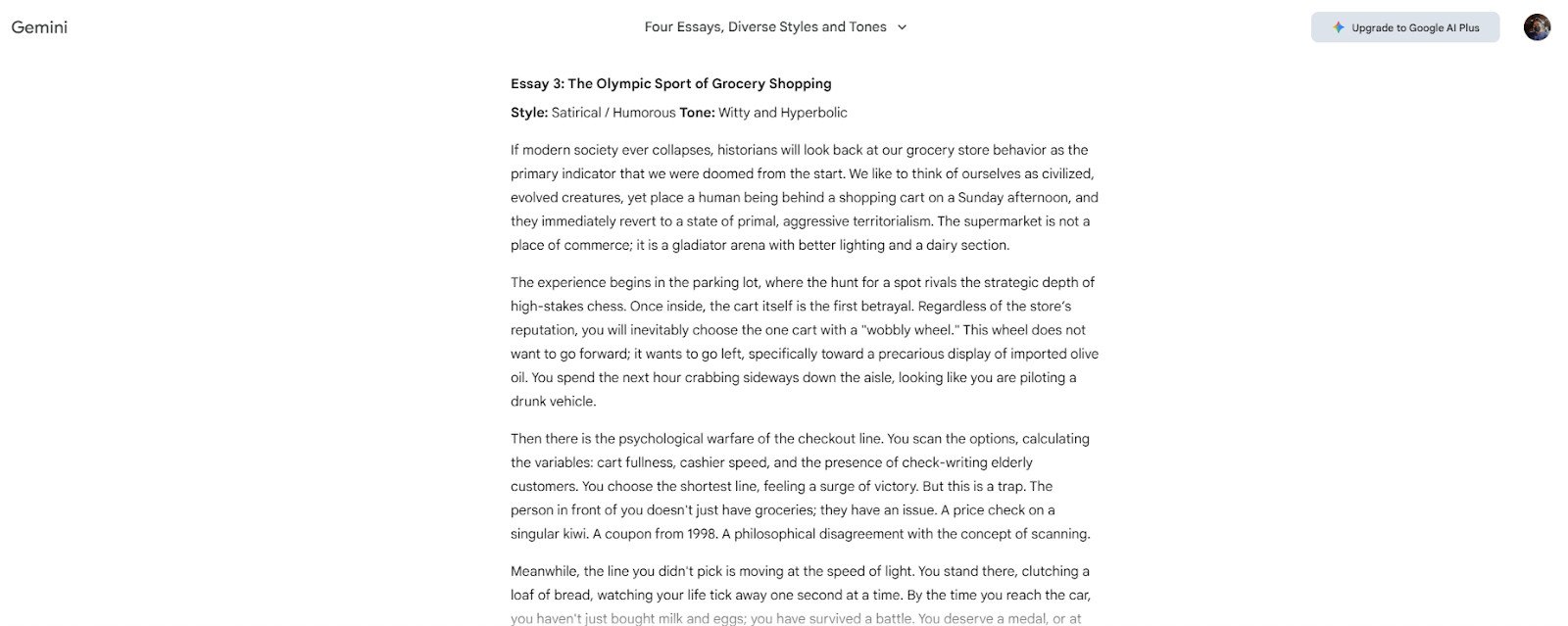
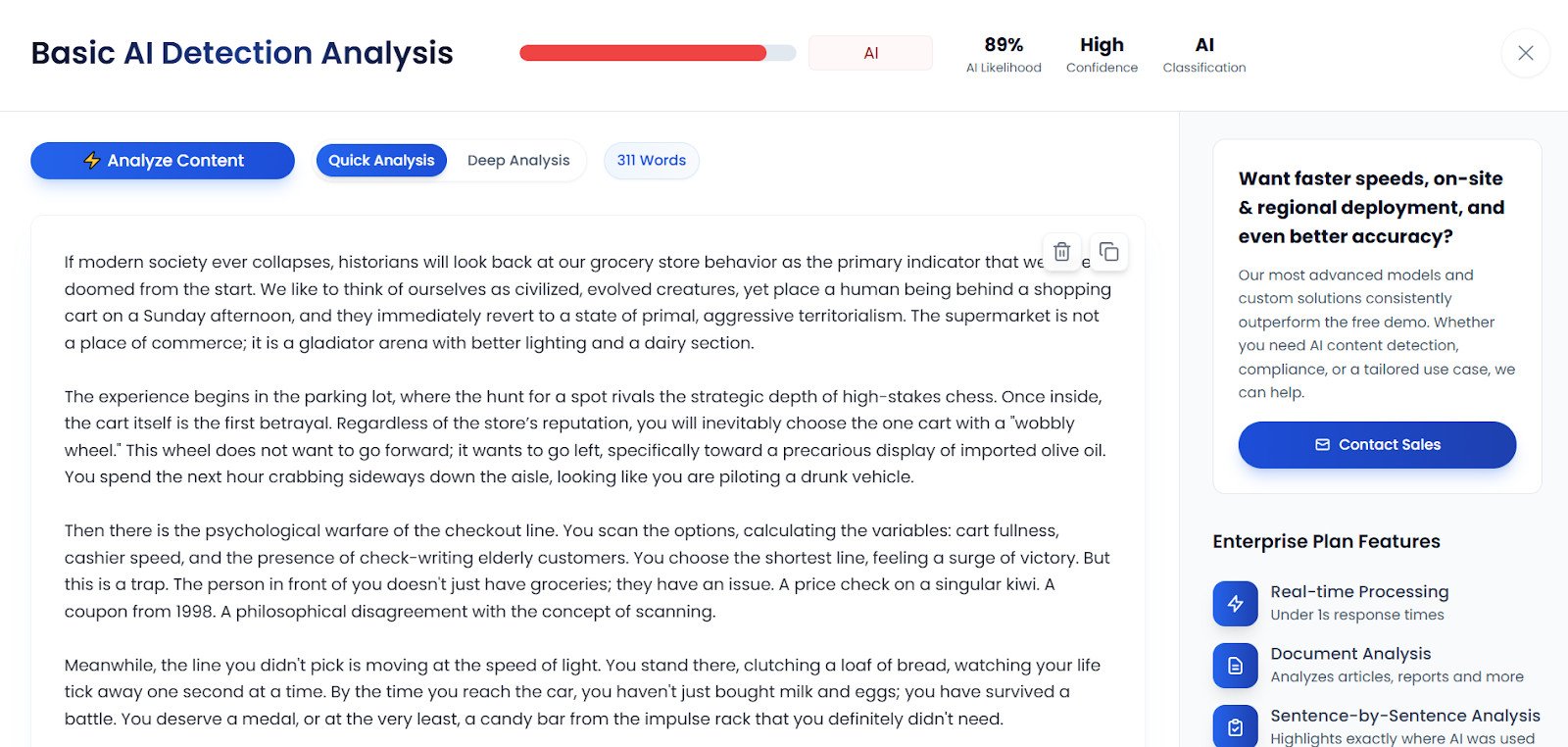
TruthScan: Correctly identified text as AI-generated.
AI Likelihood Score: 89%
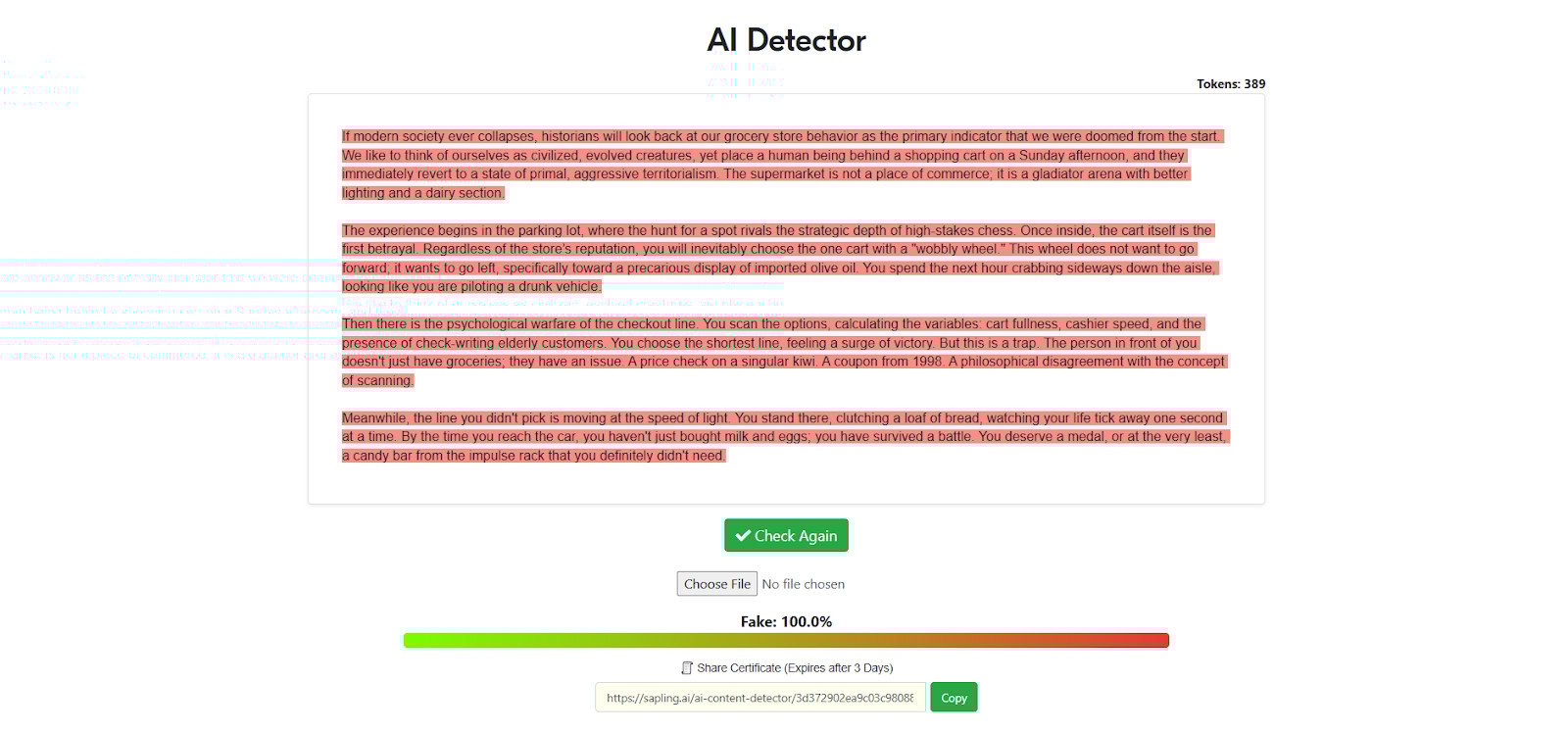
Sapling: Correctly identified text as AI-generated.
AI Likelihood Score: 100%
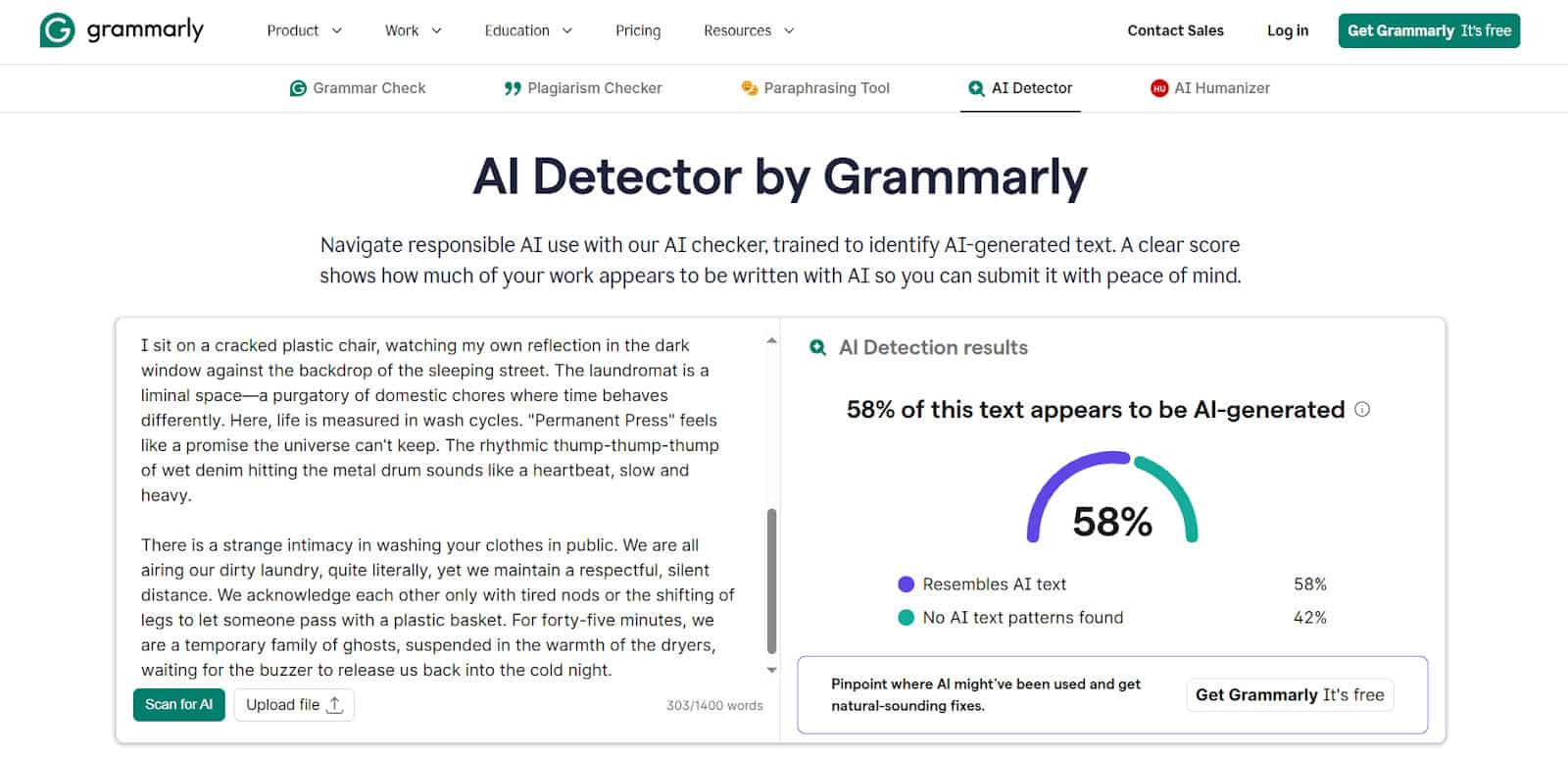
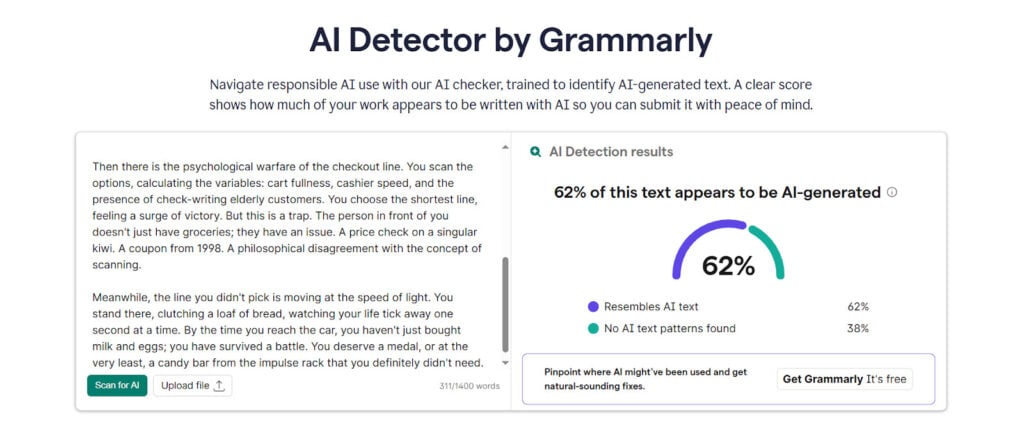
Grammarly: Correctly identified text as AI-generated.
AI Likelihood Score: 62%
Test #8
AI-Generated Essay:
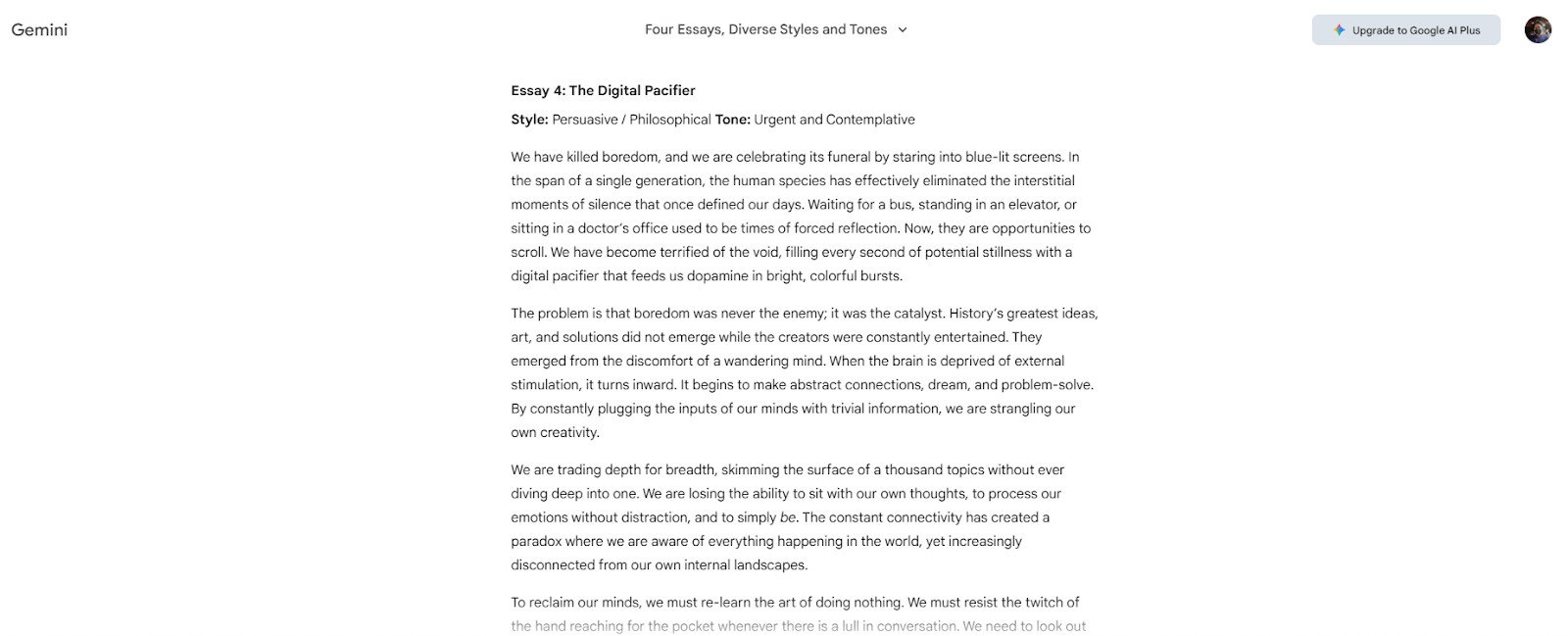
TruthScan: Correctly identified text as AI-generated.
AI Likelihood Score: 89%
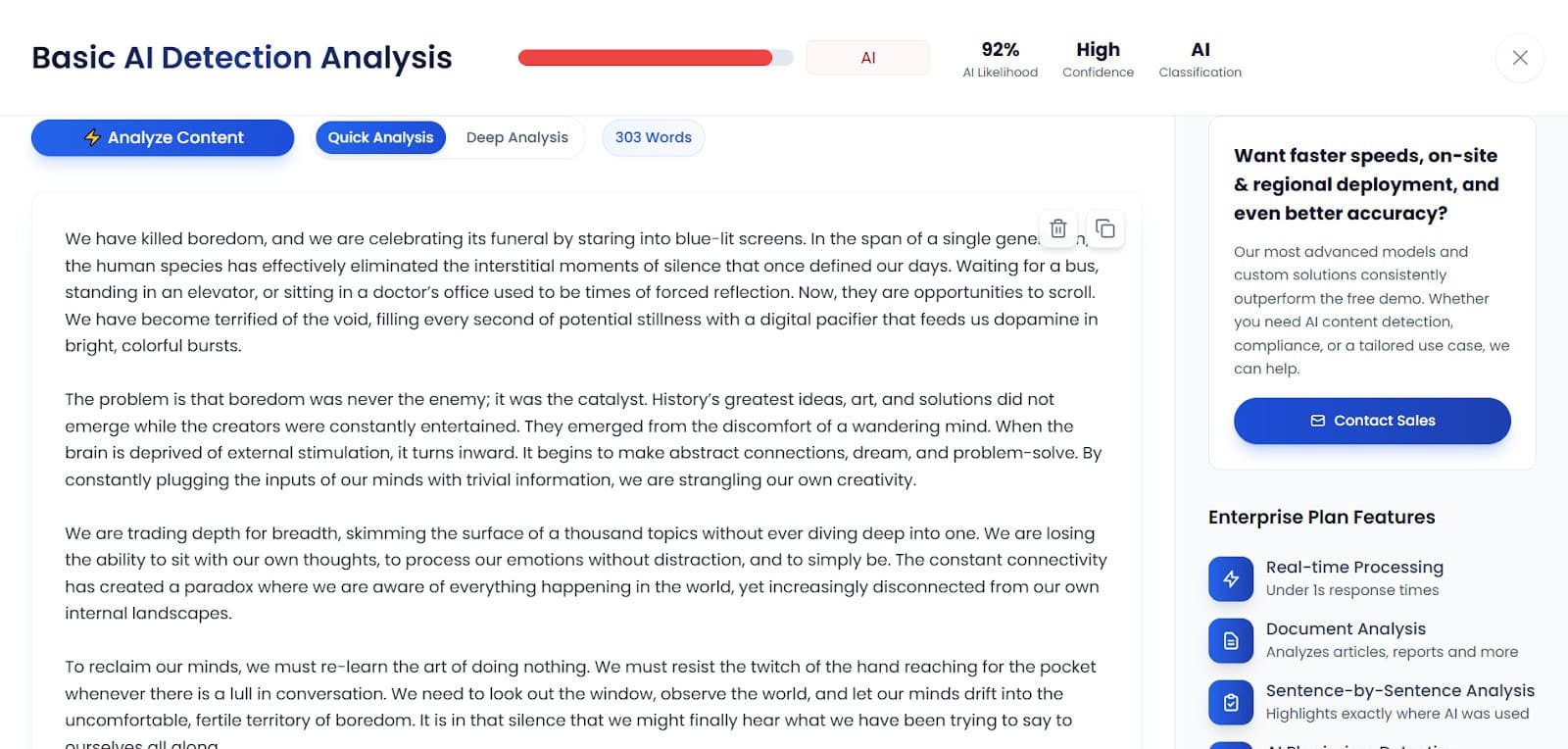
Sapling: Correctly identified text as AI-generated.
AI Likelihood Score: 100%
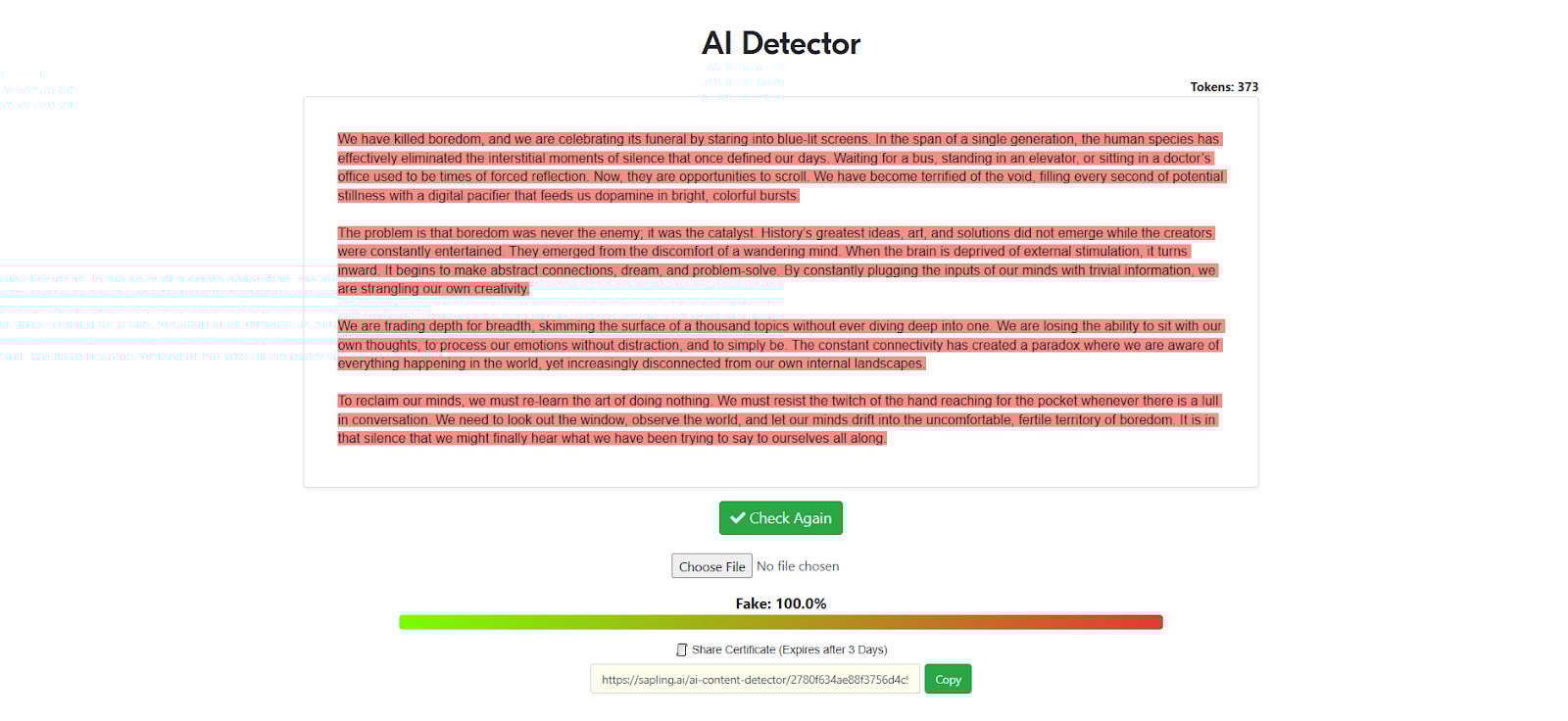
Grammarly: Incorrectly identified text as human-written.
AI Likelihood Score: 39%
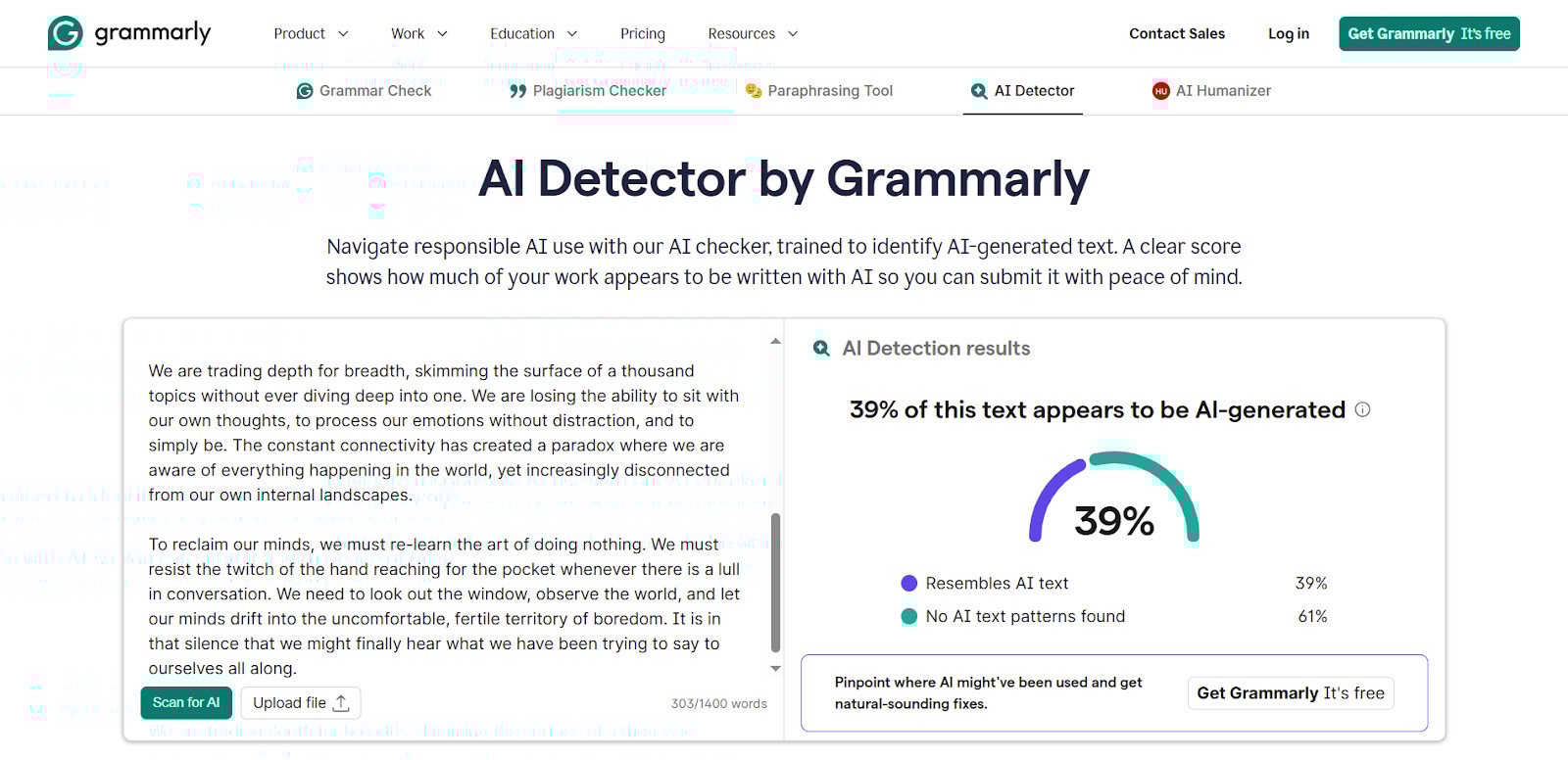
The Results
Test Number | TruthScan | Sapling | Grammarly |
#1 | 98% | 100% | 96% |
#2 | 94% | 100% | 57% |
#3 | 99% | 100% | 75% |
#4 | 95% | 100% | 100% |
#5 | 93% | 100% | 92% |
#6 | 95% | 100% | 58% |
#7 | 89% | 100% | 62% |
#8 | 92% | 100% | 39% |
Score | 94.38% | 100% | 72.38% |
AI Image Detection
Test #1
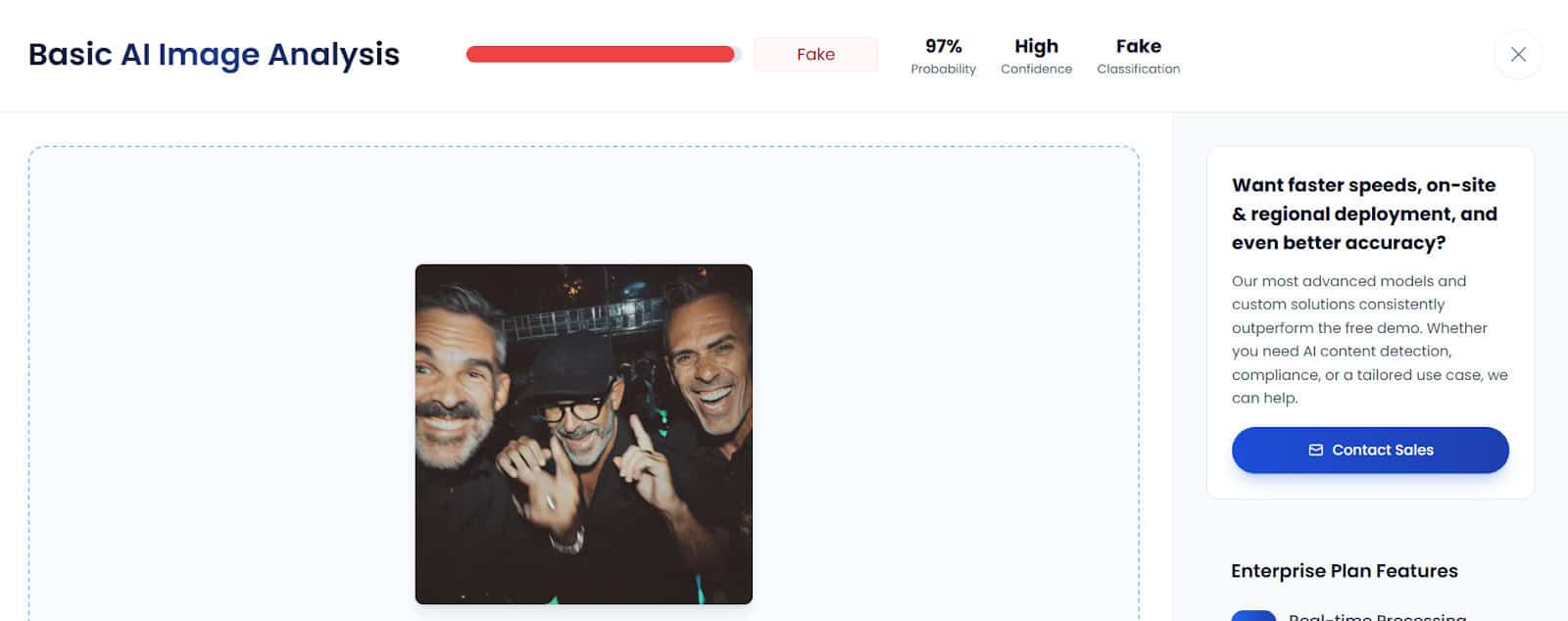
TruthScan: Correctly identified image as AI-generated.
AI Likelihood Score: 97%
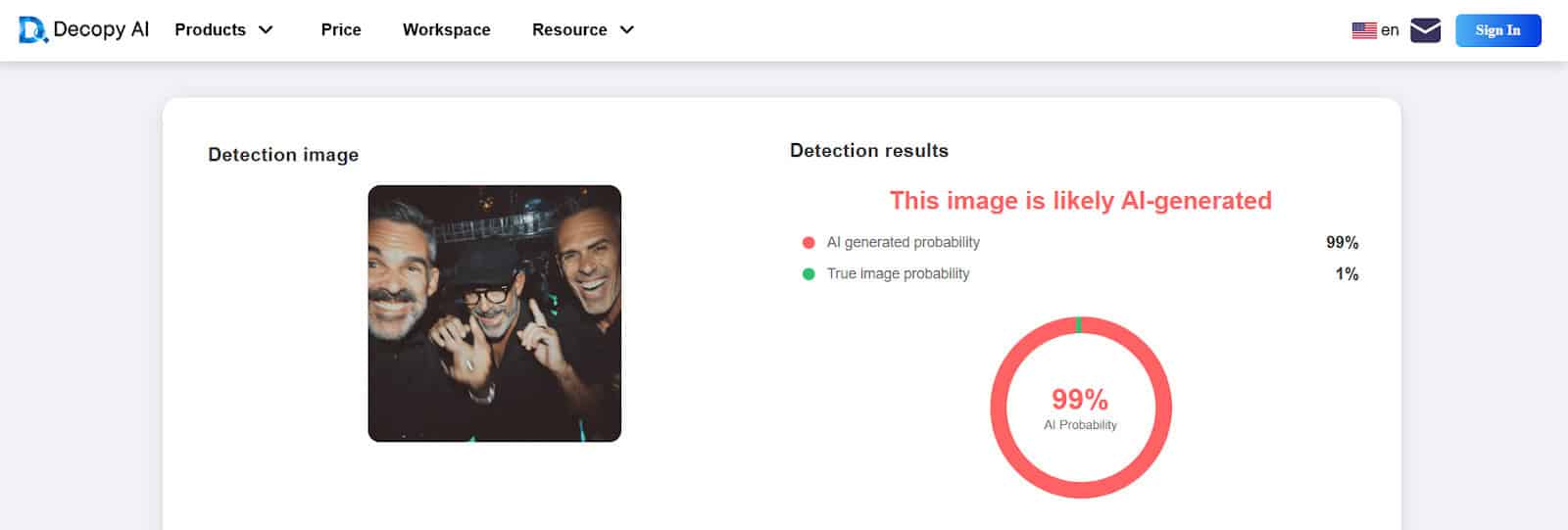
Decopy: Correctly identified image as AI-generated.
AI Likelihood Score: 99%
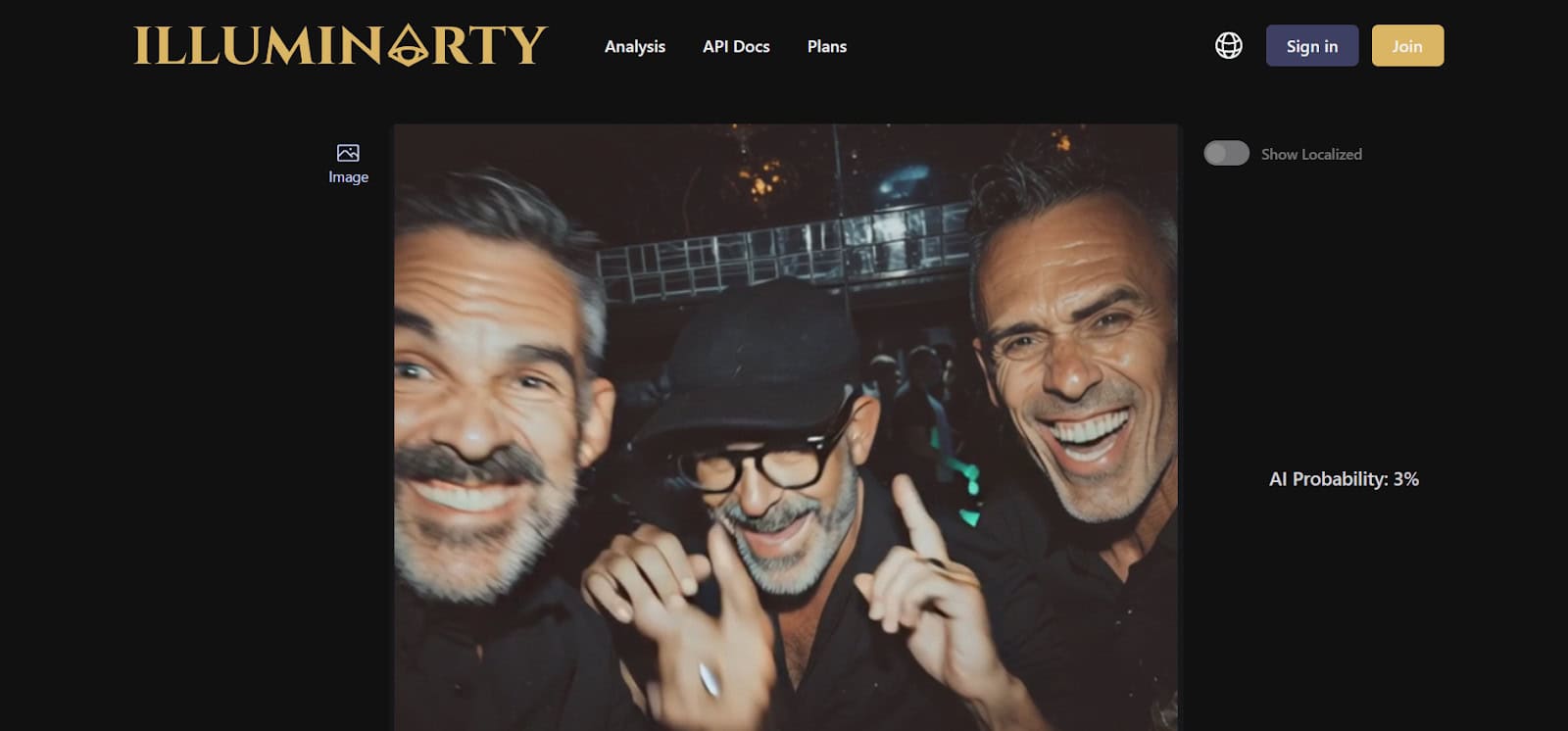
Illuminarty: Incorrectly identified image as human-made.
AI Likelihood Score: 3%
Test #2
TruthScan: Correctly identified image as AI-generated.
AI Likelihood Score: 97%
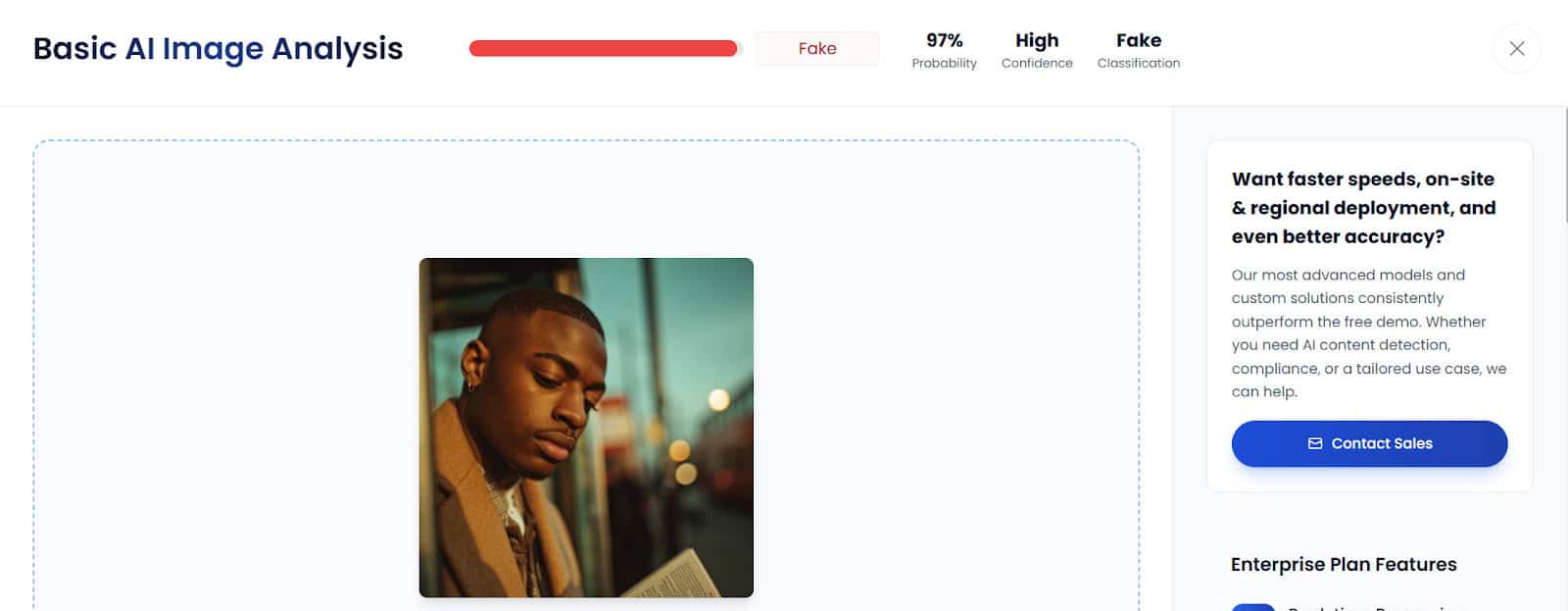
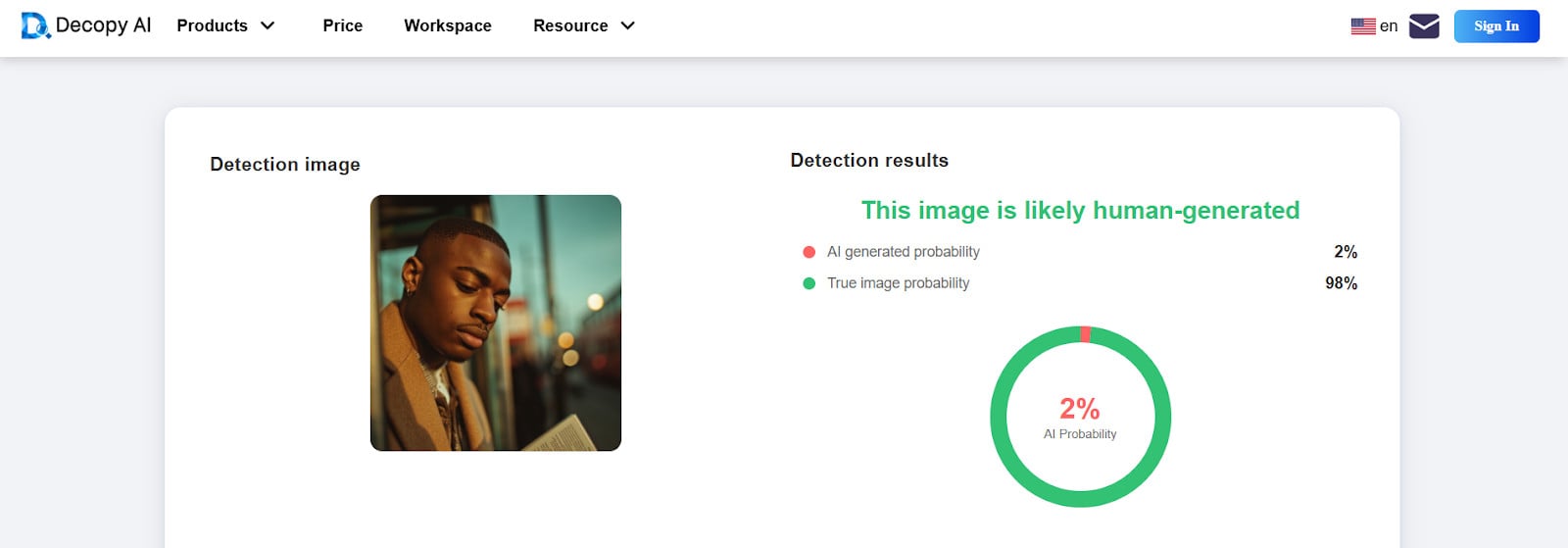
Decopy: Incorrectly identified image as human-made.
AI Likelihood Score: 2%
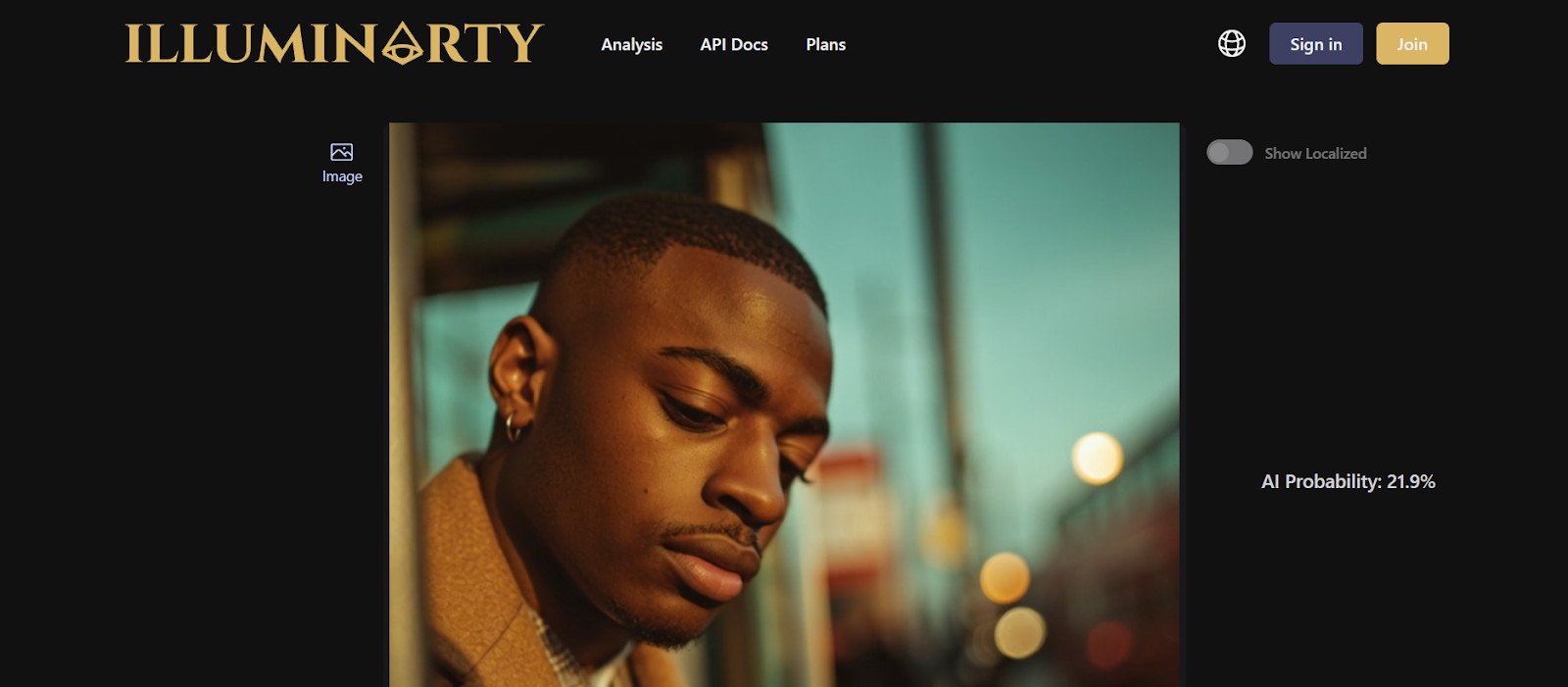
Illuminarty: Incorrectly identified image as human-made.
AI Likelihood Score: 21.9%
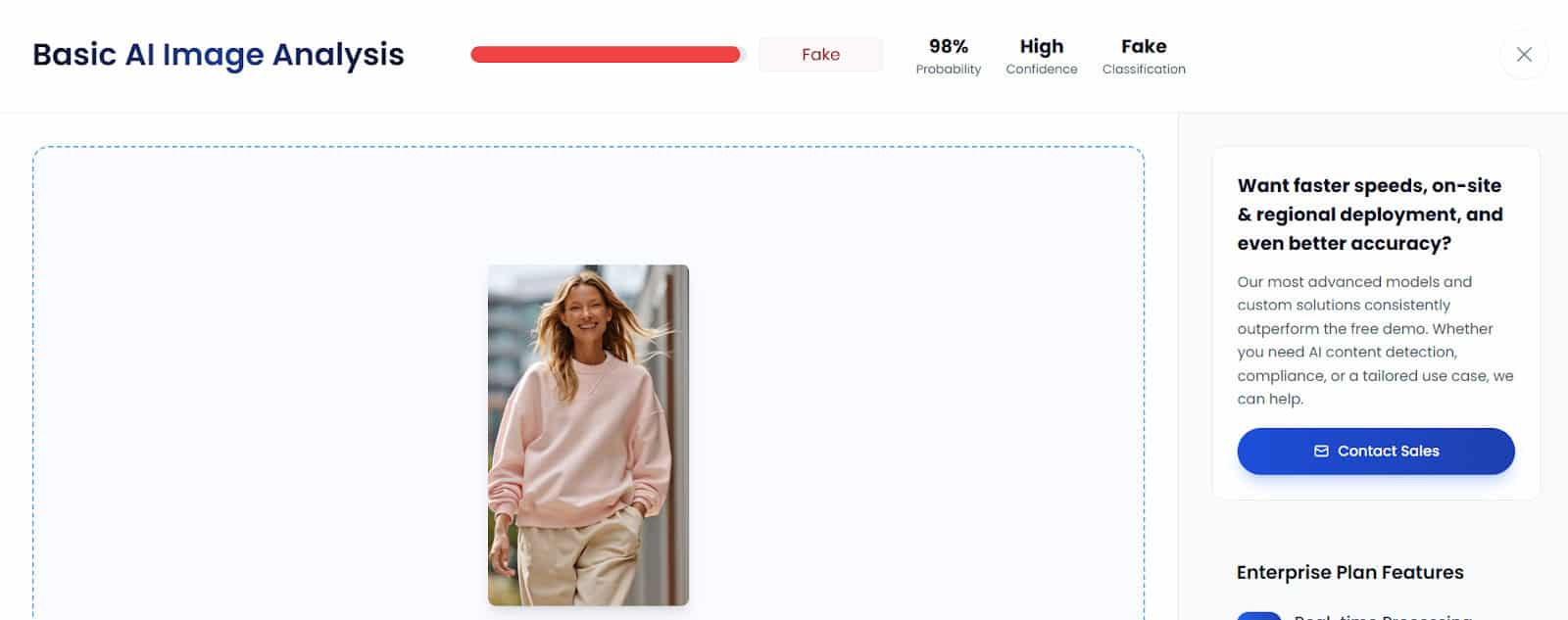
Test #3
TruthScan: Correctly identified image as AI-generated.
AI Likelihood Score: 98%
Decopy: Correctly identified image as AI-generated.
AI Likelihood Score: 100%
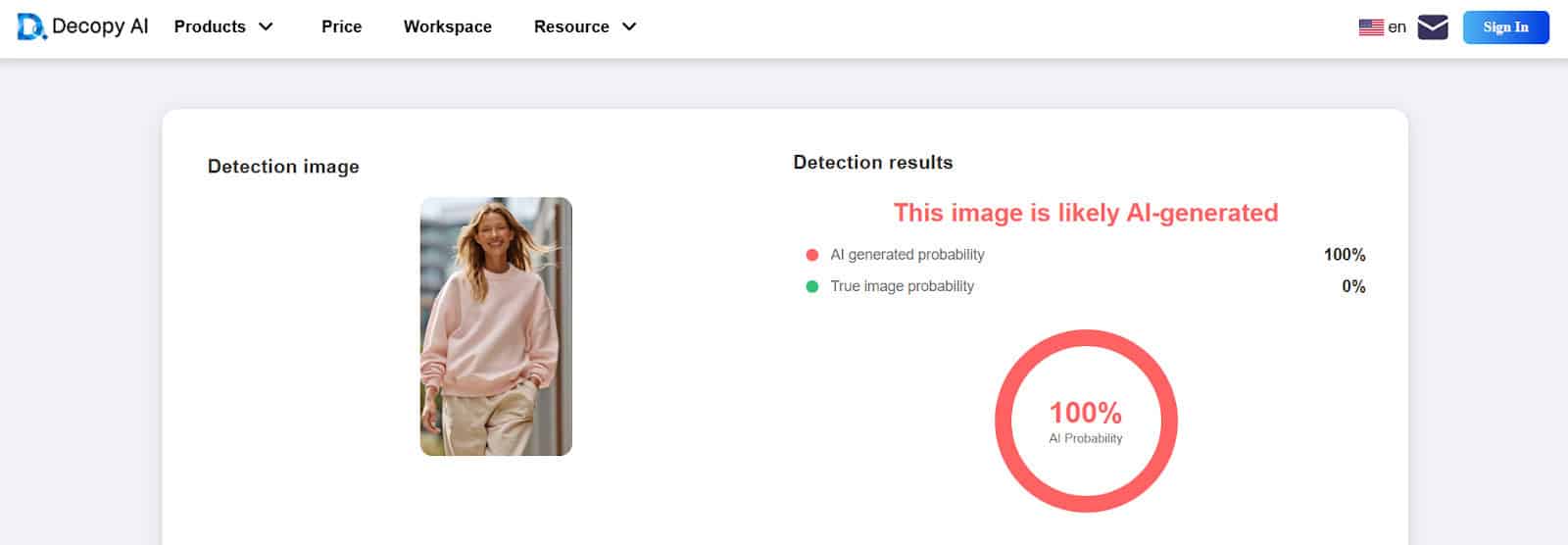
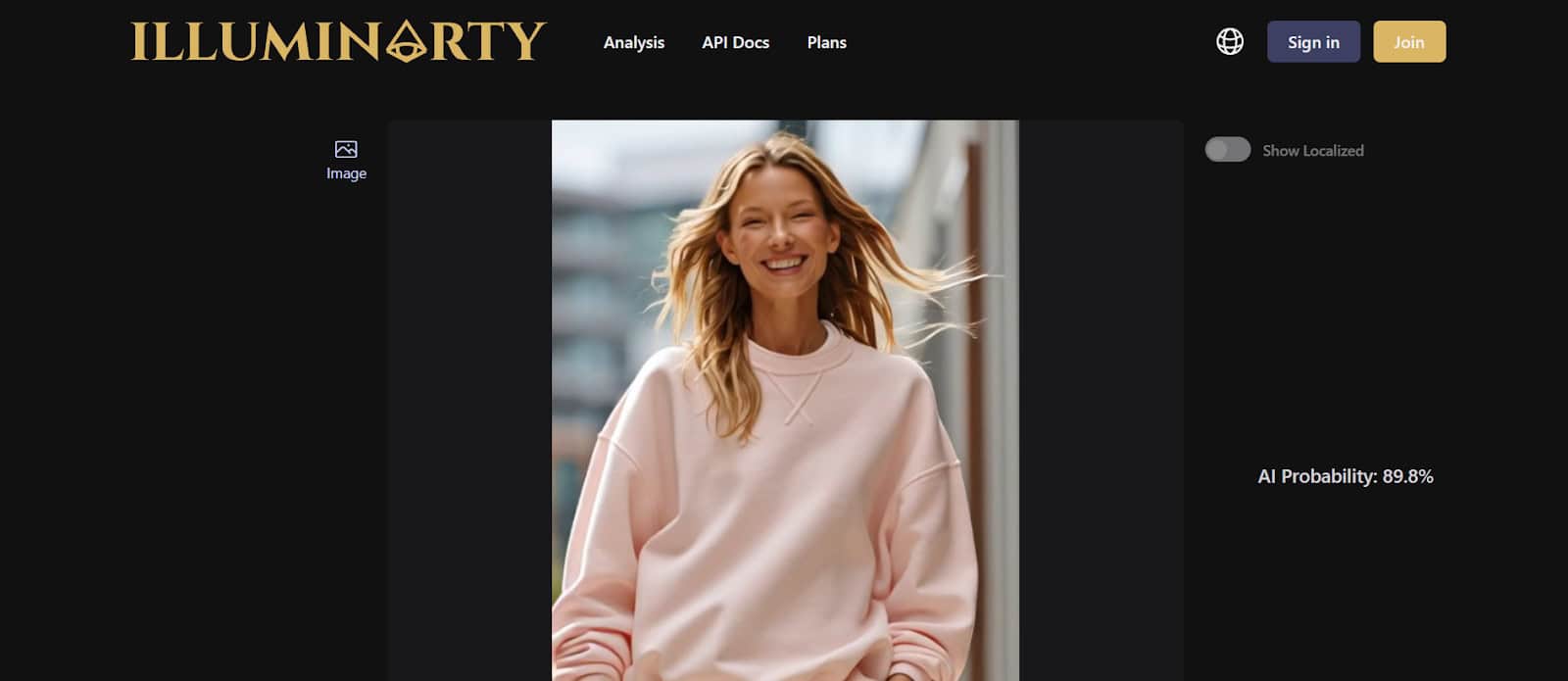
Illuminarty: Correctly identified image as AI-generated.
AI Likelihood Score: 89.8%
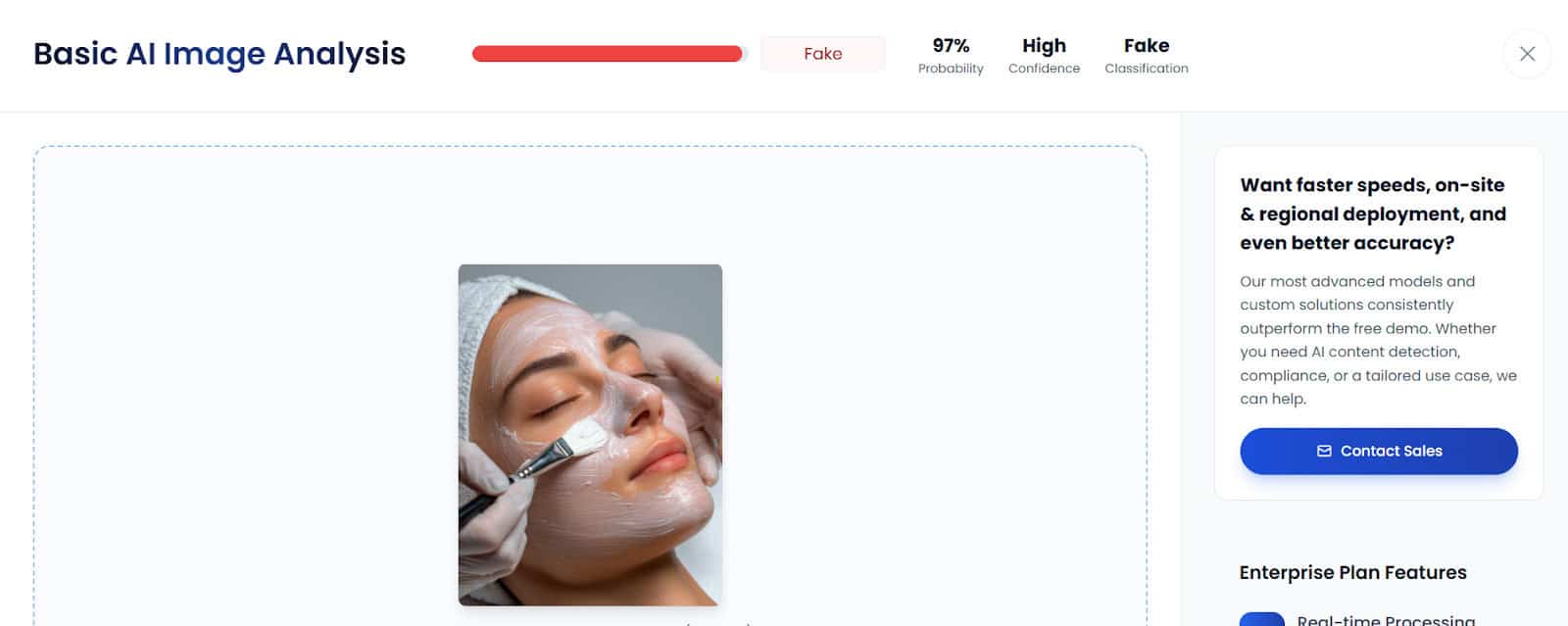
Test #4
TruthScan: Correctly identified image as AI-generated.
AI Likelihood Score: 97%
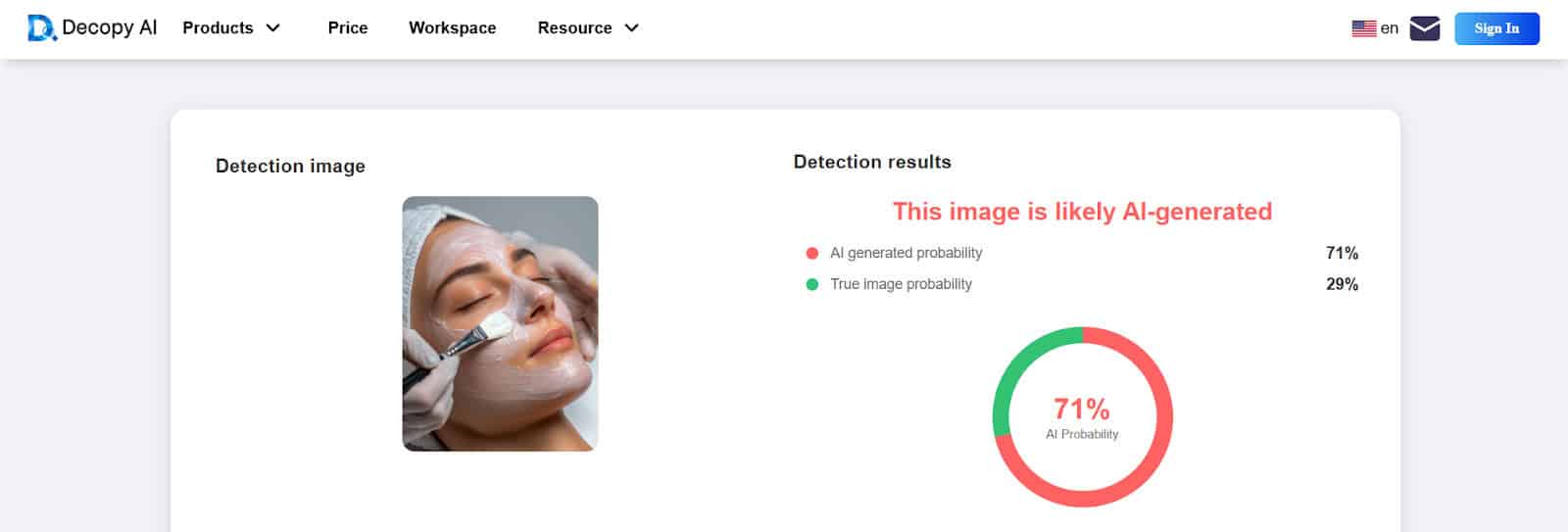
Decopy: Correctly identified image as AI-generated.
AI Likelihood Score: 71%
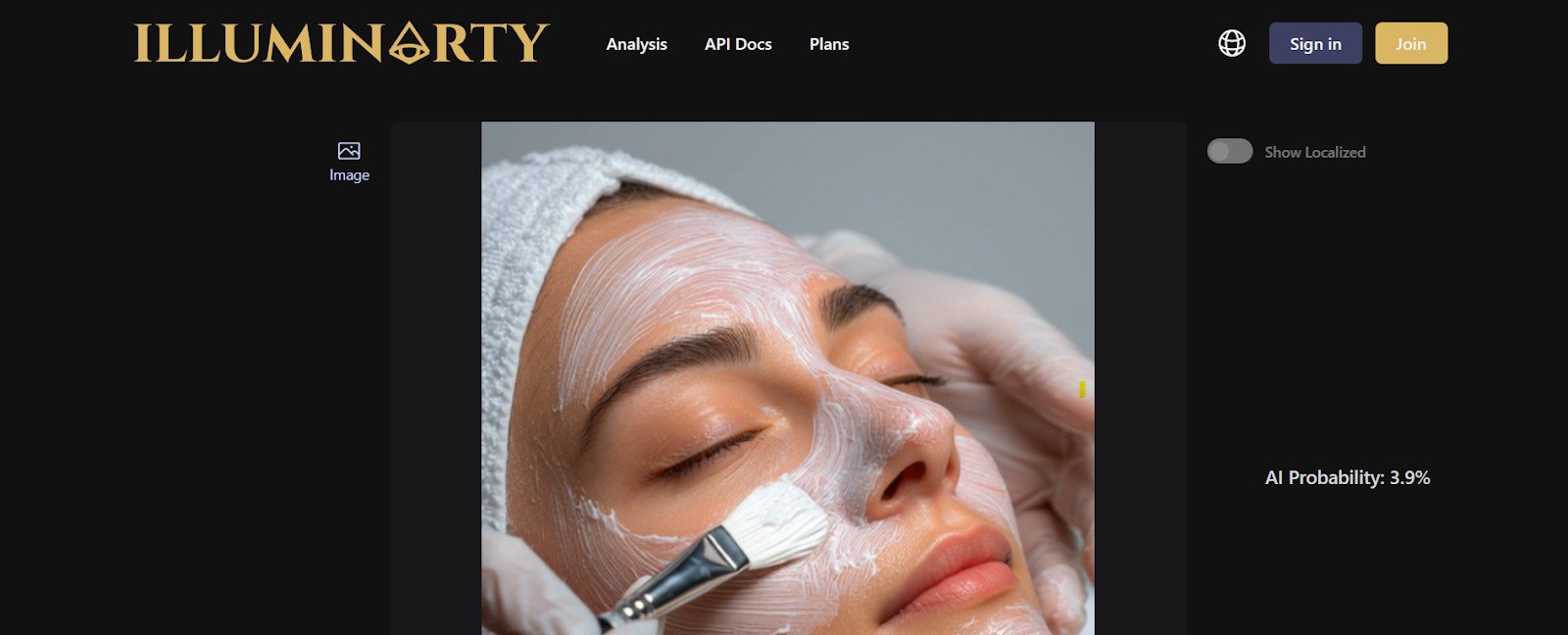
Illuminarty: Incorrectly identified image as human-made.
AI Likelihood Score: 3.9%
Test #5
TruthScan: Correctly identified image as AI-generated.
AI Likelihood Score: 99%
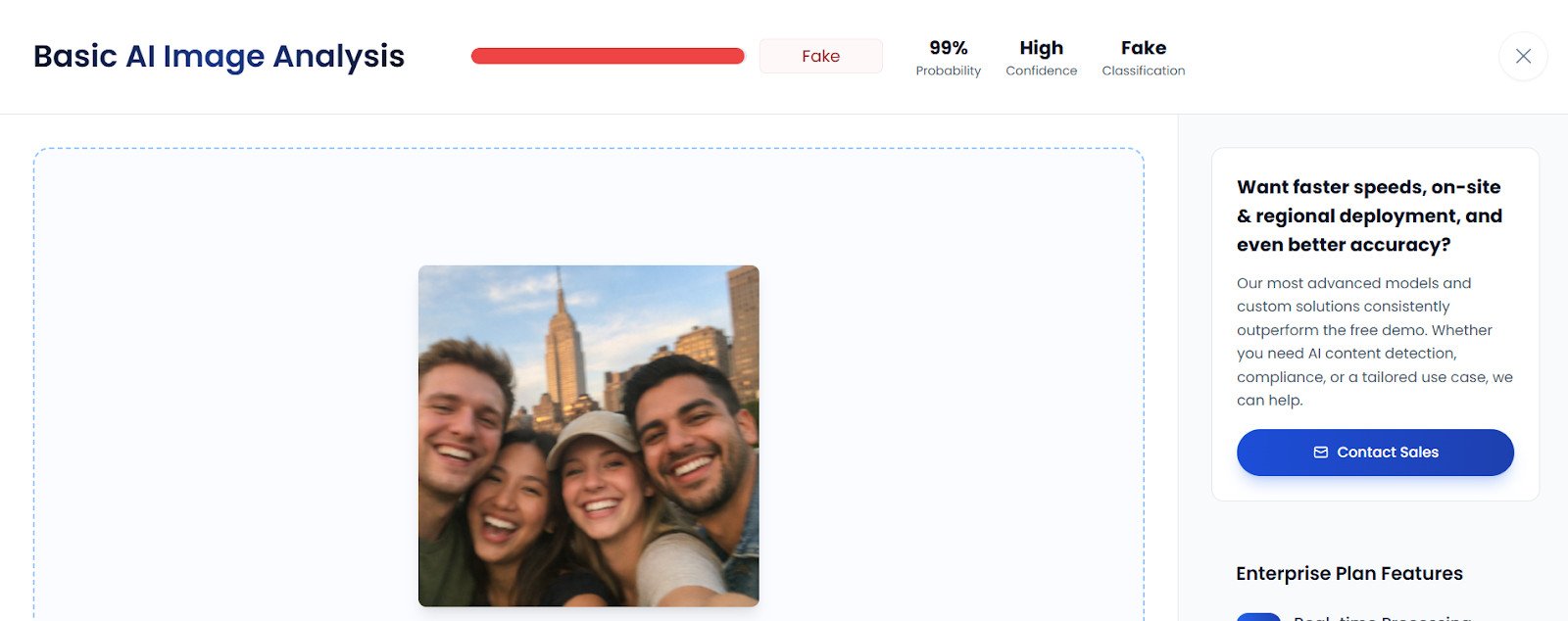
Decopy: Correctly identified image as AI-generated.
AI Likelihood Score: 95%
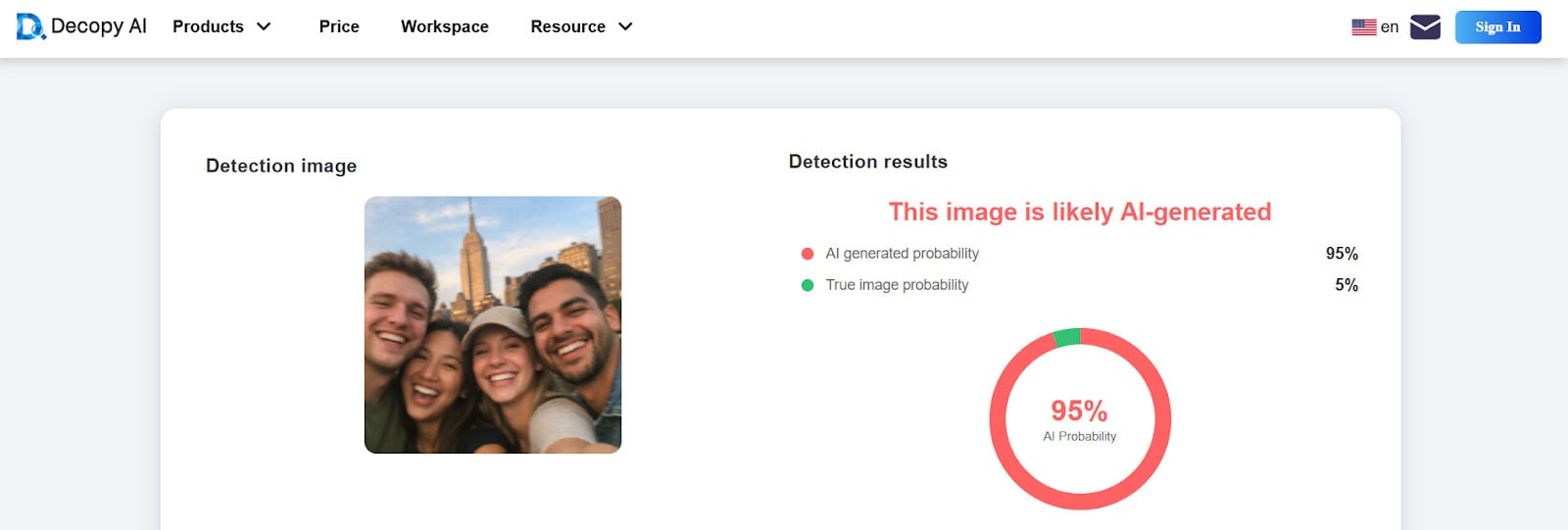
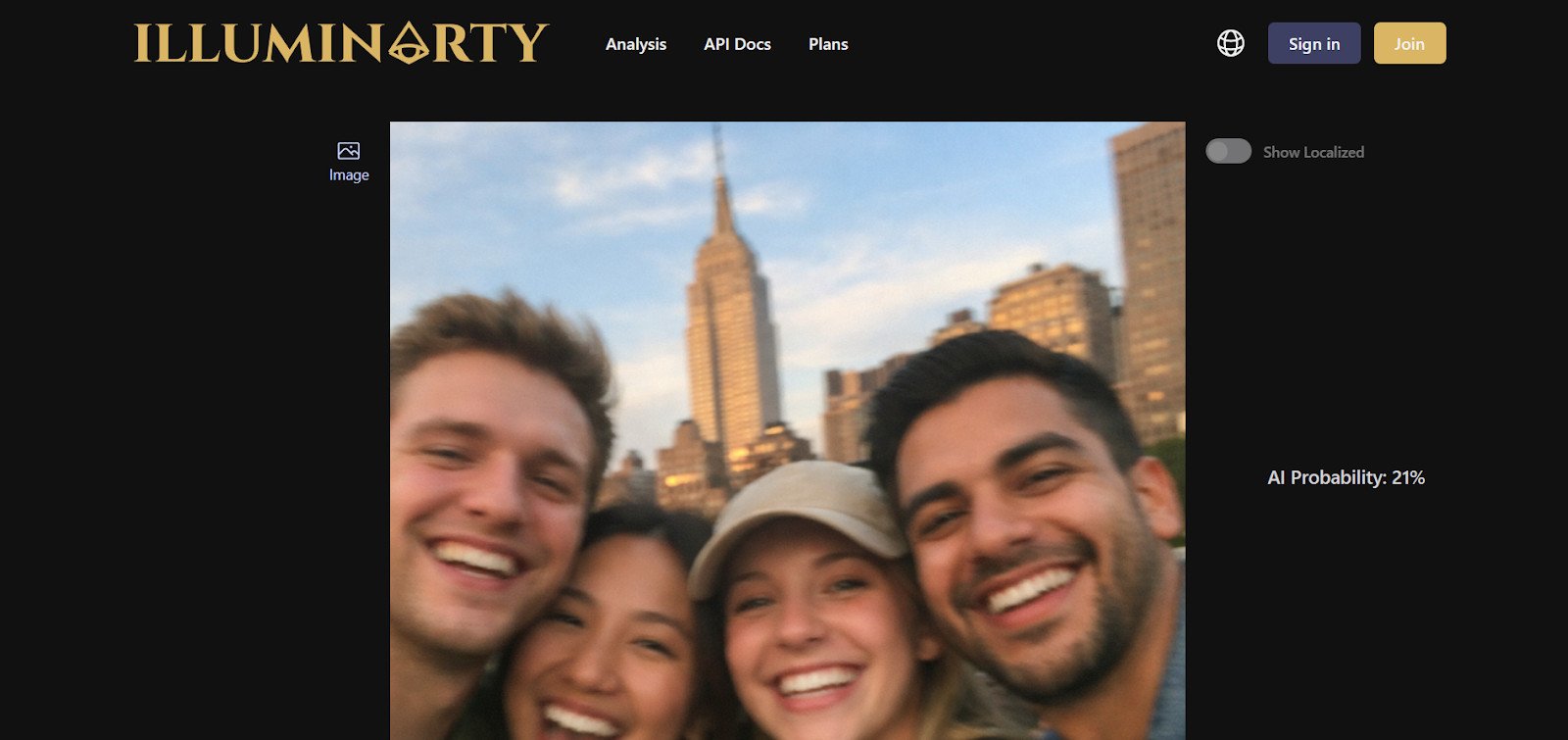
Illuminarty: Incorrectly identified image as human-made.
AI Likelihood Score: 21%
Test #6
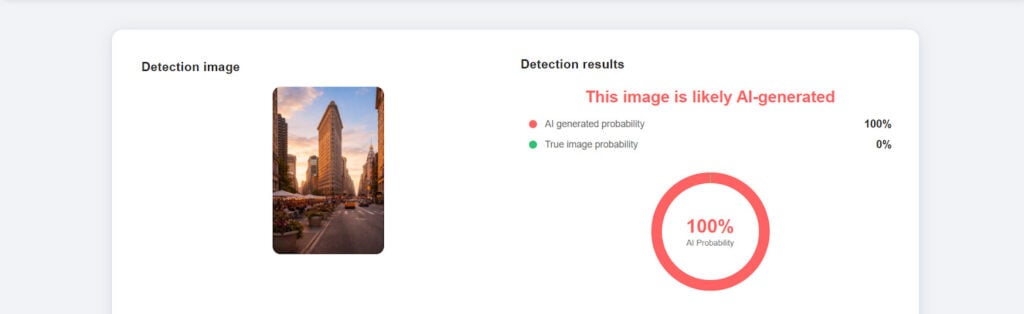
TruthScan: Correctly identified image as AI-generated.
AI Likelihood Score: 99%
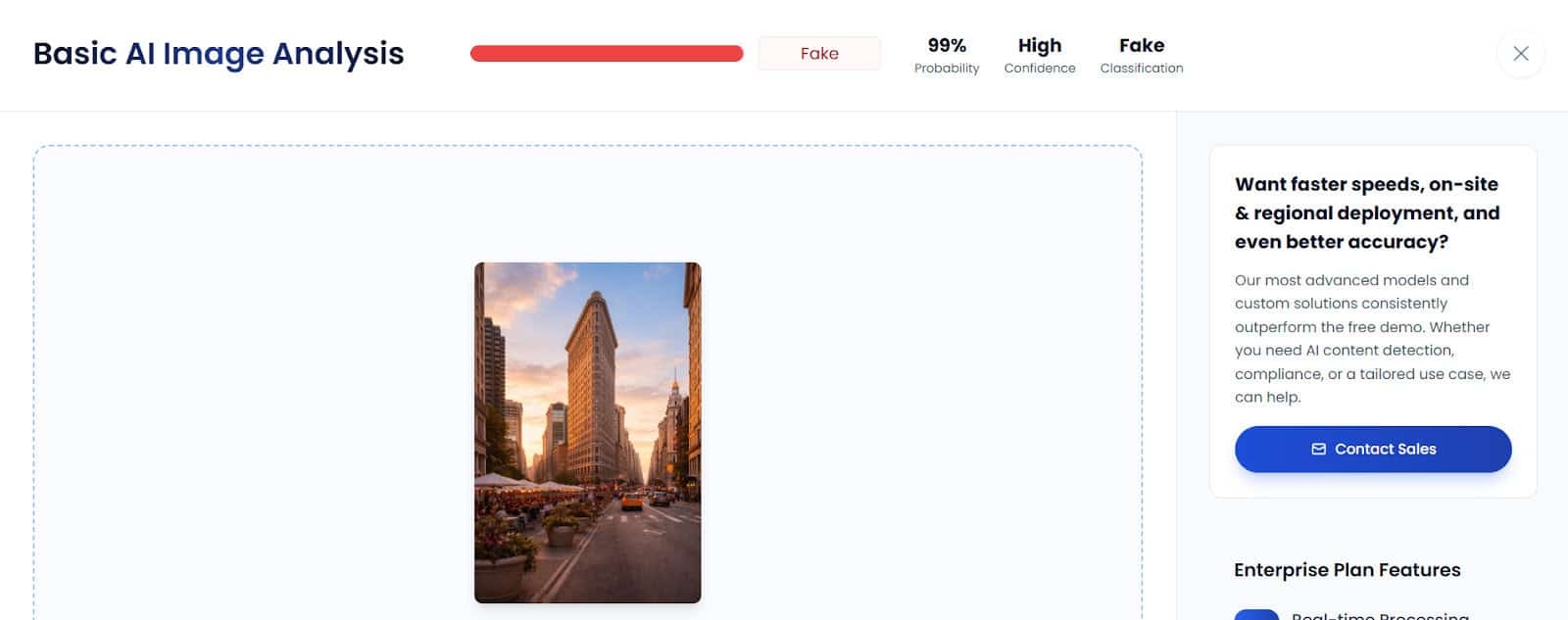
Decopy: Correctly identified image as AI-generated.
AI Likelihood Score: 100%
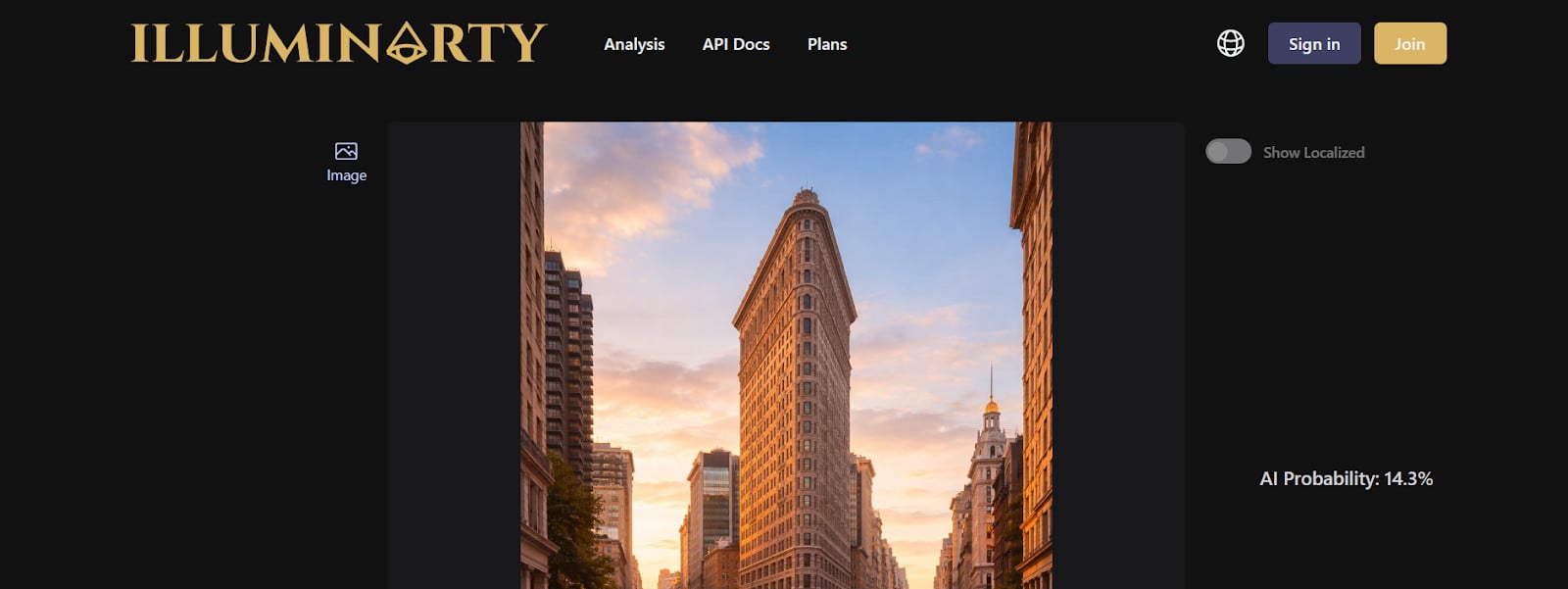
Illuminarty: Incorrectly identified image as human-made.
AI Likelihood Score: 14.3%
Test #7
TruthScan: Correctly identified image as AI-generated.
AI Likelihood Score: 99%
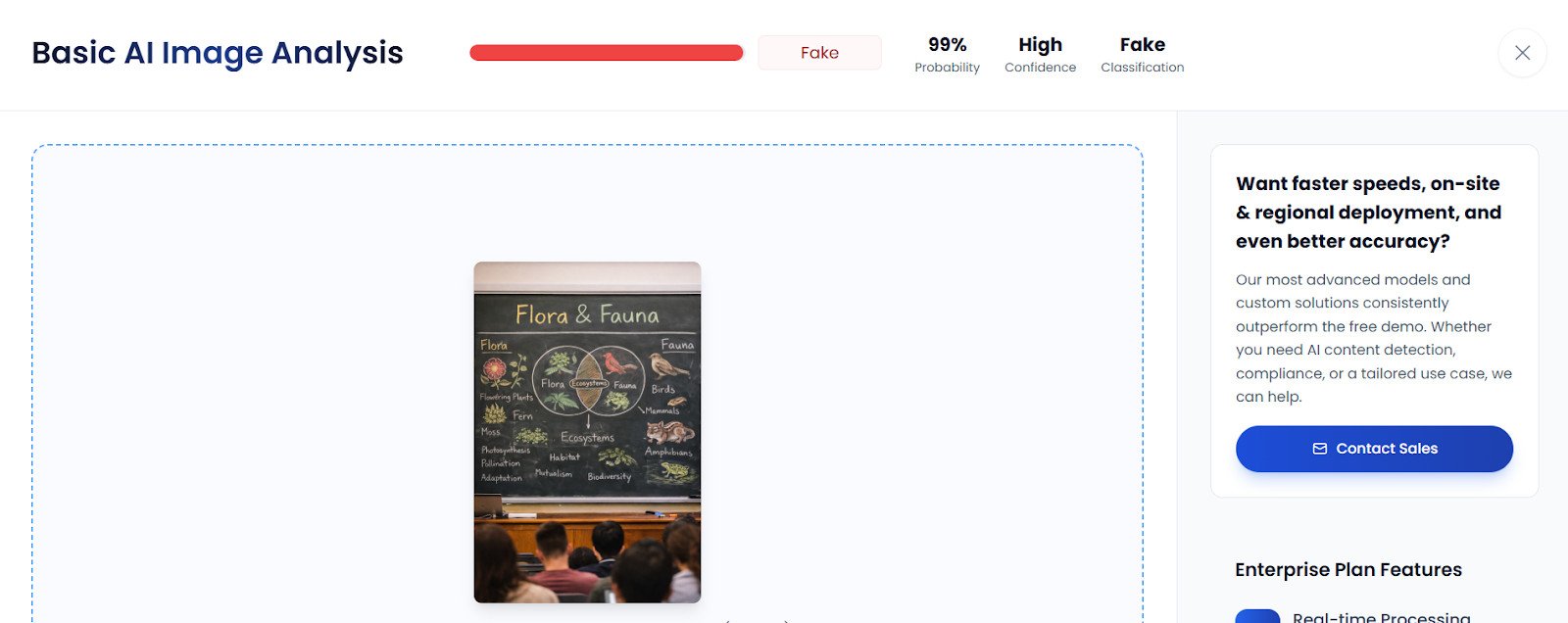
Decopy: Correctly identified image as AI-generated.
AI Likelihood Score: 100%
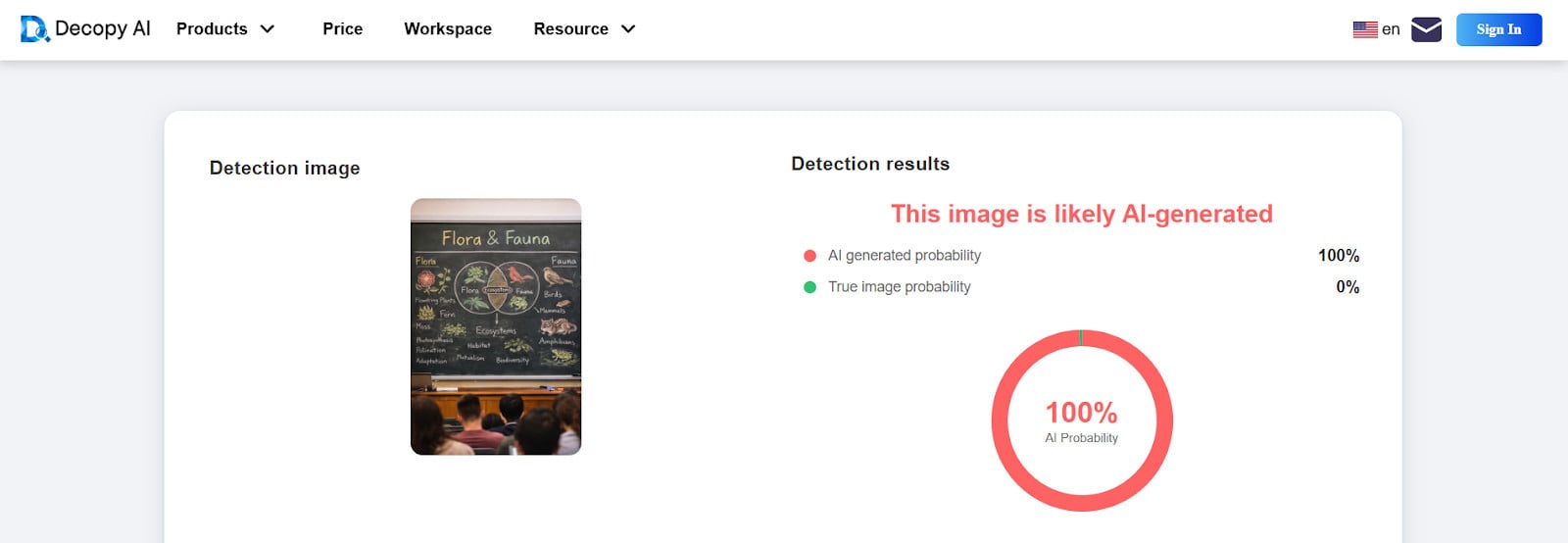
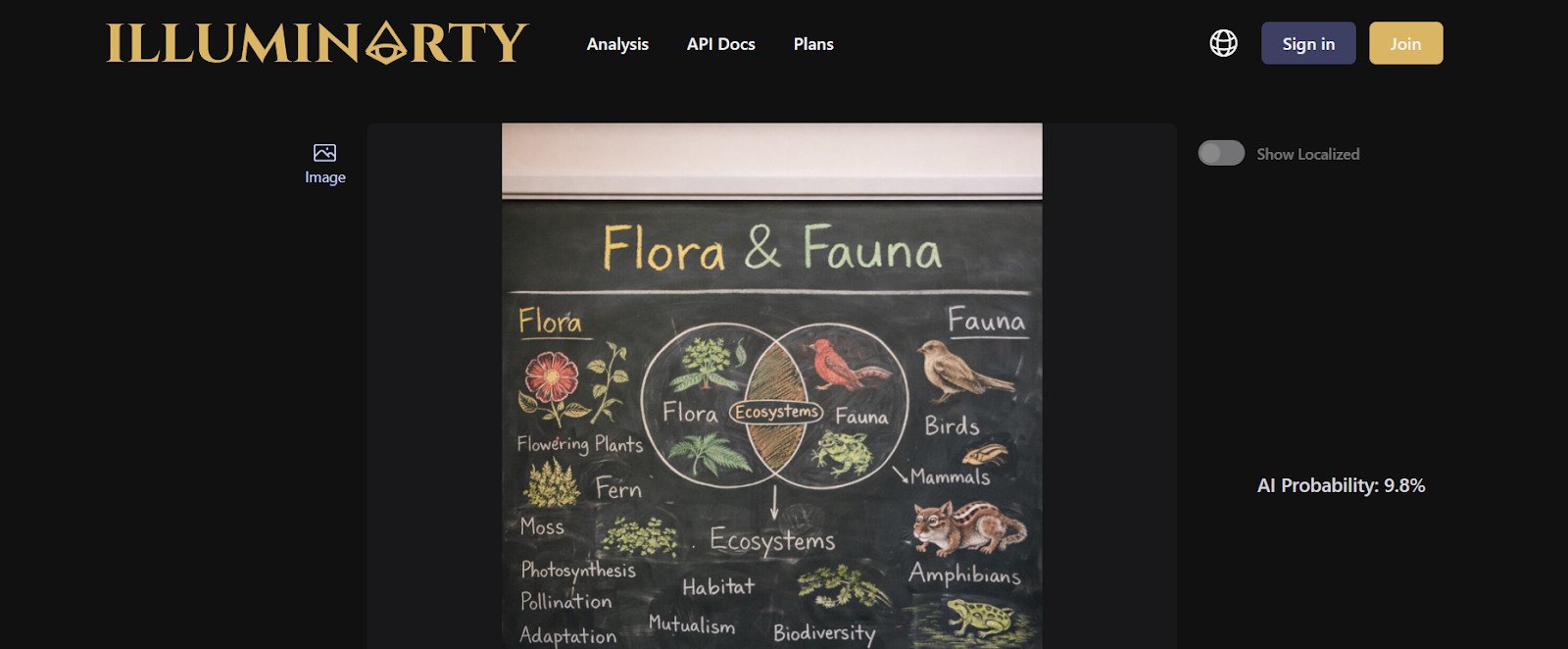
Illuminarty: Incorrectly identified image as human-made.
AI Likelihood Score: 9.8%
Test #8
TruthScan: Correctly identified image as AI-generated.
AI Likelihood Score: 99%
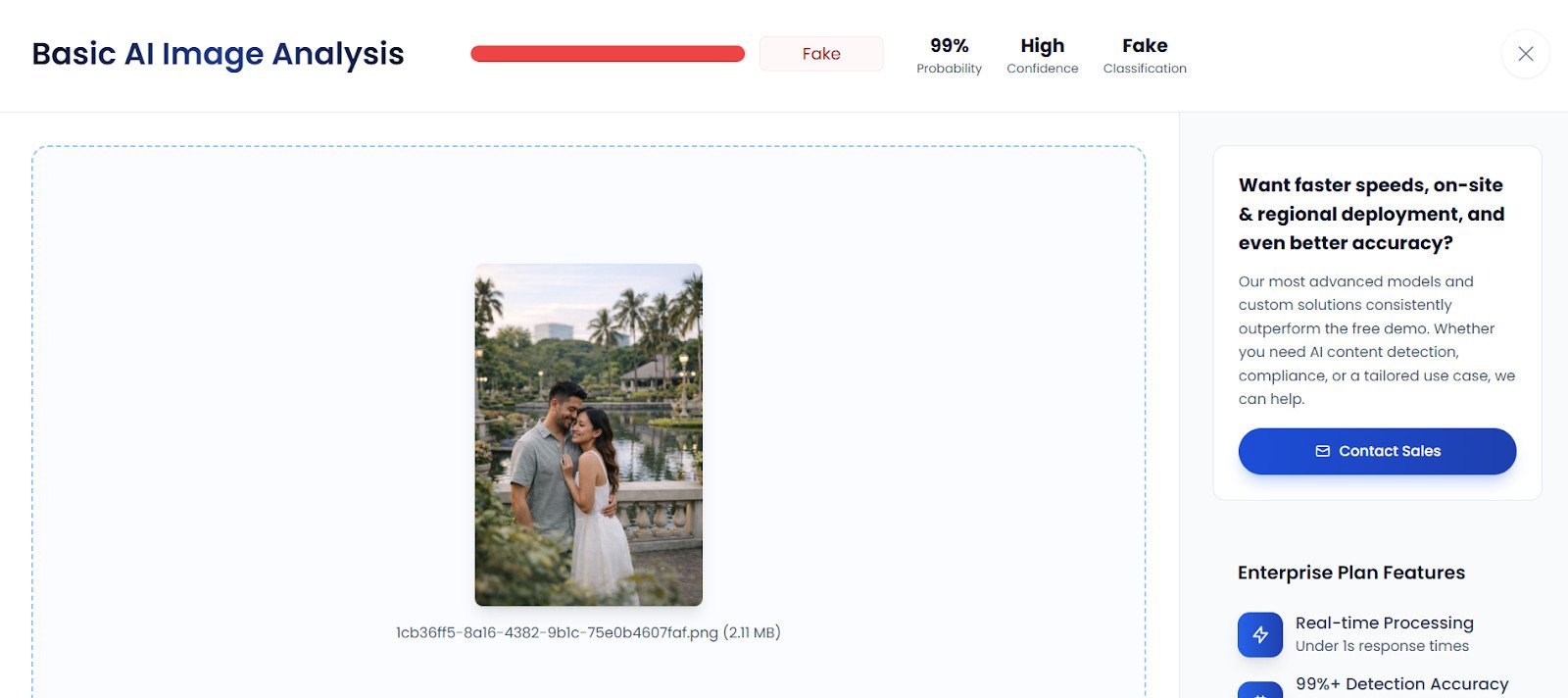
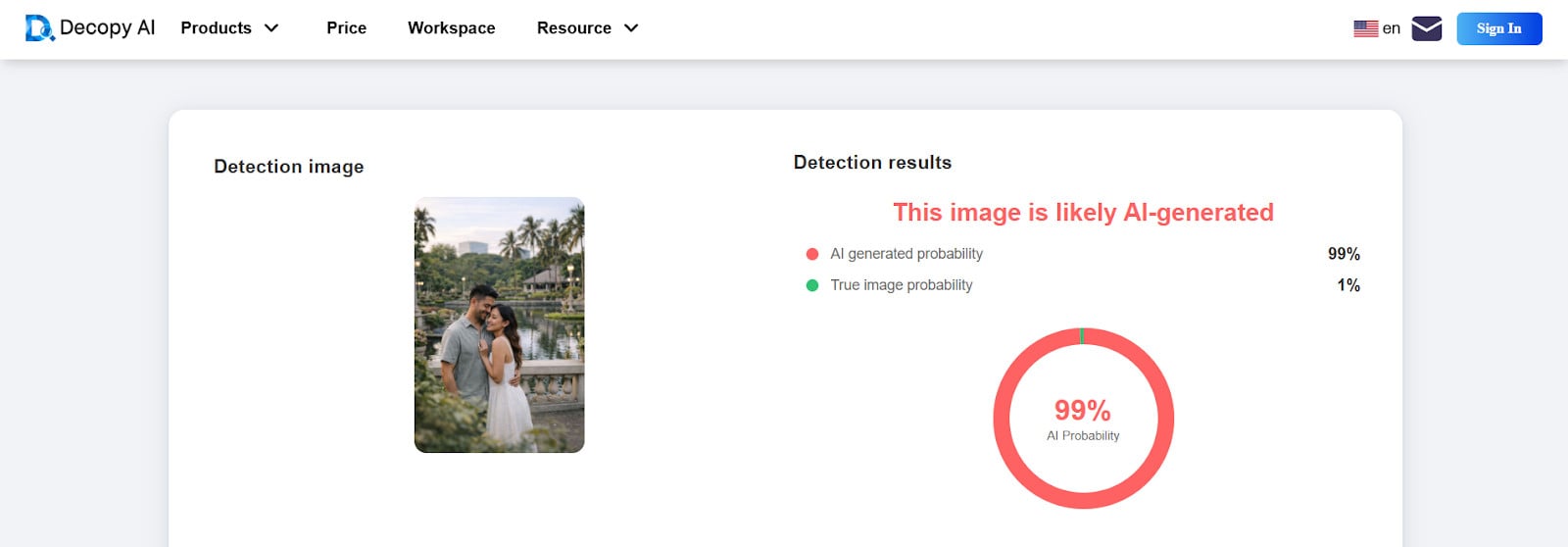
Decopy: Correctly identified image as AI-generated.
AI Likelihood Score: 99%
Illuminarty: Incorrectly identified image as human-made.
AI Likelihood Score: 3.3%
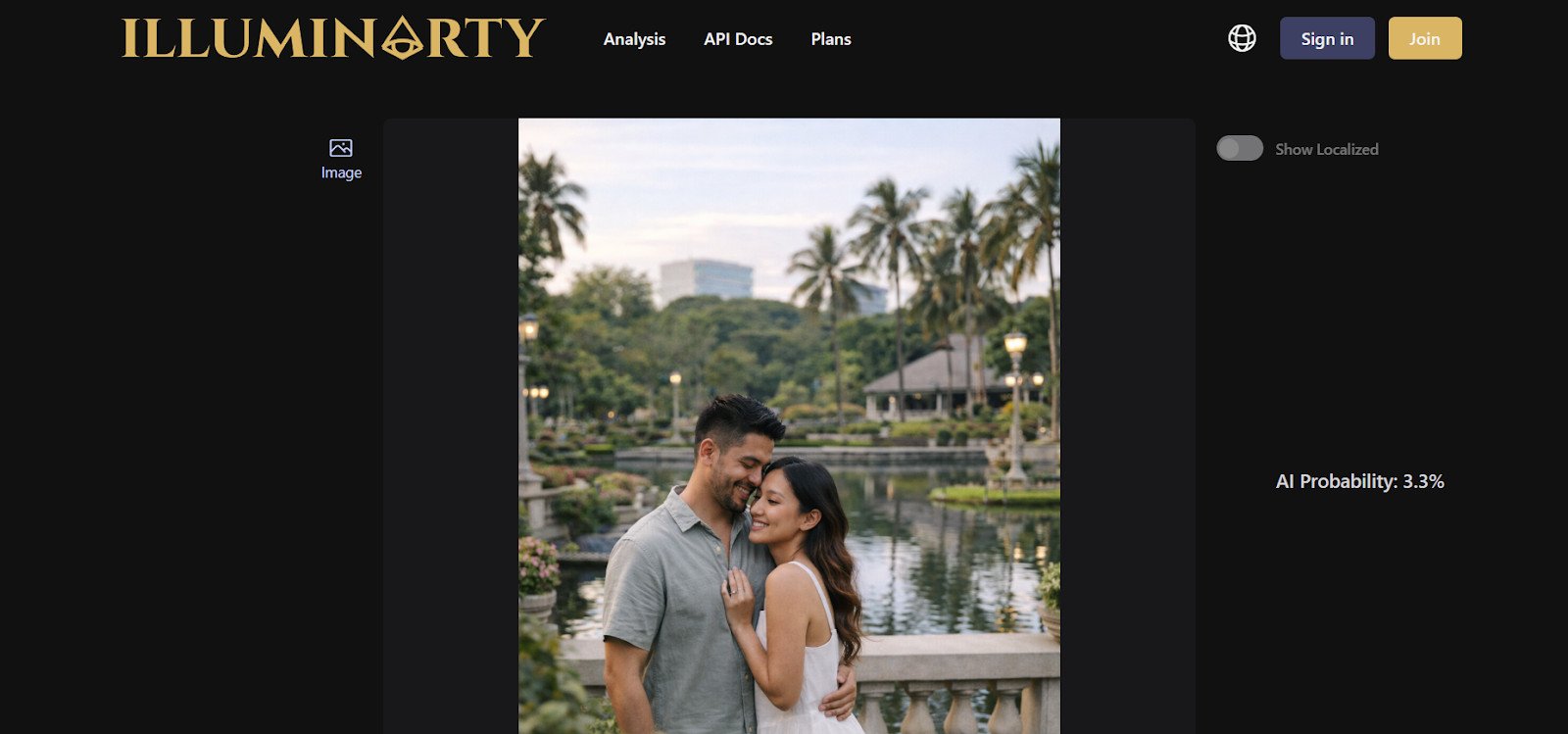
The Results
Test Number | TruthScan | Decopy | Illuminarty |
#1 | 97% | 99% | 3% |
#2 | 97% | 2% | 29% |
#3 | 98% | 100% | 100% |
#4 | 97% | 71% | 3.9% |
#5 | 99% | 95% | 21% |
#6 | 99% | 100% | 14.3% |
#7 | 99% | 100% | 7.8% |
#8 | 99% | 99% | 3.3% |
Score | 98.13% | 100% | 22.79% |
For another TruthScan text-detector matchup, see our TruthScan vs Humalingo comparison.
The Bottom Line
After running both the AI text and AI image tests, the main takeaway is pretty simple: in this sample set, TruthScan was the most consistently strong “all-around” detector in this lineup. It performed well on text and had its clearest advantage on images.
AI Text Results (TruthScan vs Sapling vs Grammarly)
On AI text detection, Sapling technically wins — it posted a clean 100% score, while TruthScan landed at 94.38%, and Grammarly trailed at 72.38%.
And credit where it’s due: Sapling is genuinely excellent. It’s fast, confident, and in this test set, it didn’t miss.
That said, there’s a practical catch that matters in real usage: Sapling’s free tier truncates input at around 2,000 characters. That means longer essays, full blog posts, or full-length academic papers often get chopped — and detection quality becomes a “partial scan” rather than a true document-level verdict.
Even with that limitation, Sapling is still really good. But it’s worth calling out because it changes how usable the tool is for most people day-to-day.
TruthScan, meanwhile, is doing something slightly different: it’s not trying to “win one category” — it’s trying to be reliable across every category.
AI Image Results (TruthScan vs Decopy vs Illuminarty)
This is where TruthScan had its clearest advantage in this sample set.
TruthScan scored 98.13% on AI image detection in this test set. That is a very strong result across eight images, and it stayed consistent from start to finish.
Decopy did solidly at 83.25% — not bad at all, and definitely usable for casual checks.
Illuminarty, though, came in at 22.79% in this test set, which made it much less reliable on realistic-looking images here.
So if the question is “can TruthScan actually detect AI images reliably in 2026?” — this eight-image test points strongly yes. I would still avoid treating any single benchmark as universal proof.
What the results mean
Even though Sapling edges TruthScan in the text-only test, TruthScan is still the stronger overall recommendation for one reason:
TruthScan was very strong at AI image detection in this test and still highly accurate at AI text detection.
Sapling is an amazing text detector — but it’s still a text-first tool, and the free-tier truncation makes it harder to use for full-length, real-world documents unless it’s upgraded.
TruthScan, on the other hand, is doing what a true “suite” should do:
- Text detection that was strong in this sample set (94.38%)
- Image detection that was the standout result in this sample set (98.13%)
- Plus the added value of being part of a wider detection platform (real-time monitoring, deepfake, voice, video, fake-document, and moderation tools) if a workflow ever needs it
So the final verdict is this:
If the goal is the single best free-tier text detector in this exact test, Sapling deserves the crown — even with the character cap.
But if the goal is a more complete AI detection suite overall — especially when images or multimodal workflows are involved — TruthScan is the one that feels like the more “2026-grade” solution.
Want to Learn Even More?
If you enjoyed this article, subscribe to our free newsletter where we share tips & tricks on how to use tech & AI to grow and optimize your business, career, and life.