Undetectable AI vs. Decopy AI Humanizer: Which Is Better in 2026?
If you’re trying to hide from AI detectors, Undetectable AI and Decopy AI are two of your best shots. But one is clearly better.

John Angelo Yap
Updated June 17, 2026

A robot putting on his human disguise, generated by Gemini
Reading Time: 6 minutes
When you hear “AI humanizer,” the first thought that comes to mind is often Undetectable AI — and for good reason. It’s one of the earliest and most popular names in the space, known for turning robotic AI text into something that reads like it came from a real person.
Use Undetectable AI to rewrite AI-generated text so it reads more naturally and is less likely to be flagged.
But in recent years, newer contenders like Decopy AI have entered the scene, offering their own spin on the concept.
Both promise the same thing: transforming AI-generated content into something that sounds more natural, more emotional, and — let’s be honest — less like ChatGPT. But in 2026, the question is not just whether a tool can make text sound smoother. It is whether the output still keeps the original meaning, reads naturally, and avoids obvious detector signals.
Let’s find out.
Quick Verdict: Undetectable AI vs. Decopy AI
| Category | Undetectable AI | Decopy AI |
|---|---|---|
| Best fit | Humanizing AI drafts while preserving tone and intent | Free/low-cost rewriting and casual content cleanup |
| Controls | Humanization settings, readability/purpose options, detector workflow | Humanization modes, tone/purpose controls, related writing tools |
| Pricing context | Paid humanizer plans with limited free testing | Free quota plus paid Lite, Basic, and Premium plans |
| My test result | Much stronger detector performance and readability | Readable in spots, but less consistent in this sample set |
What Is Undetectable AI?

Undetectable AI has built its reputation around one simple goal: to make AI text sound human — not just smoother or cleaner, but genuinely human. It’s now part of a larger ecosystem of writing and detection tools that have quietly become staples for students, marketers, freelancers, and even businesses that depend on AI-assisted writing.

What makes it stand out is that it doesn’t just rewrite words. It replicates rhythm, tone, and natural imperfection. That means it picks up on pacing, sentence structure, and emotional variance — the tiny, unpolished details that separate a real writer from a machine.
The platform supports multiple modes too, letting users choose how “human” they want their text to sound. Whether you’re trying to pass AI detection tests or simply want something that feels more personal, Undetectable AI balances natural flow with professional readability.
The company’s expanded toolkit now includes things like a Cover Letter Generator, a Writing Style Replicator, an AI Resume Builder, Smart Applier, and related detector tools — all tied to the same broader AI-writing workflow that made it famous in the first place.
Pricing also matters here. Undetectable AI's public humanizer pricing currently starts at 10,000 words/month, with monthly pricing at $9.99 and a lower annual equivalent. The free trial is limited, so if you're comparing it against Decopy's free quota, test the same sample in both tools before deciding.
What Is Decopy AI?
Decopy AI started as a simple writing and detection platform before branching out into content tools. Its AI Humanizer is designed to “de-robotize” AI writing by improving tone, fluidity, and readability. It’s marketed as a general-purpose solution — something that can rewrite academic essays, blogs, or even social media captions to sound more natural.

Decopy AI’s interface is clean and intuitive, which makes it a strong entry point for new users. Its humanizer currently advertises large input limits, Base/Pro modes, tone controls, length controls, purpose presets, target language options, and file upload support. Pricing is not just “free” anymore: the public pricing page lists a free quota, then paid plans at Lite for $6.99/month, Basic for $14.99/month, and Premium for $29.99/month. Its other tools, like the Summarizer and AI Detector, make it a convenient all-in-one writing platform.
But when it comes to true humanization, the performance gap starts to show.
Undetectable AI vs. Decopy AI: Readability
Original Essay |
Music possesses an astonishing power to manipulate our perception of duration, acting as a psychological chronometer. Up-tempo music, with its driving rhythm and density of notes, often causes time to seem compressed and fleeting, making minutes feel instantaneous. Conversely, long, sustained notes or slow, ambient compositions can stretch the present moment, deepening immersion and making time feel almost elastic. This temporal distortion is intrinsically linked to memory and expectation; familiar songs instantly transport us to the past, while a complex, novel piece requires focused attention, slowing our internal clock. Ultimately, music is a master illusionist, proving that time is less a fixed constant and more a subjective, audible experience. |
Undetectable AI | Decopy AI |
Music functions as a psychological time-measuring tool which creates remarkable effects on our sense of time duration. The fast-paced rhythm and numerous musical notes in up-tempo music create a sense of time compression which makes minutes appear to pass quickly. The combination of extended musical notes and slow ambient music creates a time-stretching effect that deepens our engagement while making time appear flexible. Our internal clock operates at different speeds based on our memory of familiar songs and our need to concentrate on new musical pieces. Music functions as a masterful illusionist which demonstrates that time exists as a personal auditory experience rather than an unchanging physical measure. | Music's pretty amazing because it can mess with how we feel time. Fast music, with its quick beats and lots of notes, usually makes time fly by. On the other hand, drawn-out sounds or slow music can make time feel longer, like you're really in the moment. This time trickery is tied to our memories and what we expect. Songs we know can take us back, but new, complicated music makes us concentrate, which slows things down for us. So, music is like a time magician, showing that time isn't set in stone but something we hear and feel. |
Undetectable AI is a bit wordier and the phrasing isn't as elegant as the original, but it keeps the soul of the essay intact. The ideas are all there, the structure mirrors the original, and honestly?
It's still perfectly readable academic writing. Sure, "functions as a psychological time-measuring tool" isn't as slick as "psychological chronometer," but it's not wrong — just a different stylistic choice.
The biggest issue is repetition ("functions as" appears twice), but otherwise, this is a solid, faithful rewrite that maintains the original's tone and intent. If you needed a paraphrase for academic purposes, this would absolutely work.
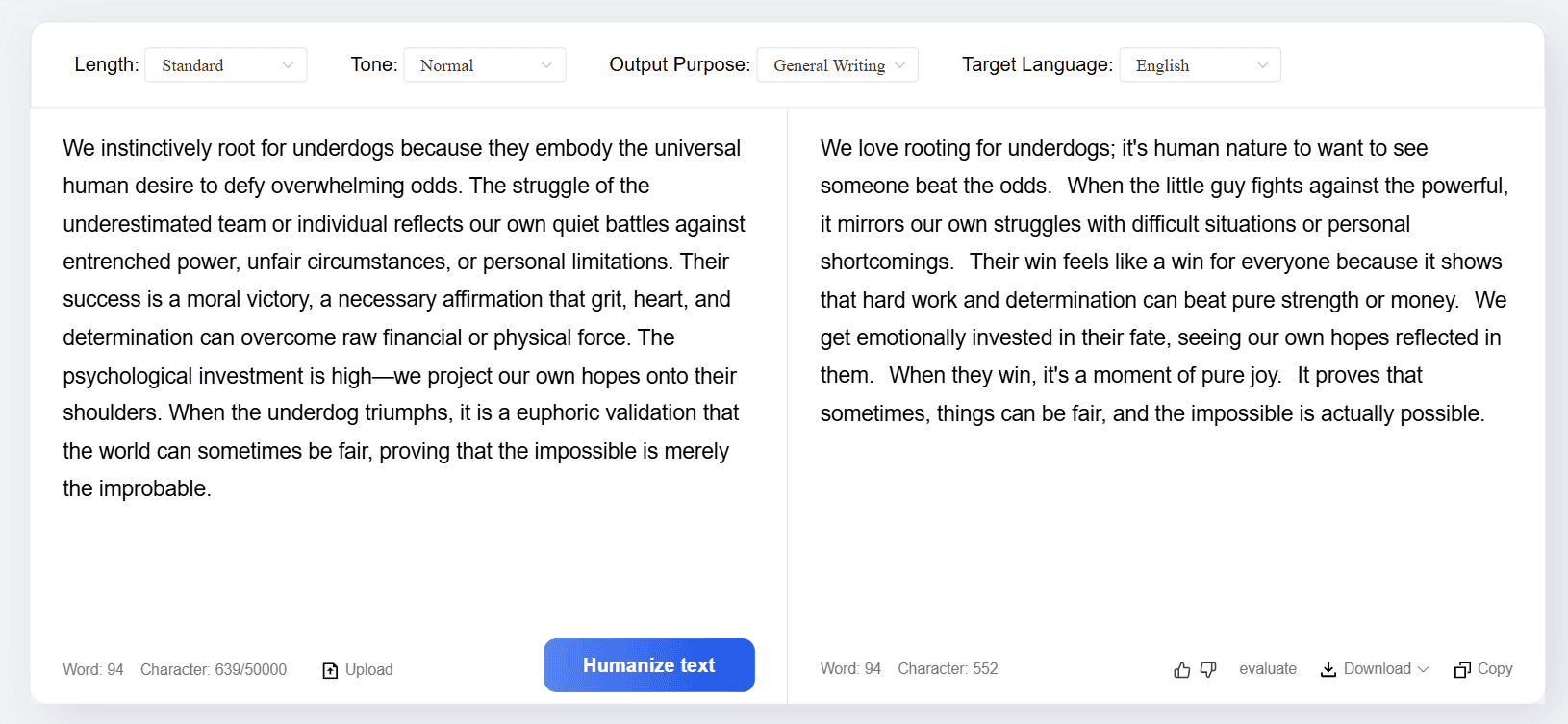
On the other hand, Decopy AI took sophisticated analysis and turned it into a casual blog post. "Music's pretty amazing"? "Mess with how we feel time"? This isn't a rewrite — it's a completely different essay.
The casual tone strips away all the intellectual weight, and phrases like "time magician" feel dumbed down compared to "master illusionist." If you wanted something conversational, fine, but this fundamentally transforms what the original essay is trying to be.
Undetectable AI vs. Decopy AI: Bypassing AI Detection
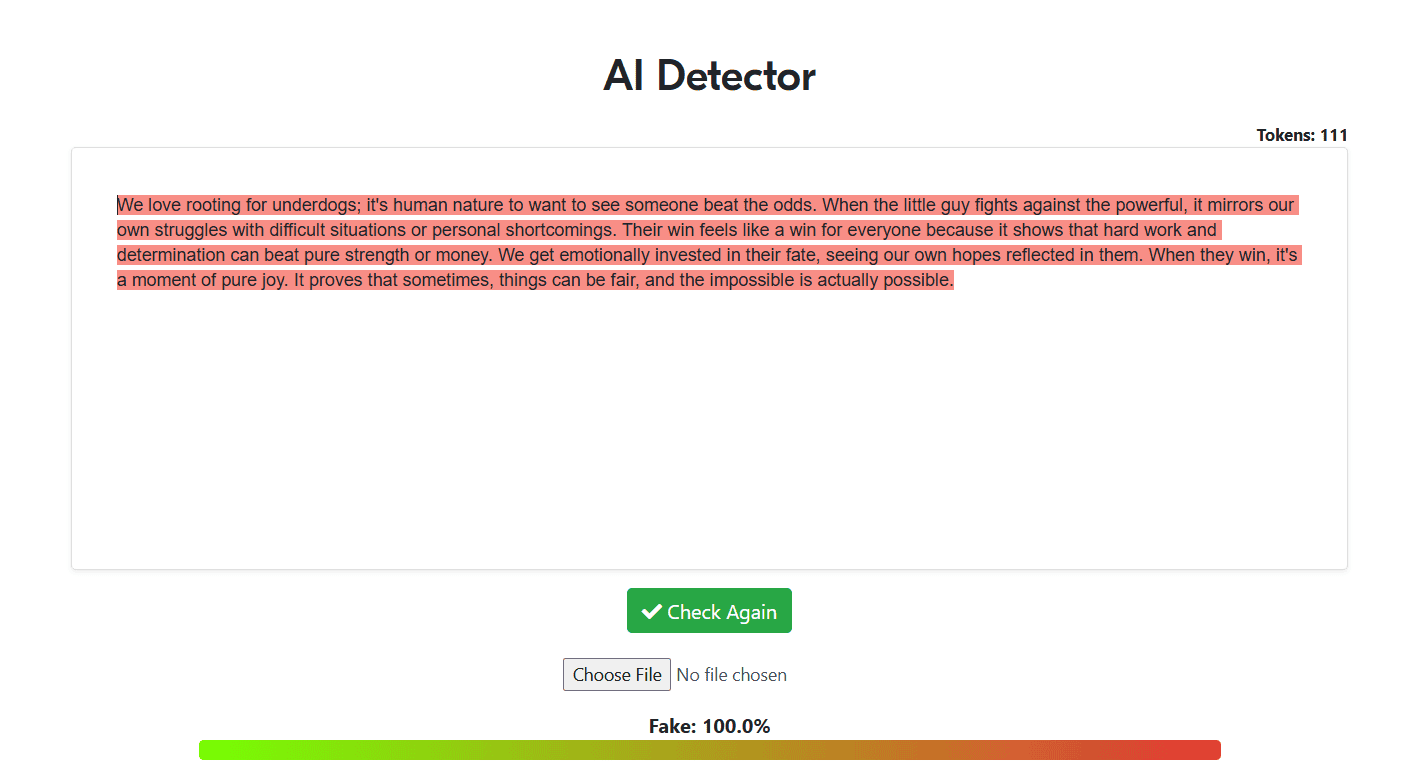
Quick caveat before the screenshots: detector results change over time. This test is still useful because both tools were run through the same samples, but I would treat the scores as a snapshot, not a permanent guarantee that any humanizer will beat every detector forever.
Test #1
Undetectable AI: Successfully passes as human!
AI Likelihood Score: 0%


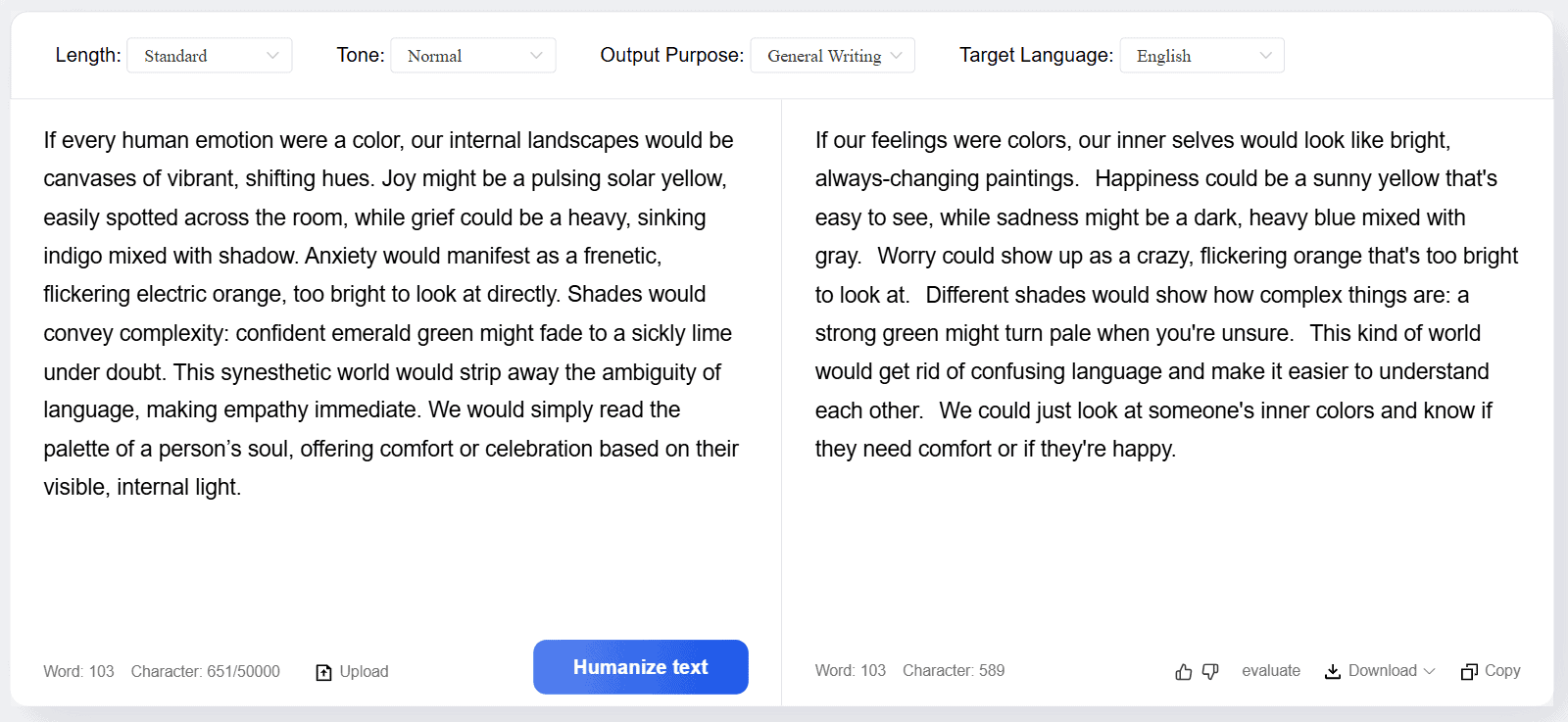
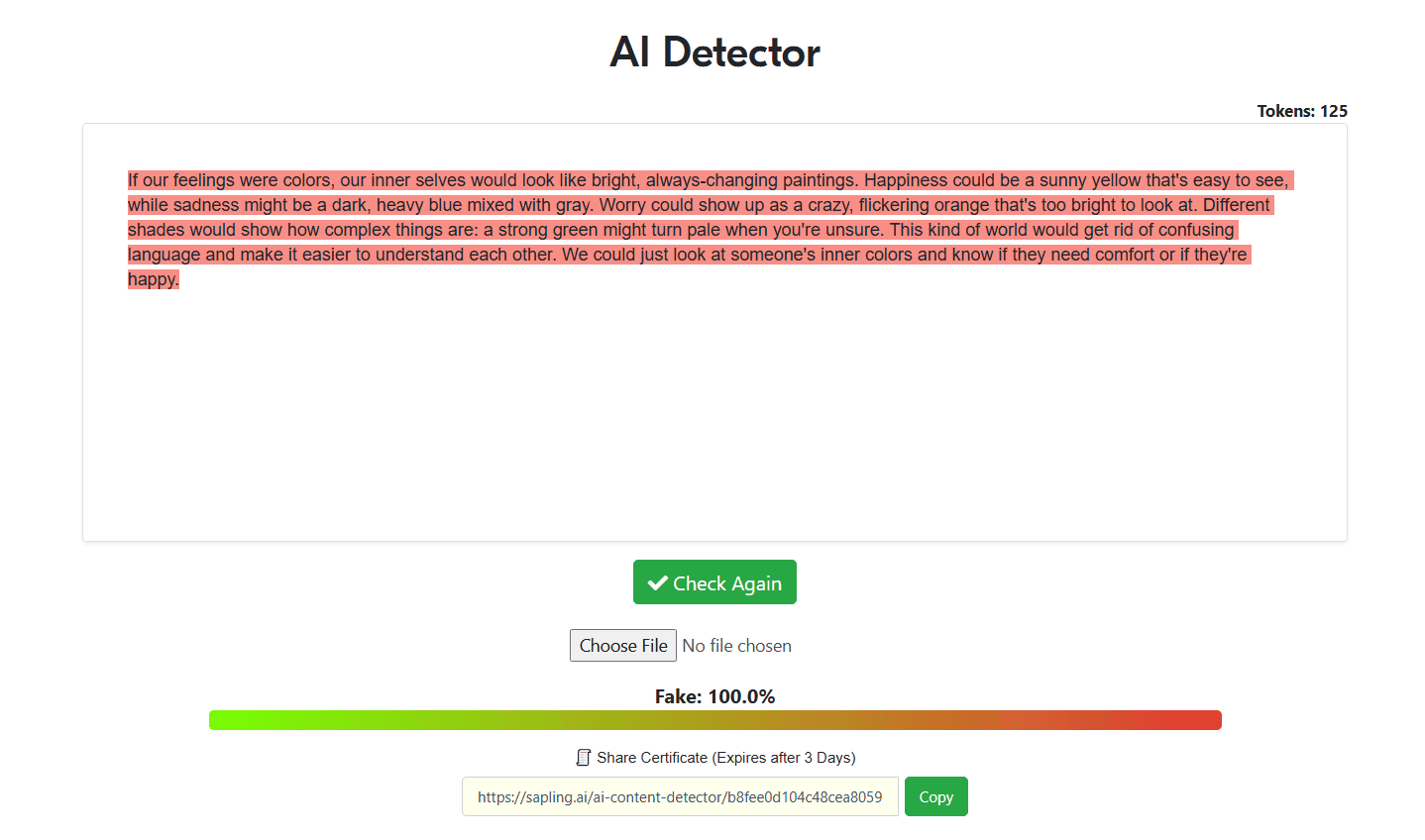
Decopy AI: Detected as AI-generated.
AI Likelihood Score: 100%


Test #2
Undetectable AI: Successfully passes as human!
AI Likelihood Score: 0%


Decopy AI: Detected as AI-generated.
AI Likelihood Score: 100%
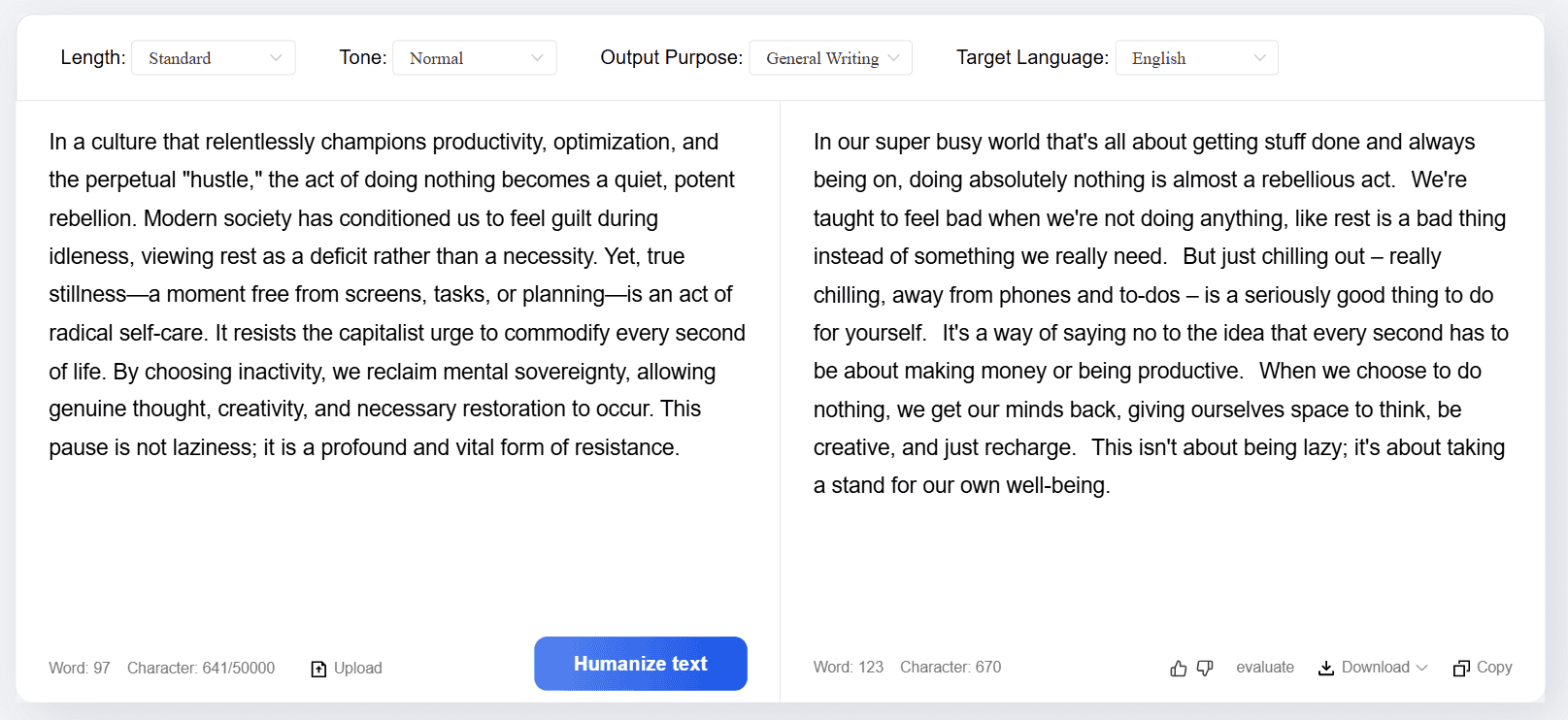
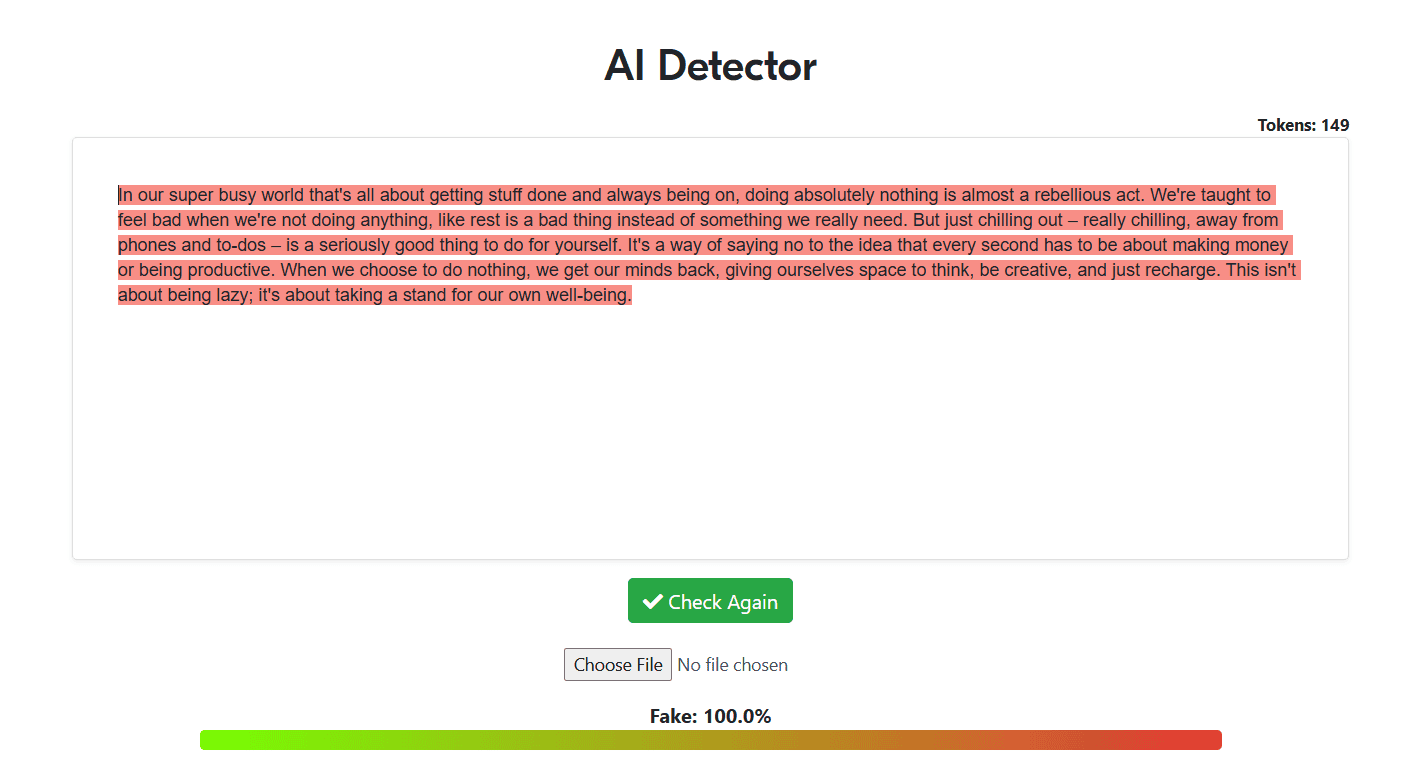
Test #3
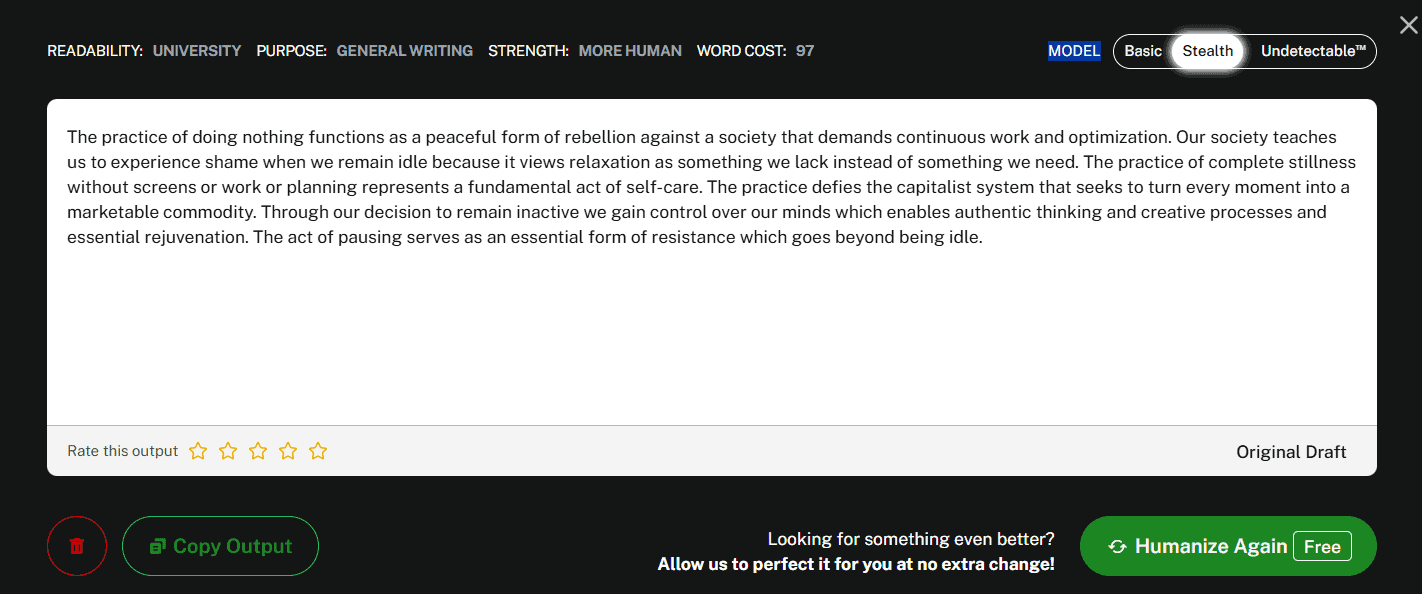
Undetectable AI: Successfully passes as human!
AI Likelihood Score: 0.1%
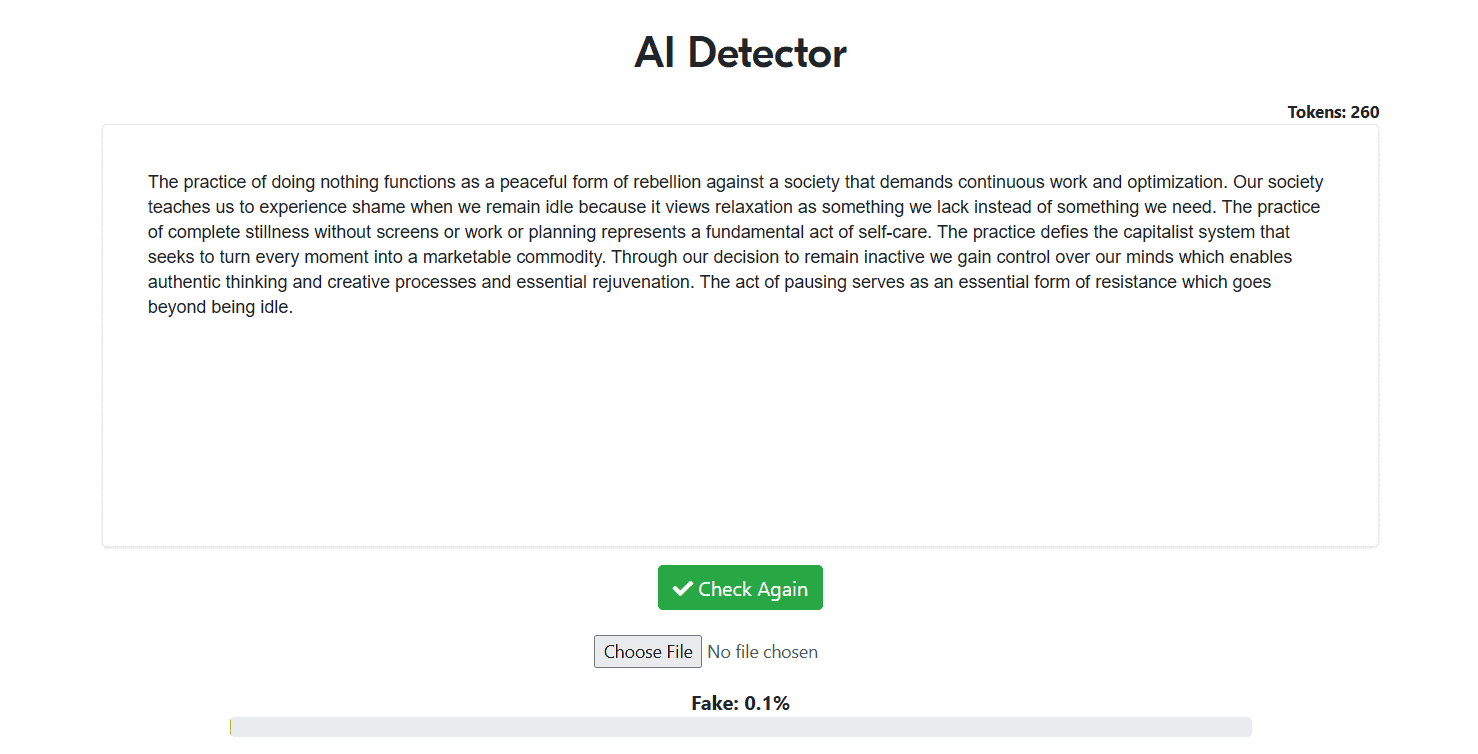
Decopy AI: Detected as AI-generated.
AI Likelihood Score: 100%
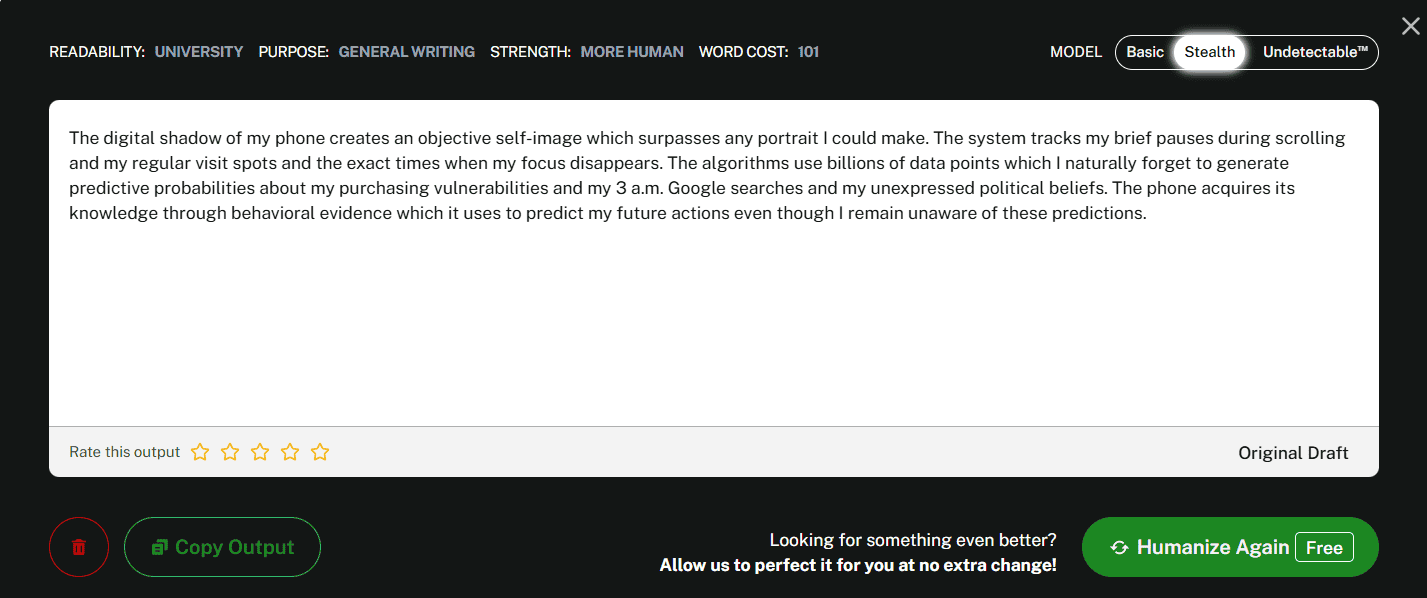
Test #4
Undetectable AI: Successfully passes as human!
AI Likelihood Score: 0%

Decopy AI: Successfully passes as human!
AI Likelihood Score: 0%


Test #5
Undetectable AI: Successfully passes as human!
AI Likelihood Score: 0.1%


Decopy AI: Detected as AI-generated.
AI Likelihood Score: 100%
Overall Score
Test Number | Undetectable AI | Decopy AI |
#1 | 0% | 100% |
#2 | 0% | 100% |
#3 | 0.1% | 100% |
#4 | 0% | 0% |
#5 | 0.1% | 100% |
Score | ~0% | 80% |
For more rewrite and humanizer comparisons, see our Grammarly AI Humanizer, Ahrefs AI Rewriter, best Undetectable AI alternatives, and avoiding AI detection for ChatGPT writing tests.
The Bottom Line
After running both tools through the same AI detection tests, the difference was clear in this sample set.
Undetectable AI’s outputs performed far better against the detector we used, and the readability was stronger overall. Its tone, rhythm, and sentence variety felt more organic, even when the phrasing was not always as elegant as the original.
Decopy AI, on the other hand, got caught around 80% of the time in this test. The content was smoother than plain ChatGPT output, but it still carried familiar AI fingerprints: overly consistent cadence, predictable transitions, and less emotional variance.
The readability results sealed the deal for me. Undetectable AI simply wrote better in this comparison. Decopy AI can still be useful if you want a free or low-cost rewrite, but if the goal is the strongest mix of natural wording, meaning preservation, and detector performance, Undetectable AI is still the better pick here.
Want to Learn Even More?
If you enjoyed this article, subscribe to our free newsletter where we share tips & tricks on how to use tech & AI to grow and optimize your business, career, and life.